







Question: 5. How strong are the competitive forces confronting harley davidson in the global motorcycle industry? Dont use other information than the information in the case
5. How strong are the competitive forces confronting harley davidson in the global motorcycle industry? 
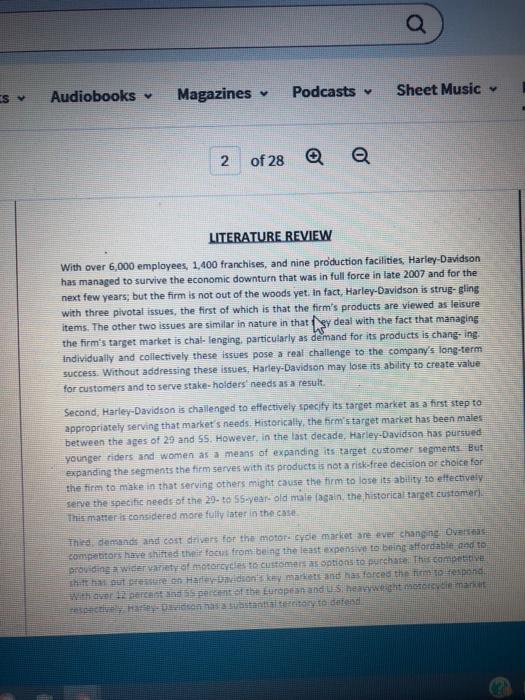
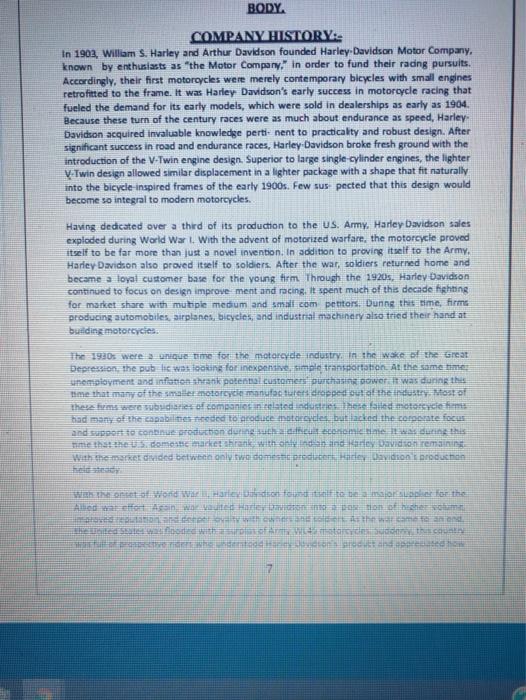
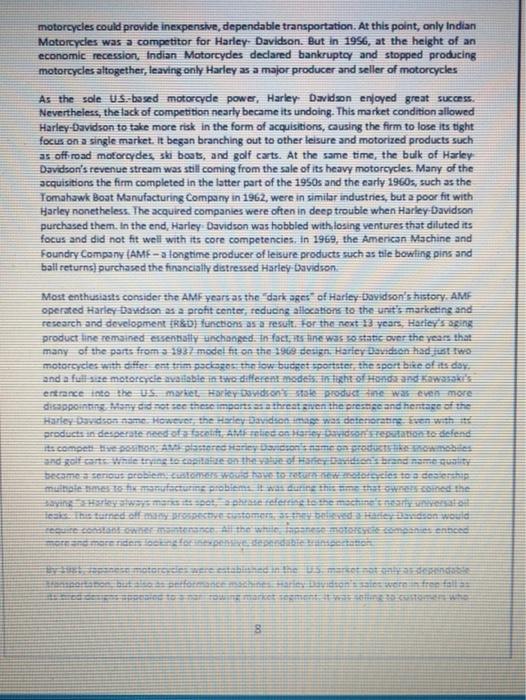
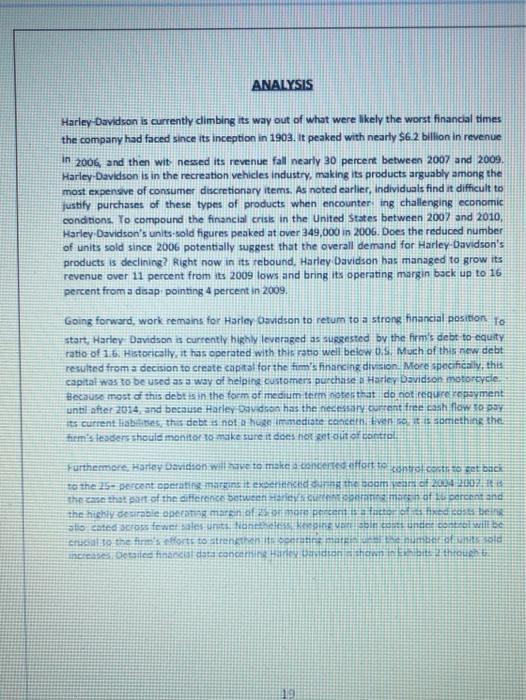
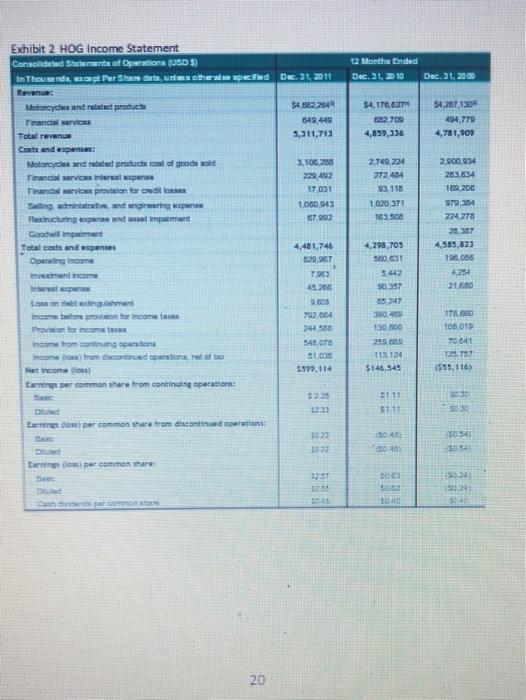
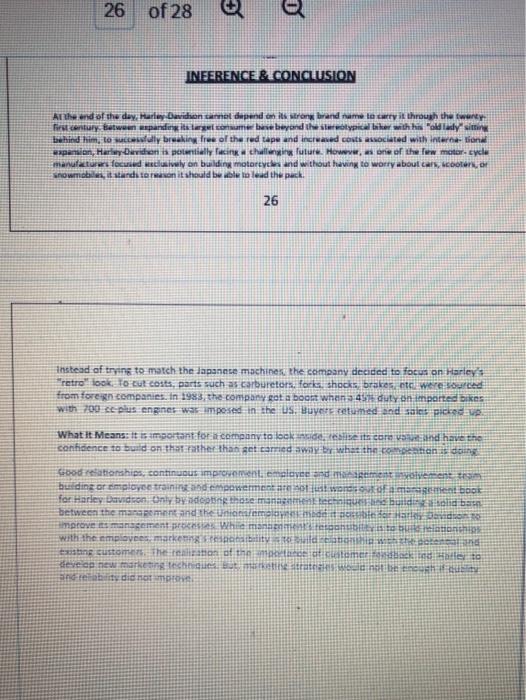
Q Do Audiobooks v Podcasts V Magazines Sheet Music HARLEY DAVIDSON CASE STUDY. BHASKAR MITRA ABSTRACT Kariey-Davidson is an American cultural and business or the level of Levi Strauss and Coca- Coia Olten imitated, but never duplicated. HarleyDavidsh has managed to survive, and has at times, thrived for many decades. Through depression, recessions, world wars high technology developments, Japanese competition, and increasing government regulation, Harley Davidson has maintained operations where over a dozen other US motorcyde firms have failed. Harley Davidson has even survived over a decade as a subsidiary of a bowling alley service firm. It has achieved this by essentially relying on designing, manufacturing, selling, and servicing a relatively static product two wheel, ants win engine and a set of handlebars How hai Harley Davidson managed to survive through these and other hardship motorcycle market that is dominated by Seisure rident How hart kent the doors open while hastant US Tal Indian Motor currently in its fourth carnation? How has it maintained its stranets without not investment bankets, and those who appear to es ricingmidlife and who sometimes to the improducts assult? ou arwhat thing that keen the industry leader full hear these question is not > 526-ound batch atste with 250 feet of then the act that Hati-Davidson in the American dream of freedom titarve KEYWORDS.- Hvid on competitor a Audiobooks Magazines ES Podcasts Sheet Music 2 of 28 LITERATURE REVIEW With over 6,000 employees, 1.400 franchises, and nine production facilities, Harley-Davidson has managed to survive the economic downturn that was in full force in late 2007 and for the next few years, but the firm is not out of the woods yet. In fact, Harley-Davidson is struggling with three pivotal issues, the first of which is that the firm's products are viewed as leisure items. The other two issues are similar in nature in that sy deal with the fact that managing the firm's target market is challenging, particularly as demand for its products is changing Individually and collectively these issues pose a real challenge to the company's long-term success. Without addressing these issues, Harley-Davidson may lose its ability to create value for customers and to serve stake-holders' needs as a result Second, Harley-Davidson s challenged to effectively specify its target market as a first step to appropriately serving that market's needs. Historically, the firm's target market has been males between the ages of 29 and 55. However, in the last decade, Harley-Davidson has pursued younger riders and women as a means of expanding it target customer segments But expanding the segments the firm serves with its products is not a risk free decision ar choice for the fire to make in that serving others might cause the firm to lose its ability to effectively serve the specific needs of the 20 to 55 year old male again the historical target customer This matter is considered more fully later in the case Third demands and can drivers for the motorcycle markere ever changing Ovates competitors have shifted the focus from being the least expensive to being affordable and to Droving wide variety of tortis customer sations to purchase the costitve Thitte testen Harley-Daedion y mantend has forced the respond ther and spent the European and she weight moral aan ha substantial to dated CON BODY. COMPANY HISTORY In 1902, William S. Harley and Arthur Davidson founded Harley Davidson Motor Company, known by enthusiasts as "the Motor Company in order to fund their racing pursuits. Accordingly, their first motorcycles were merely contemporary bicycles with small engines retrofitted to the frame. It was Harley Davidson's early success in motorcycle racing that fueled the demand for its early models, which were sold in dealerships as early as 1904. Because these turn of the century races were as much about endurance as speed, Harley Davidson acquired invaluable knowledge pertinent to practicality and robust design. After significant success in road and endurance races, Harley Davidson broke fresh ground with the introduction of the V-Twin engine design. Superior to large single-cylinder engines, the lighter V-Twin design allowed similar displacement in a lighter package with a shape that fit naturally into the bicycle inspired frames of the early 1900s. Few suspected that this design would become so integral to modern motorcycles. Having dedicated over a third of its production to the US Army, Harley Davidson sales exploded during World War I. With the advent of motorized warfare, the motorcycle proved itself to be far more than just a novel invention. In addition to proving itself to the Army. Harley Davidson also proved itself to soldiers. After the war, soldiers returned home and became a loyal customer base for the young firm. Through the 1920s, Harley-Davidson continued to focus on design improvement and racing. It spent much of this decade fighting for market share with mutiple medium and small competitors Dunng this time, firms producing automobiles, airplanes, bicycles, and industrial machinery also tried their hand at building motorcycles The 1990s were a unique time for the motorcyde industry in the wall the Great Depression, the public was looking for inexpense, simple transportation. At the same time nemaloyment and inflation thrank paternal customers purchasing power it was during this time that many of the smaller motorcycle manufactured at the industry. Most of these me subsecompanies in related indicato de had any of the capabilities needed to aroduce motor des but lacked the corporate focus and soon to continue production during the comme it was dit Timehomestearket bank with an andere Davidson remain Withcret de stw only two comprador der Davidson Douchon Wonton Well the ALWher GEN HV hUREN addition out and motorcycles could provide inexpensive, dependable transportation. At this point, only Indian Motorcycles was a competitor for Harley Davidson. But in 1956, at the height of an economic recession, Indian Motorcydes declared bankruptcy and stopped producing motorcycles altogether, leaving only Harley as a major producer and seller of motorcycles As the sole US-based motorcyde power, Harley Davidson enjoyed great success Nevertheless, the lack of competition nearly became its undoing. This market condition allowed Harley-Davidson to take more risk in the form of acquisitions, causing the firm to lose its tight focus on a single market. It began branching out to other leisure and motorized products such as off road motorcydes ski boots, and golf carts. At the same time, the bulk of Harley Davidson's revenue stream was still coming from the sale of its heavy motorcycles. Many of the acquisitions the firm completed in the latter part of the 1950s and the early 1960s, such as the Tomahawk Boat Manufacturing Company in 1962, were in similar industries, but a poor fit with Harley nonetheless. The acquired companies were often in deep trouble when Harley-Davidson purchased them. In the end, Harley Davidson was hobbled with losing ventures that diluted its focus and did not fit well with its core competencies. In 1969, the American Machine and Foundry Company (AME-a longtime producer of leisure products such as die bounting ping and ball returns) purchased the francially distressed Harley-Davidson Meat enthusiasts consider the AMF years as the dark ages of Harley-Davidson's history, AME operated Harley Davidson as a profit center, redueing allocations to the unit's marketing and research and development R&D functions as a result for the next 13 years, Harley product line remained essent unchanged. She was so statie over the years that many of the parts from a 1937 model fit on the 1969 design, Harley Davidson Bad motorcycles with different trim packages the low budget sportster, the sport bite of and a fuste motorcycle wasie in different entrance into the servidor more pointing Many did not see thes parts threaten the prestige and hentage of the products in desperate need of lied one to see sad on We te the brand became a serious problem. Soutoties to muito mesto nactus de feferring ould motorce OSHEE 8 liked classic style and dated functionality, and all for a high price. Finally, the employees and management of Harley Davidson led a managed buyout of the company from AMF. The new owners immediately took stock of the firm's strengths and vulnerabilities and increased its R&D and marketing budgets significantly. Because negative effects of AMP's past business decisions still hampered the new management team, sales remained low. In 1985, Harley-Davidson's top management team struggled to restructure the firm and divested itself of most of its unrelated assets. In 1987, Harley-Davidson became a publicly traded company, and none too soon as Harley-Davidson had revamped its product line into four motorcycle styles that were united by the introduction of a new engine. This was the turning point for Harley Davidson. From this point forward, the fim's quality control was exponentially more effective. In addition, Harley Davidson focused more on efforts to operate efficiently and effectively. Following the pre-cepts of just in time techniques and enhancement to the logistics function were critical to the firm's attempts to enhance efficiency and effectiveness. At the same time, Harley shifted to three major initiatives Improved manufacturing process, leveraging technology, robotics, and employee involvement Restructuring business management to a modem system Aggressive management of its brand name through dealership management patenting activities, and careful licensing of related products The modern day Harley Davidson has fought back from the brink several times each aime seeming to evolve & adapt What appears to be universal to each evolution of the companys that quality, promotion, and market focus have always been a priority Harley-Davidson, Inc. has been a publicly traded firm since 1987. It has two primary divi s1005Motorcycles and Related Products and Financial Services the Financial Services Division provides credit to motorcycle buvers and dealerships as well as tisk management and insurance services for all parts of the form the Motorcycles and Related Products Divion cura tently operates through eight many segments Parts & Accessories (12.5 percent of netres General Merchandise is 9 percent of net revenue! Licensing (541.2 million of net revenue! arey Davidson Museum ternationaler 3 percent of inet motorc de revenue Patent and tradema th . 9 Today Harley Davidson Inc., an employer of 4,694 workers, consists of Harley Davidson Motor Company based in Milwaukee and Eagelmark Financial Services Inc. based in Chicago, Illinois. In addition, there are nearly 600 dealerships throughout the United States. HOW DOES HARLEY DO IT22 Harley Davidson focuses on a subset of the motorcyde market featuring customers who value hertage style, reputation durability, and adaptability. Until 2000, Harley Davidson's motorcycles sold at nearly a 25 per cent premium. In the last decade, that premium has dropped to Sto 10 percent, depending on the class of motorcycle. This is due to Japanese motorcycle manufacturers shitting to marketing and selling somewhat unique motorcycles for 3 better than average price. In comparison, Harley Davidson uses the Sportster line as an Introductory product, but most of its motorcycles sell for over $1.000 with the average sale price of just over $16,4927 Harley Davidson motorcycles provide a unique product at a price that its target customers deem acceptable or reasonable. While its compebtors may have attempted to cut costs, Harley-Davidson has continued to invest in its products in ways that protect the quality of its brand image. Harley Davidson's market focus is primarily mates between the ages of 29 and SS. However, this has been changing Recenby, it has targeted female customers WHAT DOES IT DO BEST?? in its modern incarnason (1987 to present) Harley Davidson achieved success by doing what it does bestante multe ms make great motorcycles and many of these firms have dedicated following. However, through the actions themes Ethe Hote Davidson has developed and maintained et Effectively manner brand name, dedicated product foliowing are the resources of the tum comment Omaand one or 20 Harley-Davidson's brand name as most important asset: cuitates badits brand name start motivator for current and American Harley Davidson the American motonote that separated from A Harley don's to me the amount of resources tong stocated to keting we deciso that Harley Davidson no hold enter that in the story meste every that ma en city ne mettre de moto 10 cle market has been designing machines with wide rear tires for nearly two decades, in 2007, Harley-Davidson launched a single model with a wide rear tire. Harley Davidson is also very selective about its franchise (dealership) opportunities, another method through which the firm protects its brand. Due to free-trade laws, Harley Davidson is no longer able to insist that its dealerships sell only Harley products. However, it utiles price Incentives to encourage dealerships to stay "Pure Harley Harley Davidson is especially protective of its name and logo when it comes to licensed products, most of which are sold in its dealerships. If it is not the best quality, the product's license is revoked. Retailers can sell ladies' shirts at a 100 percent premium because they are of excellent quality and cannot be found anywhere. This aura of exclusivity is embedded in the very DNA of Harley Davidson Inc., from the headquarters to the dealerships. This aspect of culture is an asset in that the notion of wanting to be seen as providing products that are somewhat exclusive" in nature permeates the firm's decision processes as it seeks to serve its target customers' needs. Harley Davidson's production process is another important firm specific asset. The key elements of the process are the melding of a supply chain with team production management and part interchangeability. When combined, the elements of Harley's production process are unique Japanese manufacturers have used the same IT concept for Years, but have not stressed a limitation of key components. After 1987 Harley Davidson updated its production facilities and design process. Its production facilities in Kansas City. Missouri and York Pennsylvania are the best examples of modern robotics combined with team ensblement. Interchangeable parts are the most important component of this areat This concept simplifies all areas of the motorcycle production process, but it is perhaps most ident in the production of Harley frames and engines Hariny Davidson produce venue for each motor de family Sportster. Dyna Softai, Vod, and louning. Even the different models and en ingly limites option, Harley Davidsonder on the engine internal machining placement and color casting site the differences across the engines the Sportstertine come dice 3d 1204 cucchet The Softail and Touring lines are the same wincam ginebijnt and benches the Mods een produinone vention the produconoch Tointerchangeable parts appears to become the Harity to Produksi modeisbevidst tanta gentech the heping production Tower than it produite diferentes and to the brand another important for a while it be en te grospecte produits me repeat the most moted to the creme uti hacetate the bad these han HERCICERO 11 customer loyalty to the Harley brand appears to influence these individuals to purchase Harley products other than motorcycles such as dothing and a wide range of product accessories. Historically, loyalty to the brand has resulted in a large percentage of Harley customers choosing to buy another Harley when it is time for a new motorcycle. However, the graying of Harley's customer base is potentially a problem as at some point, this group of customers will no longer be purchasing new products KEEPING THINGS SIMPLE In 2011, Harley-Davidson generated 88 percent of its revenues from a single business area Motorcycles and Related Products) and 12 percent from its second primary segment Financial Services). This composition of sales revenue is consistent with previous years and sug gests that Harley may continue business as usual to help the firm reduce its idiosyncratic risk. It will also try to expand its business in other countries with a primary focus on providing quality product and services. Harley Davidson has been able to earn positive returns while focusing on just two businesses because it has developed strengths that allow it to create value for customers. Moreover, there are fewer challenges in managing only two businesses. This approach allows Harley Davidson to not only gain economies of scale, but also use its resources efficiently MARKETING Histoncally, males between the ages of 29 and 55 have been Harley Davidson's target customer. However, this is changing Recently for example the firm also targeting female customers with motorcycle models that have lower seat height and pink purple, anche blue color schemes its marketing has also reflected an effort to attract more female rider has even tailored its riding classes the kiders toge Program to have all femaleestons and to make new women riders feel more com fortable. A woman could walkinto Harley Davidson deslership having never motorcycles and within announce motorcycle for as little as SHO00. She could then in a riding an that would rataster spele endorsement on her driver's sense The Harley Davidson is being to teneral and multiculture dience in this regard the woring to a start of e cender and tracity. Esdevenimarket leader in the US het wegh met bete median hoitomen Hausados de esto to dietronidaci edito at Merce Anton Ed Harn tovon in continua ovative and these TET 1 | d a 12 surveys, Interviews, and focus groups. Thus, some believe that. The real power of Harley Davidson is the power to market to consumers who love the product. In 2010, the company introduced "Creative Model - a Web-based method for marketing its product. In this model, passionate fans are enabled for the purpose of helping Harley develop creative approaches for targeting new customers Customer experience has traditionally been the main source of Harley Davidson's marketing strategy. It all started in 1993, when the company introduced Harley Owners Group (H.O.G), which has now grown to more than 1 million members worldwide Harley Davidson distributes its products through an independent dealer network that almost exclusively sells Harley Davidson motorcycles. These dealerships are licensed dealers and fully authorized to sell and service new motorcycles They can have secondary locations to provide additional service to the customers. These nan traditional outlets are an extension of the main dealership and consist of Alternate Retail Outlets (ARO) and Seasonal Retail Outlets (SRD), AROs are generally located in high traffic areas such as birports, vacation destinations, tourism spots, and malls and only sell parts, accessories, and general merchandise. SROs are also located in high traffic areas, but operate only on a seasonal basis. AROs and SROs are not allowed to sel new motorcycles. The parts and apparel orders from the dealer are not taken at face value, Harley Davidson's for ward looking, market-driven sliocation system restricts the number of units a particular dealer is able to order. in Canada, the company sets its products to one whole sale dealer, Deeley Harley Davidson Canada/tred Deeley Imports Ltd. which in turn sells to independent dealers. The European, the Middle Eastern and African MEAT Egion managed to region headquarters in Oxford England Harley Davidson distributed subsidiaries located in Austria, Dubai, Cech Republica France Germany. HELA region Harley Davidson distributed all prodott subsidiaries located in Austech Xebe Unite Arab Emirates tance South Africa, Spain, Switzerland, Netherlands Russia and United dom Radosters Singapore manage the time in with the coast is topondent dealers to China, India and an actices managed through the is operations FINANCIAL SERVICES SEGMENT: it has bude da uning 71H THEI: ALASH Boite nanging the MAJOR COMPETITORS. 13 16 of 28 INTERNATIONAL GROWTH Any discussion of Harley-Davidson's future would not be complete without examining its expansion into India and China, the two BRIC economies with a strong history of motorcycle ownership and enough income growthto ensure viable target markets. After all, moving from Harley-Davidson's current position of 32 percent of revenue from international sales to its stated goal of 40 percent by 2014 will be challenging. Doing so will require a delicate balance in order to maintain the ethos of Harley Davidson while simultaneously adapting to local customs and consumer preferences. Nevertheless, it could be argued that Harley Davidson is already well on its way in this regard, For example, just four months after optically entering the Indian market July 2010, Harley announced it would build an assembly plant in northern India in order to reduce importants by as much as 80 percent. Previously, high tariffs resulted in its models contine twice as much as their U.S. equivalents only assem bling the motorcycles in India, Harley Davidson is able to sfy the desire of customers in India to purchase an American motorcycle be sourcing all the parts from the United States while significantly increasing .com ve position through lower price time will be required to see a Davidsondia will achieve thess the firm dees. Indeed, Hatey Davidson only about in the 18 months of operations. This level of sales should be considered within the context of the face Harley stocalassement in India hasny benerational filmat According the indianet has not be to the model for long mynd some mu to overcome that the mas mide biko sto con esto nour health product Shop by the that 10 Davidson is making a concerted effort to cater to the needs of customers located in developing countries. Such a strategy is essential for long term viability given global growth trends and the inevitable shift of income away from Harley-Davidson's more traditional western markets. In response to such growth, it has even committed to open ing dealerships in cities like Jaipur and Kochi - cities outside the larger Indian metropolises. In this manner, Harley- Davidson will be able to appeal to India's rural landowners who would like to ride Harley Davidsons in the countryside. CHALLENGES FACED BY HARLEY DAVIDSON:- 1. EXPANSION INTO CHINESE MARKETS Unfortunately, Harley-Davidson's venture into China, the world's largest motorcycle market, has been less smooth and illustrates what can happen when a company enters a foreign market without sufficient background preparation. For example, China currently restricts the use of motorcycles on elevated highways and major thoroughfares in about 100 cities. Import duties can also add as much as 30 percent to the price of a Harley Davidson, resulting in high-end models costing the equivalent of a luxury sedan such as the Audi A4. Perhaps more troubling is the admission by most in China that motoreycles are associated with ubistarian tasks like transportation to work, not leisure riding as is the case in developed economies such as the United States. These realises increase the difficulty Harley Davidson faces as the firm seeks to establish the level of success in China that is similar to what the form been able to accomplish in india 2. THE JAPANESE NIGHTMARE Setting late 1960s. After clockgampressive sales during World War, iconic bikemaker Harley Davidson started sturing What Happened. Eough competition from these forma coisa quality andlere performance made things dithcuit for Rare An, which bought the company in the late 1980s, tried to the problem but face and come went bankrupt. 1. the company was a group of the new own back to the board for at ret 3. STRICT INTERNATIONAL REGULATIONS use the Harming 10 whideren tot SHER ham that Transportation (DOT) regulations 54 Skeptics might say that Harley-Davidson is merely trying to minimize its liability. However, most would agree that increased injury rates from not wearing protective gear only serve to vilify motorcycle use. Indeed, Harley-Davidson even periodically issues communications to its customers encourag- ing riders to check the condition of their Sull, motorcycle riders in general have been affected by the recent loosening of helmet laws throughout the United States. "Two decades ago, 47 states required helmets for all riders. helmets 55 -- Today, 20 do. Twenty-seven states require helmets only for younger riders. Three - Illinois, lowa and New Hampshire don't require helmets at all." Another safety related concern is the fact that in 1996, S.6 motorcyclists were killed for every 10,000 registered motorcycles according to DOT statistics. However, by 2006, the most recent data available, the rate had risen to 7.3..."To be fair, such a study does not prove causalty. Still, such studies can bring unwanted negative attention to the motorcycle industry and reinforce cultural stereotypes that motorcycle nders are nisk seeking freewheelers. To make its motorcycles appealing to broader target market, Harley Davidson must continue to espouse a culture of safety, even in the face of decreasing safety regulations. New EPA emission regulations could also affect Harley Davidson's growth. Still, the last revision of motorcycle emission standards in 2003 did little to alter Harley Davidson's growth trajectory and prompted the following promise ANALYSIS Harley-Davidson is currently climbing its way out of what were likely the worst financial times the company had faced since its inception in 1903. It peaked with nearly $6.2 billion in revenue In 2006, and then witnessed its revenue fall nearly 30 percent between 2007 and 2009, Harley Davidson is in the recreation vehicles industry, making its products arguably among the most expensive of consumer discretionary items. As noted earlier, individuals find it difficult to justify purchases of these types of products when encountering challenging economic conditions. To compound the financial crisis in the United States between 2007 and 2010, Harley Davidson's units sold figures peaked at over 349,000 in 2006. the reduced number of units sold since 2006 potentially suggest that the overall demand for Harley-Davidson's products is declining? Right now in its rebound, Harley Davidson has managed to grow its revenue over 11 percent from its 2009 lows and bring its operating margin back up to 16 percent from a disappointing 4 percent in 2009. Going forward, work remains for Harley Davidson to retum to a strong financial position 10 start, Harley Davidson is currently highly leveraged as suggested by the firm's debt to equity ratio of 1.6. Historically, it has operated with this ratio well below 0.1. Much of this new debt resulted from a decision to create capital for the firm's financing division. More specifically, the capital was to be used as a way of helping customers purchase a Harley Davidson motorcycle Because most of this debt is in the form of medium termotes that do not require rapoyment until after 2014, and because Harley Davidson has the necessary content free cash flow to pay its current liable this debts not immediate conceive something the tem's teaders should monitor to make sure it does not set out of control Furthermore, Bray avidson will save to make a shtetes ntfort te contre cette est back to the 15 percent operatins marins it concerns the boom year of 2004 2002 the case that part of the difference between man sercent and the highly desirable operating marginea percent is a factories stocated IOS fewer water than the soin cotone control will be er the firm's efforts to strengthenticarti mati e hiatrists/ tsuNTSE Dette har al data contine Heidenhen inhibit thout 19 22 MontEnded Dec. 21, 2210 Dec. 31, 2002 54, 176,6 2,709 4,450,336 54,237,130 494,779 4,781,900 2,740 224 272.454 93.118 1020,371 163 500 Exhibit 2 HOG Income Statement Colle Santel Operation (USD) in Thunder handta, sotheaped Dec 31, 2015 ves Motorcycles and related products S4254 and VICE 649,440 Total revenue 5,311,713 Corts and expenses Motorcycles and red produce cost of good old 106,208 Tinancial interest 29492 dal rices provision for it 17 01 Sang anda per 1000043 Restructuring na pamant 67.992 Goodwilinment Total costs and spent 4,461,746 Operating income B07 Intro 733 45.00 Lowongan 9.00 Inco provono income 792.064 Provon for income 24 SE Income to continuing persons 348 OTS Income tam contine unionist of 51 036 Met income 5999,114 Carmine per common share from continuing operation: 5215 DO $933 Endomer common share from discontinued operations 1023 5027 Larino per common share 57 2.000,934 283.834 19 206 97,34 724278 337 4,585,823 1960G 4754 21.680 4,298,705 5051 5442 SD: 357 85 247 100 400 000 359,00D 1121 $146,543 TO 10019 TO 041 178787 1555,116) 03 5111 5111 DAN 04 SOBA +504 10 So SA 24 19 20 26 of 28 Q INEERENCE & CONCLUSION And of the day, Harley Davidson el depend on its strony brand name to carry it through the twenty first con isten pandinis comme bevebuyond the serotypical baker with his old ladysime behind him, to succeslaly braking free of the red tape and increased costs associated with international wapansion, Harividen a Dolly Pacinthulling futute. However, as one of the few motorcycle acturers focused meciully on building motorcycles and without having to worry about cars, scooter, snowmobiit sandstranit should be able to lead the pack. 26 Instead of trying to match the Japanese machines the company decided to focus on Harley's "retro" look. To cut costs, parts such as carburetors, forks, shocks, brakes were source from foreign companies. In 1983, the company at a boost whana 45 duty on imported bikes with 700 plus engines war imposed in the US. Bet tuned and sales picked What it Means: It is important for company to look deita com and have the confidence to build on that rather than get carried away by what the commentan oorships, continuous imprown colore and mome building of employee trainian Met word aangebot for Harley Davideo Only by doing those mana lid barn between managem the una mobi improve Whidman nchi with them gibility ng custome an of the mette er to devine keting tehtide atestato RE Freibt did not Q Do Audiobooks v Podcasts V Magazines Sheet Music HARLEY DAVIDSON CASE STUDY. BHASKAR MITRA ABSTRACT Kariey-Davidson is an American cultural and business or the level of Levi Strauss and Coca- Coia Olten imitated, but never duplicated. HarleyDavidsh has managed to survive, and has at times, thrived for many decades. Through depression, recessions, world wars high technology developments, Japanese competition, and increasing government regulation, Harley Davidson has maintained operations where over a dozen other US motorcyde firms have failed. Harley Davidson has even survived over a decade as a subsidiary of a bowling alley service firm. It has achieved this by essentially relying on designing, manufacturing, selling, and servicing a relatively static product two wheel, ants win engine and a set of handlebars How hai Harley Davidson managed to survive through these and other hardship motorcycle market that is dominated by Seisure rident How hart kent the doors open while hastant US Tal Indian Motor currently in its fourth carnation? How has it maintained its stranets without not investment bankets, and those who appear to es ricingmidlife and who sometimes to the improducts assult? ou arwhat thing that keen the industry leader full hear these question is not > 526-ound batch atste with 250 feet of then the act that Hati-Davidson in the American dream of freedom titarve KEYWORDS.- Hvid on competitor a Audiobooks Magazines ES Podcasts Sheet Music 2 of 28 LITERATURE REVIEW With over 6,000 employees, 1.400 franchises, and nine production facilities, Harley-Davidson has managed to survive the economic downturn that was in full force in late 2007 and for the next few years, but the firm is not out of the woods yet. In fact, Harley-Davidson is struggling with three pivotal issues, the first of which is that the firm's products are viewed as leisure items. The other two issues are similar in nature in that sy deal with the fact that managing the firm's target market is challenging, particularly as demand for its products is changing Individually and collectively these issues pose a real challenge to the company's long-term success. Without addressing these issues, Harley-Davidson may lose its ability to create value for customers and to serve stake-holders' needs as a result Second, Harley-Davidson s challenged to effectively specify its target market as a first step to appropriately serving that market's needs. Historically, the firm's target market has been males between the ages of 29 and 55. However, in the last decade, Harley-Davidson has pursued younger riders and women as a means of expanding it target customer segments But expanding the segments the firm serves with its products is not a risk free decision ar choice for the fire to make in that serving others might cause the firm to lose its ability to effectively serve the specific needs of the 20 to 55 year old male again the historical target customer This matter is considered more fully later in the case Third demands and can drivers for the motorcycle markere ever changing Ovates competitors have shifted the focus from being the least expensive to being affordable and to Droving wide variety of tortis customer sations to purchase the costitve Thitte testen Harley-Daedion y mantend has forced the respond ther and spent the European and she weight moral aan ha substantial to dated CON BODY. COMPANY HISTORY In 1902, William S. Harley and Arthur Davidson founded Harley Davidson Motor Company, known by enthusiasts as "the Motor Company in order to fund their racing pursuits. Accordingly, their first motorcycles were merely contemporary bicycles with small engines retrofitted to the frame. It was Harley Davidson's early success in motorcycle racing that fueled the demand for its early models, which were sold in dealerships as early as 1904. Because these turn of the century races were as much about endurance as speed, Harley Davidson acquired invaluable knowledge pertinent to practicality and robust design. After significant success in road and endurance races, Harley Davidson broke fresh ground with the introduction of the V-Twin engine design. Superior to large single-cylinder engines, the lighter V-Twin design allowed similar displacement in a lighter package with a shape that fit naturally into the bicycle inspired frames of the early 1900s. Few suspected that this design would become so integral to modern motorcycles. Having dedicated over a third of its production to the US Army, Harley Davidson sales exploded during World War I. With the advent of motorized warfare, the motorcycle proved itself to be far more than just a novel invention. In addition to proving itself to the Army. Harley Davidson also proved itself to soldiers. After the war, soldiers returned home and became a loyal customer base for the young firm. Through the 1920s, Harley-Davidson continued to focus on design improvement and racing. It spent much of this decade fighting for market share with mutiple medium and small competitors Dunng this time, firms producing automobiles, airplanes, bicycles, and industrial machinery also tried their hand at building motorcycles The 1990s were a unique time for the motorcyde industry in the wall the Great Depression, the public was looking for inexpense, simple transportation. At the same time nemaloyment and inflation thrank paternal customers purchasing power it was during this time that many of the smaller motorcycle manufactured at the industry. Most of these me subsecompanies in related indicato de had any of the capabilities needed to aroduce motor des but lacked the corporate focus and soon to continue production during the comme it was dit Timehomestearket bank with an andere Davidson remain Withcret de stw only two comprador der Davidson Douchon Wonton Well the ALWher GEN HV hUREN addition out and motorcycles could provide inexpensive, dependable transportation. At this point, only Indian Motorcycles was a competitor for Harley Davidson. But in 1956, at the height of an economic recession, Indian Motorcydes declared bankruptcy and stopped producing motorcycles altogether, leaving only Harley as a major producer and seller of motorcycles As the sole US-based motorcyde power, Harley Davidson enjoyed great success Nevertheless, the lack of competition nearly became its undoing. This market condition allowed Harley-Davidson to take more risk in the form of acquisitions, causing the firm to lose its tight focus on a single market. It began branching out to other leisure and motorized products such as off road motorcydes ski boots, and golf carts. At the same time, the bulk of Harley Davidson's revenue stream was still coming from the sale of its heavy motorcycles. Many of the acquisitions the firm completed in the latter part of the 1950s and the early 1960s, such as the Tomahawk Boat Manufacturing Company in 1962, were in similar industries, but a poor fit with Harley nonetheless. The acquired companies were often in deep trouble when Harley-Davidson purchased them. In the end, Harley Davidson was hobbled with losing ventures that diluted its focus and did not fit well with its core competencies. In 1969, the American Machine and Foundry Company (AME-a longtime producer of leisure products such as die bounting ping and ball returns) purchased the francially distressed Harley-Davidson Meat enthusiasts consider the AMF years as the dark ages of Harley-Davidson's history, AME operated Harley Davidson as a profit center, redueing allocations to the unit's marketing and research and development R&D functions as a result for the next 13 years, Harley product line remained essent unchanged. She was so statie over the years that many of the parts from a 1937 model fit on the 1969 design, Harley Davidson Bad motorcycles with different trim packages the low budget sportster, the sport bite of and a fuste motorcycle wasie in different entrance into the servidor more pointing Many did not see thes parts threaten the prestige and hentage of the products in desperate need of lied one to see sad on We te the brand became a serious problem. Soutoties to muito mesto nactus de feferring ould motorce OSHEE 8 liked classic style and dated functionality, and all for a high price. Finally, the employees and management of Harley Davidson led a managed buyout of the company from AMF. The new owners immediately took stock of the firm's strengths and vulnerabilities and increased its R&D and marketing budgets significantly. Because negative effects of AMP's past business decisions still hampered the new management team, sales remained low. In 1985, Harley-Davidson's top management team struggled to restructure the firm and divested itself of most of its unrelated assets. In 1987, Harley-Davidson became a publicly traded company, and none too soon as Harley-Davidson had revamped its product line into four motorcycle styles that were united by the introduction of a new engine. This was the turning point for Harley Davidson. From this point forward, the fim's quality control was exponentially more effective. In addition, Harley Davidson focused more on efforts to operate efficiently and effectively. Following the pre-cepts of just in time techniques and enhancement to the logistics function were critical to the firm's attempts to enhance efficiency and effectiveness. At the same time, Harley shifted to three major initiatives Improved manufacturing process, leveraging technology, robotics, and employee involvement Restructuring business management to a modem system Aggressive management of its brand name through dealership management patenting activities, and careful licensing of related products The modern day Harley Davidson has fought back from the brink several times each aime seeming to evolve & adapt What appears to be universal to each evolution of the companys that quality, promotion, and market focus have always been a priority Harley-Davidson, Inc. has been a publicly traded firm since 1987. It has two primary divi s1005Motorcycles and Related Products and Financial Services the Financial Services Division provides credit to motorcycle buvers and dealerships as well as tisk management and insurance services for all parts of the form the Motorcycles and Related Products Divion cura tently operates through eight many segments Parts & Accessories (12.5 percent of netres General Merchandise is 9 percent of net revenue! Licensing (541.2 million of net revenue! arey Davidson Museum ternationaler 3 percent of inet motorc de revenue Patent and tradema th . 9 Today Harley Davidson Inc., an employer of 4,694 workers, consists of Harley Davidson Motor Company based in Milwaukee and Eagelmark Financial Services Inc. based in Chicago, Illinois. In addition, there are nearly 600 dealerships throughout the United States. HOW DOES HARLEY DO IT22 Harley Davidson focuses on a subset of the motorcyde market featuring customers who value hertage style, reputation durability, and adaptability. Until 2000, Harley Davidson's motorcycles sold at nearly a 25 per cent premium. In the last decade, that premium has dropped to Sto 10 percent, depending on the class of motorcycle. This is due to Japanese motorcycle manufacturers shitting to marketing and selling somewhat unique motorcycles for 3 better than average price. In comparison, Harley Davidson uses the Sportster line as an Introductory product, but most of its motorcycles sell for over $1.000 with the average sale price of just over $16,4927 Harley Davidson motorcycles provide a unique product at a price that its target customers deem acceptable or reasonable. While its compebtors may have attempted to cut costs, Harley-Davidson has continued to invest in its products in ways that protect the quality of its brand image. Harley Davidson's market focus is primarily mates between the ages of 29 and SS. However, this has been changing Recenby, it has targeted female customers WHAT DOES IT DO BEST?? in its modern incarnason (1987 to present) Harley Davidson achieved success by doing what it does bestante multe ms make great motorcycles and many of these firms have dedicated following. However, through the actions themes Ethe Hote Davidson has developed and maintained et Effectively manner brand name, dedicated product foliowing are the resources of the tum comment Omaand one or 20 Harley-Davidson's brand name as most important asset: cuitates badits brand name start motivator for current and American Harley Davidson the American motonote that separated from A Harley don's to me the amount of resources tong stocated to keting we deciso that Harley Davidson no hold enter that in the story meste every that ma en city ne mettre de moto 10 cle market has been designing machines with wide rear tires for nearly two decades, in 2007, Harley-Davidson launched a single model with a wide rear tire. Harley Davidson is also very selective about its franchise (dealership) opportunities, another method through which the firm protects its brand. Due to free-trade laws, Harley Davidson is no longer able to insist that its dealerships sell only Harley products. However, it utiles price Incentives to encourage dealerships to stay "Pure Harley Harley Davidson is especially protective of its name and logo when it comes to licensed products, most of which are sold in its dealerships. If it is not the best quality, the product's license is revoked. Retailers can sell ladies' shirts at a 100 percent premium because they are of excellent quality and cannot be found anywhere. This aura of exclusivity is embedded in the very DNA of Harley Davidson Inc., from the headquarters to the dealerships. This aspect of culture is an asset in that the notion of wanting to be seen as providing products that are somewhat exclusive" in nature permeates the firm's decision processes as it seeks to serve its target customers' needs. Harley Davidson's production process is another important firm specific asset. The key elements of the process are the melding of a supply chain with team production management and part interchangeability. When combined, the elements of Harley's production process are unique Japanese manufacturers have used the same IT concept for Years, but have not stressed a limitation of key components. After 1987 Harley Davidson updated its production facilities and design process. Its production facilities in Kansas City. Missouri and York Pennsylvania are the best examples of modern robotics combined with team ensblement. Interchangeable parts are the most important component of this areat This concept simplifies all areas of the motorcycle production process, but it is perhaps most ident in the production of Harley frames and engines Hariny Davidson produce venue for each motor de family Sportster. Dyna Softai, Vod, and louning. Even the different models and en ingly limites option, Harley Davidsonder on the engine internal machining placement and color casting site the differences across the engines the Sportstertine come dice 3d 1204 cucchet The Softail and Touring lines are the same wincam ginebijnt and benches the Mods een produinone vention the produconoch Tointerchangeable parts appears to become the Harity to Produksi modeisbevidst tanta gentech the heping production Tower than it produite diferentes and to the brand another important for a while it be en te grospecte produits me repeat the most moted to the creme uti hacetate the bad these han HERCICERO 11 customer loyalty to the Harley brand appears to influence these individuals to purchase Harley products other than motorcycles such as dothing and a wide range of product accessories. Historically, loyalty to the brand has resulted in a large percentage of Harley customers choosing to buy another Harley when it is time for a new motorcycle. However, the graying of Harley's customer base is potentially a problem as at some point, this group of customers will no longer be purchasing new products KEEPING THINGS SIMPLE In 2011, Harley-Davidson generated 88 percent of its revenues from a single business area Motorcycles and Related Products) and 12 percent from its second primary segment Financial Services). This composition of sales revenue is consistent with previous years and sug gests that Harley may continue business as usual to help the firm reduce its idiosyncratic risk. It will also try to expand its business in other countries with a primary focus on providing quality product and services. Harley Davidson has been able to earn positive returns while focusing on just two businesses because it has developed strengths that allow it to create value for customers. Moreover, there are fewer challenges in managing only two businesses. This approach allows Harley Davidson to not only gain economies of scale, but also use its resources efficiently MARKETING Histoncally, males between the ages of 29 and 55 have been Harley Davidson's target customer. However, this is changing Recently for example the firm also targeting female customers with motorcycle models that have lower seat height and pink purple, anche blue color schemes its marketing has also reflected an effort to attract more female rider has even tailored its riding classes the kiders toge Program to have all femaleestons and to make new women riders feel more com fortable. A woman could walkinto Harley Davidson deslership having never motorcycles and within announce motorcycle for as little as SHO00. She could then in a riding an that would rataster spele endorsement on her driver's sense The Harley Davidson is being to teneral and multiculture dience in this regard the woring to a start of e cender and tracity. Esdevenimarket leader in the US het wegh met bete median hoitomen Hausados de esto to dietronidaci edito at Merce Anton Ed Harn tovon in continua ovative and these TET 1 | d a 12 surveys, Interviews, and focus groups. Thus, some believe that. The real power of Harley Davidson is the power to market to consumers who love the product. In 2010, the company introduced "Creative Model - a Web-based method for marketing its product. In this model, passionate fans are enabled for the purpose of helping Harley develop creative approaches for targeting new customers Customer experience has traditionally been the main source of Harley Davidson's marketing strategy. It all started in 1993, when the company introduced Harley Owners Group (H.O.G), which has now grown to more than 1 million members worldwide Harley Davidson distributes its products through an independent dealer network that almost exclusively sells Harley Davidson motorcycles. These dealerships are licensed dealers and fully authorized to sell and service new motorcycles They can have secondary locations to provide additional service to the customers. These nan traditional outlets are an extension of the main dealership and consist of Alternate Retail Outlets (ARO) and Seasonal Retail Outlets (SRD), AROs are generally located in high traffic areas such as birports, vacation destinations, tourism spots, and malls and only sell parts, accessories, and general merchandise. SROs are also located in high traffic areas, but operate only on a seasonal basis. AROs and SROs are not allowed to sel new motorcycles. The parts and apparel orders from the dealer are not taken at face value, Harley Davidson's for ward looking, market-driven sliocation system restricts the number of units a particular dealer is able to order. in Canada, the company sets its products to one whole sale dealer, Deeley Harley Davidson Canada/tred Deeley Imports Ltd. which in turn sells to independent dealers. The European, the Middle Eastern and African MEAT Egion managed to region headquarters in Oxford England Harley Davidson distributed subsidiaries located in Austria, Dubai, Cech Republica France Germany. HELA region Harley Davidson distributed all prodott subsidiaries located in Austech Xebe Unite Arab Emirates tance South Africa, Spain, Switzerland, Netherlands Russia and United dom Radosters Singapore manage the time in with the coast is topondent dealers to China, India and an actices managed through the is operations FINANCIAL SERVICES SEGMENT: it has bude da uning 71H THEI: ALASH Boite nanging the MAJOR COMPETITORS. 13 16 of 28 INTERNATIONAL GROWTH Any discussion of Harley-Davidson's future would not be complete without examining its expansion into India and China, the two BRIC economies with a strong history of motorcycle ownership and enough income growthto ensure viable target markets. After all, moving from Harley-Davidson's current position of 32 percent of revenue from international sales to its stated goal of 40 percent by 2014 will be challenging. Doing so will require a delicate balance in order to maintain the ethos of Harley Davidson while simultaneously adapting to local customs and consumer preferences. Nevertheless, it could be argued that Harley Davidson is already well on its way in this regard, For example, just four months after optically entering the Indian market July 2010, Harley announced it would build an assembly plant in northern India in order to reduce importants by as much as 80 percent. Previously, high tariffs resulted in its models contine twice as much as their U.S. equivalents only assem bling the motorcycles in India, Harley Davidson is able to sfy the desire of customers in India to purchase an American motorcycle be sourcing all the parts from the United States while significantly increasing .com ve position through lower price time will be required to see a Davidsondia will achieve thess the firm dees. Indeed, Hatey Davidson only about in the 18 months of operations. This level of sales should be considered within the context of the face Harley stocalassement in India hasny benerational filmat According the indianet has not be to the model for long mynd some mu to overcome that the mas mide biko sto con esto nour health product Shop by the that 10 Davidson is making a concerted effort to cater to the needs of customers located in developing countries. Such a strategy is essential for long term viability given global growth trends and the inevitable shift of income away from Harley-Davidson's more traditional western markets. In response to such growth, it has even committed to open ing dealerships in cities like Jaipur and Kochi - cities outside the larger Indian metropolises. In this manner, Harley- Davidson will be able to appeal to India's rural landowners who would like to ride Harley Davidsons in the countryside. CHALLENGES FACED BY HARLEY DAVIDSON:- 1. EXPANSION INTO CHINESE MARKETS Unfortunately, Harley-Davidson's venture into China, the world's largest motorcycle market, has been less smooth and illustrates what can happen when a company enters a foreign market without sufficient background preparation. For example, China currently restricts the use of motorcycles on elevated highways and major thoroughfares in about 100 cities. Import duties can also add as much as 30 percent to the price of a Harley Davidson, resulting in high-end models costing the equivalent of a luxury sedan such as the Audi A4. Perhaps more troubling is the admission by most in China that motoreycles are associated with ubistarian tasks like transportation to work, not leisure riding as is the case in developed economies such as the United States. These realises increase the difficulty Harley Davidson faces as the firm seeks to establish the level of success in China that is similar to what the form been able to accomplish in india 2. THE JAPANESE NIGHTMARE Setting late 1960s. After clockgampressive sales during World War, iconic bikemaker Harley Davidson started sturing What Happened. Eough competition from these forma coisa quality andlere performance made things dithcuit for Rare An, which bought the company in the late 1980s, tried to the problem but face and come went bankrupt. 1. the company was a group of the new own back to the board for at ret 3. STRICT INTERNATIONAL REGULATIONS use the Harming 10 whideren tot SHER ham that Transportation (DOT) regulations 54 Skeptics might say that Harley-Davidson is merely trying to minimize its liability. However, most would agree that increased injury rates from not wearing protective gear only serve to vilify motorcycle use. Indeed, Harley-Davidson even periodically issues communications to its customers encourag- ing riders to check the condition of their Sull, motorcycle riders in general have been affected by the recent loosening of helmet laws throughout the United States. "Two decades ago, 47 states required helmets for all riders. helmets 55 -- Today, 20 do. Twenty-seven states require helmets only for younger riders. Three - Illinois, lowa and New Hampshire don't require helmets at all." Another safety related concern is the fact that in 1996, S.6 motorcyclists were killed for every 10,000 registered motorcycles according to DOT statistics. However, by 2006, the most recent data available, the rate had risen to 7.3..."To be fair, such a study does not prove causalty. Still, such studies can bring unwanted negative attention to the motorcycle industry and reinforce cultural stereotypes that motorcycle nders are nisk seeking freewheelers. To make its motorcycles appealing to broader target market, Harley Davidson must continue to espouse a culture of safety, even in the face of decreasing safety regulations. New EPA emission regulations could also affect Harley Davidson's growth. Still, the last revision of motorcycle emission standards in 2003 did little to alter Harley Davidson's growth trajectory and prompted the following promise ANALYSIS Harley-Davidson is currently climbing its way out of what were likely the worst financial times the company had faced since its inception in 1903. It peaked with nearly $6.2 billion in revenue In 2006, and then witnessed its revenue fall nearly 30 percent between 2007 and 2009, Harley Davidson is in the recreation vehicles industry, making its products arguably among the most expensive of consumer discretionary items. As noted earlier, individuals find it difficult to justify purchases of these types of products when encountering challenging economic conditions. To compound the financial crisis in the United States between 2007 and 2010, Harley Davidson's units sold figures peaked at over 349,000 in 2006. the reduced number of units sold since 2006 potentially suggest that the overall demand for Harley-Davidson's products is declining? Right now in its rebound, Harley Davidson has managed to grow its revenue over 11 percent from its 2009 lows and bring its operating margin back up to 16 percent from a disappointing 4 percent in 2009. Going forward, work remains for Harley Davidson to retum to a strong financial position 10 start, Harley Davidson is currently highly leveraged as suggested by the firm's debt to equity ratio of 1.6. Historically, it has operated with this ratio well below 0.1. Much of this new debt resulted from a decision to create capital for the firm's financing division. More specifically, the capital was to be used as a way of helping customers purchase a Harley Davidson motorcycle Because most of this debt is in the form of medium termotes that do not require rapoyment until after 2014, and because Harley Davidson has the necessary content free cash flow to pay its current liable this debts not immediate conceive something the tem's teaders should monitor to make sure it does not set out of control Furthermore, Bray avidson will save to make a shtetes ntfort te contre cette est back to the 15 percent operatins marins it concerns the boom year of 2004 2002 the case that part of the difference between man sercent and the highly desirable operating marginea percent is a factories stocated IOS fewer water than the soin cotone control will be er the firm's efforts to strengthenticarti mati e hiatrists/ tsuNTSE Dette har al data contine Heidenhen inhibit thout 19 22 MontEnded Dec. 21, 2210 Dec. 31, 2002 54, 176,6 2,709 4,450,336 54,237,130 494,779 4,781,900 2,740 224 272.454 93.118 1020,371 163 500 Exhibit 2 HOG Income Statement Colle Santel Operation (USD) in Thunder handta, sotheaped Dec 31, 2015 ves Motorcycles and related products S4254 and VICE 649,440 Total revenue 5,311,713 Corts and expenses Motorcycles and red produce cost of good old 106,208 Tinancial interest 29492 dal rices provision for it 17 01 Sang anda per 1000043 Restructuring na pamant 67.992 Goodwilinment Total costs and spent 4,461,746 Operating income B07 Intro 733 45.00 Lowongan 9.00 Inco provono income 792.064 Provon for income 24 SE Income to continuing persons 348 OTS Income tam contine unionist of 51 036 Met income 5999,114 Carmine per common share from continuing operation: 5215 DO $933 Endomer common share from discontinued operations 1023 5027 Larino per common share 57 2.000,934 283.834 19 206 97,34 724278 337 4,585,823 1960G 4754 21.680 4,298,705 5051 5442 SD: 357 85 247 100 400 000 359,00D 1121 $146,543 TO 10019 TO 041 178787 1555,116) 03 5111 5111 DAN 04 SOBA +504 10 So SA 24 19 20 26 of 28 Q INEERENCE & CONCLUSION And of the day, Harley Davidson el depend on its strony brand name to carry it through the twenty first con isten pandinis comme bevebuyond the serotypical baker with his old ladysime behind him, to succeslaly braking free of the red tape and increased costs associated with international wapansion, Harividen a Dolly Pacinthulling futute. However, as one of the few motorcycle acturers focused meciully on building motorcycles and without having to worry about cars, scooter, snowmobiit sandstranit should be able to lead the pack. 26 Instead of trying to match the Japanese machines the company decided to focus on Harley's "retro" look. To cut costs, parts such as carburetors, forks, shocks, brakes were source from foreign companies. In 1983, the company at a boost whana 45 duty on imported bikes with 700 plus engines war imposed in the US. Bet tuned and sales picked What it Means: It is important for company to look deita com and have the confidence to build on that rather than get carried away by what the commentan oorships, continuous imprown colore and mome building of employee trainian Met word aangebot for Harley Davideo Only by doing those mana lid barn between managem the una mobi improve Whidman nchi with them gibility ng custome an of the mette er to devine keting tehtide atestato RE Freibt did not Dont use other information than the information in the case below, it will not be usefull if you use other new information.
Step by Step Solution
There are 3 Steps involved in it
1 Expert Approved Answer
Step: 1 Unlock

Question Has Been Solved by an Expert!
Get step-by-step solutions from verified subject matter experts
Step: 2 Unlock
Step: 3 Unlock
 Study Help