







Question: Answer.... A B C D E F G H 1 Time (year month) Number of UK visits abroad in thousands 1980 JAN 823 W N
Answer....
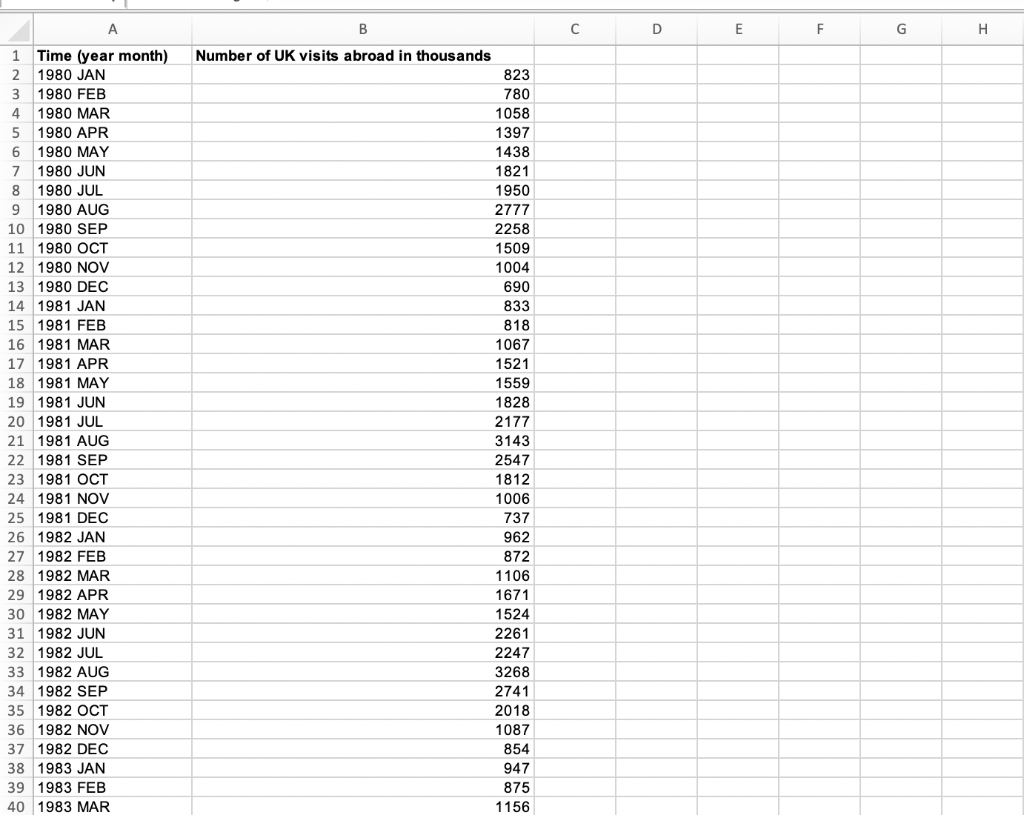
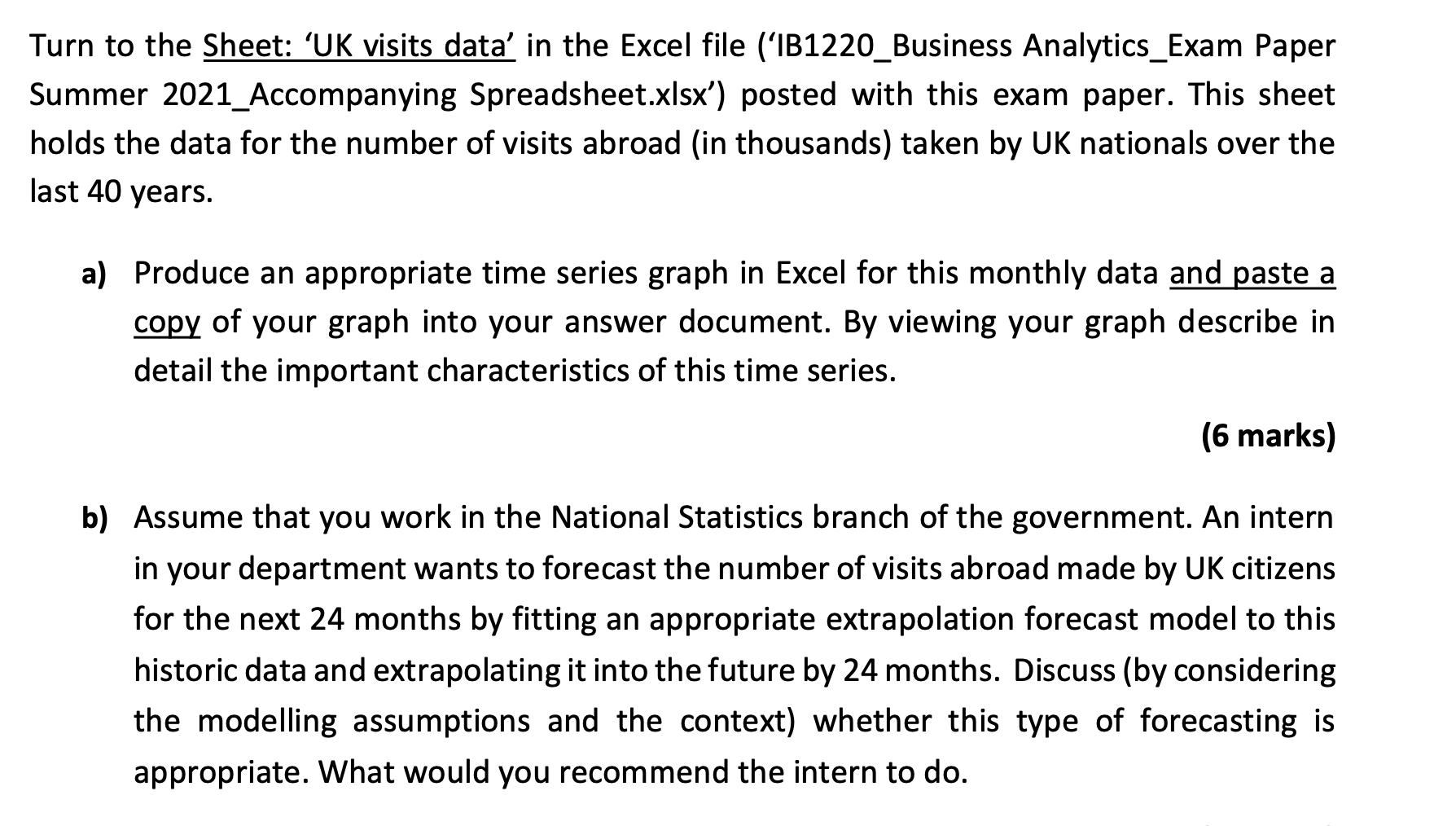
A B C D E F G H 1 Time (year month) Number of UK visits abroad in thousands 1980 JAN 823 W N 1980 FEB 780 1980 MAR 1058 1980 APR 1397 1980 MAY 1438 1980 JUN 1821 1980 JUL 1950 LD CO 1980 AUG 2777 10 1980 SEP 2258 11 1980 OCT 1509 12 1980 NOV 1004 13 1980 DEC 690 14 1981 JAN 833 15 1981 FEB 818 16 1981 MAR 1067 17 1981 APR 1521 18 1981 MAY 1559 19 1981 JUN 1828 20 1981 JUL 2177 21 1981 AUG 3143 22 1981 SEP 2547 23 1981 OCT 1812 24 1981 NOV 1006 25 1981 DEC 737 26 1982 JAN 962 27 1982 FEB 872 28 1982 MAR 1106 29 1982 APR 1671 30 1982 MAY 1524 31 1982 JUN 2261 32 1982 JUL 2247 33 1982 AUG 3268 34 1982 SEP 2741 35 1982 OCT 2018 36 1982 NOV 1087 37 1982 DEC 854 38 1983 JAN 947 39 1983 FEB 875 1983 MAR 1156Turn to the Sheet: 'UK visits data' in the Excel file ('IBlZZO_Business Analytics_Exam Paper Summer 2021_Accompanying Spreadsheetxlsx') posted with this exam paper. This sheet holds the data for the number of visits abroad (in thousands) taken by UK nationals over the last 40 years. a) Produce an appropriate time series graph in Excel for this monthly data and paste a copy of your graph into your answer document. By viewing your graph describe in detail the important characteristics of this time series. (6 marks) b) Assume that you work in the National Statistics branch of the government. An intern in your department wants to forecast the number of visits abroad made by UK citizens for the next 24 months by fitting an appropriate extrapolation forecast model to this historic data and extrapolating it into the future by 24 months. Discuss (by considering the modelling assumptions and the context) whether this type of forecasting is appropriate. What would you recommend the intern to do
Step by Step Solution
There are 3 Steps involved in it

Get step-by-step solutions from verified subject matter experts
 Study Help