







Question: Answer the case study questions (be specific) Case Study 4: Protein-Energy Mr. Williams, a 70-year-old man with long-standing insulin-dependent diabetes mellitus, renal insufficiency, and heart
Answer the case study questions (be specific) 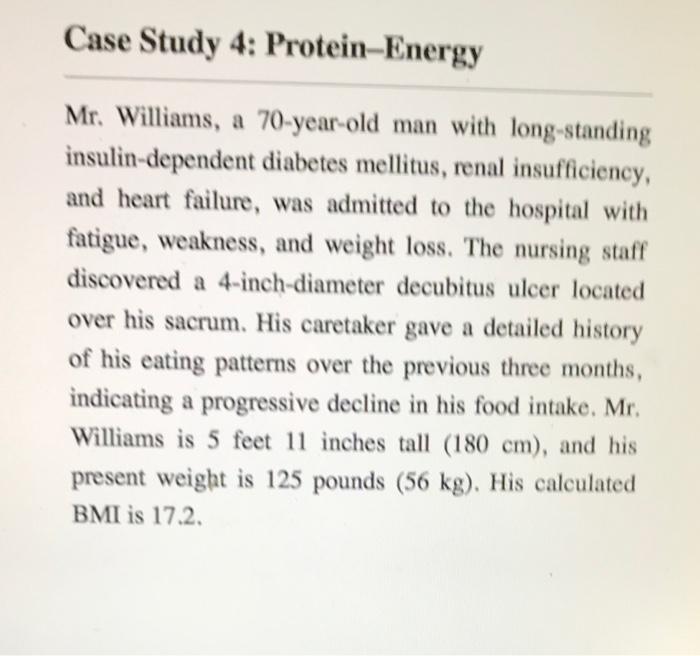
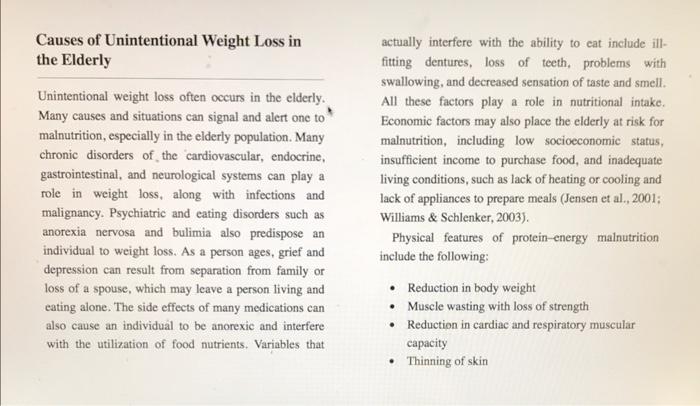
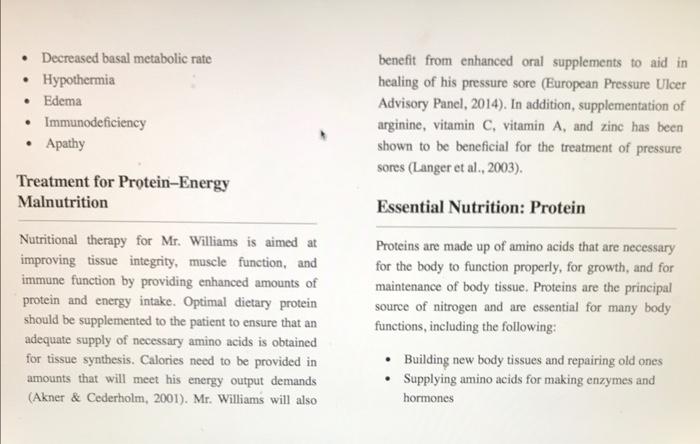
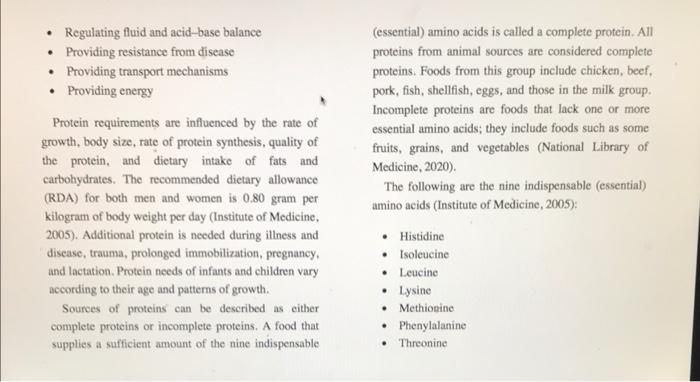
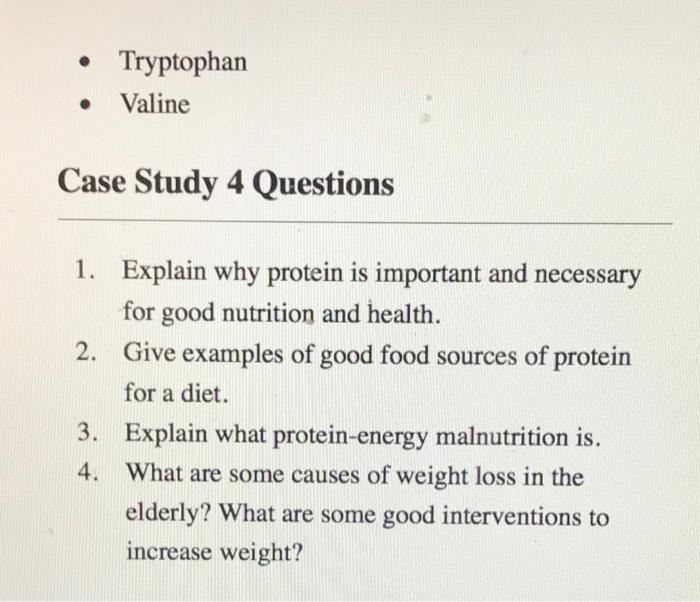
Case Study 4: Protein-Energy Mr. Williams, a 70-year-old man with long-standing insulin-dependent diabetes mellitus, renal insufficiency, and heart failure, was admitted to the hospital with fatigue, weakness, and weight loss. The nursing staff discovered a 4-inch-diameter decubitus ulcer located over his sacrum. His caretaker gave a detailed history of his eating patterns over the previous three months, indicating a progressive decline in his food intake. Mr. Williams is 5 feet 11 inches tall (180 cm), and his present weight is 125 pounds (56 kg). His calculated BMI is 17.2. Causes of Unintentional Weight Loss in the Elderly Unintentional weight loss often occurs in the elderly. Many causes and situations can signal and alert one to malnutrition, especially in the elderly population. Many chronic disorders of the cardiovascular, endocrine, gastrointestinal, and neurological systems can play a role in weight loss, along with infections and malignancy. Psychiatric and eating disorders such as anorexia nervosa and bulimia also predispose an individual to weight loss. As a person ages, grief and depression can result from separation from family or loss of a spouse, which may leave a person living and eating alone. The side effects of many medications can also cause an individual to be anorexic and interfere with the utilization of food nutrients. Variables that actually interfere with the ability to cat include ill- fitting dentures, loss of teeth, problems with swallowing, and decreased sensation of taste and smell. All these factors play a role in nutritional intake. Economic factors may also place the elderly at risk for malnutrition, including low socioeconomic status, insufficient income to purchase food, and inadequate living conditions, such as lack of heating or cooling and lack of appliances to prepare meals (Jensen et al., 2001: Williams & Schlenker, 2003). Physical features of protein-energy malnutrition include the following: Reduction in body weight Muscle wasting with loss of strength Reduction in cardiac and respiratory muscular capacity Thinning of skin Decreased basal metabolic rate Hypothermia Edema Immunodeficiency Apathy Treatment for Protein-Energy Malnutrition benefit from enhanced oral supplements to aid in healing of his pressure sore (European Pressure Ulcer Advisory Panel, 2014). In addition, supplementation of arginine, vitamin C, vitamin A, and zinc has been shown to be beneficial for the treatment of pressure sores (Langer et al., 2003). Essential Nutrition: Protein Nutritional therapy for Mr. Williams is aimed at improving tissue integrity, muscle function, and immune function by providing enhanced amounts of protein and energy intake. Optimal dietary protein should be supplemented to the patient to ensure that an adequate supply of necessary amino acids is obtained for tissue synthesis. Calories need to be provided in amounts that will meet his energy output demands (Akner & Cederholm, 2001). Mr. Williams will also Proteins are made up of amino acids that are necessary for the body to function properly, for growth, and for maintenance of body tissue. Proteins are the principal source of nitrogen and are essential for many body functions, including the following: Building new body tissues and repairing old ones Supplying amino acids for making enzymes and hormones Regulating fluid and acid-base balance Providing resistance from disease Providing transport mechanisms Providing energy Protein requirements are influenced by the rate of growth, body size, rate of protein synthesis, quality of the protein, and dietary intake of fats and carbohydrates. The recommended dietary allowance (RDA) for both men and women is 0.80 gram per kilogram of body weight per day (Institute of Medicine, 2005). Additional protein is needed during illness and disease, trauma, prolonged immobilization, pregnancy, and lactation. Protein needs of infants and children vary according to their age and patterns of growth. Sources of proteins can be described as either complete proteins or incomplete proteins. A food that supplies a sufficient amount of the nine indispensable (essential) amino acids is called a complete protein. All proteins from animal sources are considered complete proteins. Foods from this group include chicken, beef, pork, fish, shellfish, eggs, and those in the milk group. Incomplete proteins are foods that lack one or more essential amino acids, they include foods such as some fruits, grains, and vegetables (National Library of Medicine, 2020). The following are the nine indispensable (essential) amino acids (Institute of Medicine, 2005): . Histidine Isoleucine Leucine Lysine Methionine Phenylalanine Threonine Tryptophan Valine Case Study 4 Questions 1. Explain why protein is important and necessary for good nutrition and health. 2. Give examples of good food sources of protein for a diet. 3. Explain what protein-energy malnutrition is. 4. What are some causes of weight loss in the elderly? What are some good interventions to increase weight
Step by Step Solution
There are 3 Steps involved in it
1 Expert Approved Answer
Step: 1 Unlock

Question Has Been Solved by an Expert!
Get step-by-step solutions from verified subject matter experts
Step: 2 Unlock
Step: 3 Unlock
 Study Help