







Question: summary for this article :key theme, major findings, and key implications Harvard Business Review REPRINT R1703G PUBLISHED IN HBR MAY-JUNE 2017 ARTICLE INNOVATION The Problem
summary for this article :key theme, major findings, and key implications


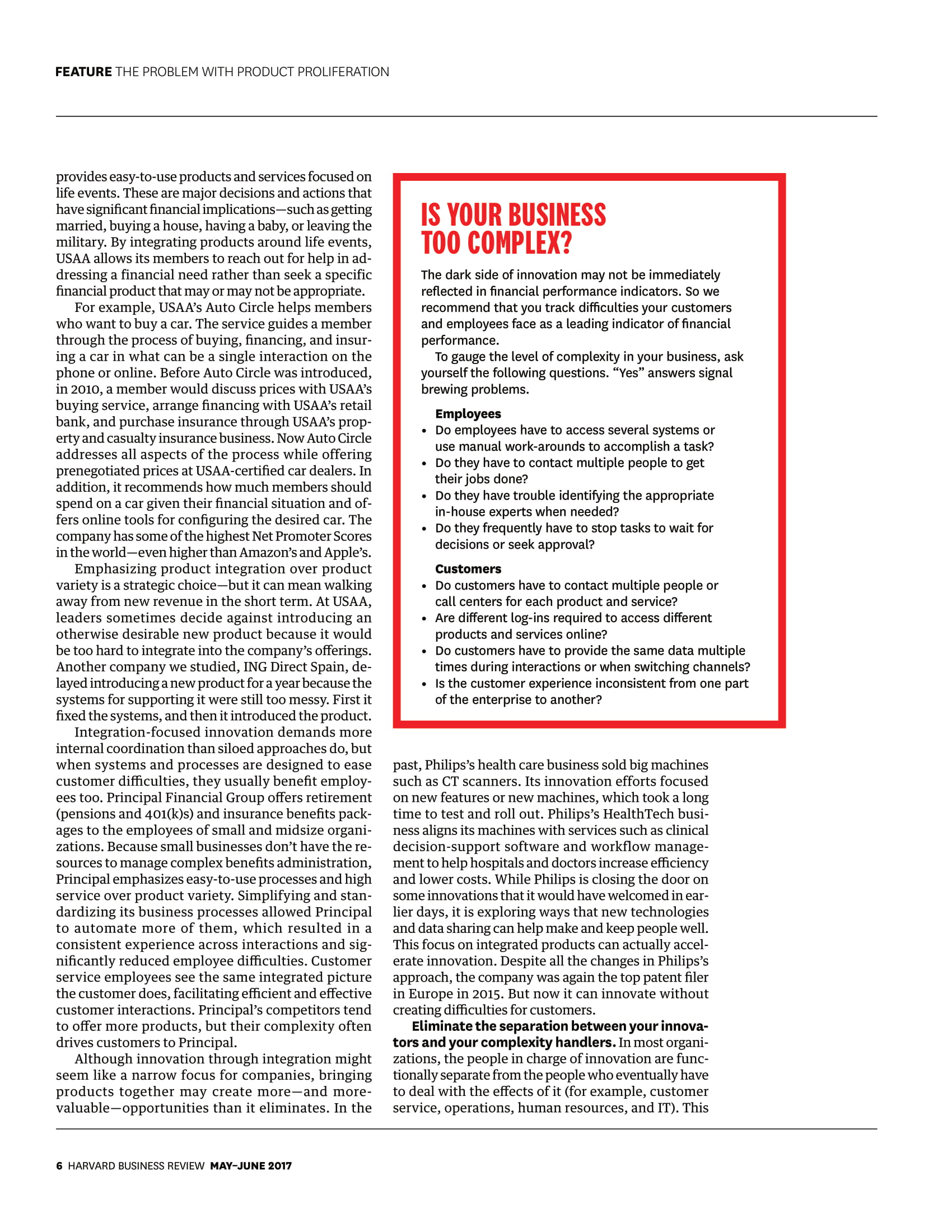
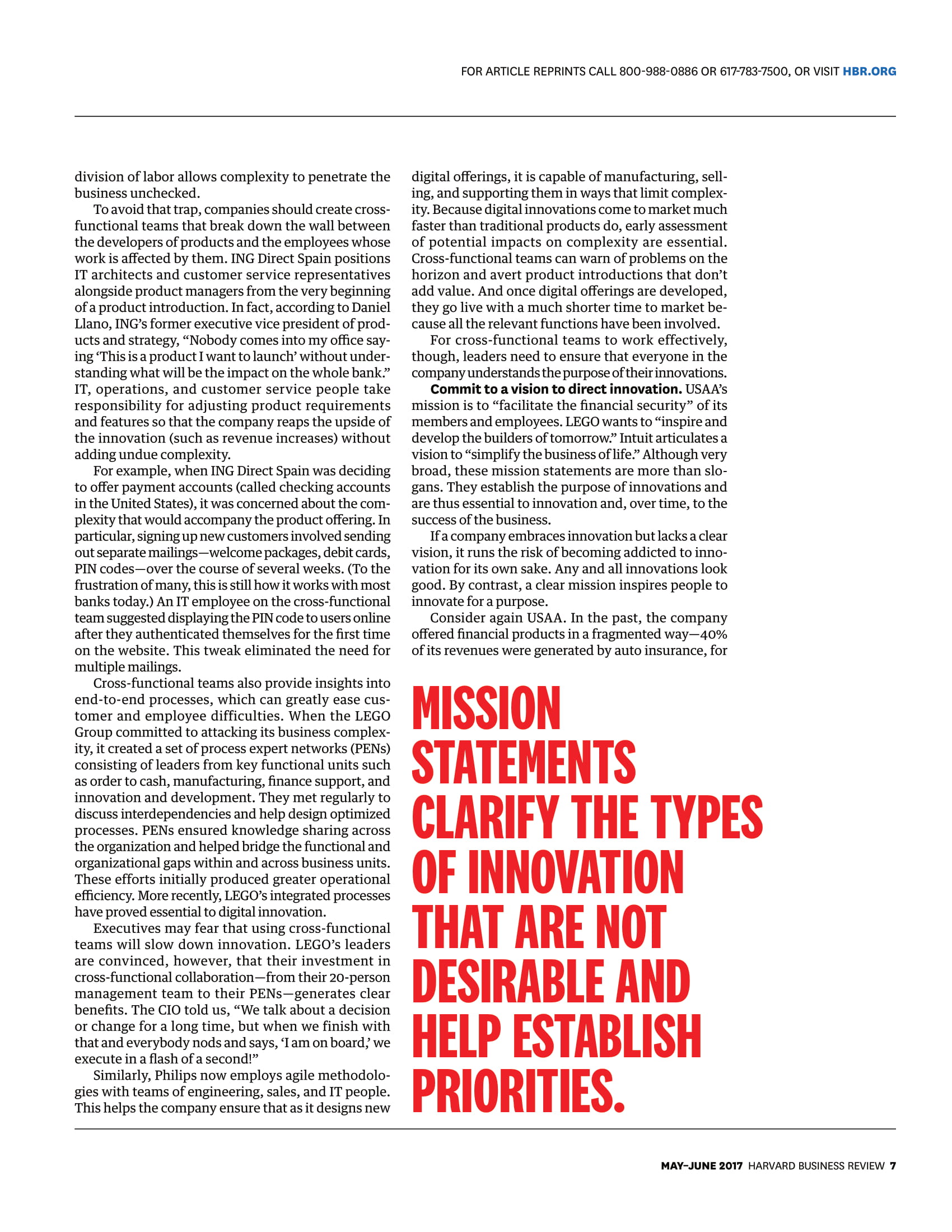
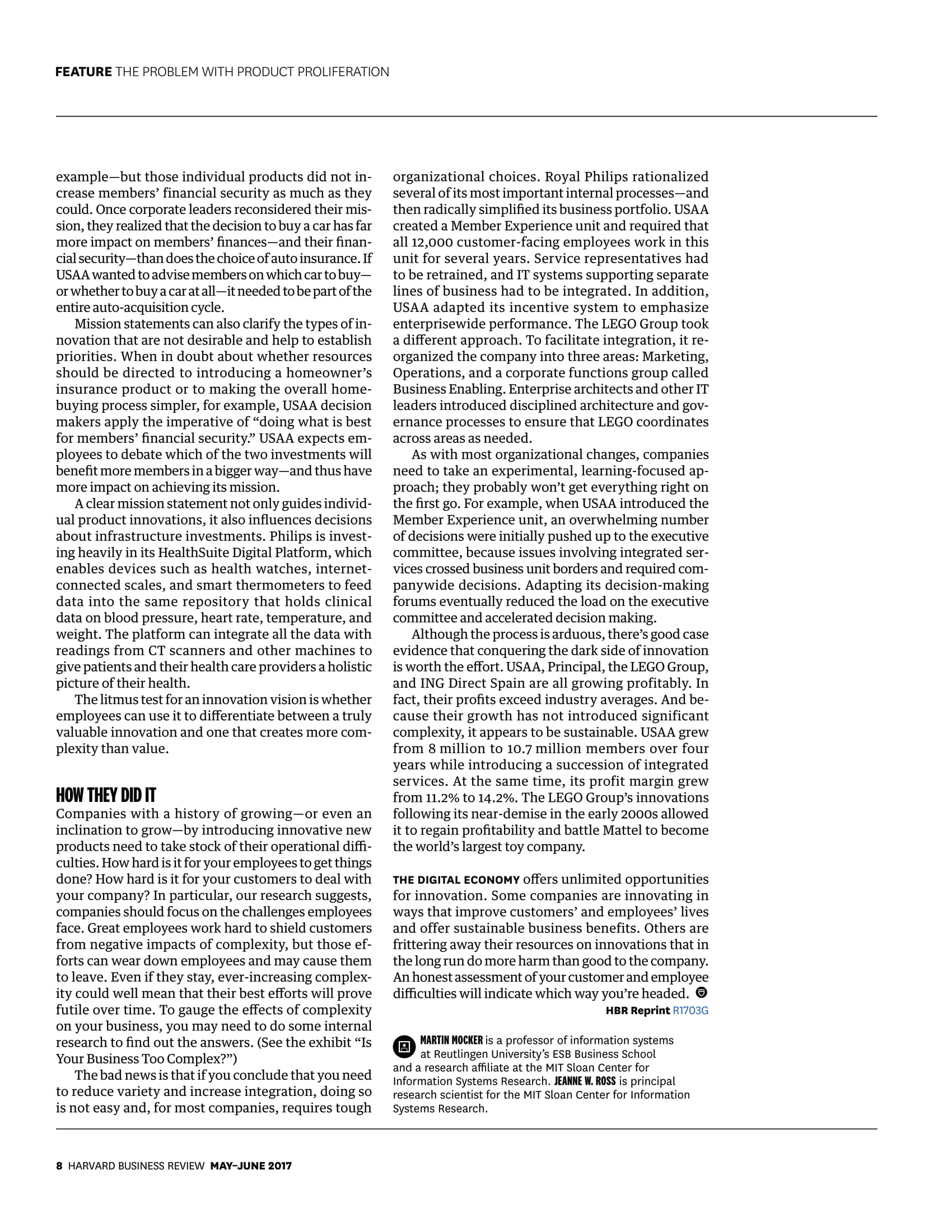
Harvard Business Review REPRINT R1703G PUBLISHED IN HBR MAY-JUNE 2017 ARTICLE INNOVATION The Problem with Product Proliferation Unmanaged innovation leads to excessive operational complexity. What's needed is product integration. by Martin Mocker and Jeanne W. RossUN SALE: FEATURE THE PROBLEM WITH PRODUCT PROLIFERATION CHECK OUT THE LATEST RADAR DETECTOR Bus BU WATCH FOR WORLDWIDE USE obra S,Cobra LASER SCRAMBLER RADAR LASER DETECTOR Bushnell Bushnell TOU DEGREE LASER DETECTIN Vivitar LASER FOR WORLDWIDE USE DOBinceum RANGE FINDERS AT LOW PRICE ON SALE Bu Bushnell SPORTS Vivitar Bushnell BINOCULARS HELMET 5X30 VIDEO CAMERA 19 99 ON SPECIAL! TAKE A LOOOK AT THE LATEST PRODUCT INNOVATIONS ECTACO STRAVL Cybertec SMALLEST MOBILE NEW Optoma PROJECTOR SUNGLASSES HIGH DEFINITION LIFESTYLE ON SALE CAMERA, MP3 PLAYER POCKET PROJECTOR ON SPECIAL Fredart M U Final C ON SPECIAL ! ALL LENSES FOR SLR CAMERAS Canon Eos 10 Mark TV Nikon SONY ON SPECIAL 03s Bloggie ND TOUCH VIDEO CAMERA INST IN STOCK IN STOCK WE HAVE FULL LIN CAMERAS AC G-SHOCK G-SI WAT ON! KEEP THE EYES ar Farteder ON WHAT YOU CARE WITH SECURITY DEVICES DIGITAL VIDEO RECORDERS ON SPECIAL ON SPECIAL 899 $ 12999 FOR YOU SLR CAMERA BOWE160% WATERPROOF Bushnell TICLE REPRINTS CALL 800-986-0886 OR 617-783-7500, OR VISIT HER.ORG WATER PROOF BINOCULARS O ON SPECIAL MP3 PLAYER MP3 PLA SE HABLA ESPANOL iPOD ON 10x Canon THE PROBLEM B IMAGE STABILIZER BINOCULARS 00 ALL WEATHER SALE ON SPECIAL! WITH PRODUCT EXPLORE THE WORLD WITH NEW EYES OLYMPUS PROLIFERATION WATER PROOF STYLUS TOUGH ON SALE UNMANAGED INNOVATION LEADS EXPLORE TO EXCESSIVE OPERATIONAL COMPLEXITY. OLYMPUS CAMERA MASK WHAT'S NEEDED IS PRODUCT INTEGRATION. BY MARTIN MOCKER AND JEANNE W. ROSS PROFFESIONA + TAL PHOTOGRAPHY ENTERS NY $2999 SONY INTRODUCING THE WORLD'S ONLY WHOLE NEW DIMENSION UNDERWATER FUJIFILM Canon CAMERA MASK ON SALE FUJIFILM 32 DIGITAL CAMERA IN STOCK Canon BON 10.0 MEGAPIXELS DU IMAGINATION IN SPECIAL SONY ISTIME.COM AS LOW AS $10099 SONY CYBER-SHOT TONY $119 99 Vivitar DIGITAL CAMERA SONY $5099 MAY TUNE 2017 HARVARD BUSINESS REVIEW 3FEATURE THE PROBLEM WITH PRODUCT PROLIFERATION Royal Philips, the Netherlands' most valuable brand, has long been a leader in product innovation. But in the rst 10 years of the new millennium, the com pany's revenue plunged 40%, prots for the decade were wiped out, and its market capitalization fell signicantly. What went wrong? The problem, it turned out, was excessive inno- vation. In the early 20005, executives expanded the company's product portfolio, through inhouse de velopment and acquisitions, to encompass an ex traordinary array of new products and services. In 2003, Philips was the top patent ler in Europe and among the top 10 in the United States. Innovations included energyeicient light bulbs, medical scan ners, webenabled cameras, chipsets for incar enter tainment systems, software offerings, and product related services. By 2011, Philips was active in more than 60 product categories. But because Philips had allowed business leaders in various product lines and geographies to design stand alone systems to support their products and custom- ers, business complexityin supply chain, sales and marketing, product development, and administrative processesincreased signicantly, leading to much higher expenses. Complexity also led, not surpris- ingly, to greater customer and employee difficulties. For example, health care customers buying medical scanners and related software and services had to work with multiple account managers and received 4 HARVARD BUSINESS REVIEW MAY-JUNE 2017 multiple invoices. Employees struggled to navigate the more than 10,000 IT applications, including 60 enterprise resource planning systems, that had sprung up. With customer data spread across all of them, it was nearly impossible for frontline employ- ees to get a view of a customer's needs or to provide a consistent level of service. Welcome to the dark side of innovation. Every time customers have to enter the same data twice, have inconsistent experiences when interacting with different parts of the business, or are forced to contact multiple people to get something done, it hurts the company. Every time employees can't access import- ant customer information or have to wait for decisions and approvals by multiple people in multiple depart- ments, it hurts the company. It can even destroy a business, as almost happened with Royal Philips. Customers and frontline employees are well aware of the problems that product variety can intro duce. Leaders, however, tend to focus exclusively on the potential benets. The top team at one large nan- cial services company we studied admitted to being \"addicted to innovation.\" Even when executives rec- ognize that some of their innovations generate little value and that their company has become difcult to do business with, they don't see the connection. The desire to be first to market with a new productor to quickly replicate a competitor's offeringblinds companies to the potential downside of adding to the product portfolio. Most companies do assess the po- tential for cannibalization of other products, but few consider the costs of added complexity. To examine this problem, we surveyed 255 senior executives and studied seven companies in depth through interviews with 72 executives. (The com- panies were DHL Express, IBM, ING Direct Spain, the LEGO Group, Principal Financial Group, Royal Philips, and USAA.) We found that on average, prod uct variety is not correlated with company protabil- itybut it is correlated with customer and employee difculties. The bottom line: The more potentially value-generating innovations you add to your com- pany's product portfolio, the more valuedestroying complexity you are likely to embed in your business. We o'er three guidelines for addressing this prob- lem: Focus on product integration rather than pro- liferation. Make sure that product developers are in close touch with customer-facing and operational employees. And dene your purpose in a way that will guide decision making. FACING TNE DIIIIN SIDE OF INNOVATION When Philips set out to address the problems that unmanaged innovation had created, it soon realized it needed to transform both its operations and its portfolio of businesses. In 20H, as part of an ongoing business transformation program, the company began INE PIIIIBlEN Companies create problems for customers and employees when product innovation goes unmanaged. Eventually, excessive operational complexity hurts the bottom line. TNIIEE SOLUTIONS Focus on product integration, not product proliferation. Make sure your product developers work closely with customer facing and operational employees. And settle on a high-level purpose that can guide decision making. FOR ARTICLE REPRINTS CALL 800-988-0886 OR 617-783-7500. OR VISIT HBR.0RG building a \"greenfield\" platform of globally stan- dardized systems and processes that spanned three areas: from idea to market (all processes relating to innovation), from market to order (processes related to marketing and sales), and from order to cash (those related to nance and back-ofce illlment). The goal of the platform was to significantly re- duce employee and customer difculties, but Philips management realized that with the current portfolio of products it would take years to implement. So the company also reduced product varietydramatically. In 2000, it was doing business in six areas: ghting, consumer electronics, domestic appliances and per- sonal care, components, semiconductors, and med ical systems. The company gradually sold off low- margin businesses until it was down to just two units: HealthTech (health care and consumer lifestyle) and Lighting. In 2016, Philips sold off its lighting business so that it could focus exclusively on its HealthTech business. To be sure, the decision to focus on only one business sector was not motivated solely by the difculties that operational complexity presented but that was one of the biggest factors, according to executives we spoke with. Philips's transformation achieved its midterm goal or\" increasing EBITA margins to more than 10%, and its share price has doubled since 2011. But its journey to reduce complexitylike that of many companies has been long and painful. You don't have to be as diversified as Philips to experience the dark side of innovation. In the 19905, the LEGO Group reacted to the expiration of the pat ent on its iconic brickand the growing popularity of computer gameswith an all-out effort to innovate. The company doubled the number of unique bricks to more than 12,000 from 1997 to 2004. It also moved into new areas, such as computer games, children's clothing, and theme parks. As product variety grew, complexity crept into LEGO's operational processes. Customers and employees began to struggle with a lack of transparency in its supply chain. LEGO's popular sets began to experience out-ofstock issues, sometimes because just one brick in a set of more than 500 was not avaable. Retailers were frustrated by the company's inability to respond to a shortage in one country by moving excess inventory from another country. In 2004, LEGO found itself on the brink of bankruptcy. Like Philips, the LEGO Group addressed its value destroying complexity by initiating a major business transformation. Starting in 2004, it sold off theme parks and standardized its global supply chain and product-life-cycle management processes. It also reduced the number of unique bricks, although it continued to innovate around the way bricks were combined into sets. These efforts have paid off in protability and growth. And they have made LEGO easier for customers and employees to deal with. FIXIIO THE PROBLEM The prescription for managing valuedestroying complexity is not to stop innovating. Innovation is essential to growth and enables companies to re- spond to shifts in technology and market conditions. Advances in digital technologies, in particular, offer opportunities to enhance products with information and to personalize customer interactions. Companies that fail to embrace these technologies will surely sacrice competitiveness. ENPHASIZING INTEGRATION OVER VARIETY IS A STRATEGIC CHOICE- BUT IT CAN MEAN WALKING AWAY FROM NEW REVENUE IN THE SHORT TERM. But to ensure that innovations do more good than harm, companies must minimize customer and employee difficulties. We have found that success ful innovators follow three principles to help them recover fromor avoid altogetherthe downside of innovation. Focus on integration, not variety. Our research shows that product integration, unlike product vari- ety, is related to better performance and does not cre- ate challenges for customers and employees. There are many ways to integrate products: Cross-selling and bundling are obvious options. Companies can also integrate by enriching products with information and offering services that help solve customers' problems. We found that efforts to provide integrated customer service had the potential to limit complexity. USAA, a financial services company supporting members of the U.S. military and their families, MAY-JUNE 2017 HARVARD BUSINESS REVIEW 5 FEATURE THE PROBLEM WITH PRODUCT PROLIFERATION provides easy-to-use products and services focused on life events. These are major decisions and actions that have signicant nancial implicationssuch as getting married, buying a house, having a baby, or leaving the military. By integrating products around life events, USAA allows its members to reach out for help in ad- dressing a financial need rather than seek a specic nancial product that may or may not be appropriate. For example, USAA's Auto Circle helps members who want to buy a car. The service guides a member through the process of buying, nancing, and insur- ing a car in what can be a single interaction on the phone or online. Before Auto Circle was introduced, in 2010, a member would discuss prices with USAA's buying service, arrange nancing with USAA's retail bank, and purchase insurance through USAA's prop- erty and casualtyinsurance business. Now Auto Circle addresses all aspects of the process while offering prenegotiated prices at USAAcertied car dealers. In addition, it recommends how much members should spend on a car given their nancial situation and of- fers online tools for conguring the desired car. The company has some of the highest Net Promoter Scores in the world-even higher than Amazon's and Apple's. Emphasizing product integration over product variety is a strategic choicebut it can mean walking away from new revenue in the short term. At USAA, leaders sometimes decide against introducing an otherwise desirable new product because it would be too hard to integrate into the company's offerings. Another company we studied, ING Direct Spain, de layed introducing a new product for a year because the systems for supporting it were still too messy. First it xed the systems, and then it introduced the product. Integration-focused innovation demands more internal coordination than siloed approaches do, but when systems and processes are designed to ease customer difculties, they usually benet employ- ees too. Principal Financial Group offers retirement (pensions and 401(k)s) and insurance benets pack- ages to the employees of small and midsize organi- zations. Because small businesses don't have the re- sources to manage complex benets administration, Principal emphasizes easy~to~use processes and high service over product variety. Simplifying and stan- dardizing its business processes allowed Principal to automate more of them, which resulted in a consistent experience across interactions and sig- nicantly reduced employee difculties. Customer service employees see the same integrated picture the customer does, facilitating efcient and effective customer interactions. Principal's competitors tend to offer more products, but their complexity often drives customers to Principal. Although innovation through integration might seem like a narrow focus for companies, bringing products together may create moreand more- valuableopportunities than it eliminates. In the 6 HARVARD BUSINESS REVIEW MAY-JUNE 2017 IS YOUR BUSINESS T00 COMPLEX? The dark side of innovation may not be immediately reected in nancial performance indicators. So we recommend that you track difficulties your customers and employees face as a leading indicator of nancial performance. To gauge the level of complexity in your business, ask yourself the following questions. \"Yes" answers signal brewing problems. Employees Do employees have to access several systems or use manual work-arounds to accomplish a task? 00 they have to contact multiple people to get theirjobs done? Do they have trouble identifying the appropriate in-house experts when needed? Do they frequently have to stop tasks to wait for decisions or seek approval? Customers Do customers have to contact multiple people or call centers for each product and service? Are different log-ins required to access different products and services online? Do customers have to provide the same data multiple times during interactions or when switching channels? Is the customer experience inconsistent from one part of the enterprise to another! past, Philips's health care business sold big machines such as CT scanners. Its innovation efforts focused on new features or new machines, which took a long time to test and roll out. Philips's HealthTech busi- ness aligns its machines with services such as clinical decision-support software and workow manage- ment to help hospitals and doctors increase eiciency and lower costs. While Philips is closing the door on some innovations that it would have welcomed in ear- lier days, it is exploring ways that new technologies and data sharing can help make and keep people well. This focus on integrated products can actually accel- erate innovation. Despite all the changes in Philips's approach, the company was again the top patent ler in Europe in 2015. But now it can innovate without creating difculties for customers. Eliminate the separation between your innova- tors and your complexity handlers. In most organi- zations, the people in charge of innovation are func- tionally separate from the people who eventually have to deal with the effects of it (for example, customer service, operations, human resources, and IT). This FOR ARTICLE REPRINTS CALL 800-988-0886 OR 617-783-7500. OR VISIT HBR.0RG division of labor allows complexity to penetrate the business unchecked. To avoid that trap, companies should create cross- functional teams that break down the wall between the developers of products and the employees whose work is affected by them. ING Direct Spain positions IT architects and customer service representatives alongSide product managers from the very beginning of a product introduction. In fact, according to Daniel Llano, ING's former executive vice president of prod- ucts and strategy, \"Nobody comes into my o'rce say- ing 'This is a product I want to launch' without under- standing what will be the impact on the whole bank.\" IT, operations, and customer service people take responsibility for adjusting product requirements and features so that the company reaps the upside of the innovation (such as revenue increases) without adding undue complexity. For example, when ING Direct Spain was deciding to offer payment accounts (called checking accounts in the United States), it was concerned about the com- plexity that would accompany the product offering. In particular, signing up new customers involved sending out separate mailingswelcome packages, debit cards, PIN codesover the course of several weeks. (To the frustration of many, this is still how it works with most banks today.) An 1T employee on the crossmcn'onal team suggested displaying the PIN code to users online after they authenticated themselves for the rst time on the website. This tweak eliminated the need for multiple mailings. Crossfunctional teams also provide insights into end-to-end processes, which can greatly ease cus- tomer and employee difficulties. When the LEGO Group committed to attacking its business complex- ity, it created a set of process expert networks (PENs) consisting of leaders from key functional units such as order to cash, manufacturing, nance support, and innovation and development. They met regularly to discuss interdependencies and help design optimized processes. PENs ensured knowledge sharing across the organization and helped bridge the functional and organizational gaps within and across business units. These efforts initially produced greater operational efciency. More recently, LEGO's integrated processes have proved essential to digital innovation. Executives may fear that using cross-functional teams will slow down innovation. LEGO's leaders are convinced, however, that their investment in cross-functional collaborationfrom their 20-person management team to their PENsgenerates clear benets. The 610 told us, \"We talk about a decision or change for a long time, but when we nish with that and everybody nods and says, 'I am on board: we execute in a ash of a secondl\" Similarly, Philips now employs agile methodolo- gies with teams of engineering, sales, and IT people. This helps the company ensure that as it designs new digital offerings, it is capable of manufacturing, sell- ing, and supporting them in ways that limit complex ity. Because digital innovations come to market much faster than traditional products do, early assessment of potential impacts on complexity are essential. Cross-functional teams can warn of problems on the horizon and avert product introductions that don't add value. And once digital offerings are developed, they go live with a much shorter time to market be cause all the relevant functions have been involved. For cross-functional teams to work effectively, though, leaders need to ensure that everyone in the company understands the purpose of their innovations. Commit to avision to direct innovation. USAA's mission is to \"facilitate the nancial security\" of its members and employees. LEGO wants to \"inspire and develop the builders of tomorrow.\" Intuit articulates a vision to \"simplify the business of life.\" Although very broad, these mission statements are more than 510 gans. They establish the purpose of innovations and are thus essential to innovation and, over time, to the success of the business. Ifa company embraces innovation but lacks a clear vision, it runs the risk of becoming addicted to inno- vation for its own sake. Any and all innovations look good. By contrast, a clear mission inspires people to innovate for a purpose. Consider again USAA. In the past, the company offered nancial products in a fragmented way40% of its revenues were generated by auto insurance, for MISSION STATEMENTS OLARIFY THE TYPES OF INNOVATION THAT ARE NOT DESIRABLE AND HELP ESTABLISH PRIORITIES. MAY-JUNE 2M7 HARVARD BUSINESS REVIEW 7 FEATURE THE PROBLEM WITH PRODUCT PROLIFERATION examplebut those individual products did not in- crease members' financial security as much as they could. Once corporate leaders reconsidered their mis- sion, they realized that the decision to buy a car has far more impact on members' nancesand their nan- cial securitythan does the choice of auto insurance. If USAA wanted to advise members on which car to buy or whether to buy a car at allit needed to be part of the entire auto-acquisition cycle. Mission statements can also clarify the types of in- novation that are not desirable and help to establish priorities. When in doubt about whether resources should be directed to introducing a homeowner's insurance product or to making the overall home buying process simpler, for example, USAA decision makers apply the imperative of \"doing what is best for members' nancial security.\" USAA expects em- ployees to debate which of the two investments will benet more members in a bigger way and thus have more impact on achieving its mission. A clear mission statement not only guides individ- ual product innovations, it also inuences decisions about infrastructure investments. Philips is invest- ing heavily in its HealthSuite Digital Platform, which enables devices such as health watches, intemet connected scales, and smart thermometers to feed data into the same repository that holds clinical data on blood pressure, heart rate, temperature, and weight. The platform can integrate all the data with readings from CT scanners and other machines to give patients and their health care providers a holistic picture of their health. The litmus test for an innovation vision is whether employees can use it to differentiate between a truly valuable innovation and one that creates more com- plexity than value. HOW THE DID IT Companies with a history of growingor even an inclination to growby introducing innovative new products need to take stock of their operational dif- culties. How hard is it for your employees to get things done? How hard is it for your customers to deal with your company? In particular, our research suggests, companies should focus on the challenges employees face. Great employees work hard to shield customers from negative impacts of complexity, but those ef- forts can wear down employees and may cause them to leave. Even if they stay, ever-increasing complex- ity could well mean that their best eEorts will prove futile over time. To gauge the eects of complexity on your business, you may need to do some internal research to find out the answers. (See the exhibit \"Is Your Business Too Complex?") The bad news is that if you conclude that you need to reduce variety and increase integration, doing so is not easy and, for most companies, requires tough I! HARVARD BUSINESS REVIEW MAY-JUNE 2017 organizational choices. Royal Philips rationalized several of its most important internal processesand then radically simplied its business portfolio. USAA created a Member Experience unit and required that all 12,000 customer-facing employees work in this unit for several years. Service representatives had to be retrained, and IT systems supporting separate lines of business had to be integrated. In addition, USAA adapted its incentive system to emphasize enterprisewide performance. The LEGO Group took a different approach. To facilitate integration, it re- organized the company into three areas: Marketing, Operations, and a corporate functions group called Business Enabling. Enterprise architects and other IT leaders introduced disciplined architecture and gov- ernance processes to ensure that LEGO coordinates across areas as needed. As with most organizational changes, companies need to take an experimental, learningfocused ap proach; they probably won't get everything right on the rst go. For example, when USAA introduced the Member Experience unit, an overwhelming number of decisions were initially pushed up to the executive committee, because issues involving integrated ser- vices crossed business unit borders and required com panywide decisions. Adapting its decisionmaking forums eventually reduced the load on the executive committee and accelerated decision making. Although the process is arduous, there's good case evidence that conquering the dark side of innovation is worth the effort. USAA, Principal, the LEGO Group, and ING Direct Spain are all growing profitably. In fact, their prots exceed industry averages. And be- cause their growth has not introduced significant complexity, it appears to be sustainable. USAA grew from 8 million to 10.7 million members over four years while introducing a succession of integrated services. At the same time, its profit margin grew from 11.2% to 14.2%. The LEGO Group's innovations following its near-demise in the early 20005 allowed it to regain protability and battle Mattel to become the world's largest toy company. THE DIGITAL econom offers unlimited opportunities for innovation. Some companies are innovating in ways that improve customers' and employees' lives and offer sustainable business benefits. Others are frittering away their resources on innovations that in the long run do more harm than good to the company. An honest assessment of your customer and employee difculties will indicate which way you're headed. 6 HBR Reprint RIVOSG E IIIIIIII IIIBIIEII is a professor of information systems at Reutllngen University's ESB Business School and a research afliate at the MIT Sloan Center for Information Systems Research. IEIIIIII moss is principal research scientist for the MIT Sloan Center for Information systems Research
Step by Step Solution
There are 3 Steps involved in it

Get step-by-step solutions from verified subject matter experts
 Study Help