







Question: Problem - 2 ( Water - gas shift reactor unit of a NG reforming process - mole balance, extent of the reaction at equilibrium and
Problem Watergas shift reactor unit of a NG reforming process mole balance, extent of the reaction at equilibrium and equilibrium conversion calculation
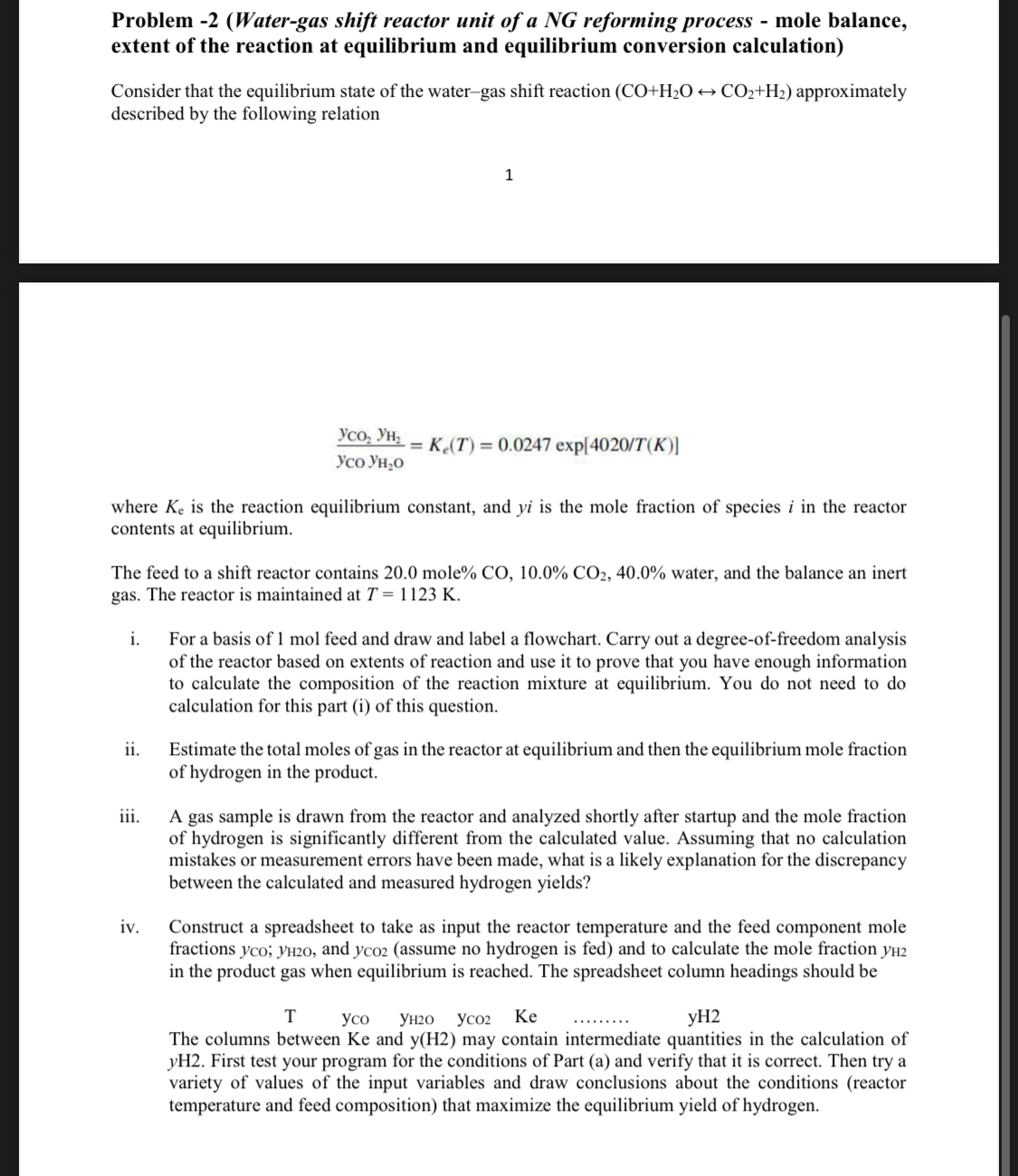
Consider that the equilibrium state of the watergas shift reaction approximately described by the following relation
exp
where is the reaction equilibrium constant, and is the mole fraction of species in the reactor contents at equilibrium.
The feed to a shift reactor contains mole water, and the balance an inert gas. The reactor is maintained at
i For a basis of mol feed and draw and label a flowchart. Carry out a degreeoffreedom analysis of the reactor based on extents of reaction and use it to prove that you have enough information to calculate the composition of the reaction mixture at equilibrium. You do not need to do calculation for this part i of this question.
ii Estimate the total moles of gas in the reactor at equilibrium and then the equilibrium mole fraction of hydrogen in the product.
iii. A gas sample is drawn from the reactor and analyzed shortly after startup and the mole fraction of hydrogen is significantly different from the calculated value. Assuming that no calculation mistakes or measurement errors have been made, what is a likely explanation for the discrepancy between the calculated and measured hydrogen yields?
iv Construct a spreadsheet to take as input the reactor temperature and the feed component mole fractions ; and assume no hydrogen is fed and to calculate the mole fraction in the product gas when equilibrium is reached. The spreadsheet column headings should be
The columns between and may contain intermediate quantities in the calculation of First test your program for the conditions of Part a and verify that it is correct. Then try a variety of values of the input variables and draw conclusions about the conditions reactor temperature and feed composition that maximize the equilibrium yield of hydrogen.
Step by Step Solution
There are 3 Steps involved in it
1 Expert Approved Answer
Step: 1 Unlock

Question Has Been Solved by an Expert!
Get step-by-step solutions from verified subject matter experts
Step: 2 Unlock
Step: 3 Unlock
 Study Help