







Question: Questions based on the Reading -Atoms - The Building Block of Matter Part A Use the following words to fill in the blanks. (12 marks)
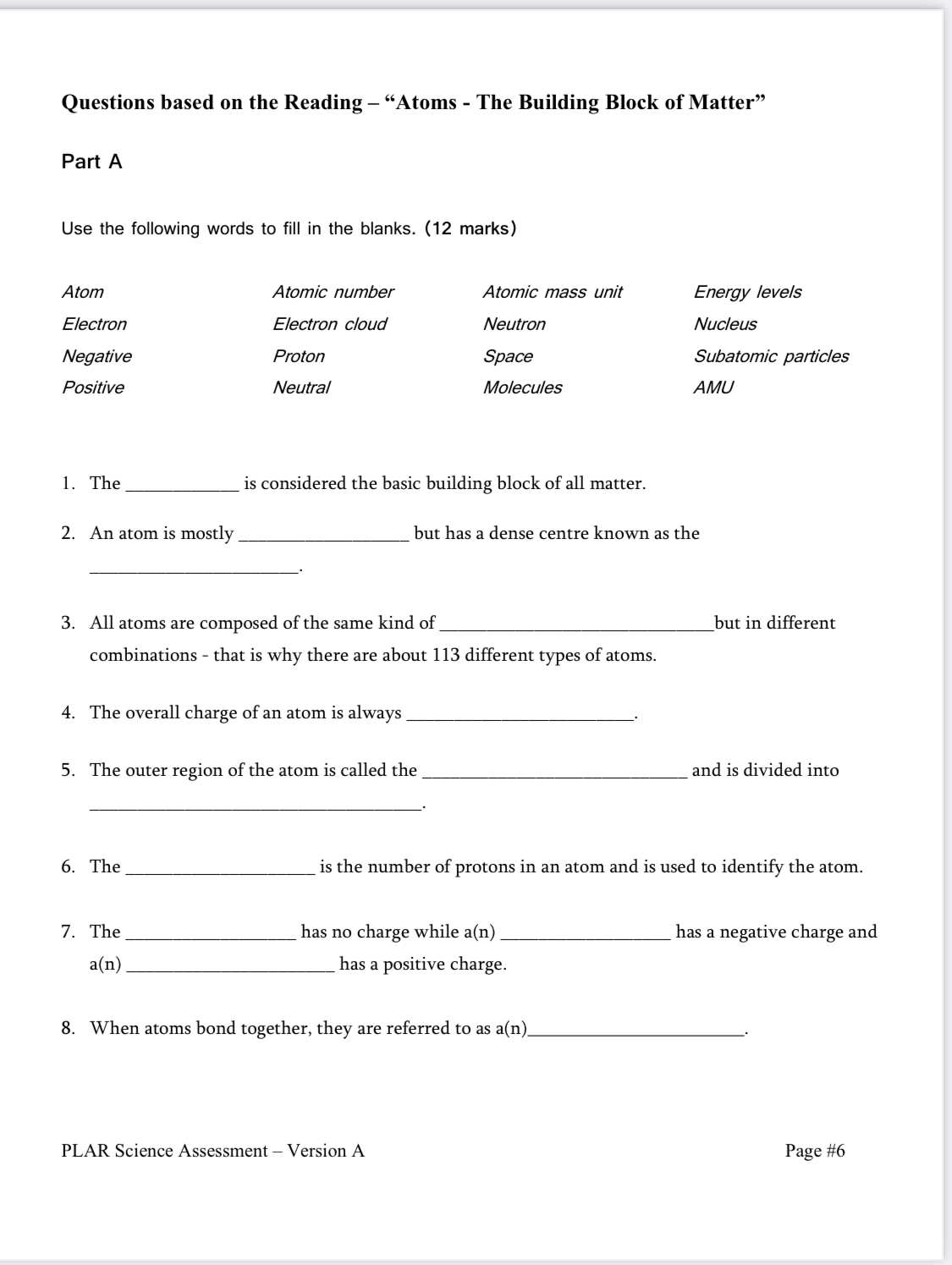
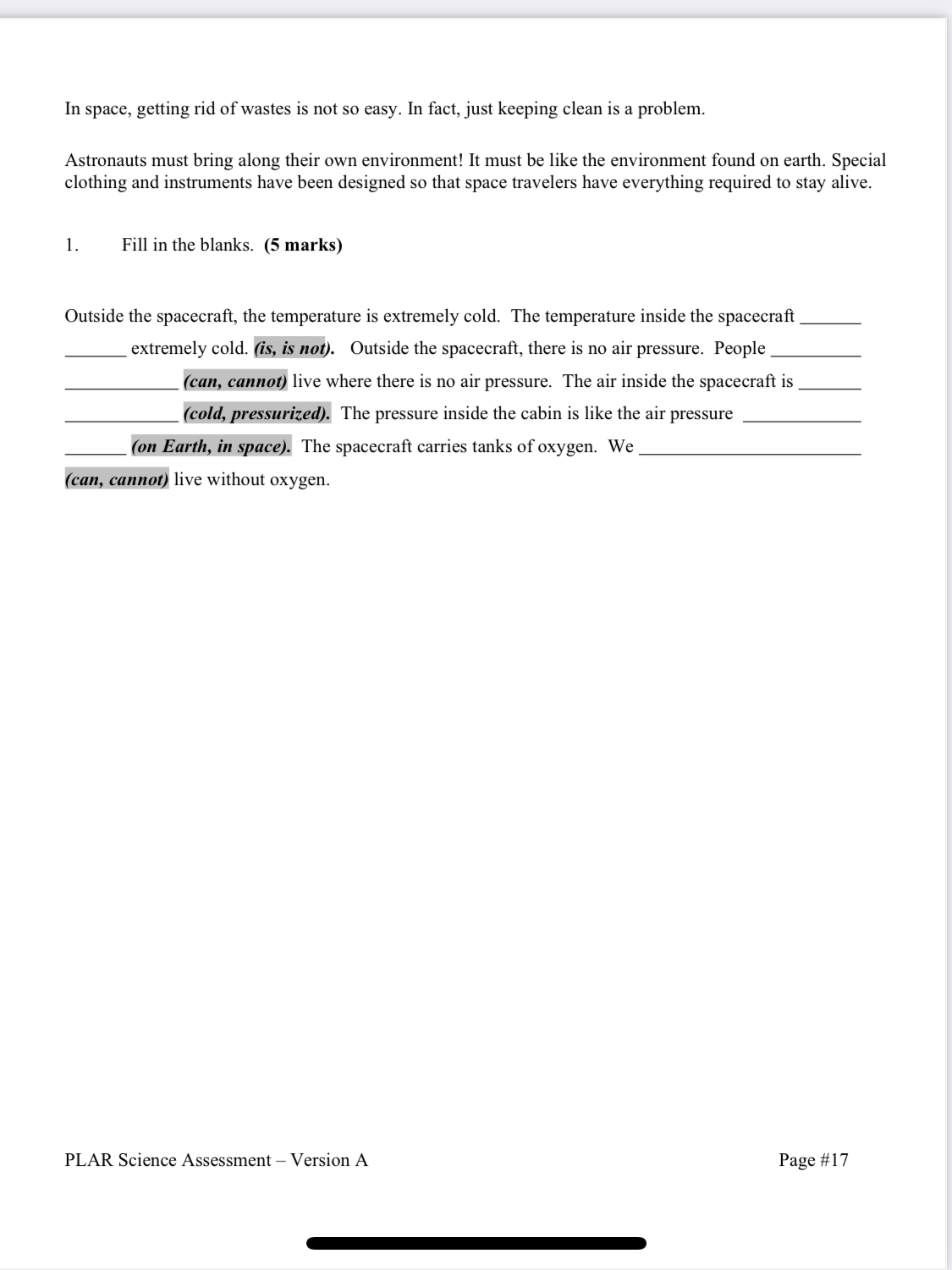
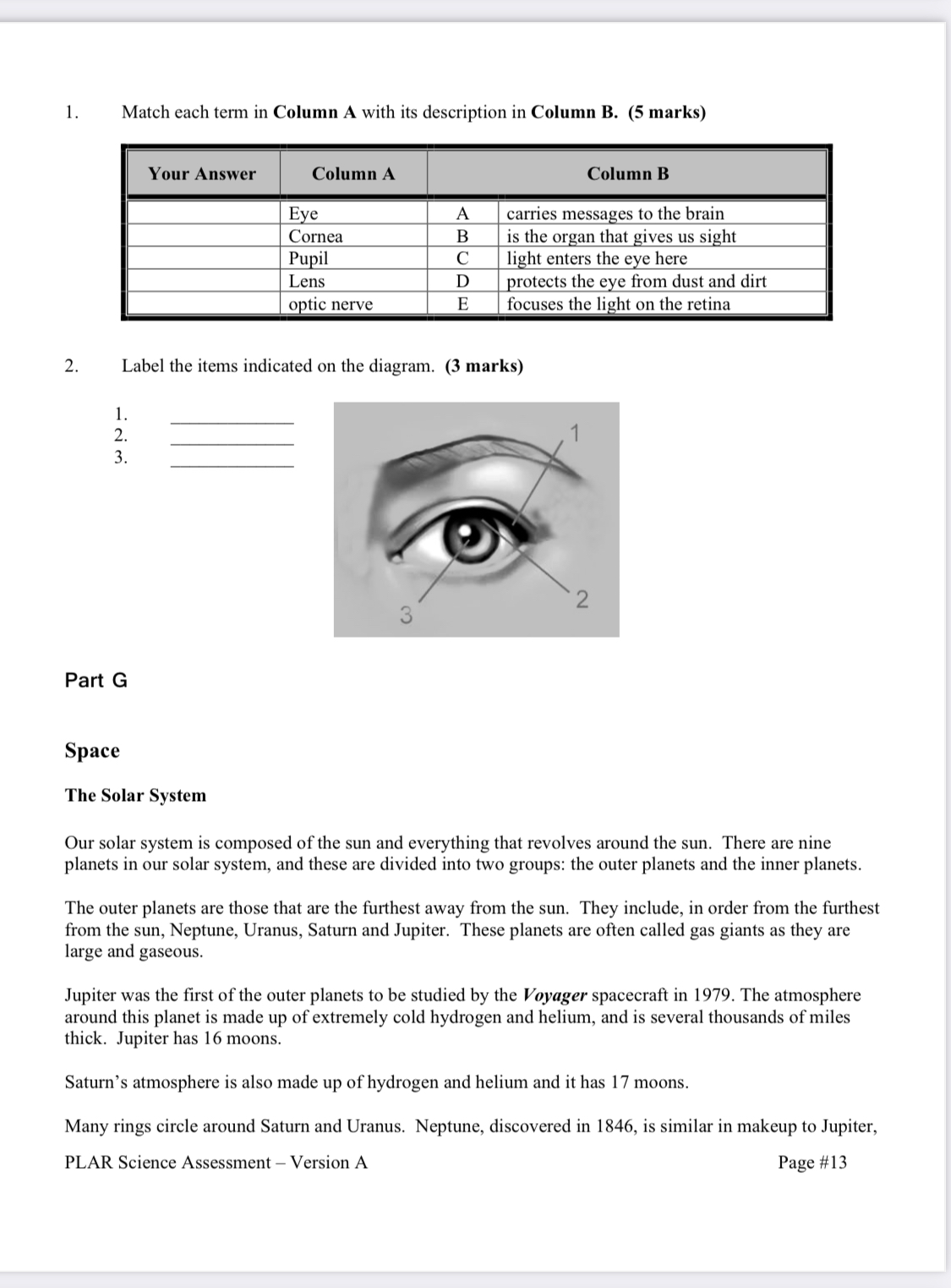
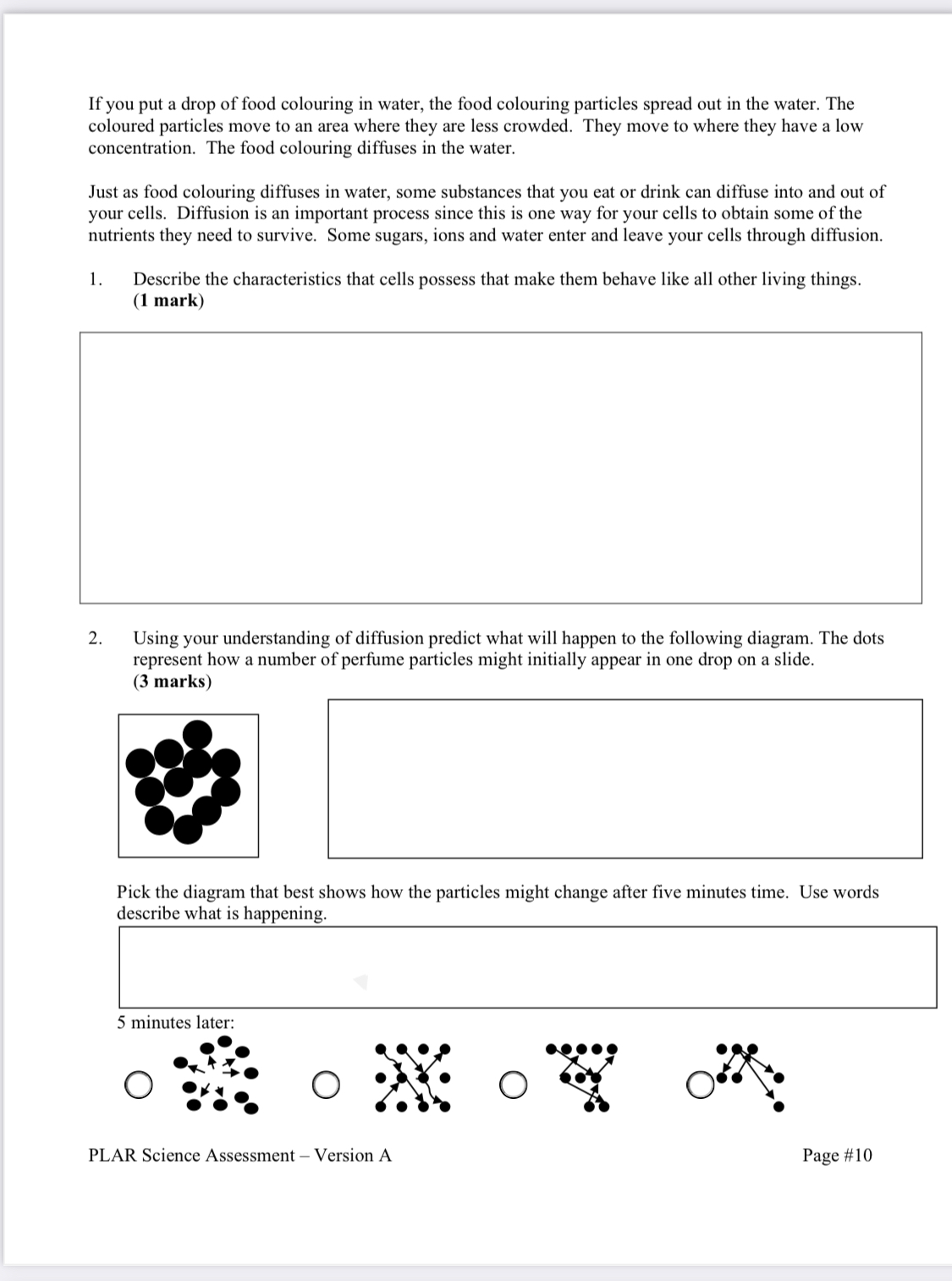
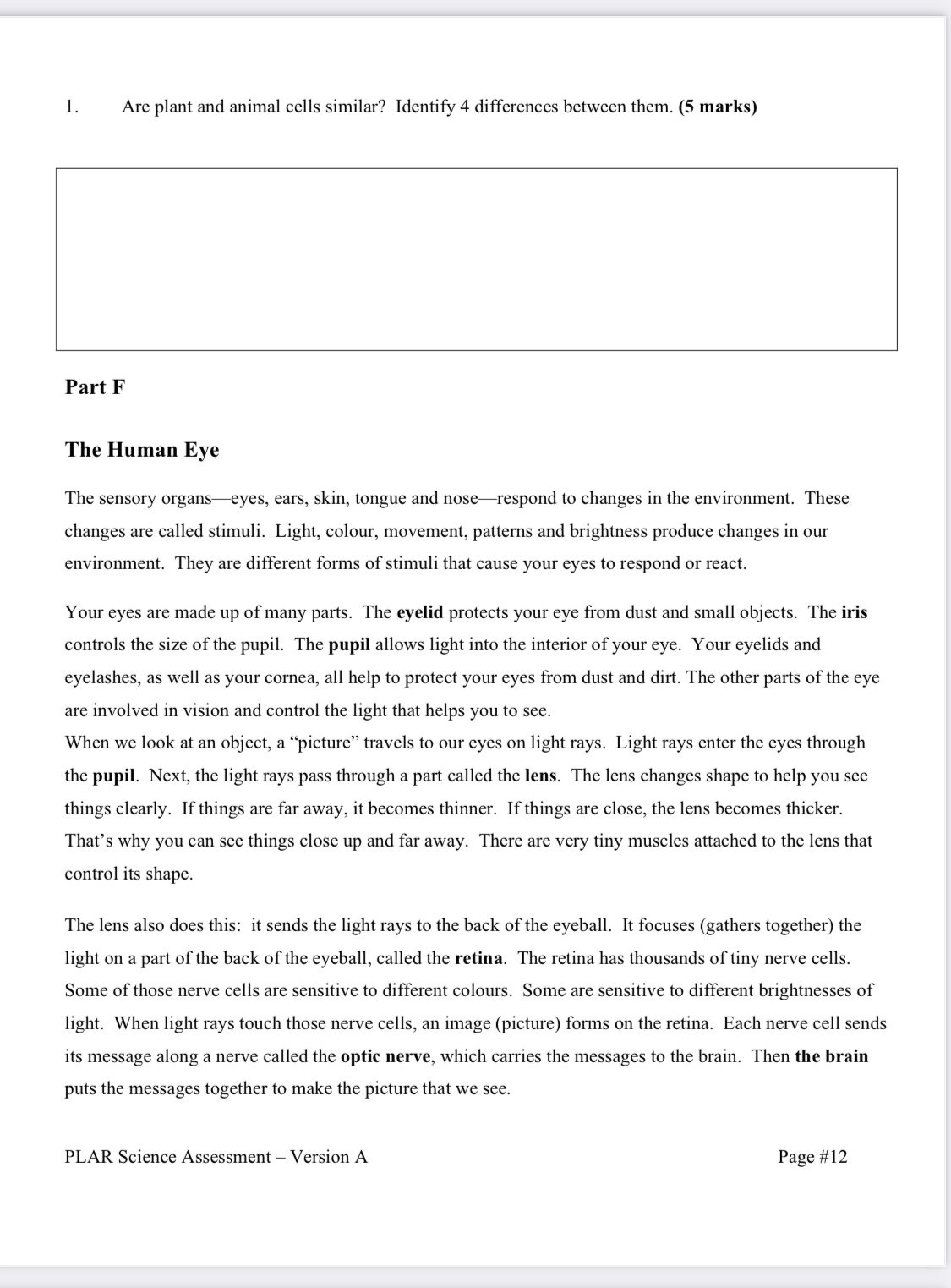
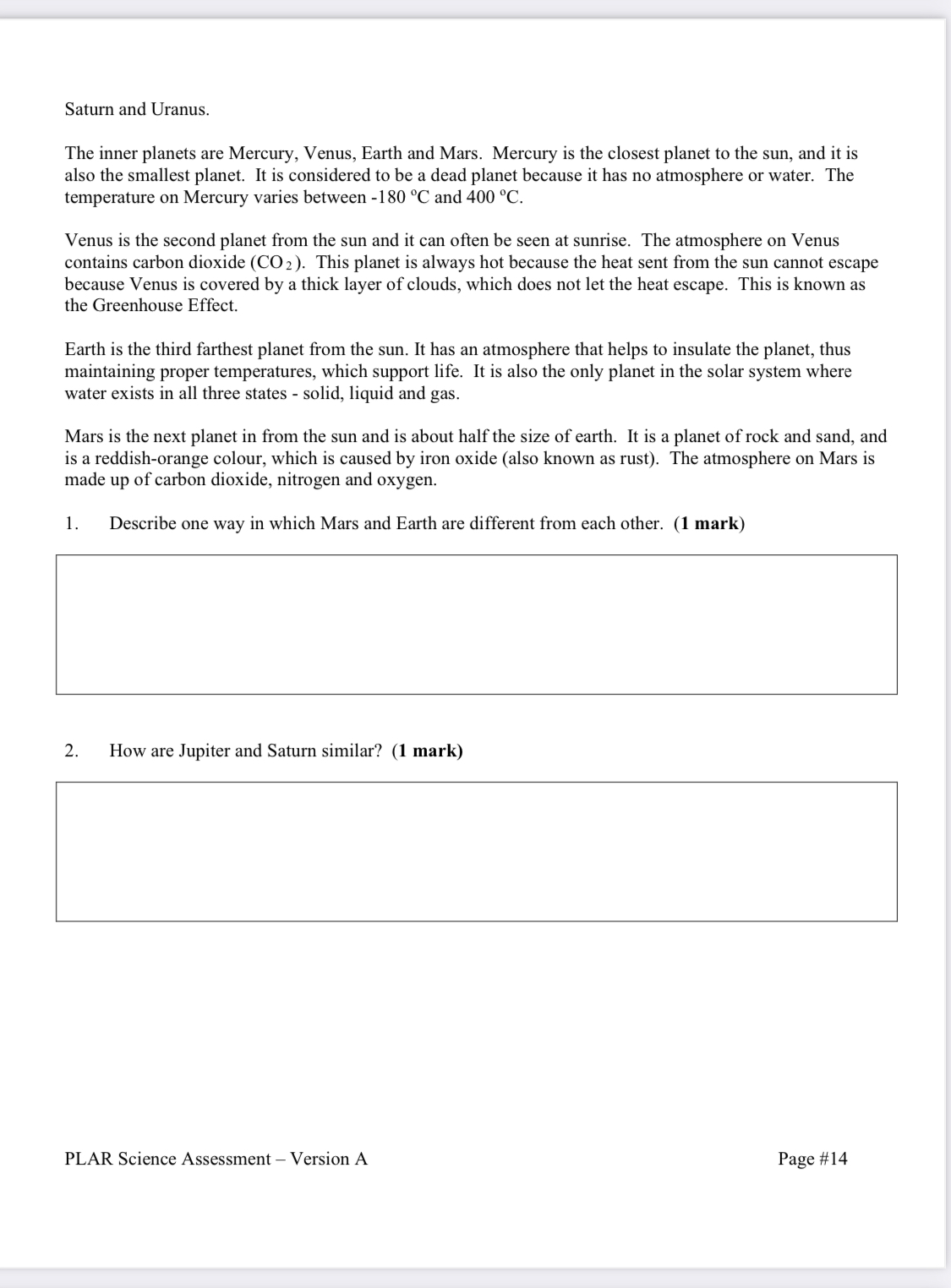
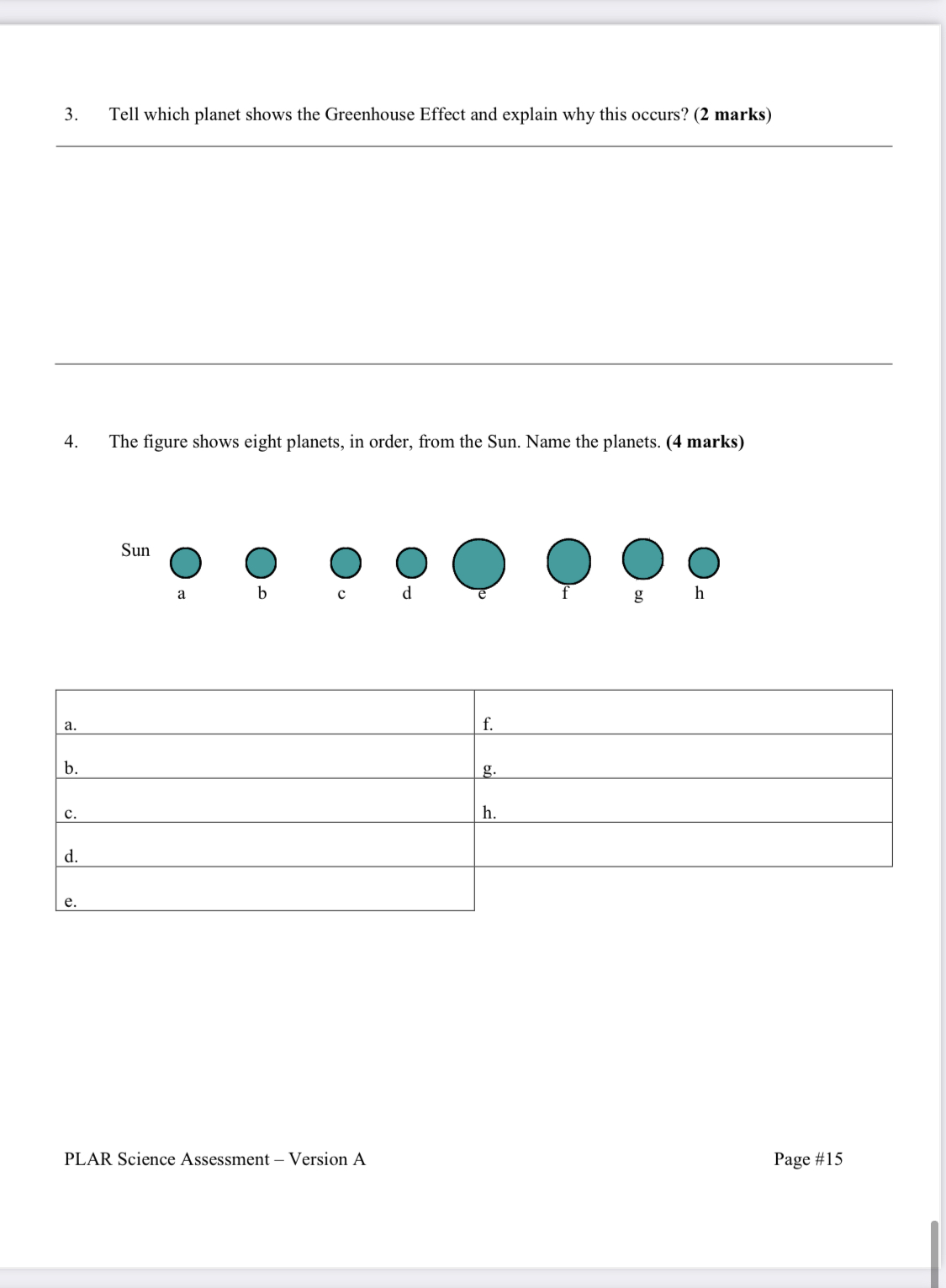
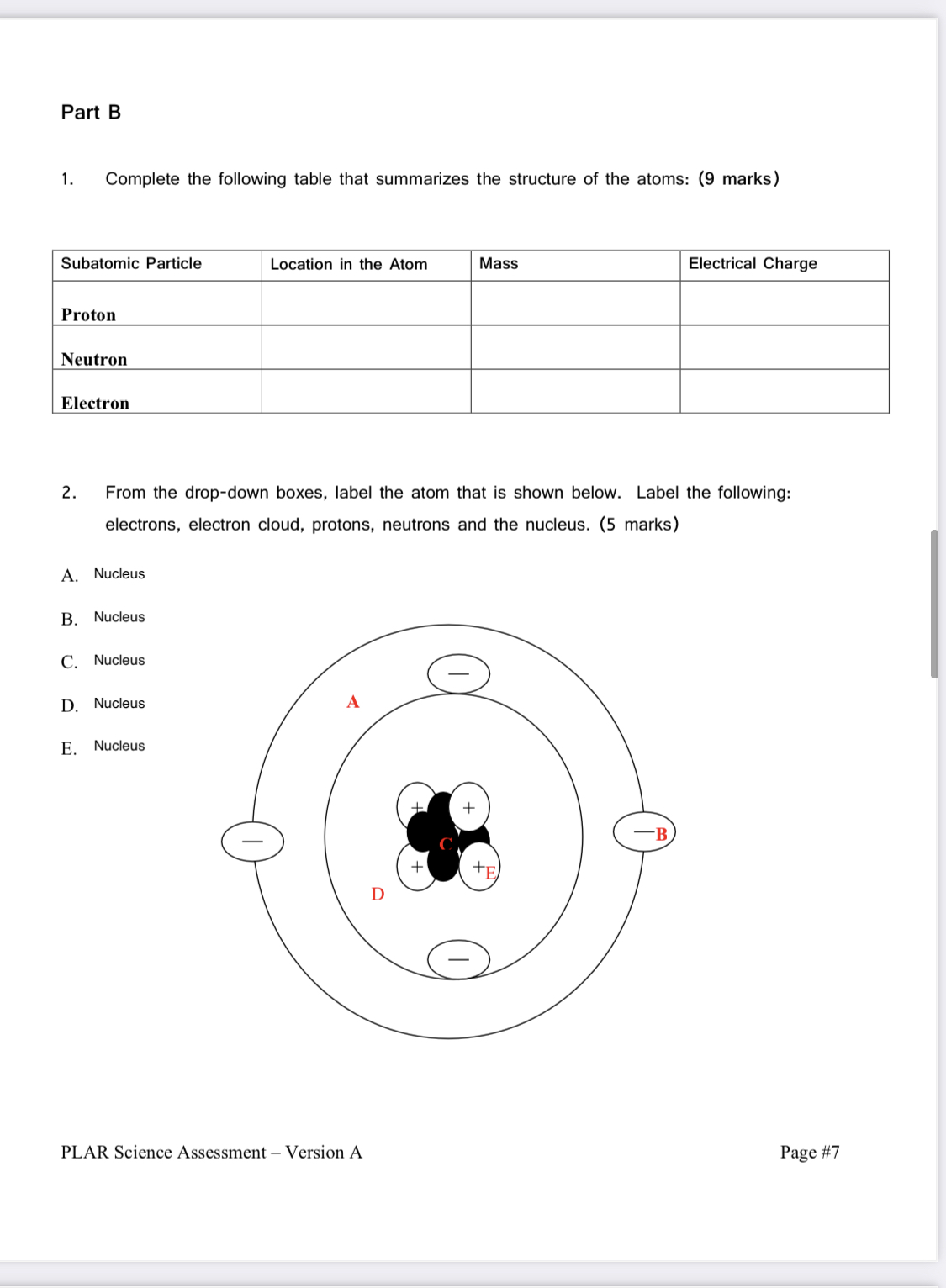
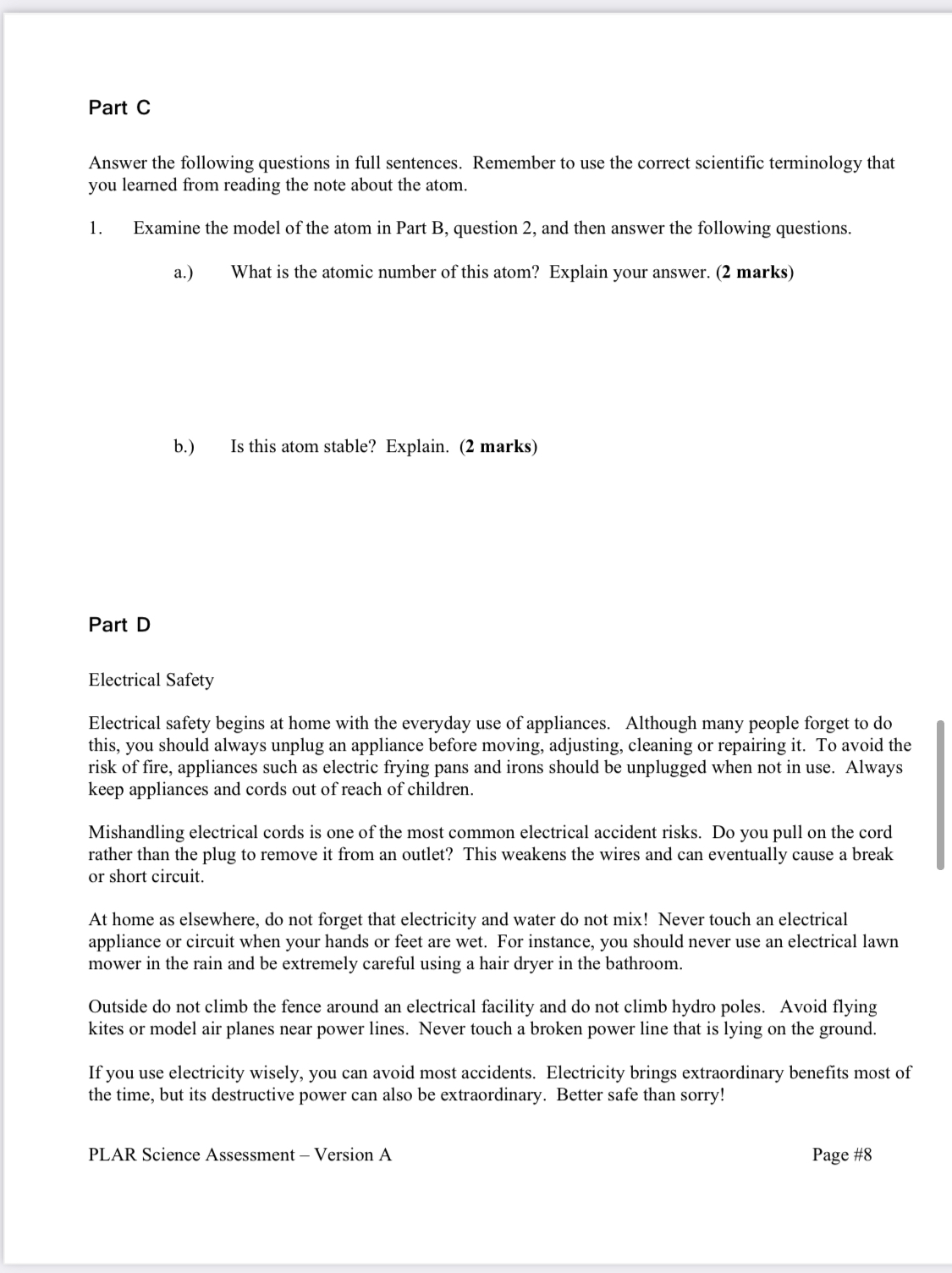
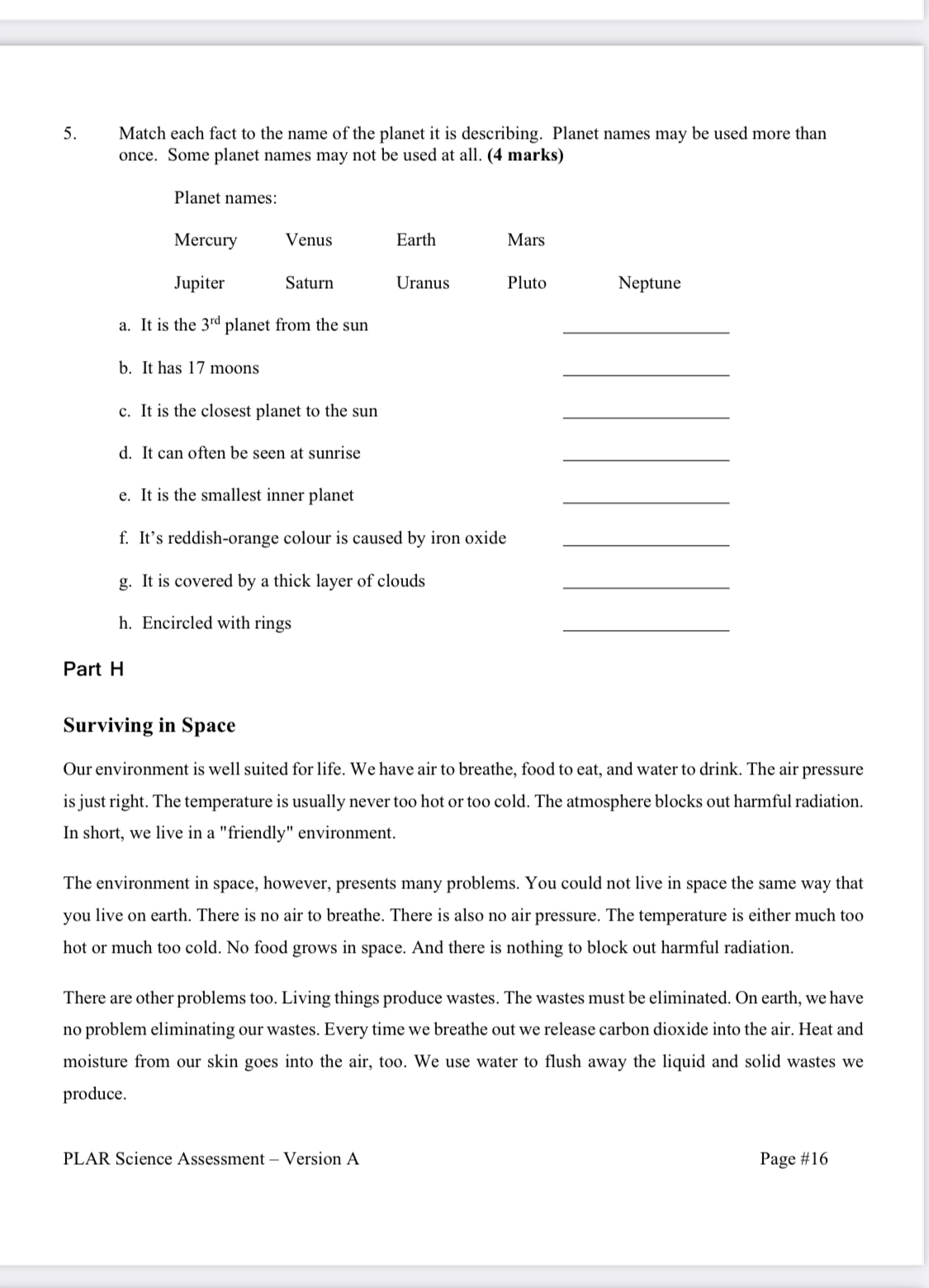
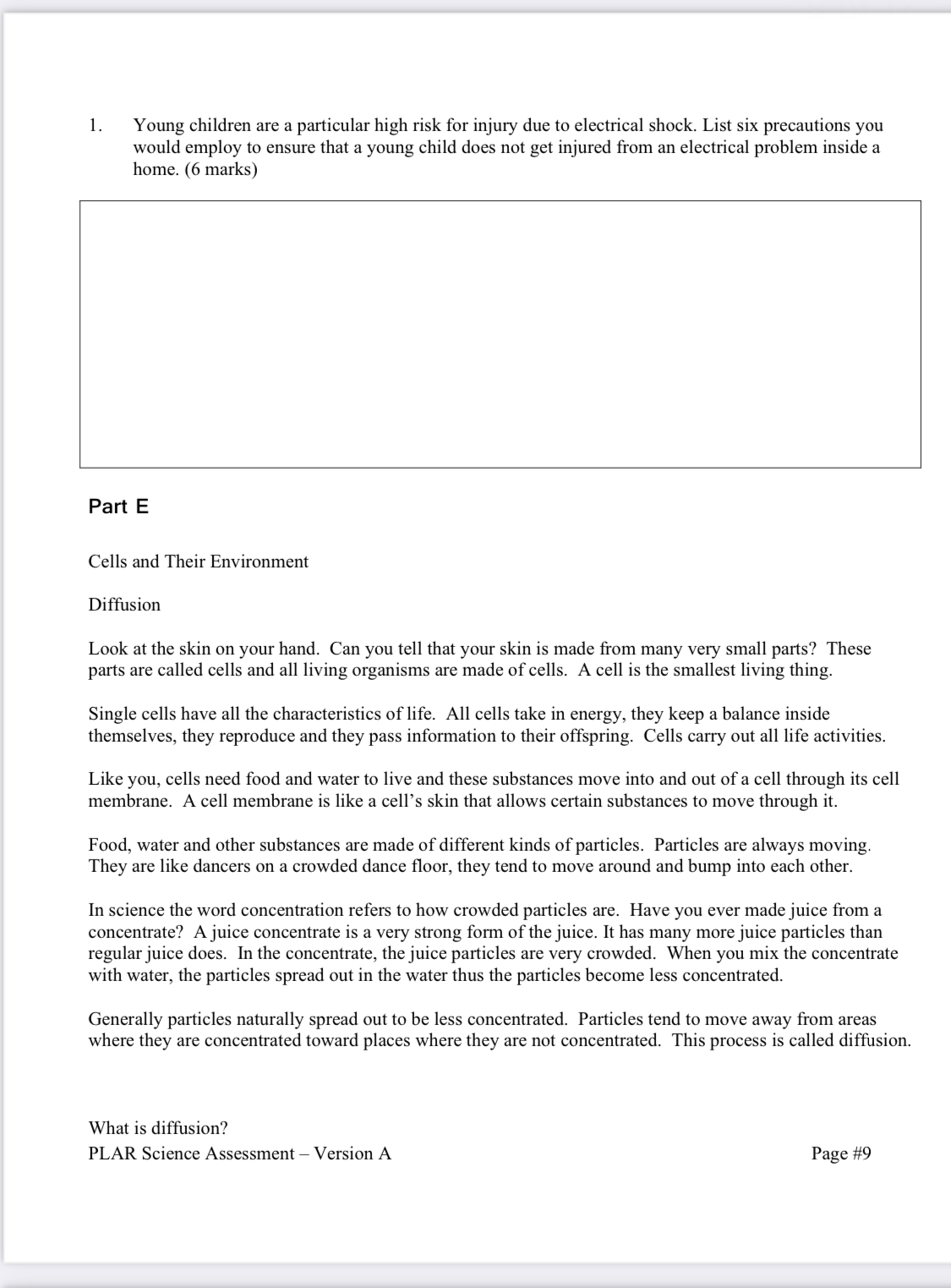
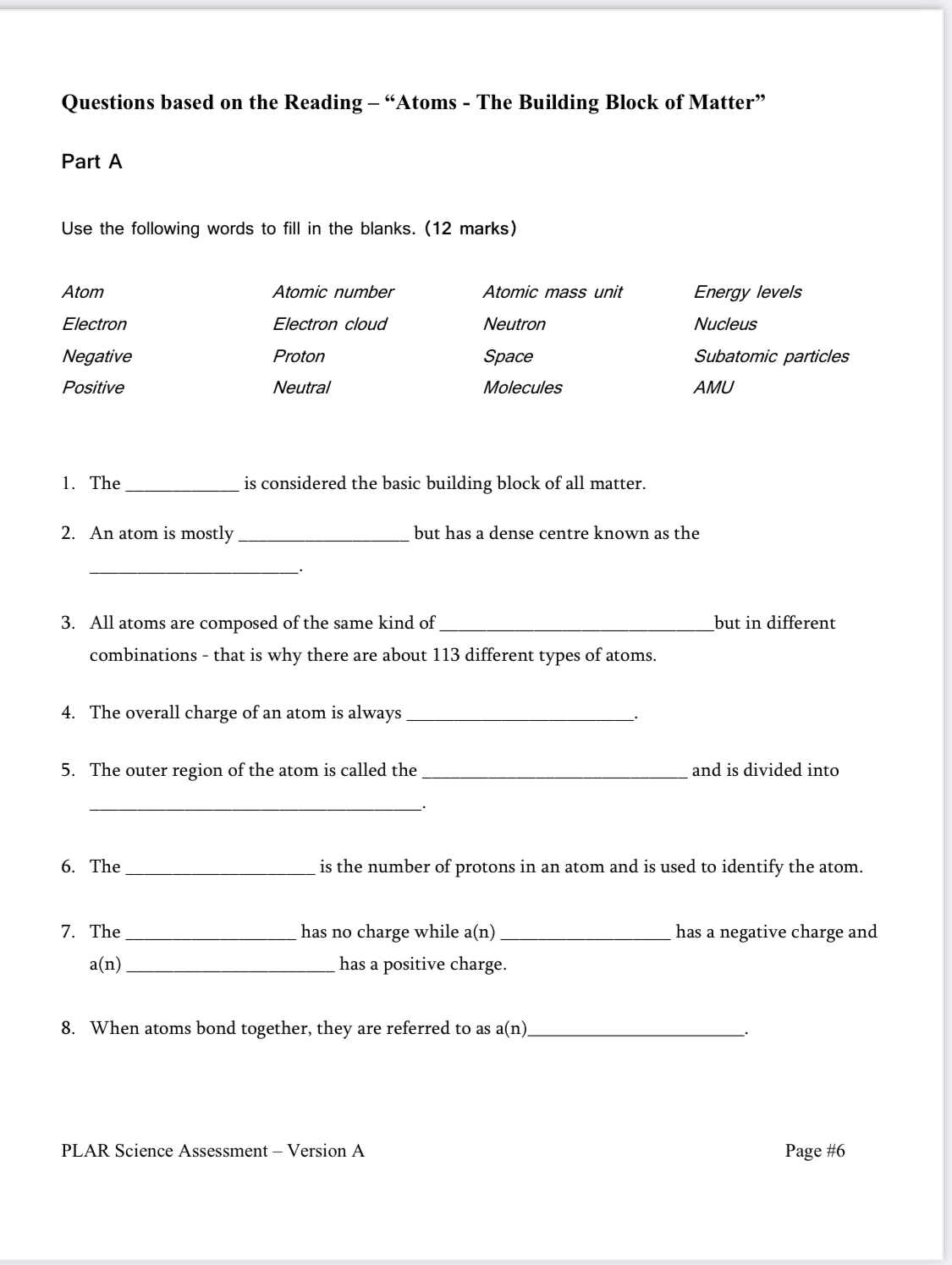
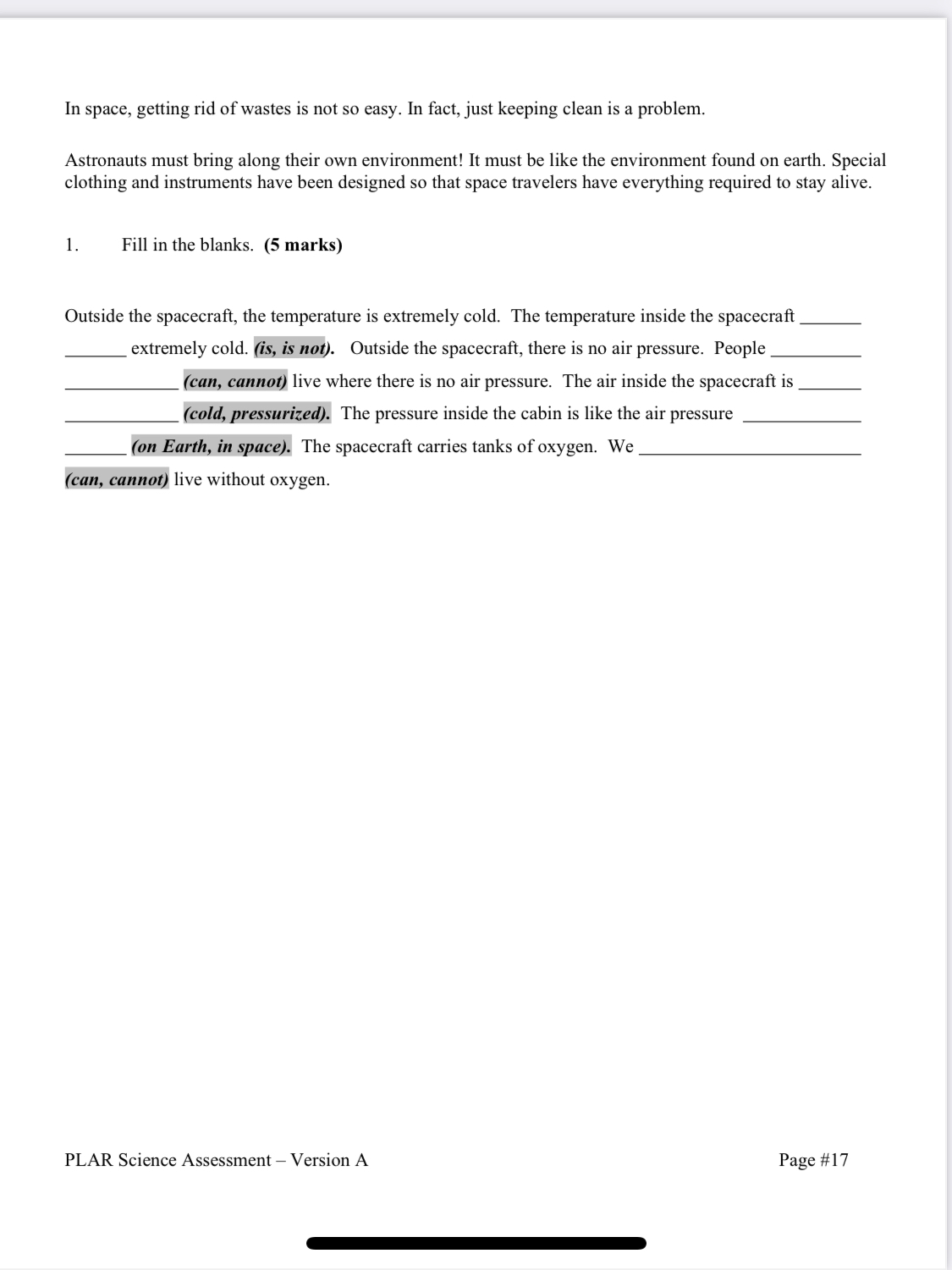
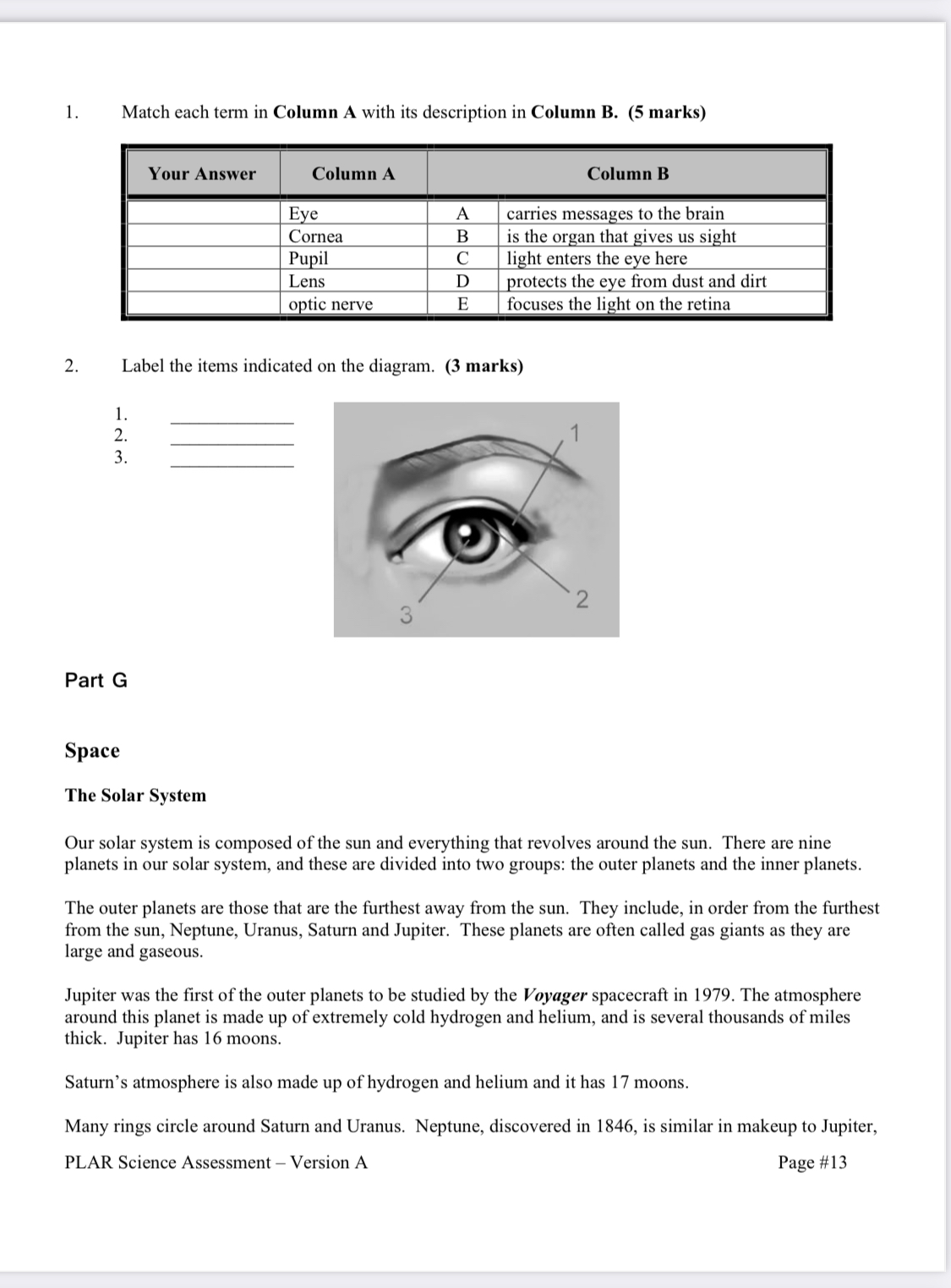
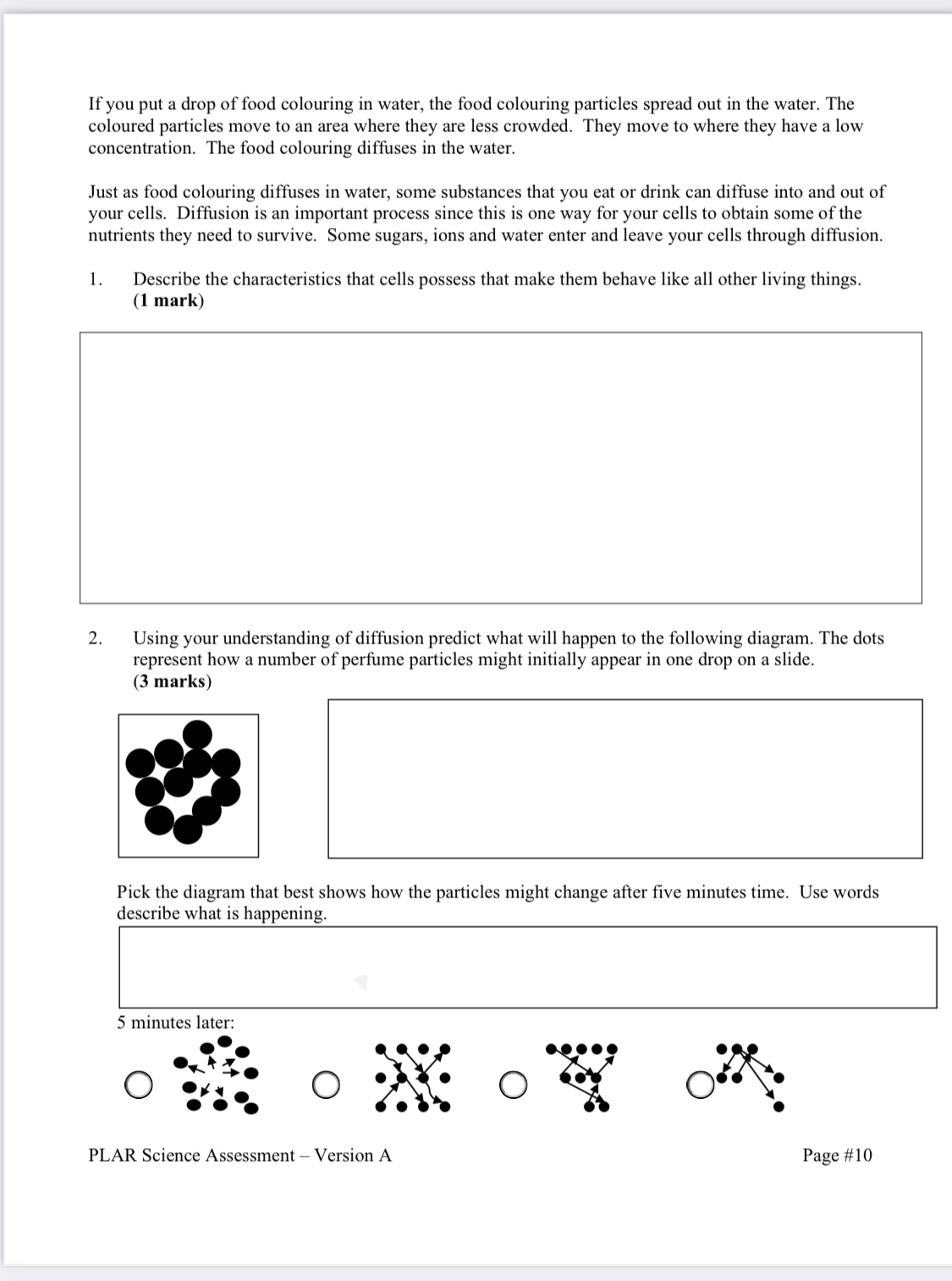
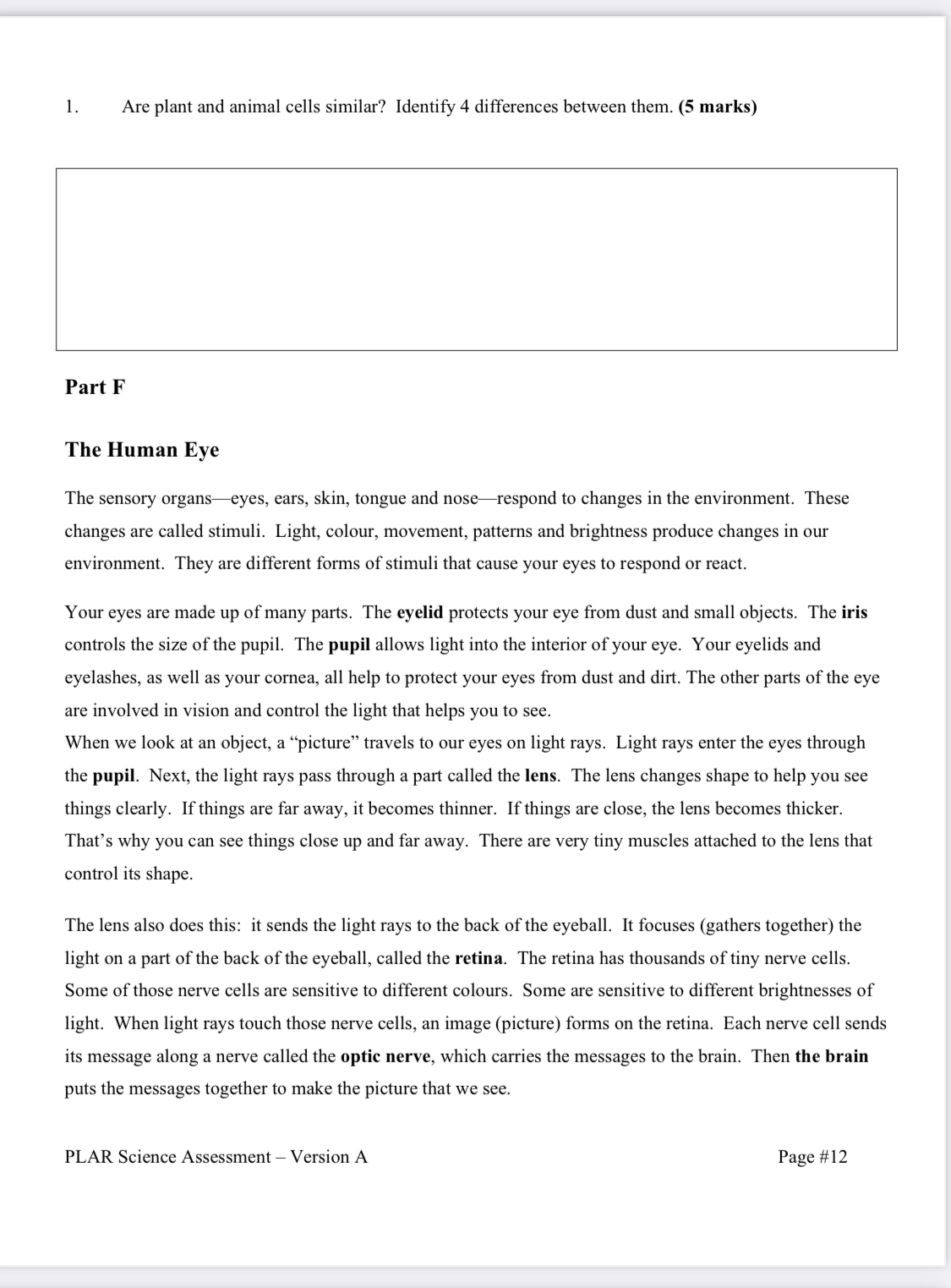
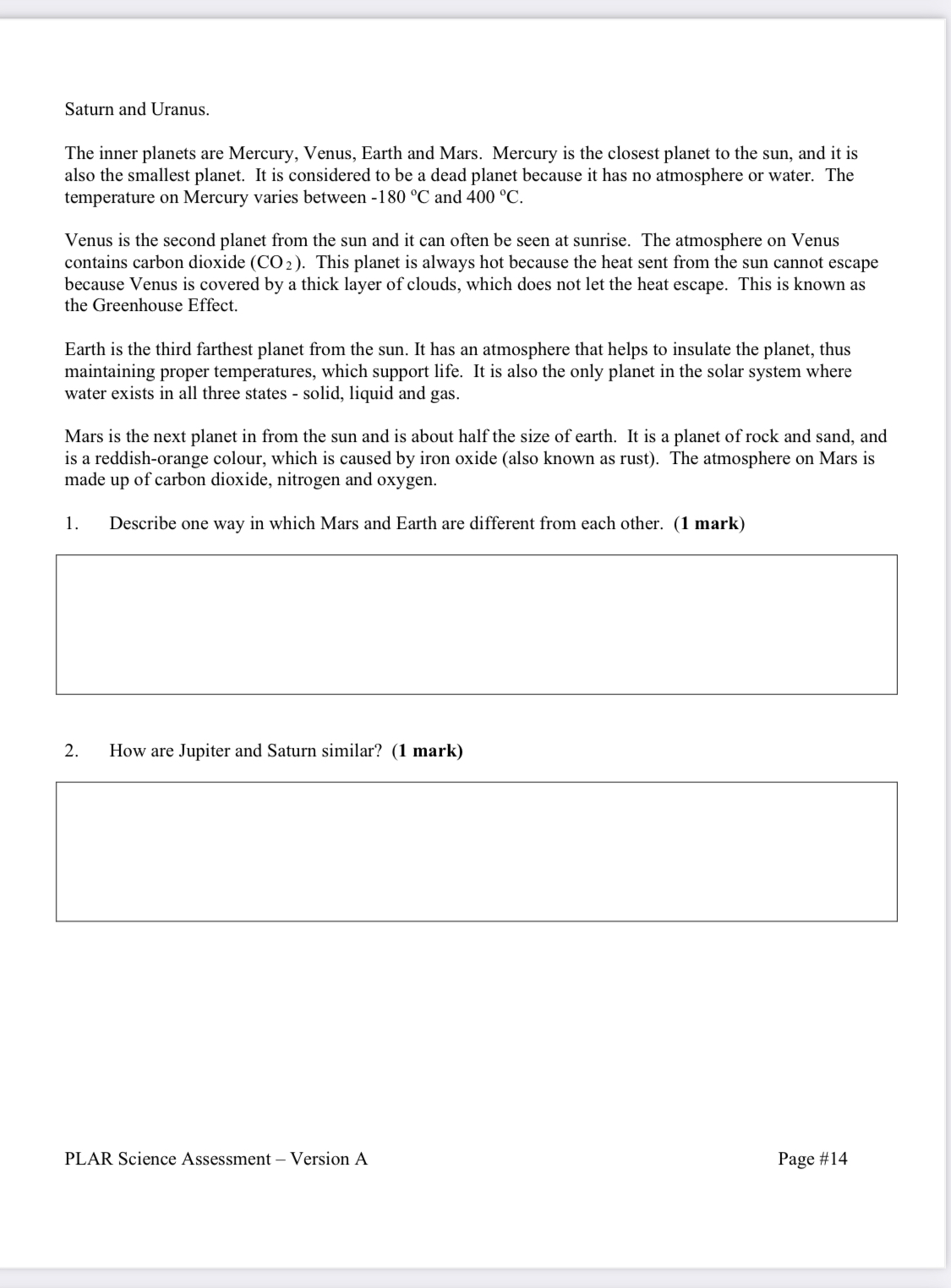
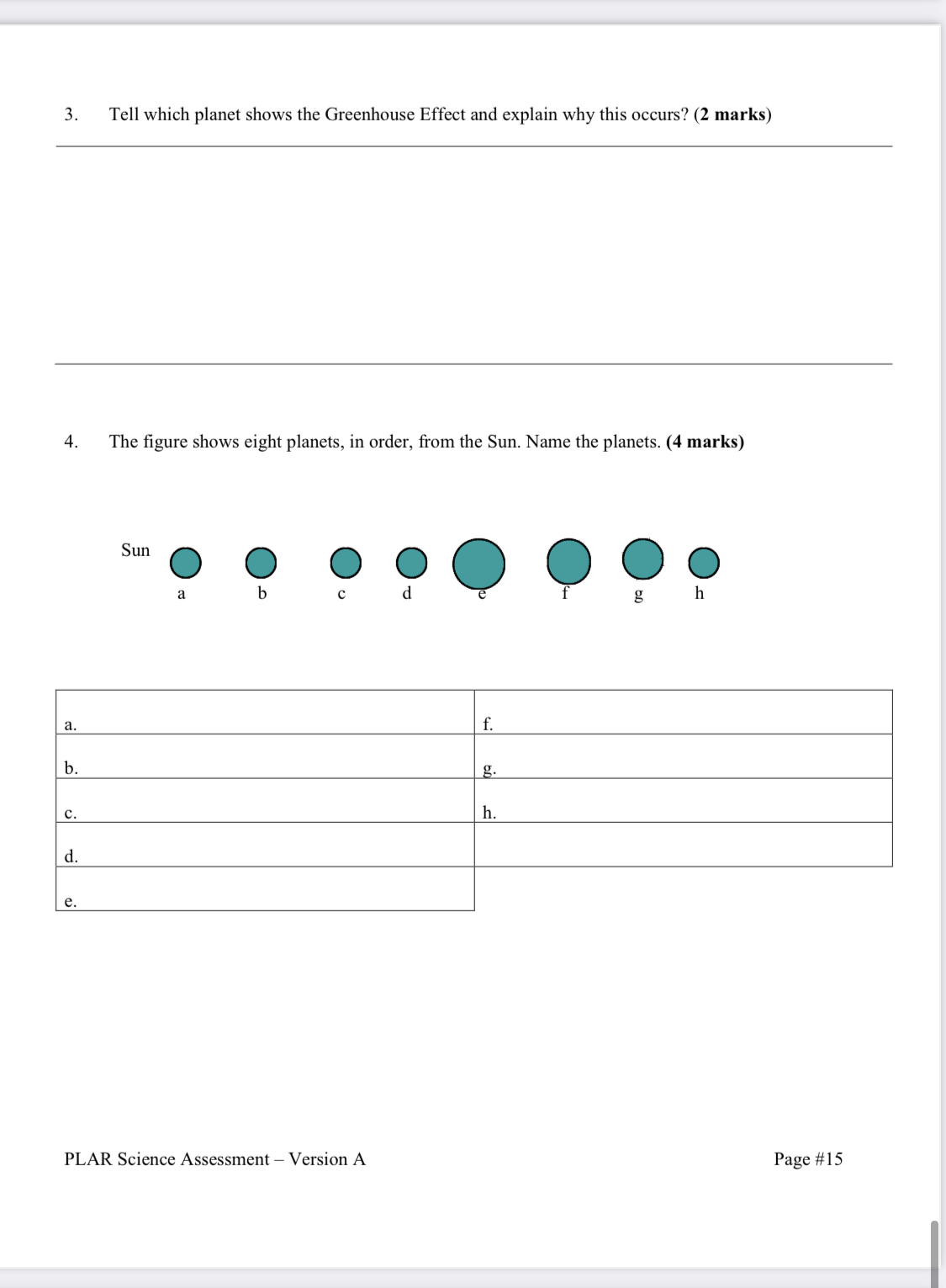
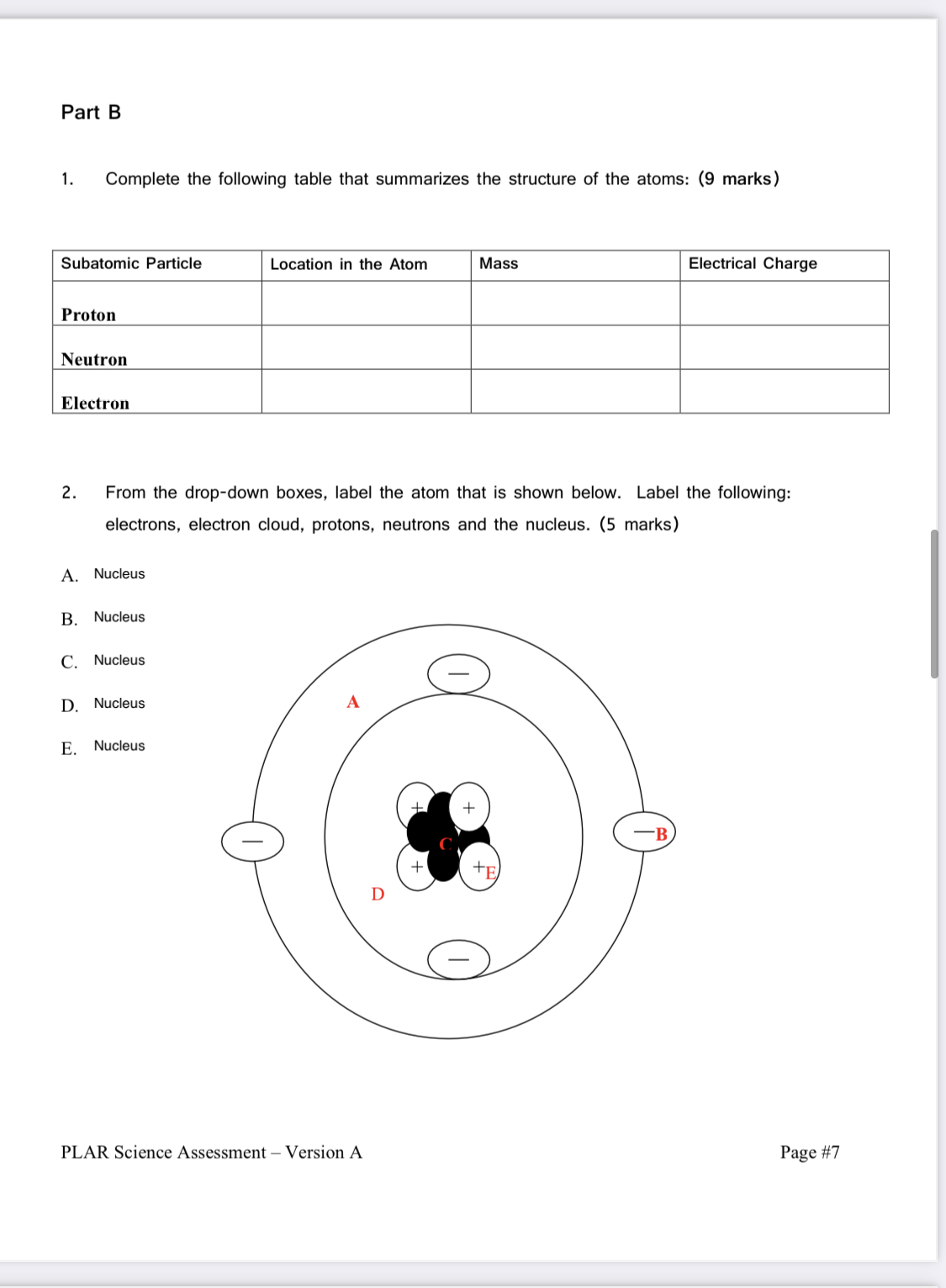
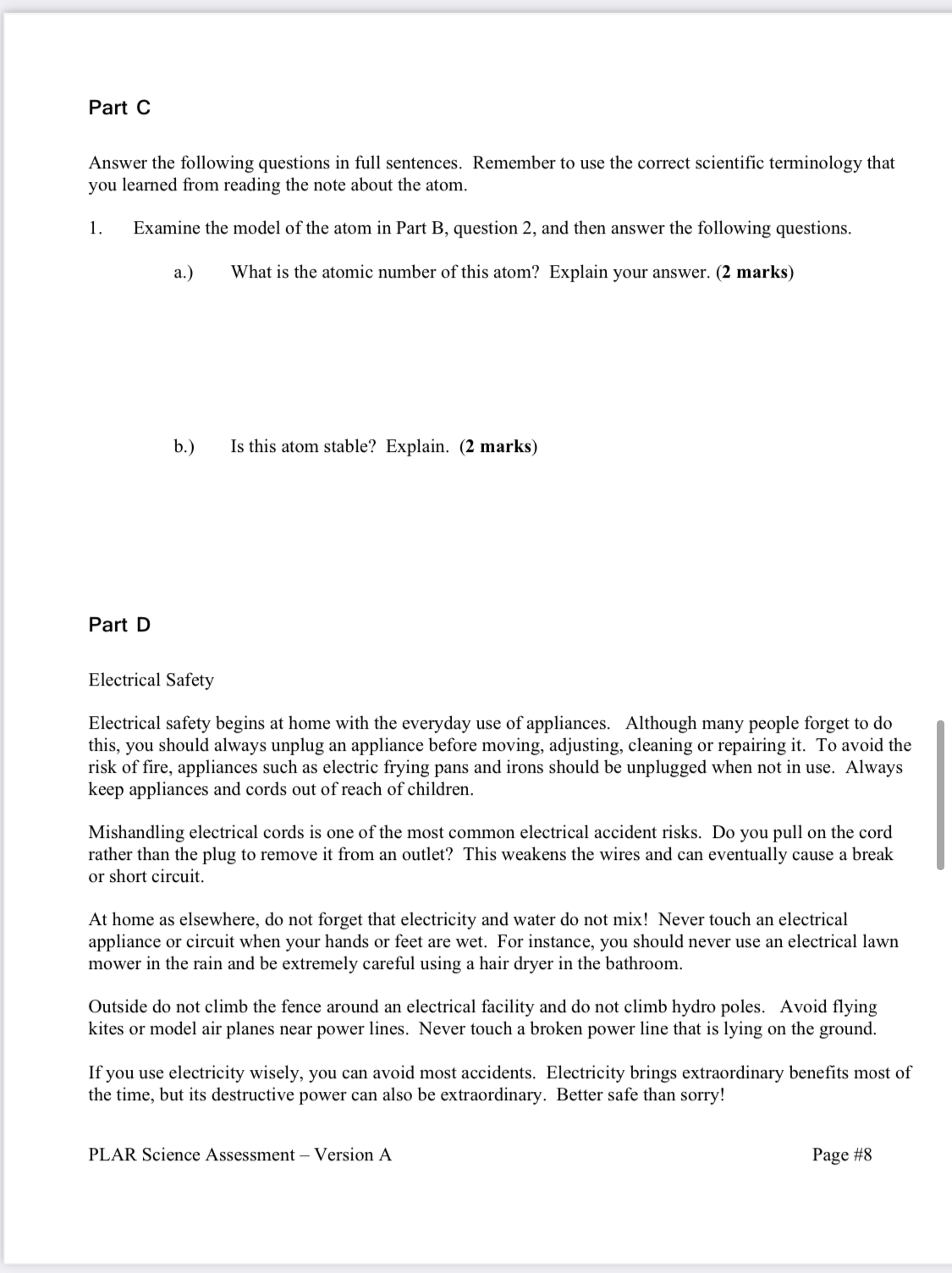
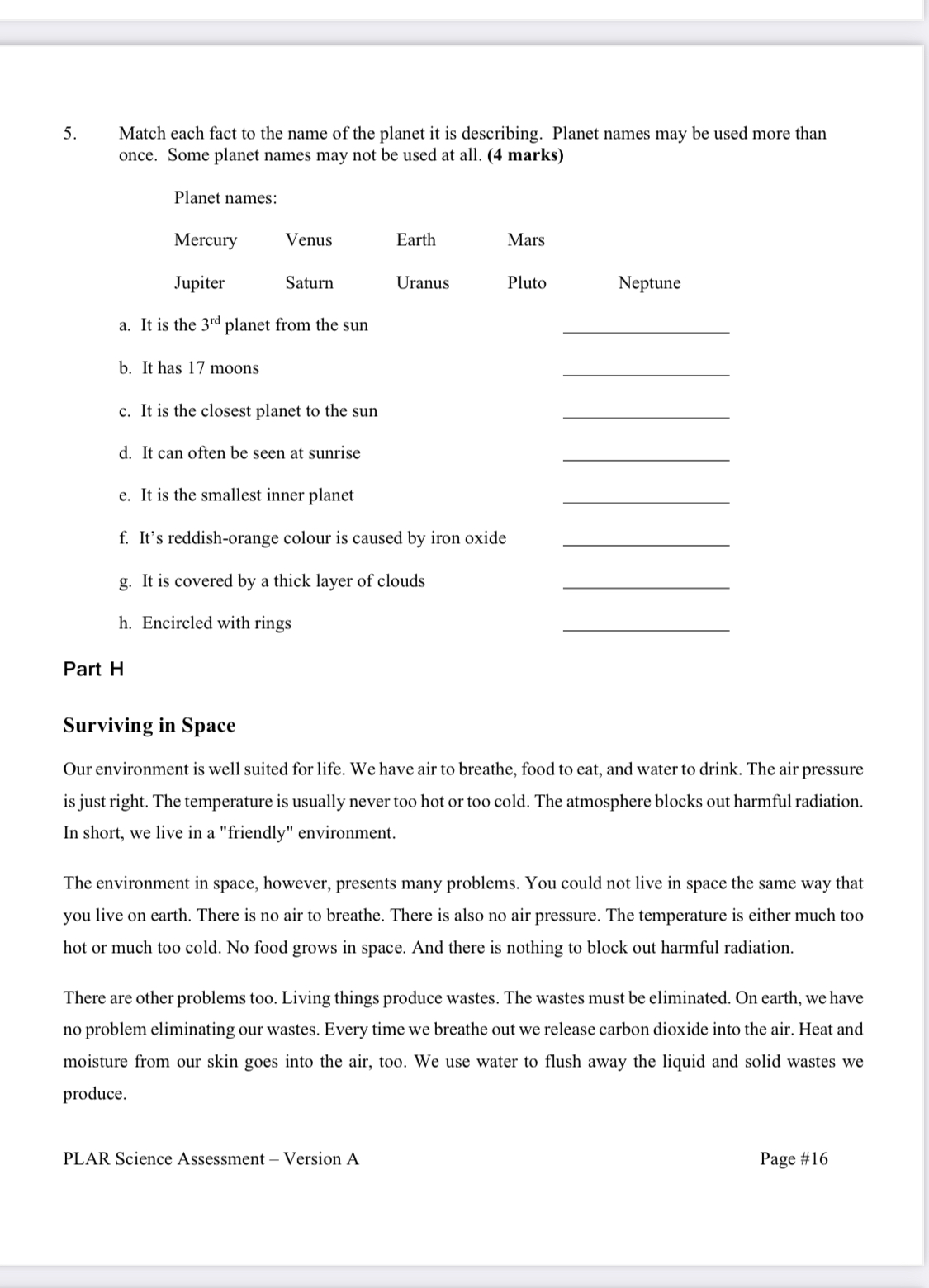
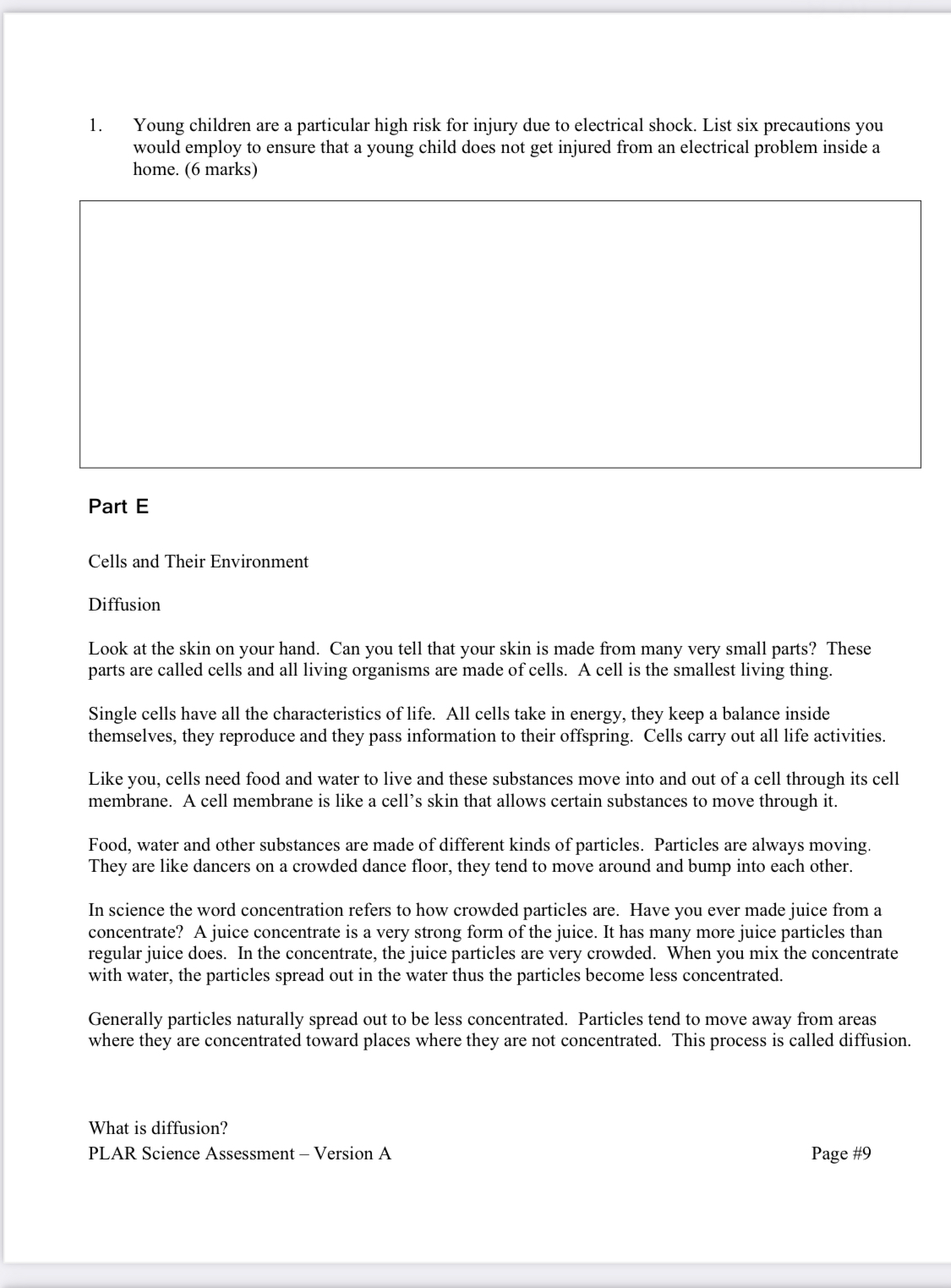
Questions based on the Reading -"Atoms - The Building Block of Matter" Part A Use the following words to fill in the blanks. (12 marks) Atom Atomic number Atomic mass unit Energy levels Electron Electron cloud Neutron Nucleus Negative Proton Space Subatomic particles Positive Neutral Molecules AMU 1. The is considered the basic building block of all matter. 2. An atom is mostly but has a dense centre known as the 3. All atoms are composed of the same kind of but in different combinations - that is why there are about 113 different types of atoms. 4. The overall charge of an atom is always 5. The outer region of the atom is called the and is divided into 6. The is the number of protons in an atom and is used to identify the atom. 7. The has no charge while a(n) has a negative charge and a(n) has a positive charge. 8. When atoms bond together, they are referred to as a(n)_ PLAR Science Assessment - Version A Page #6In space, getting rid of wastes is not so easy. In fact, just keeping clean is a problem. Astronauts must bring along their own environment! It must be like the environment found on earth. Special clothing and instruments have been designed so that space travelers have everything required to stay alive. 1. Fill in the blanks. (5 marks) Outside the spacecraft, the temperature is extremely cold. The temperature inside the spacecraft extremely cold. (is, is not). Outside the spacecraft, there is no air pressure. People (can, cannot) live where there is no air pressure. The air inside the spacecraft is (cold, pressurized). The pressure inside the cabin is like the air pressure (on Earth, in space). The spacecraft carries tanks of oxygen. We (can, cannot) live without oxygen. PLAR Science Assessment Version A Page #17 3. Explain why diffusion is so important to living things? Answer the question using complete sentence format. (2 marks) Plant Cells vs. Animal Cells All living things are composed ofcells, from the smallest unicellular organism to the largest multicellular one. There are, however, signicant differences between cells found in plants and those found in animals. Plant cells and animal cells are not exactly alike. Plant cells have certain parts that animal cells do not. These parts are a cell wall and chloroplasts. The cell wall surrounds the cell membrane ofa plant cell. The cell wall is made of non-living material called cellulose. The cell wall is more rigid (stiff) than the cell membrane and this gives a plant cell its stiffness and its shape. Chloroplasts are found in the cytoplasm of a plant cell and contain a green substance called chlorophyll. Chlorophyll is needed by green plants for food making. This food-making process of green plants is called photosynthesis. Most chlorophyll is found in leaf cells of green plants. This illustrates the biggest difference between plant and animal cells. Plant cells can make their own food. Animal cells can not. The number and size of vacuoles also is different in plant and animal cells. Plant cells have only one or two vacuoles. The vacuoles are usually very large. Animal cells have many small vacuoles. PLAR Science Assessment Version A Page #11 1. Match each term in Column A with its description in Column B. (5 marks) Cornea is the or_an that ,ives us siht _l lizhtcntcrsthce chcrc Lens protects the eye from dust and dirt _ .0 tic nerve _ _ _ focuses the li,ht on the retina 2. Label the items indicated on the diagram. (3 marks) Part G Space The Solar System Our solar system is composed of the sun and everything that revolves around the sun. There are nine planets in our solar system, and these are divided into two groups: the outer planets and the inner planets. The outer planets are those that are the furthest away from the sun. They include. in order from the furthest from the sun. Neptune, Uranus. Saturn and Jupiter. These planets are often called gas giants as they are large and gaseous. Jupiter was the first of the outer planets to be studied by the Voyager spacecraft in 1979. The atmosphere around this planet is made up of extremely cold hydrogen and helium, and is several thousands ofmiles thick. Jupiter has 16 moons. Saturn's atmosphere is also made up of hydrogen and helium and it has 17 moons. Many rings circle around Saturn and Uranus. Neptune. discovered in 1846. is similar in makeup to Jupiter. PLAR Science Assessment Version A Page #13 If you put a drop of food colouring in water. the food colouring particles spread out in the water. The coloured particles move to an area where they are less crowded. They move to where they have a low concentration. The food colouring diffuses in the water. Just as food colouring diffuses in water, some substances that you eat or drink can diffuse into and out of your cells. Diffusion is an important process since this is one way for your cells to obtain some of the nutrients they need to survive. Some sugars, ions and water enter and leave your cells through diffusion. 1. Describe the characteristics that cells possess that make them behave like all other living things. (1 mark) 2. Using your understanding of diffusion predict what will happen to the following diagram. The dots represent how a number of perfume particles might initially appear in one drop on a slide. (3 marks) Pick the diagram that best shows how the particles might change after five minutes time. Use words describe what is happening. 5 minutes later: :33: 0 >14 0 7%? 0271: PLAR Science Assessment Version A Page #10 1. Are plant and animal cells similar? Identify 4 differences between them. (5 marks) Part F The Human Eye The sensory organseyes, ears, skin, tongue and noserespond to changes in the environment. These changes are called stimuli. Light, colour, movement, patterns and brightness produce changes in our environment. They are different forms of stimuli that cause your eyes to respond or react. Your eyes are made up of many parts. The eyelid protects your eye from dust and small objects. The iris controls the size ofthe pupil. The pupil allows light into the interior ofyour eye. Your eyelids and eyelashes, as well as your comea, all help to protect your eyes from dust and dirt. The other parts ofthe eye are involved in vision and control the light that helps you to see. When we look at an object, a \"picture" travels to our eyes on light rays. Light rays enter the eyes through the pupil. Next, the light rays pass through a part called the lens. The lens changes shape to help you see things clearly. Ifthings are far away, it becomes thinner. If things are close, the lens becomes thicker. That's why you can see things close up and far away. There are very tiny muscles attached to the lens that control its shape. The lens also does this: it sends the light rays to the back ofthe eyeball. It focuses (gathers together) the light on a part of the back ofthe eyeball, called the retina. The retina has thousands oftiny nerve cells. Some of those nerve cells are sensitive to different colours. Some are sensitive to different brightnesses of light. When light rays touch those nerve cells, an image (picture) forms on the retina. Each nerve cell sends its message along a nerve called the optic nerve, which carries the messages to the brain. Then the brain puts the messages together to make the picture that we see. PLAR Science Assessment Version A Page #12 Saturn and Uranus. The inner planets are Mercury, Venus, Earth and Mars. Mercury is the closest planet to the sun, and it is also the smallest planet. It is considered to be a dead planet because it has no atmosphere or water. The temperature on Mercury varies between -180 DC and 400 0C. Venus is the second planet from the sun and it can often be seen at sunrise. The atmosphere on Venus contains carbon dioxide (CO 2 ). This planet is always hot because the heat sent from the sun cannot escape because Venus is covered by a thick layer ofclouds, which does not let the heat escape. This is known as the Greenhouse Effect. Earth is the third farthest planet from the sun. It has an atmosphere that helps to insulate the planet, thus maintaining proper temperatures, which support life. It is also the only planet in the solar system where water exists in all three states - solid, liquid and gas. Mars is the next planet in from the sun and is about half the size of earth. It is a planet of rock and sand, and is a reddish-orange colour, which is caused by iron oxide (also known as rust). The atmosphere on Mars is made up of carbon dioxide, nitrogen and oxygen. 1. Describe one way in which Mars and Earth are different from each other. (1 mark) 2. How are Jupiter and Saturn similar? (1 mark) PLAR Science Assessment Version A Page #14 3. Tell which planet shows the Greenhouse Effect and explain why this occurs? (2 marks) 4. The figure shows eight planets, in order, from the Sun. Name the planets. (4 marks) Sun a h g a. f. b. g. C. h. d. PLAR Science Assessment - Version A Page #15Part B 1. Complete the following table that summarizes the structure of the atoms: (9 marks) Subatomic Particle Location in the Atom _ Electrical Charge 2. From the drop-down boxes. label the atom that is shown below. Label the following: electrons, electron cloud, protons. neutrons and the nucleus. (5 marks) A. Nucleus B. Nucleus C Nucleus D. Nucleus E. Nucleus PLAR Science Assessment Version A Page #7 Part C Answer the following questions in full sentences. Remember to use the correct scientific terminology that you learned from reading the note about the atom. 1. Examine the model of the atom in Part B, question 2, and then answer the following questions. a.) What is the atomic number ofthis atom? Explain your answer. (2 marks) b.) Is this atom stable? Explain. (2 marks) Part D Electrical Safety Electrical safety begins at home with the everyday use of appliances. Although many people forget to do this, you should always unplug an appliance before moving, adjusting, cleaning or repairing it. To avoid the risk of fire, appliances such as electric frying pans and irons should be unplugged when not in use. Always keep appliances and cords out of reach ofchildren. Mishandling electrical cords is one ofthe most common electrical accident risks. Do you pull on the cord rather than the plug to remove it from an outlet? This weakens the wires and can eventually cause a break or short circuit. At home as elsewhere, do not forget that electricity and water do not mix! Never touch an electrical appliance or circuit when your hands or feet are wet. For instance, you should never use an electrical lawn mower in the rain and be extremely careful using a hair dryer in the bathroom. Outside do not climb the fence around an electrical facility and do not climb hydro poles. Avoid flying kites or model air planes near power lines. Never touch a broken power line that is lying on the ground. Ifyou use electricity wisely, you can avoid most accidents. Electricity brings extraordinary benefits most of the time, but its destructive power can also be extraordinary. Better safe than sorry! PLAR Science Assessment Version A Page #8 5. Match each fact to the name ofthe planet it is describing. Planet names may be used more than once. Some planet names may not be used at all. (4 marks) Planet names: Mercury Venus Earth Mars Jupiter Saturn Uranus Pluto Neptune a. It is the 3"J planet from the sun b. It has 17 moons c. It is the closest planet to the sun d. It can often be seen at sunrise c. It is the smallest inner planet f. It's reddish-orange colour is caused by iron oxide g. It is covered by a thick layer of clouds h. Encircled with rings Part H Surviving in Space Our environment is well suited for life. We have air to breathe, food to eat. and water to drink. The air pressure isjust right. The temperature is usually never too hot or too cold. The atmosphere blocks out harmful radiation. In short. we live in a "friendly" environment. The environment in space, however, presents many problems. You could not live in space the same way that you live on earth. There is no air to breathe. There is also no air pressure. The temperature is either much too hot or much too cold. No food grows in space. And there is nothing to block out harmful radiation. There are other problems too. Living things produce wastes. The wastes must be eliminated. 0n earth, we have no problem eliminating our wastes. Every time we breathe out we release carbon dioxide into the air. Heat and moisture from our skin goes into the air, too. We use water to flush away the liquid and solid wastes we produce. PLAR Science Assessment Version A Page #16 1. Young children are a particular high risk for injury due to electrical shock. List six precautions you would employ to ensure that a young child does not get injured from an electrical problem inside a home. (6 marks) Part E Cells and Their Environment Diffusion Look at the skin on your hand. Can you tell that your skin is made from many very small parts? These parts are called cells and all living organisms are made ofcells. A cell is the smallest living thing. Single cells have all the characteristics oflife. All cells take in energy, they keep a balance inside themselves, they reproduce and they pass information to their offspring. Cells carry out all life activities. Like you, cells need food and water to live and these substances move into and out ofa cell through its cell membrane. A cell membrane is like a cell's skin that allows certain substances to move through it. Food, water and other substances are made ofdifferent kinds ofparticles. Particles are always moving. They are like dancers on a crowded dance floor, they tend to move around and bump into each other. In science the word concentration refers to how crowded particles are. Have you ever madejuice from a concentrate? Ajuice concentrate is a very strong form of the juice. It has many more juice particles than regular juice does. In the concentrate, thejuice particles are very crowded. When you mix the concentrate with water, the particles spread out in the water thus the particles become less concentrated. Generally particles naturally spread out to be less concentrated. Particles tend to move away from areas where they are concentrated toward places where they are not concentrated. This process is called diffusion. What is diffusion? PLAR Science Assessment Version A Page #9
Step by Step Solution
There are 3 Steps involved in it

Get step-by-step solutions from verified subject matter experts
 Study Help