







Question: ( Uniprogramming , Job queue, Multiprogramming ) Part 1 Introduction The problems of servicing the processes with or not priority for uniprocessor system is examined
Uniprogramming Job queue, Multiprogramming
Part
Introduction
The problems of servicing the processes with or not priority for uniprocessor system is examined
Problem status
The processes are arrived in a list or a queue and serviced in FCES and PS priority service from a CPU.
Four processes are inserted in a list or queue and compose the set of processes that wait in the ready queue. Each process will have as input: pid, arrival time, service time.
Two services disciplines are considered : the FCFS and the priority service. For the last one each process has a priority and their service order depends on their priority.
Input
Four processes are considered.
Each process will have as input: pid, arrival time, service time:
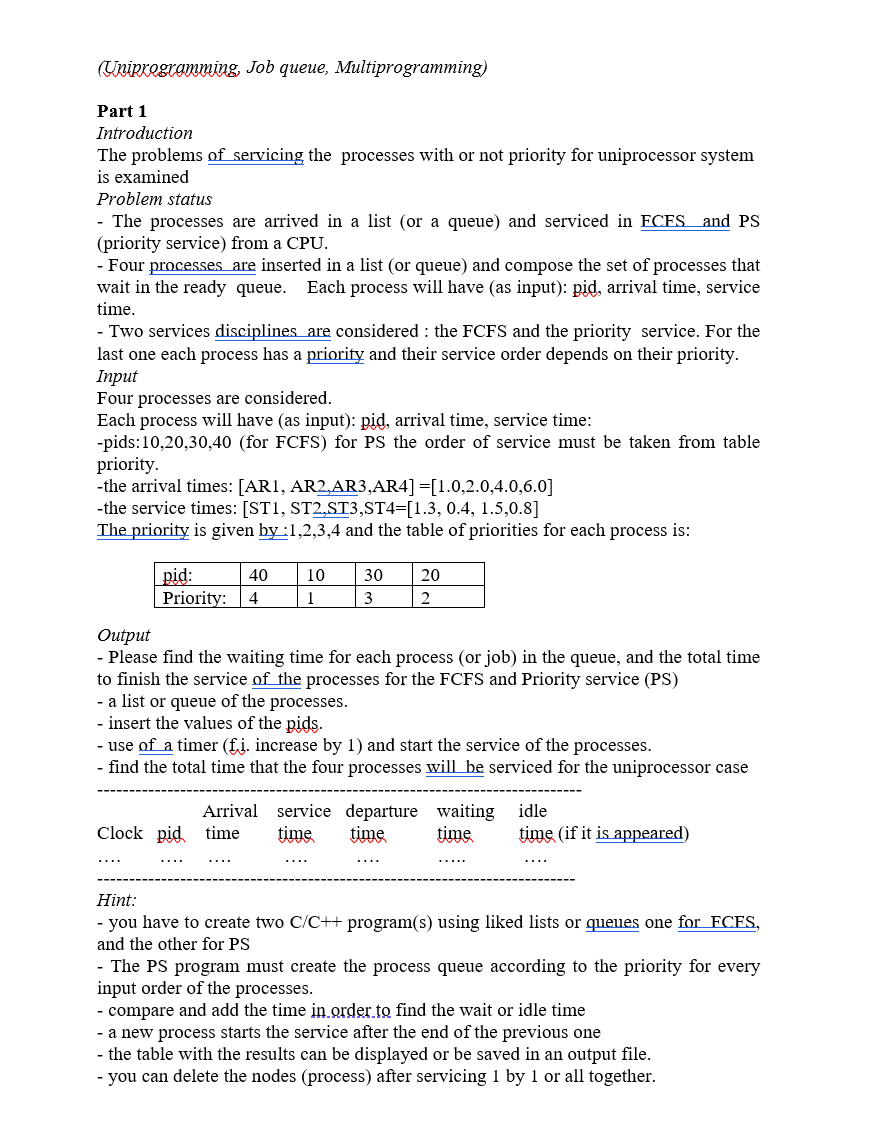
pids:for FCFS for PS the order of service must be taken from table priority.
the arrival times: mathrmARmathrmARmathrmARmathrmAR
the service times: ST STSTST
The priority is given by: and the table of priorities for each process is:
Output
Please find the waiting time for each process or job in the queue, and the total time to finish the service of the processes for the FCFS and Priority service PS
a list or queue of the processes.
insert the values of the pids.
use of a timer fi increase by and start the service of the processes.
find the total time that the four processes will be serviced for the uniprocessor case
Hint:
you have to create two mathrmCmathrmC programs using liked lists or queues one for FCES, and the other for PS
The PS program must create the process queue according to the priority for every input order of the processes.
compare and add the time in order.to find the wait or idle time
a new process starts the service after the end of the previous one
the table with the results can be displayed or be saved in an output file.
you can delete the nodes process after servicing by or all together.
Step by Step Solution
There are 3 Steps involved in it
1 Expert Approved Answer
Step: 1 Unlock

Question Has Been Solved by an Expert!
Get step-by-step solutions from verified subject matter experts
Step: 2 Unlock
Step: 3 Unlock
 Study Help