







Question: In this exercise, we analyze in more detail the persistent-failure model for the battery sensor in Figure (a). a. Figure (b) stops at t =
In this exercise, we analyze in more detail the persistent-failure model for the battery sensor in Figure (a).
a. Figure (b) stops at t = 32. Describe qualitatively what should happen as t ? ? if the sensor continues to read 0.
b. Suppose that the external temperature affects the battery sensor in such a way that transient failures become more likely as temperature increases. Show how to augment the DBN structure in Figure (a) and explain any required changes to the CPTs.
c. Given the new network structure, can battery readings be used by the robot to infer the current temperature?
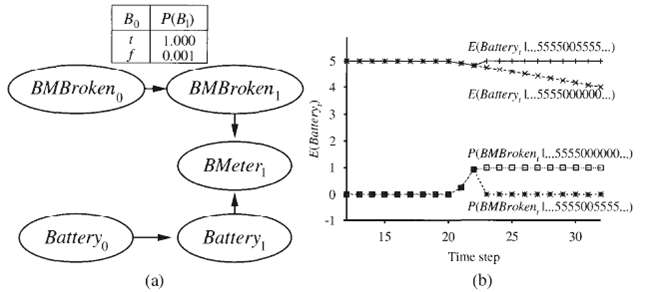
B. P(B) 1.000 E(Battery, .555005555.) 0.001 BMBroken, BMBroken, E(Battery, L.55550XX00.) P(BMBroken, .555000000.) BMeter P(BMBroken, .55500555.) -1 Battery, Battery, 25 15 20 30 Time step (b) (a) E(Battery)
Step by Step Solution
3.34 Rating (154 Votes )
There are 3 Steps involved in it
a The curve of interest is the one for E Battery t 5555000000 In the absence of any useful sensor in... View full answer

Get step-by-step solutions from verified subject matter experts
Document Format (1 attachment)

21-C-S-A-I (232).docx
120 KBs Word File
 Study Help