



Question: In Figure, an albatross glides at a constant 15 m/s horizontally above level ground, moving in a vertical plane that contains the Sun. It glides
(a) Across the level ground and then
(b) Up the wall? Suppose that later a hawk happens to glide along the same path, also at 15 m/s. You see that when its shadow reaches the wall, the speed of the shadow noticeably increases.
(c) Is the Sun now higher or lower in the sky than when the albatross flew by earlier?
(d) If the speed of the hawk's shadow on the wall is 45 m/s, what is the angle θ of the Sun just then?
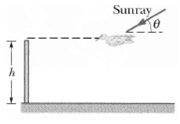
Sunray
Step by Step Solution
3.31 Rating (169 Votes )
There are 3 Steps involved in it
a The Sun is far enough away that we approximate its rays as parallel in this Figure That i... View full answer

Get step-by-step solutions from verified subject matter experts
Document Format (1 attachment)

2-P-E-E-W (136).docx
120 KBs Word File