







Question: Refer to Exercise 27. Let g (p 1 , p 2 ) be the number of people who will take the train when p 1
Refer to Exercise 27. Let g (p1, p2) be the number of people who will take the train when p1 is the price of the bus ride and p2 is the price of the train ride. Would you expect δg/δp1 to be positive or negative? How about δg/δp2?
Exercise 27
In a certain suburban community, commuters have the choice of getting into the city by bus or train. The demand for these modes of transportation varies with their cost. Let f (p1, p2) be the number of people who will take the bus when p1 is the price of the bus ride and p2 is the price of the train ride. For example, if f (4.50, 6) = 7000, then 7000 commuters will take the bus when the price of a bus ticket is $4.50 and the price of a train ticket is $6.00. Explain why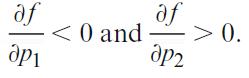
af 1 < 0 and af ap2 > 0.
Step by Step Solution
3.32 Rating (161 Votes )
There are 3 Steps involved in it
g p 1 p 2 is the number of people who will take the train when ... View full answer

Get step-by-step solutions from verified subject matter experts
 Study Help