







Question: Show that in any experiment E in which there is a possible value y for the random variable X such that PX(y) = 0, then
Show that in any experiment E in which there is a possible value y for the random variable X̃ such that PX̃(y∣θ) = 0, then if z is any other possible value of X̃, the statistic t = t(x) defined by
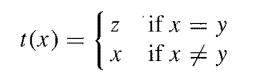
is sufficient for θ given X̃. Hence, show that if x is a continuous random variable, then a naïve application of the weak sufficiency principle as defined in Section 7.1 would result in Ev{E, y, θ} = Ev{E, z, θ} for any two possible values y and z of X̃.
>= { z if x = y x if x = y t(x) =
Step by Step Solution
3.40 Rating (150 Votes )
There are 3 Steps involved in it
Certainly lets prove that the statistic tx is sufficient for given X and analyze the weak sufficiency principle in this scenario Proof of Sufficiency ... View full answer

Get step-by-step solutions from verified subject matter experts
 Study Help