







Question: In order to program many microcontrollers, the binary instructions are stored in a file on a personal computer in a special way known as Intel
In order to program many microcontrollers, the binary instructions are stored in a file on a personal computer in a special way known as Intel Hex Format. The hexadecimal information is encoded into ASCII characters so it can be displayed easily on the PC screen, printed, and easily transmitted one character at a time over a standard PC’s serial COM port. One line of an Intel Hex Format file is shown below:
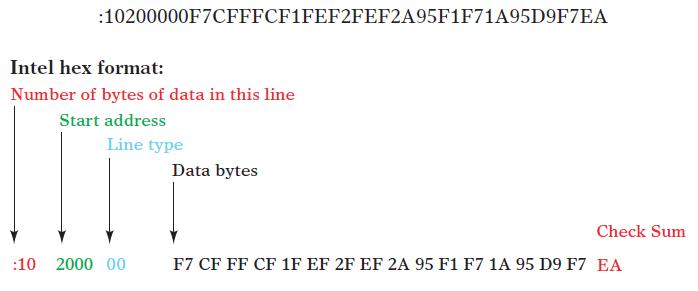
The first character sent is the ASCII code for a colon, followed by a 1. Each has an even-parity bit appended as the most significant bit. A test instrument captures the binary bit pattern as it goes across the cable to the microcontroller.
(a) What should the binary bit pattern (including parity) look like? (MSB – LSB)
(b) The value 10, following the colon, represents the total hexadecimal number of bytes that are to be loaded into the micro’s memory. What is the decimal number of bytes being loaded?
(c) The number 2000 is a four-digit hex value representing the address where the first byte is to be stored. What is the biggest address possible? How many bits would it take to represent this address?
(d) The value of the first data byte is F7. What is the value (in binary) of the least significant nibble of this byte?
:10200000F7CFFFCF1FEF2FEF2A95F1F71A95D9F7EA Intel hex format: Number of bytes of data in this line Start address Line type :10 2000 00 Data bytes Check Sum F7 CF FF CF 1F EF 2F EF 2A 95 F1 F7 1A 95 D9 F7 EA
Step by Step Solution
3.43 Rating (172 Votes )
There are 3 Steps involved in it
a b 10 hex 1 16 0 1 16 decimal bytes c FFFF is the bigge... View full answer

Get step-by-step solutions from verified subject matter experts
 Study Help