







Question: Consider a random variable X that is equal to 1, 2, or 3. If we know that then it follows (since p(1) + p(2) +
Consider a random variable X that is equal to 1, 2, or 3. If we know that

then it follows (since p(1) + p(2) + p(3) = 1) that 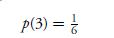
A graph of p(x) is presented in Figure 4.1. ■
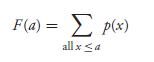
The cumulative distribution function F can be expressed in terms of p(x) by
p(1) = 2 and p(2) =
Step by Step Solution
There are 3 Steps involved in it
1 Expert Approved Answer
Step: 1 Unlock

Question Has Been Solved by an Expert!
Get step-by-step solutions from verified subject matter experts
Step: 2 Unlock
Step: 3 Unlock
 Study Help