







Question: The NASA Team algorithm for calculating sea-ice concentration from SSM/I data defines the polarisation ratio PR as and thegradient ratioGR as where, in both of
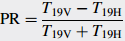
and thegradient ratioGR as
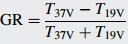
where, in both of these expressions,TfP represents the at-satellite brightness temperature of P-polarised radiation at a frequency of f GHz. It is known from experimental measurements that open water shows a PR of typically 0.22 and a GR of 0.08, while multi-year ice shows a PR of 0.02 and a GR of 0, and first-year ice a PR of 0.04 and a GR of €“0.09. Plot a graph of GR against PR and identify the points corresponding to open water, 100% first-year ice and 100% multi-year ice. Use your graph to suggest, with reasons, interpretations of SSM/I data giving the following values:
(i) PR = 0.06, GR = 0.01,
(ii) PR = 0.12, GR = 0.01.
Interpret the low values of PR for both ice types, and the low value of GR for multi-year ice, in terms of the respective emissivities.
Tigv PR = 19H T19v + T19H r Ti9v GR = T37V + T19V
Step by Step Solution
3.47 Rating (173 Votes )
There are 3 Steps involved in it
Since we are considering microwave radiation we can assume the RayleighJeans approximation to be val... View full answer

Get step-by-step solutions from verified subject matter experts
Document Format (2 attachments)

1618_60641d7060d70_692594.pdf
180 KBs PDF File

1618_60641d7060d70_692594.docx
120 KBs Word File
 Study Help