







Question: Given the following parameter values from the IEEE802.16 standard: Modulation Coding rate BPSK···································1/2 BPSK···································3/4 QPSK···································1/2 QPSK···································3/4 16-.QAM·······························1/2 16-QAM································3/4 64-QAM································2/3 64-QAM································3/4 Find effective data rates in
Modulation Coding rate
BPSK···································1/2
BPSK···································3/4
QPSK···································1/2
QPSK···································3/4
16-.QAM·······························1/2
16-QAM································3/4
64-QAM································2/3
64-QAM································3/4
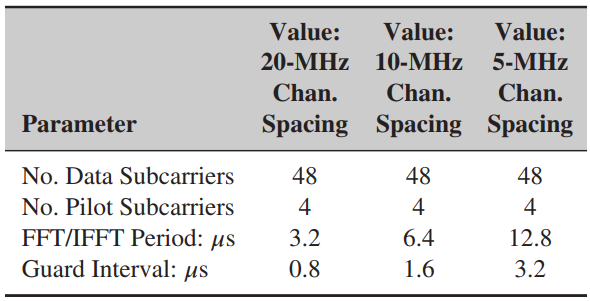
Find effective data rates in Mbps for every case. That is, for each modulation/coding rate combination consider each channel spacing.
Value: Value: Value: 20-MHz 10-MHz 5-MHz Chan. Chan. Chan. Spacing Spacing Spacing Parameter No. Data Subcarriers 48 48 48 No. Pilot Subcarriers 4 4 FFT/IFFT Period: s Guard Interval: s 3.2 6.4 12.8 0.8 1.6 3.2
Step by Step Solution
3.30 Rating (156 Votes )
There are 3 Steps involved in it
The equation for the effective rate is Fo... View full answer

Get step-by-step solutions from verified subject matter experts
 Study Help