







Question: 0 1 0 observations in two classes ( black and red ) are given according to the table. table [ [ , o _
observations in two classes black and red are given according to the table.
tableoooooooooooooooooooo
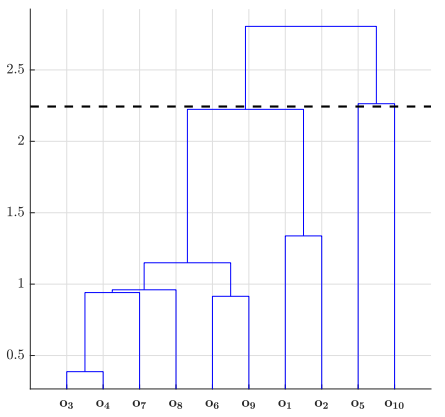
Consider the dendrogram shown with clusters which is based on the observations and distances
in the Table using single linkage.
Suppose we apply a cutoff indicated by the black
line thereby generating three clusters. We
wish to compare the quality of this clustering, Q to the
groundtruth clustering, Z indicated by the colors in
Table What is the Rand index of the two clusterings?
Step by Step Solution
There are 3 Steps involved in it
1 Expert Approved Answer
Step: 1 Unlock

Question Has Been Solved by an Expert!
Get step-by-step solutions from verified subject matter experts
Step: 2 Unlock
Step: 3 Unlock
 Study Help