







Question: 01: A constant net torque is applied to a rotating object. Which of the following can possibly describe the object's motion? Check all that apply.
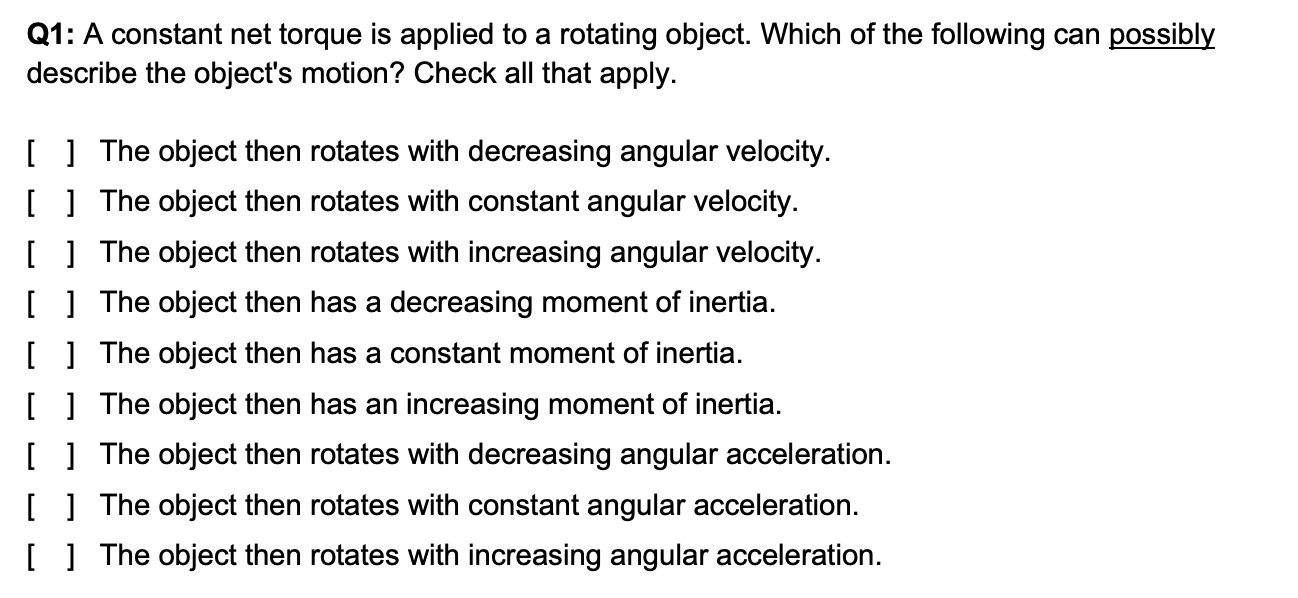
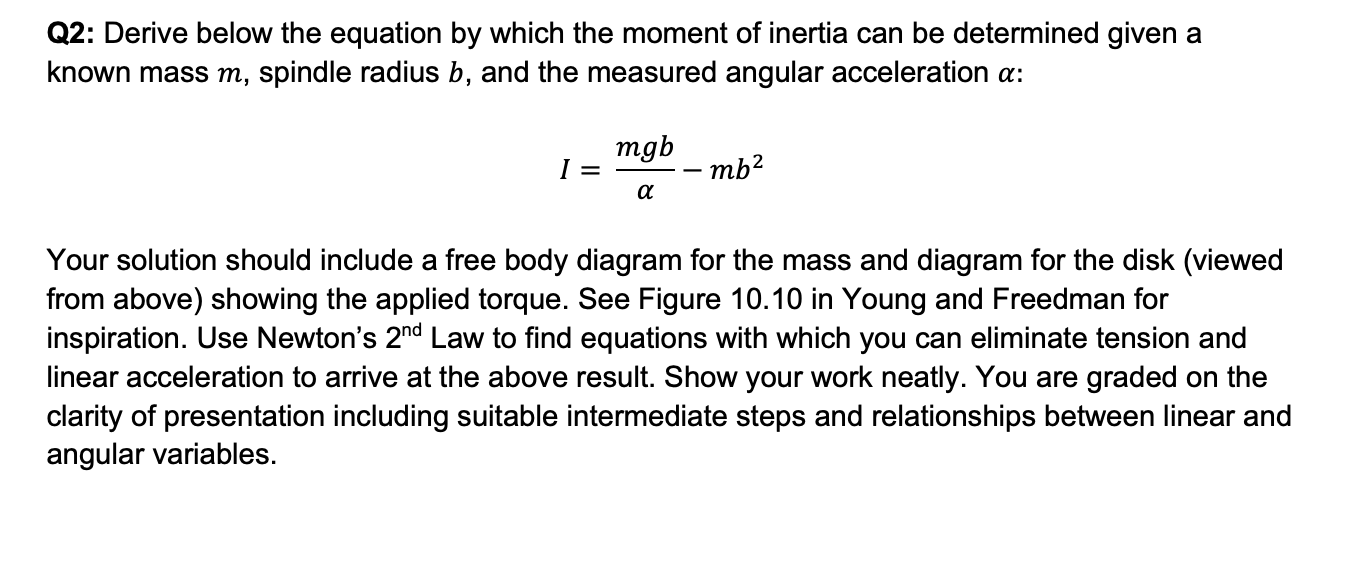
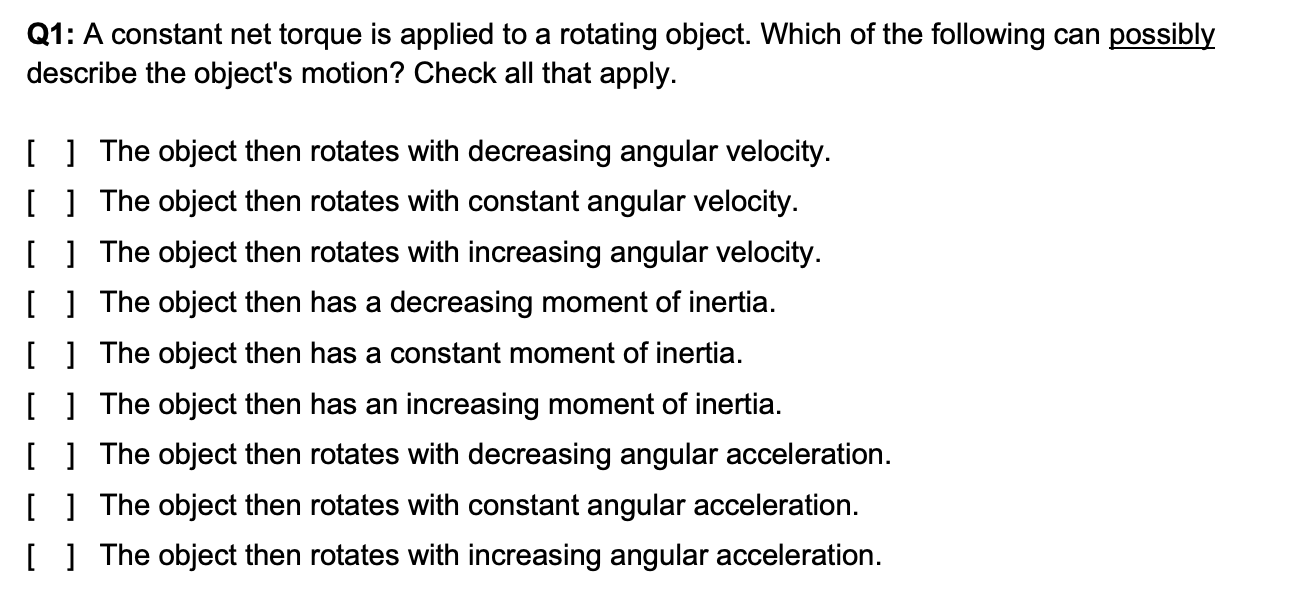
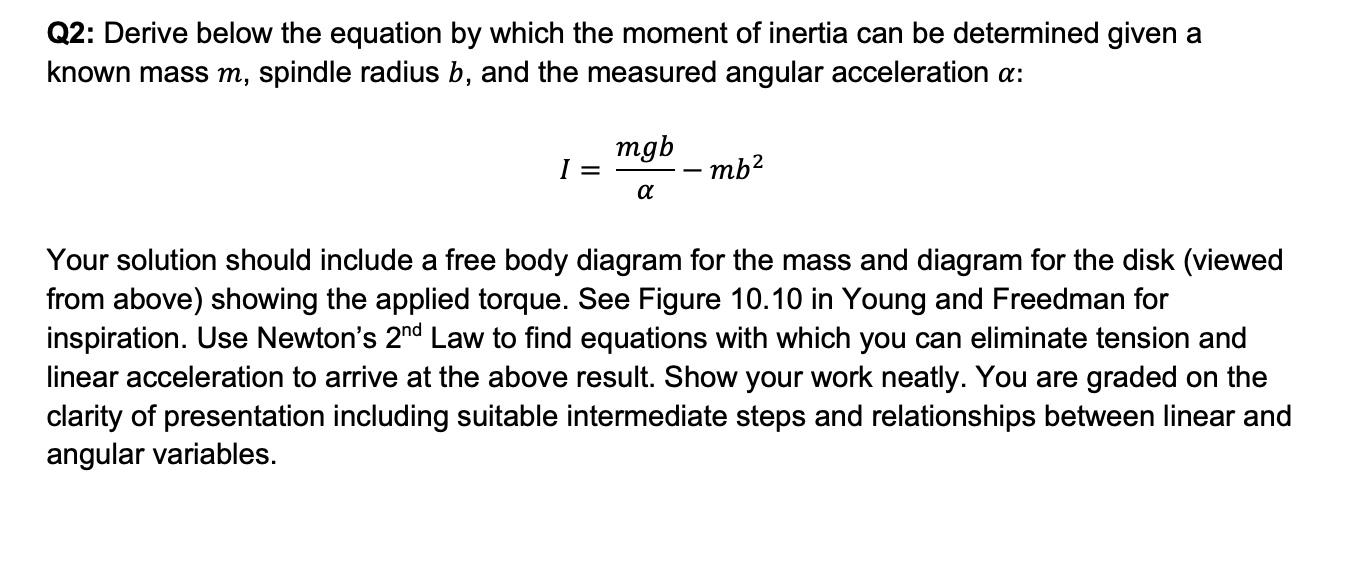
01: A constant net torque is applied to a rotating object. Which of the following can possibly describe the object's motion? Check all that apply. The object then rotates with decreasing angular velocity. The object then rotates with constant angular velocity. The object then rotates with increasing angular velocity. The object then has a decreasing moment of inertia. The object then has an increasing moment of inertia. The object then rotates with decreasing angular acceleration. [ l [ l [ l [ l [ ] The object then has a constant moment of inertia. [ l [ l [ ] The object then rotates with constant angular acceleration. [ l The object then rotates with increasing angular acceleration. 02: Derive below the equation by which the moment of inertia can be determined given a known mass m, spindle radius b. and the measured angular acceleration as: Your solution should include a free body diagram for the mass and diagram for the disk (viewed from above) showing the applied torque. See Figure 10.10 in Young and Freedman for inspiration. Use Newton's 2nd Law to find equations with which you can eliminate tension and linear acceleration to arrive at the above result. Show your work neatly. You are graded on the clarity of presentation including suitable intermediate steps and relationships between linear and angular variables
Step by Step Solution
There are 3 Steps involved in it

Get step-by-step solutions from verified subject matter experts
 Study Help