







Question: a) What are the flaws of the report? b) What kinds of students are less likely to persist online education? c) What is MOOC?
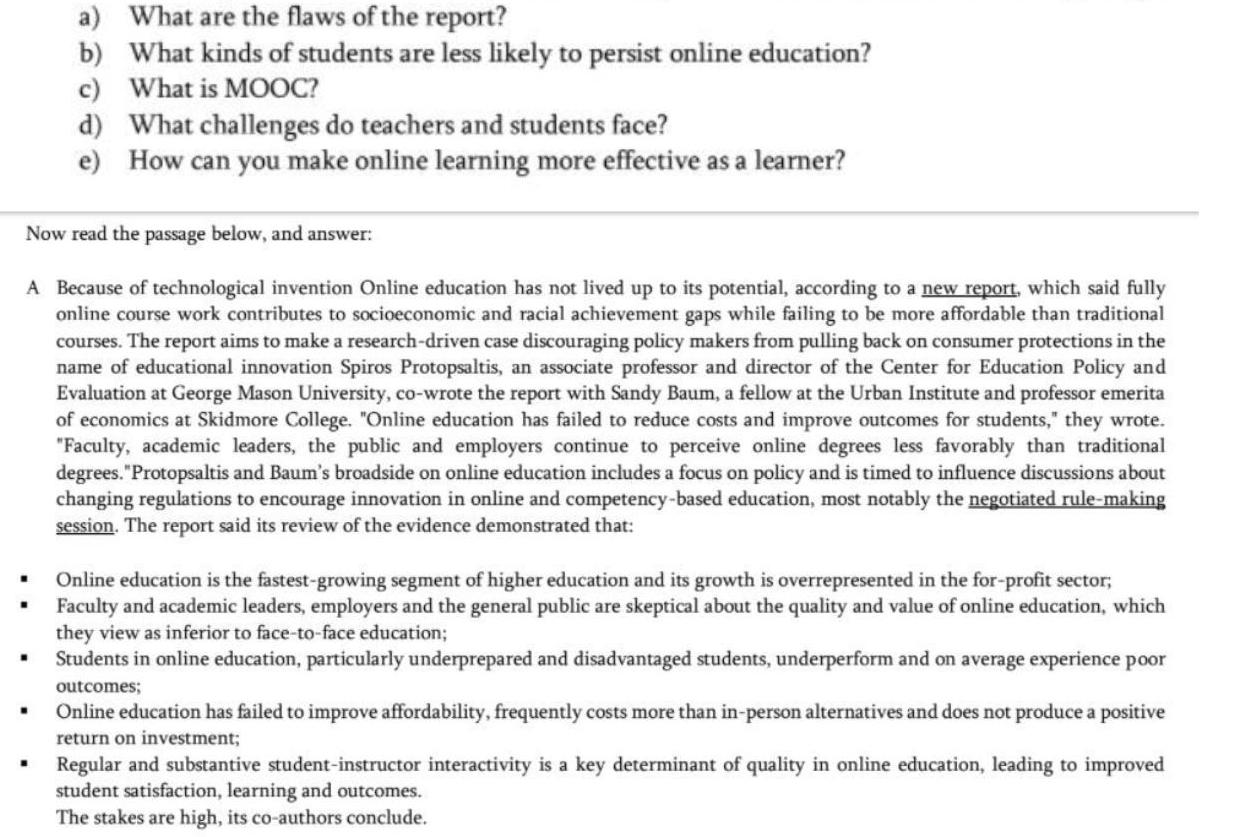
a) What are the flaws of the report? b) What kinds of students are less likely to persist online education? c) What is MOOC? d) What challenges do teachers and students face? e) How can you make online learning more effective as a learner? Now read the passage below, and answer: A Because of technological invention Online education has not lived up to its potential, according to a new report, which said fully online course work contributes to socioeconomic and racial achievement gaps while failing to be more affordable than traditional courses. The report aims to make a research-driven case discouraging policy makers from pulling back on consumer protections in the name of educational innovation Spiros Protopsaltis, an associate professor and director of the Center for Education Policy and Evaluation at George Mason University, co-wrote the report with Sandy Baum, a fellow at the Urban Institute and professor emerita of economics at Skidmore College. "Online education has failed to reduce costs and improve outcomes for students," they wrote. "Faculty, academic leaders, the public and employers continue to perceive online degrees less favorably than traditional degrees."Protopsaltis and Baum's broadside on online education includes a focus on policy and is timed to influence discussions about changing regulations to encourage innovation in online and competency-based education, most notably the negotiated rule-making session. The report said its review of the evidence demonstrated that: Online education is the fastest-growing segment of higher education and its growth is overrepresented in the for-profit sector; Faculty and academic leaders, employers and the general public are skeptical about the quality and value of online education, which they view as inferior to face-to-face education; Students in online education, particularly underprepared and disadvantaged students, underperform and on average experience poor outcomes; Online education has failed to improve affordability, frequently costs more than in-person alternatives and does not produce a positive return on investment; Regular and substantive student-instructor interactivity is a key determinant of quality in online education, leading to improved student satisfaction, learning and outcomes. The stakes are high, its co-authors conclude.
Step by Step Solution
3.51 Rating (148 Votes )
There are 3 Steps involved in it
a What are the flaws of the report The report fails to acknowledge the arguments from those who explain the advantages of online learning such as Incr... View full answer

Get step-by-step solutions from verified subject matter experts
Document Format (2 attachments)

636952a2ab72a_242534.pdf
180 KBs PDF File

636952a2ab72a_242534.docx
120 KBs Word File
 Study Help