







Question: 0(1): What is the difference between mass and weight? How much you will weigh if you are on the surface of the Moon? And how
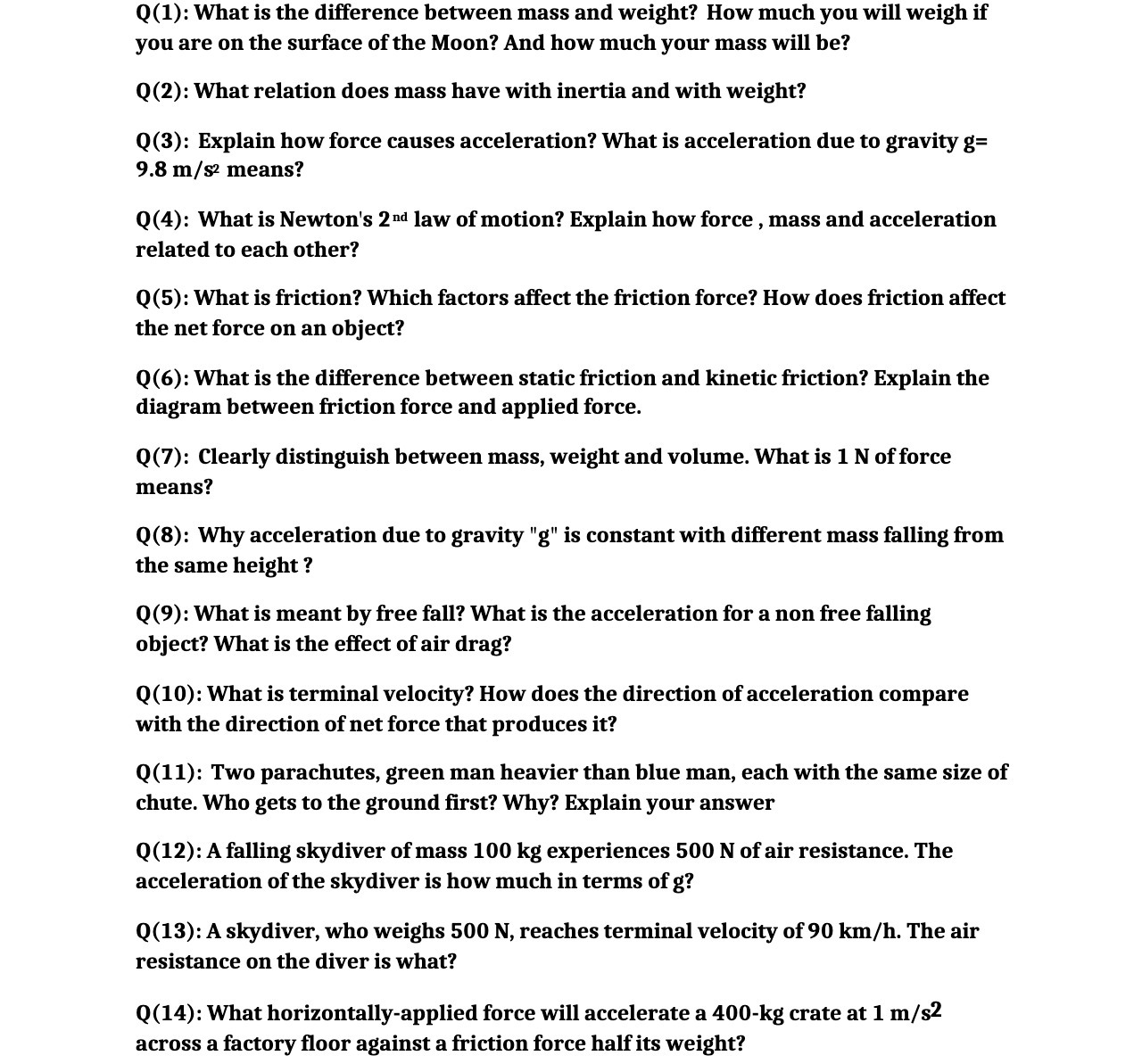
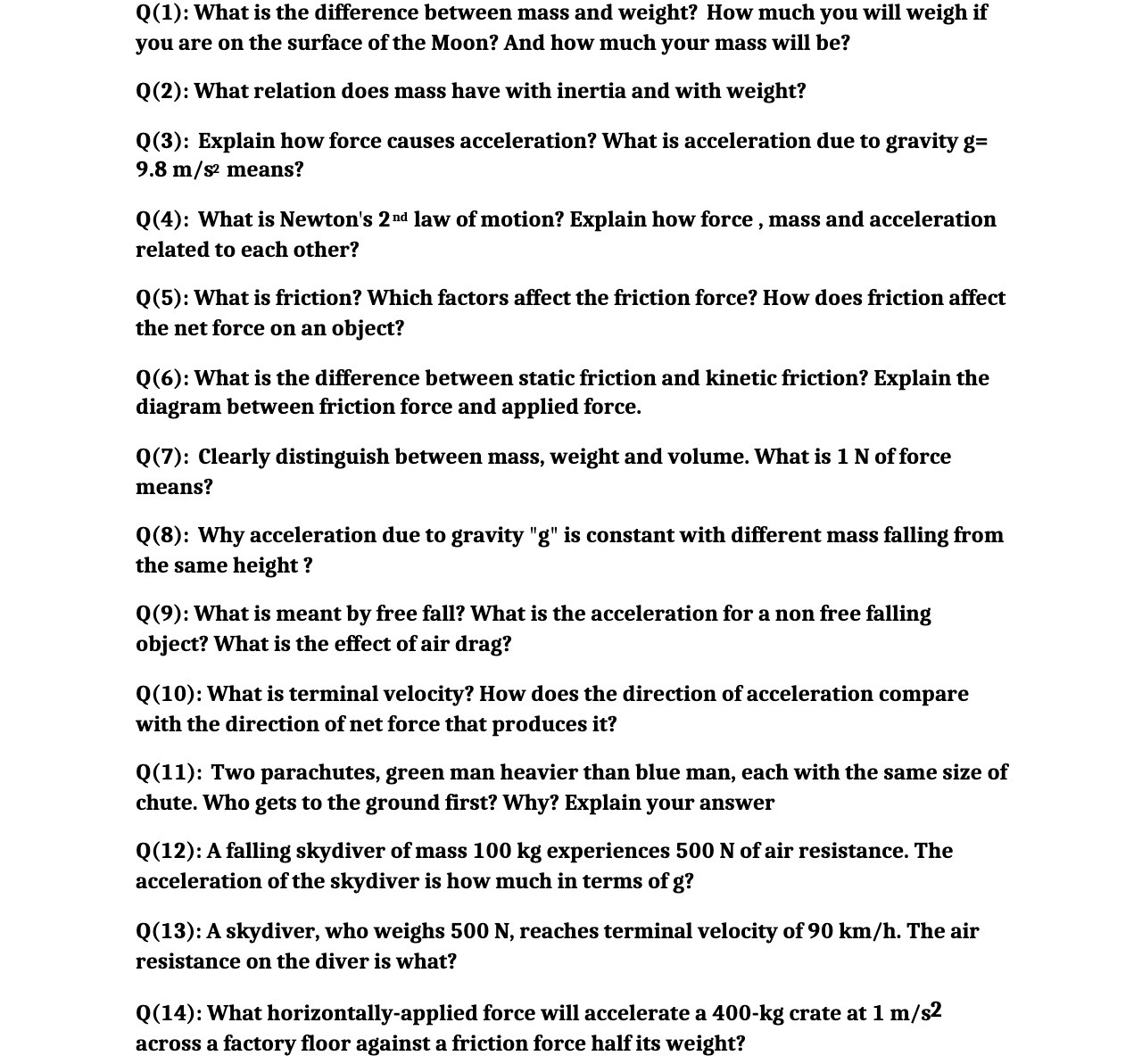
0(1): What is the difference between mass and weight? How much you will weigh if you are on the surface of the Moon? And how much your mass will be? 0(2): What relation does mass have with inertia and with weight? 0(3): Explain how force causes acceleration? What is acceleration due to gravity g: 9.8 m/s2 means? 0(4): What is Newton's 2llli law of motion? Explain how force , mass and acceleration related to each other? 0(5): What is friction? Which factors affect the friction force? How does friction affect the net force on an object? 0(6): What is the difference between static friction and kinetic friction? Explain the diagram between friction force and applied force. 0(7): Clearly distinguish between mass, weight and volume. What is 1 N of force means? 0(8): Why acceleration due to gravity "g" is constant with different mass falling from the same height ? 0(9): What is meant by free fall? What is the acceleration for a non free falling object? What is the effect of air drag? 0(10): What is terminal velocity? How does the direction of acceleration compare with the direction of net force that produces it? 0(11): Two parachutes, green man heavier than blue man, each with the same size of chute. Who gets to the ground first? Why? Explain your answer 0(12): A falling skydiver of mass 100 kg experiences 500 N of air resistance. The acceleration of the skydiver is how much in terms of g? 0(13): A skydiver, who weighs 500 N, reaches terminal velocity of 90 km/h. The air resistance on the diver is what? 0(14): What horizontally-applied force will accelerate a 400-kg crate at 1 m/s2 across a factory oor against a friction force half its weight
Step by Step Solution
There are 3 Steps involved in it

Get step-by-step solutions from verified subject matter experts
 Study Help