







Question: 05 Do Lefties do Better in Baseball? Part 3 7 Points The data that we explored in 03 also had information on the hand used
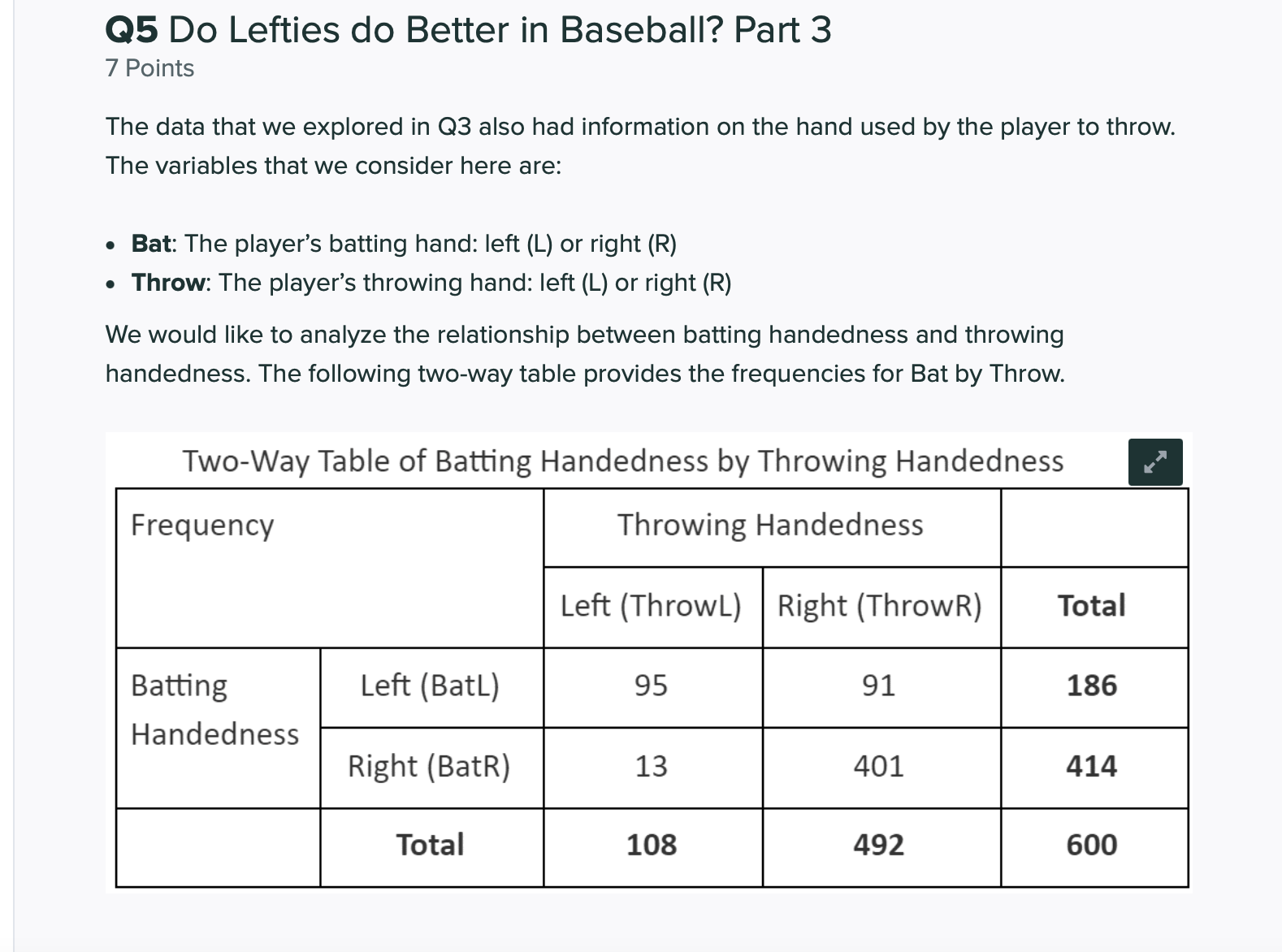
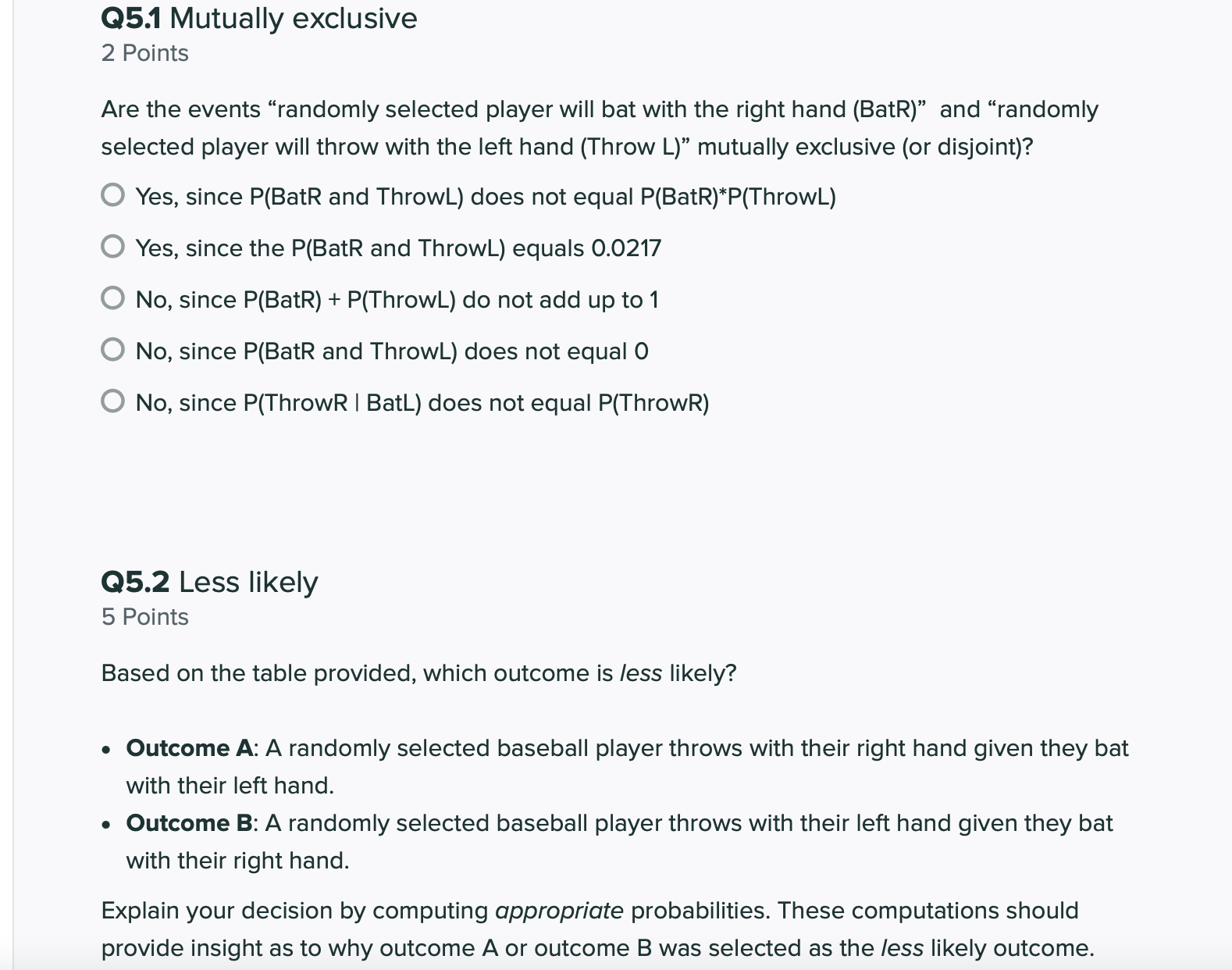
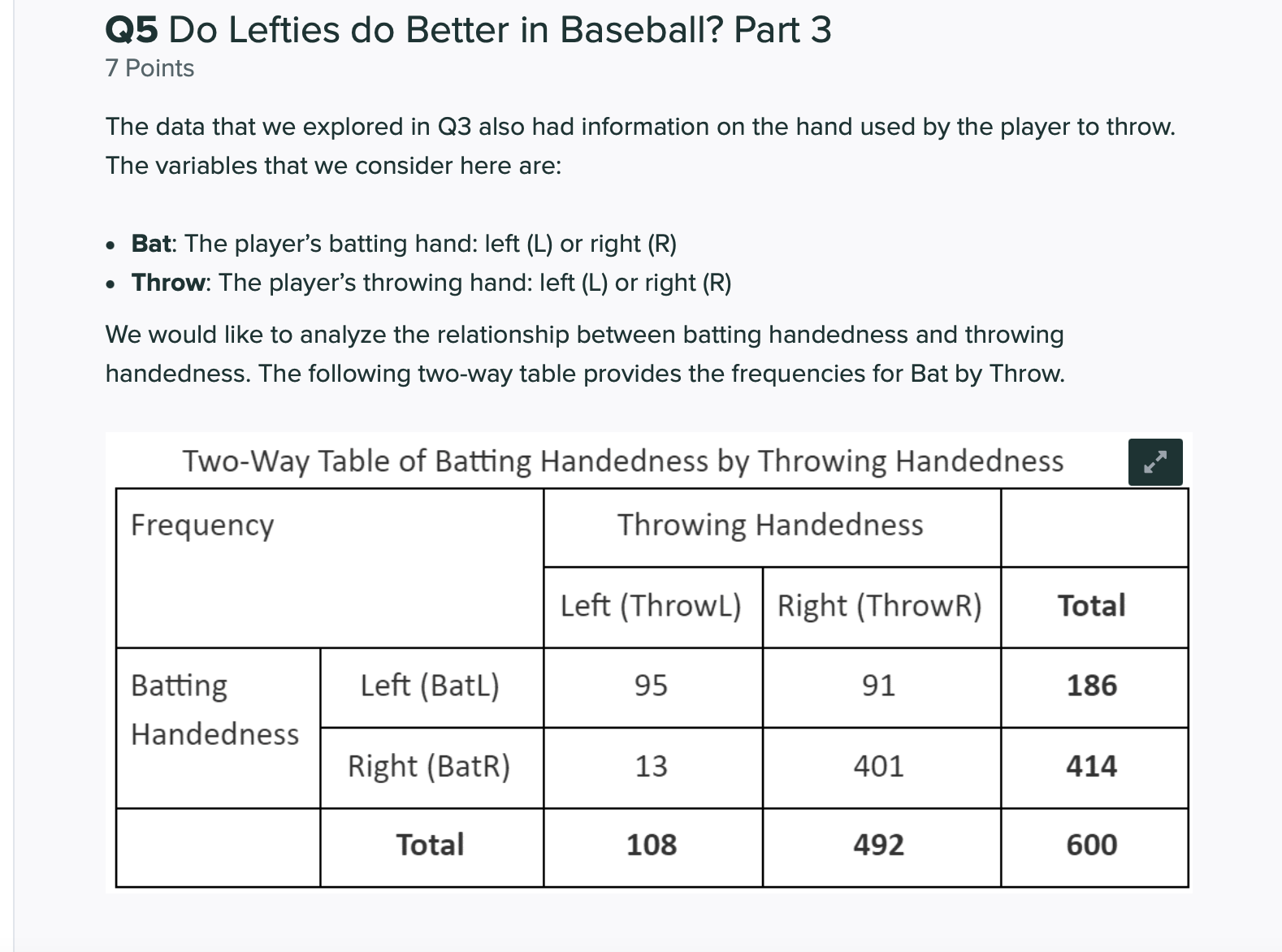
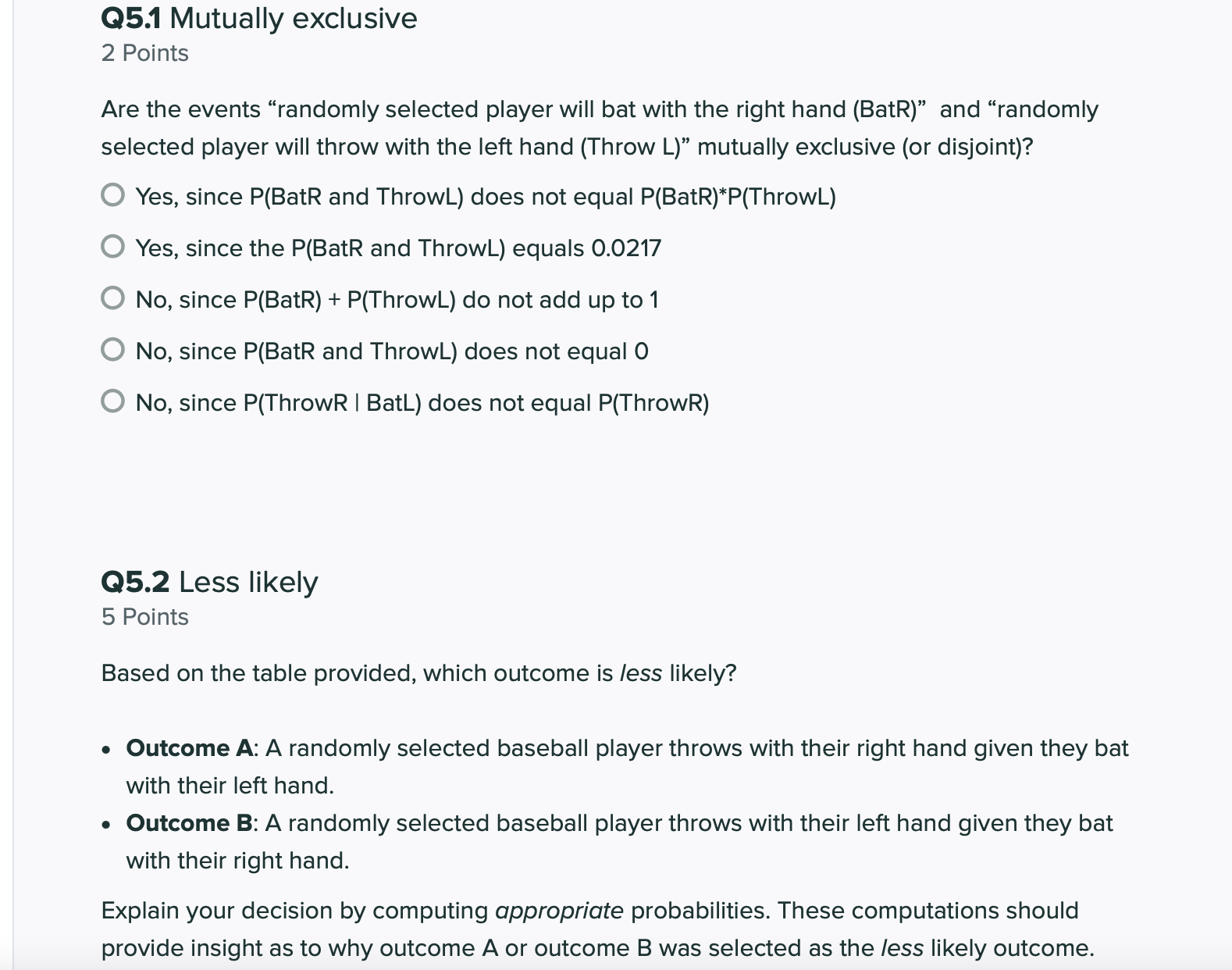
05 Do Lefties do Better in Baseball? Part 3 7 Points The data that we explored in 03 also had information on the hand used by the player to throw. The variables that we consider here are: . Bat: The player's batting hand: left (L) or right (R) . Throw: The player's throwing hand: left (L) or right (R) We would like to analyze the relationship between batting handedness and throwing handedness. The following two-way table provides the frequencies for Bat by Throw. Two- -Way Table of Batting Handedness by Throwing Handedness Frequency Throwing Handedness - Left (ThrowL) Right (ThrowR) Handed ness --\"\"\" 05.1 Mutually exclusive 2 Points Are the events "randomly selected player will bat with the right hand (BatR)\" and "randomly selected player will throw with the left hand (Throw L)\" mutually exclusive (or disjoint)? 0 Yes, since P(BatR and ThrowL) does not equal P(BatR)*P(ThrowL) 0 Yes, since the P(BatR and ThrowL) equals 0.0217 0 No, since P(BatR) + P(ThrowL) do not add up to 1 O No, since P(BatR and ThrowL) does not equal 0 O No, since P(ThrowR | BatL) does not equal P(ThrowR) 05.2 Less likely 5 Points Based on the table provided, which outcome is less likely? - Outcome A: A randomly selected baseball player throws with their right hand given they bat with their left hand. . Outcome B: A randomly selected baseball player throws with their left hand given they bat with their right hand. Explain your decision by computing appropriate probabilities. These computations should provide insight as to why outcome A or outcome B was selected as the less likely outcome
Step by Step Solution
There are 3 Steps involved in it

Get step-by-step solutions from verified subject matter experts
 Study Help