







Question: 1 1 . 8 Exercises Consider a trading network with intermediaries in which there is one seller S , two buyers B 1 , B
Exercises Consider a trading network with intermediaries in which there is one seller S two buyers BB and two traders intermediaries TT The seller is allowed to trade with either trader. The buyers can each trade with only one of the traders: buyer B can only trade with trader T ; and buyer B can only trade with trader T The seller has one unit of the object and values it at ; the buyers are not endowed with the object. Buyer B values a unit at and buyer B values a unit at a Draw the trading network, with the traders as squares, the buyers and the seller as circles, and with edges connecting nodes who are able to trade with each other. Label each node as SBBT or Tb Suppose the traders offer prices aly follows. Trader T offers a bid price of to S and an ask price of to B Trader T offers a bid price of to S and an ask price of to B Does this set of prices form a Nash equilibrium? If you think the answer is yes, give a brief sentence explanation why. If you think the answer is no describe a way in which one of the traders could changes its prices so as to increase its profit. Consider a trading network with intermediaries in which there are three sellers
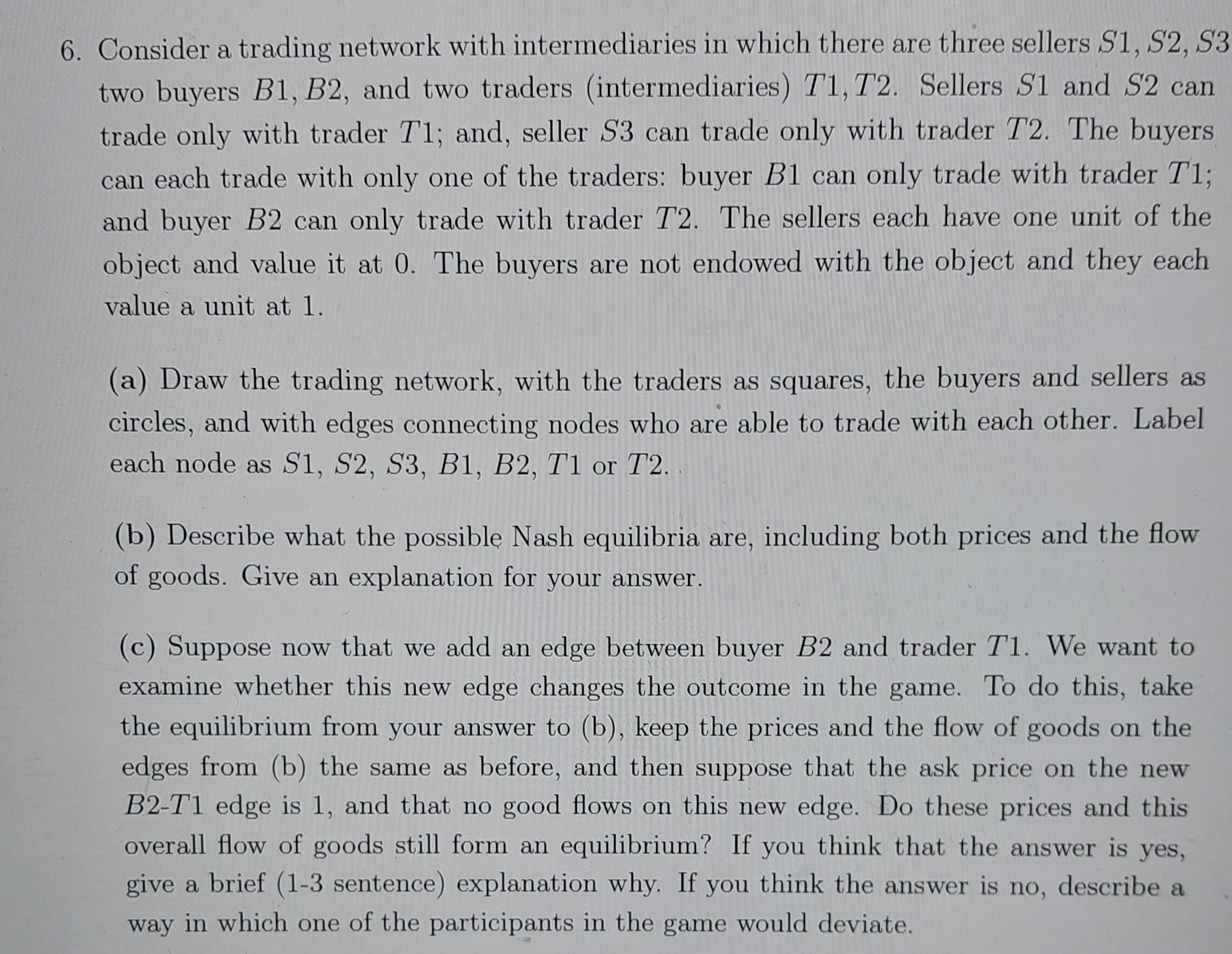
two buyers and two traders intermediaries Sellers and can
trade only with trader ; and, seller can trade only with trader The buyers
can each trade with only one of the traders: buyer can only trade with trader ;
and buyer can only trade with trader The sellers each have one unit of the
object and value it at The buyers are not endowed with the object and they each
value a unit at
a Draw the trading network, with the traders as squares, the buyers and sellers as
circles, and with edges connecting nodes who are able to trade with each other. Label
each node as or
b Describe what the possible Nash equilibria are, including both prices and the flow
of goods. Give an explanation for your answer.
c Suppose now that we add an edge between buyer and trader We want to
examine whether this new edge changes the outcome in the game. To do this, take
the equilibrium from your answer to b keep the prices and the flow of goods on the
edges from b the same as before, and then suppose that the ask price on the new
edge is and that no good flows on this new edge. Do these prices and this
overall flow of goods still form an equilibrium? If you think that the answer is yes,
give a brief sentence explanation why. If you think the answer is no describe a
way in which one of the participants in the game would deviate.
Step by Step Solution
There are 3 Steps involved in it
1 Expert Approved Answer
Step: 1 Unlock

Question Has Been Solved by an Expert!
Get step-by-step solutions from verified subject matter experts
Step: 2 Unlock
Step: 3 Unlock
 Study Help