







Question: 1. 2. 3. 4. 5. A process may transition to the ready state by which item(s)? 1. As a newly admitted process 2. Suspension from
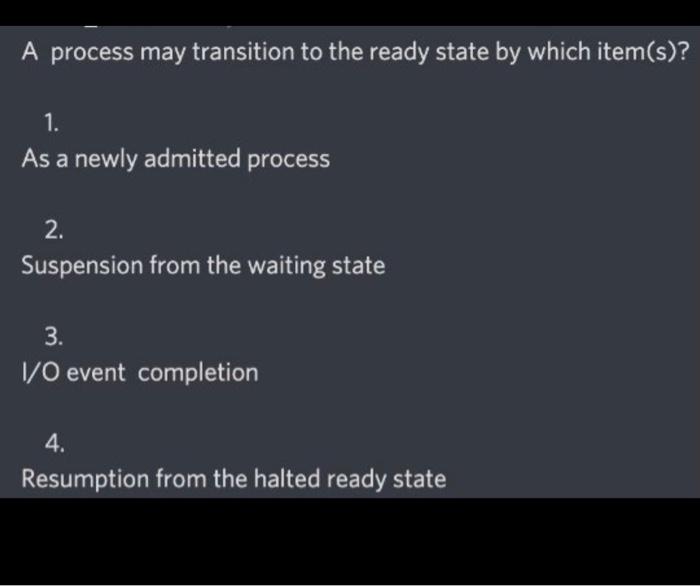
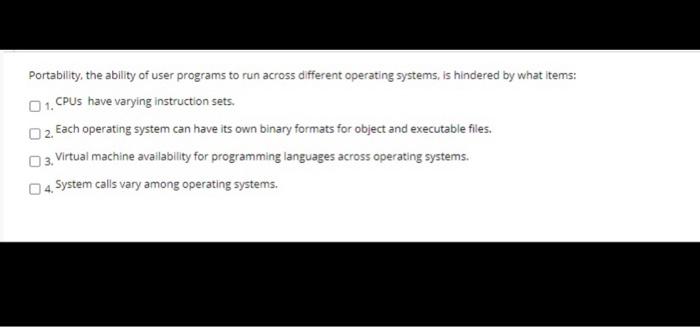
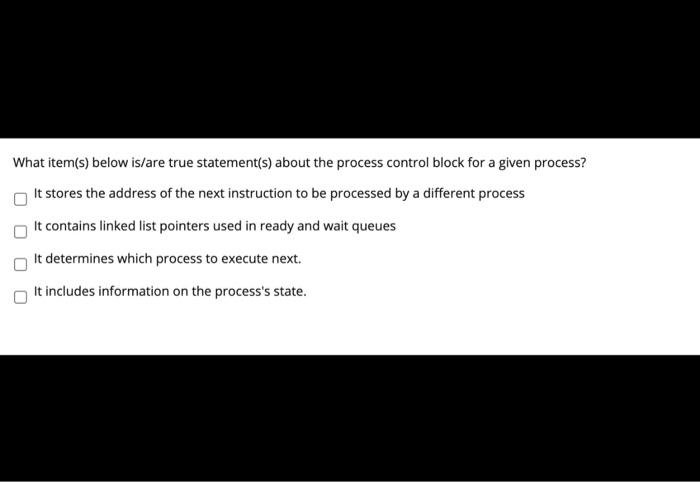
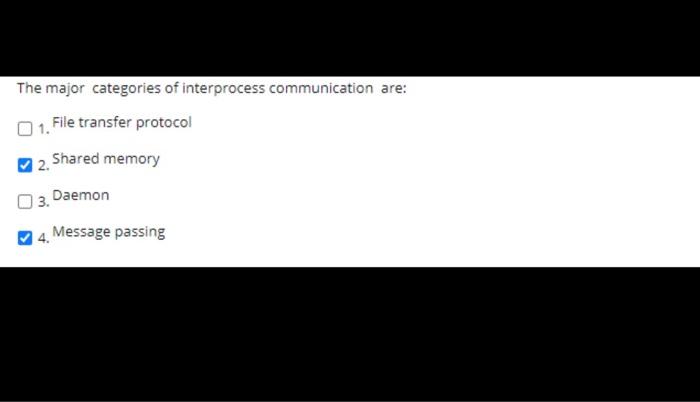
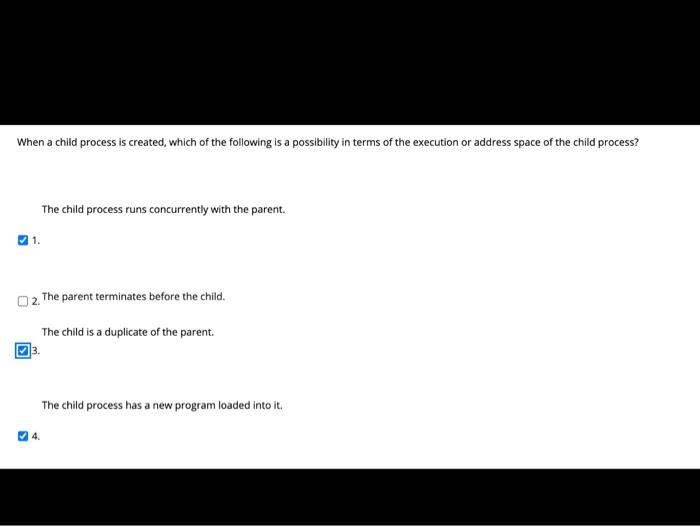
A process may transition to the ready state by which item(s)? 1. As a newly admitted process 2. Suspension from the waiting state 3. V/O event completion 4. Resumption from the halted ready state Portability, the ability of user programs to run across different operating systems is hindered by what items: 1. CPUs have varying Instruction sets. 2. Each operating system can have its own binary formats for object and executable files. 3. Virtual machine availability for programming languages across operating systems. 4. System calls vary among operating systems. What item(s) below is/are true statement(s) about the process control block for a given process? It stores the address of the next instruction to be processed by a different process It contains linked list pointers used in ready and wait queues It determines which process to execute next. It includes information on the process's state. The major categories of interprocess communication are: 1. File transfer protocol 12. Shared memory 3. Daemon 4. 4. Message passing When a child process is created, which of the following is a possibility in terms of the execution or address space of the child process? The child process runs concurrently with the parent. 1. 2. The parent terminates before the child. The child is a duplicate of the parent. The child process has a new program loaded into it
Step by Step Solution
There are 3 Steps involved in it

Get step-by-step solutions from verified subject matter experts
 Study Help