





Question: (1) 2. For this question, suppose that we once again aim to predict whether the students' final year grade is above or below average. This
(1) 2. For this question, suppose that we once

(1) 2. For this question, suppose that we once

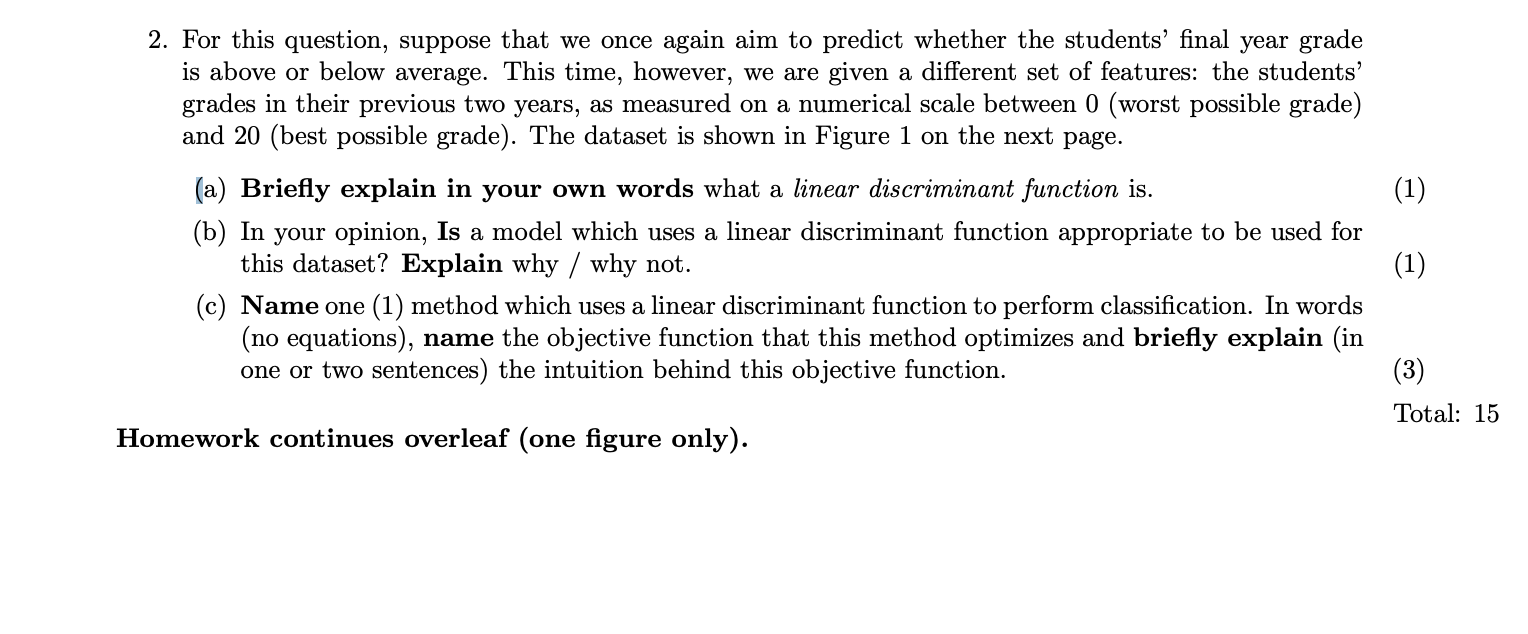
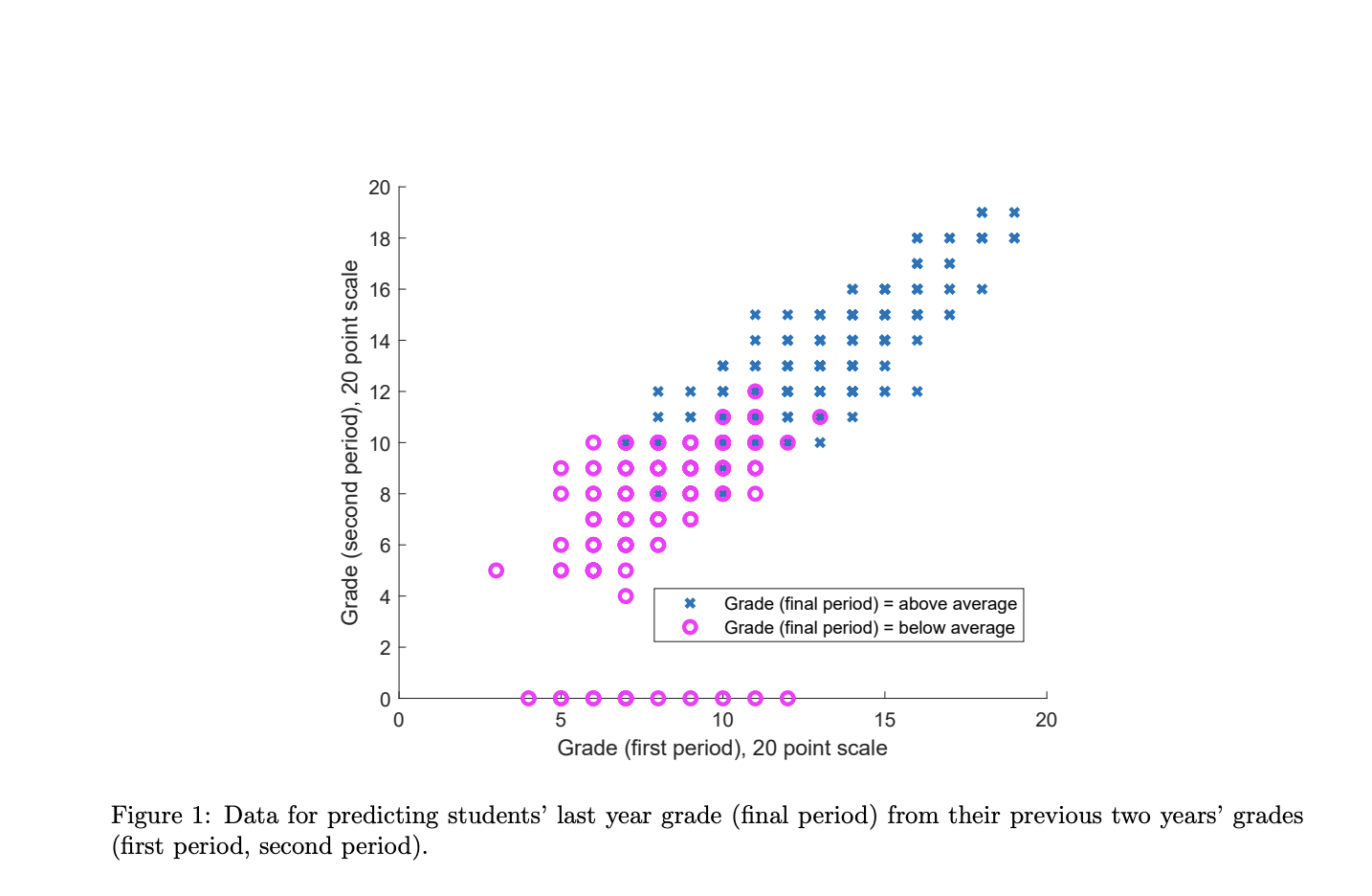
(1) 2. For this question, suppose that we once again aim to predict whether the students' final year grade is above or below average. This time, however, we are given a different set of features: the students' grades in their previous two years, as measured on a numerical scale between 0 (worst possible grade) and 20 (best possible grade). The dataset is shown in Figure 1 on the next page. (a) Briefly explain in your own words what a linear discriminant function is. (b) In your opinion, Is a model which uses a linear discriminant function appropriate to be used for this dataset? Explain why / why not. (c) Name one (1) method which uses a linear discriminant function to perform classification. In words (no equations), name the objective function that this method optimizes and briefly explain (in one or two sentences) the intuition behind this objective function. (1) (3) Total: 15 Homework continues overleaf (one figure only). 20 18 16 xxxx 14 xx xxxxxx 12 Grade (second period), 20 point scale 10 8 6 4 Grade (final period) = above average Grade (final period) = below average 2 0 0 15 20 5 10 Grade (first period), 20 point scale Figure 1: Data for predicting students' last year grade (final period) from their previous two years' grades (first period, second period)

Step by Step Solution

There are 3 Steps involved in it

1 Expert Approved Answer
Step: 1 Unlock blur-text-image

Question Has Been Solved by an Expert!

Get step-by-step solutions from verified subject matter experts

Step: 2 Unlock
Step: 3 Unlock

Students Have Also Explored These Related General Management Questions!