







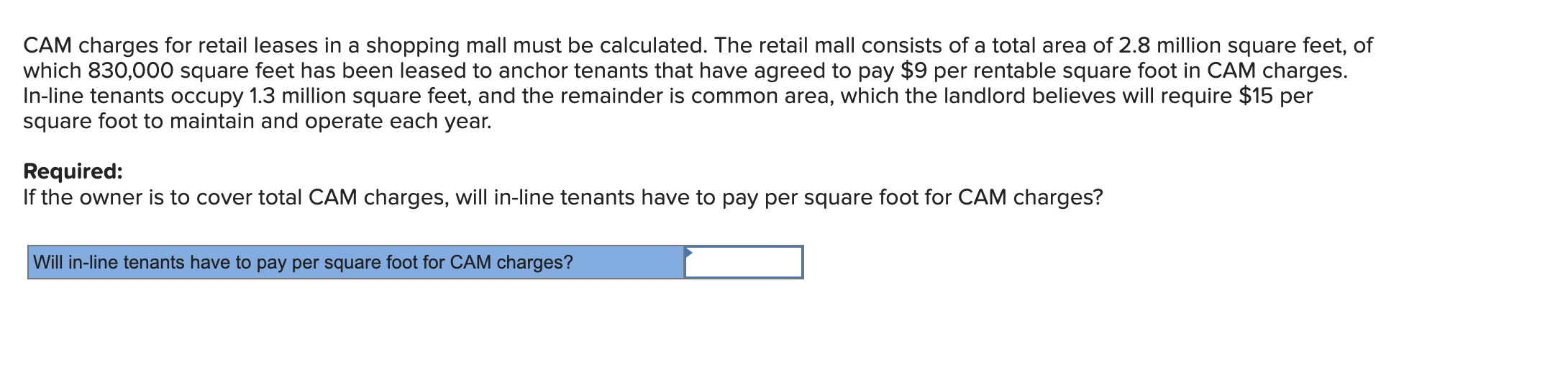
Question: 1. 2. PLEASE ANSWER PART A AND B CAM charges for retail leases in a shopping mall must be calculated. The retail mall consists of
1.
 2. PLEASE ANSWER PART A AND B
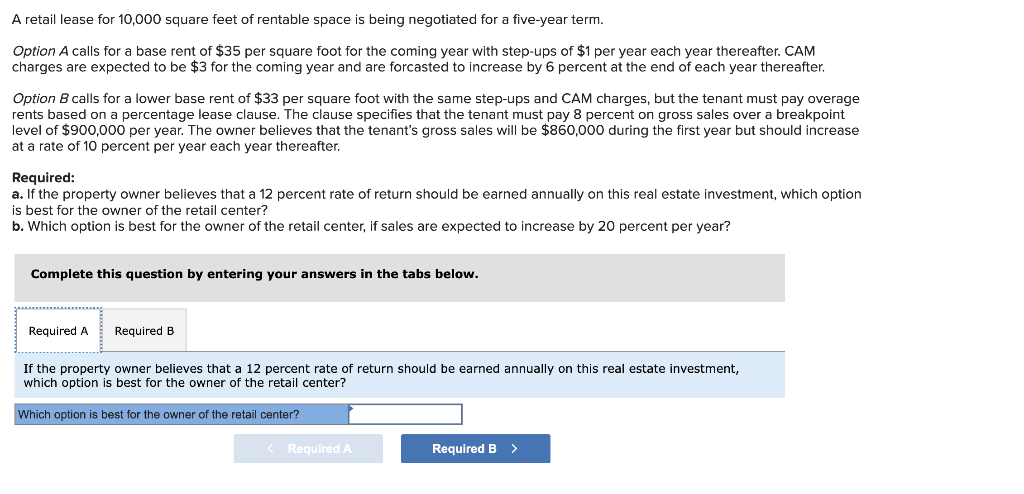
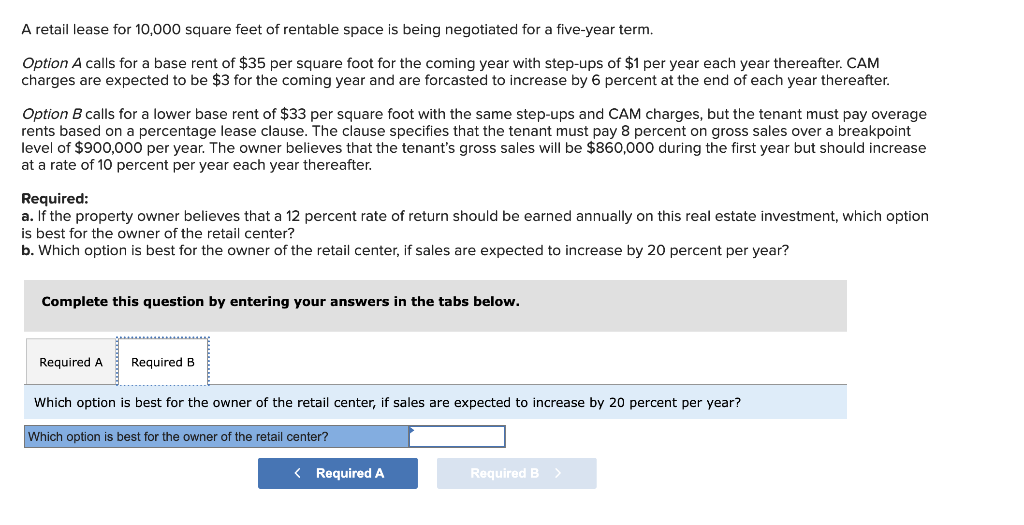
CAM charges for retail leases in a shopping mall must be calculated. The retail mall consists of a total area of 2.8 million square feet, of which 830,000 square feet has been leased to anchor tenants that have agreed to pay $9 per rentable square foot in CAM. In-line tenants occupy 1.3 million square feet, and the remainder is common area, which the landlord believes will require $15 per square foot to maintain and operate each year. Required: If the owner is to cover total CAM charges, will in-line tenants have to pay per square foot for CAM charges? A retail lease for 10,000 square feet of rentable space is being negotiated for a five-year term. Option A calls for a base rent of $35 per square foot for the coming year with step-ups of $1 per year each year thereafter. CAM charges are expected to be $3 for the coming year and are forcasted to increase by 6 percent at the end of each year thereafter. Option B calls for a lower base rent of $33 per square foot with the same step-ups and CAM charges, but the tenant must pay overage rents based on a percentage lease clause. The clause specifies that the tenant must pay 8 percent on gross sales over a breakpoint level of $900,000 per year. The owner believes that the tenant's gross sales will be $860,000 during the first year but should increase at a rate of 10 percent per year each year thereafter. Required: a. If the property owner believes that a 12 percent rate of return should be earned annually on this real estate investment, which option is best for the owner of the retail center? b. Which option is best for the owner of the retail center, if sales are expected to increase by 20 percent per year? Complete this question by entering your answers in the tabs below. If the property owner believes that a 12 percent rate of return should be earned annually on this real estate investment, which option is best for the owner of the retail center? A retail lease for 10,000 square feet of rentable space is being negotiated for a five-year term. Option A calls for a base rent of $35 per square foot for the coming year with step-ups of $1 per year each year thereafter. CAM charges are expected to be $3 for the coming year and are forcasted to increase by 6 percent at the end of each year thereafter. Option B calls for a lower base rent of $33 per square foot with the same step-ups and CAM charges, but the tenant must pay overage rents based on a percentage lease clause. The clause specifies that the tenant must pay 8 percent on gross sales over a breakpoint level of $900,000 per year. The owner believes that the tenant's gross sales will be $860,000 during the first year but should increase at a rate of 10 percent per year each year thereafter. Required: a. If the property owner believes that a 12 percent rate of return should be earned annually on this real estate investment, which option is best for the owner of the retail center? b. Which option is best for the owner of the retail center, if sales are expected to increase by 20 percent per year? Complete this question by entering your answers in the tabs below. Which option is best for the owner of the retail center, if sales are expected to increase by 20 percent per year? Which option is best for the owner of the retail center? CAM charges for retail leases in a shopping mall must be calculated. The retail mall consists of a total area of 2.8 million square feet, of which 830,000 square feet has been leased to anchor tenants that have agreed to pay $9 per rentable square foot in CAM. In-line tenants occupy 1.3 million square feet, and the remainder is common area, which the landlord believes will require $15 per square foot to maintain and operate each year. Required: If the owner is to cover total CAM charges, will in-line tenants have to pay per square foot for CAM charges? A retail lease for 10,000 square feet of rentable space is being negotiated for a five-year term. Option A calls for a base rent of $35 per square foot for the coming year with step-ups of $1 per year each year thereafter. CAM charges are expected to be $3 for the coming year and are forcasted to increase by 6 percent at the end of each year thereafter. Option B calls for a lower base rent of $33 per square foot with the same step-ups and CAM charges, but the tenant must pay overage rents based on a percentage lease clause. The clause specifies that the tenant must pay 8 percent on gross sales over a breakpoint level of $900,000 per year. The owner believes that the tenant's gross sales will be $860,000 during the first year but should increase at a rate of 10 percent per year each year thereafter. Required: a. If the property owner believes that a 12 percent rate of return should be earned annually on this real estate investment, which option is best for the owner of the retail center? b. Which option is best for the owner of the retail center, if sales are expected to increase by 20 percent per year? Complete this question by entering your answers in the tabs below. If the property owner believes that a 12 percent rate of return should be earned annually on this real estate investment, which option is best for the owner of the retail center? A retail lease for 10,000 square feet of rentable space is being negotiated for a five-year term. Option A calls for a base rent of $35 per square foot for the coming year with step-ups of $1 per year each year thereafter. CAM charges are expected to be $3 for the coming year and are forcasted to increase by 6 percent at the end of each year thereafter. Option B calls for a lower base rent of $33 per square foot with the same step-ups and CAM charges, but the tenant must pay overage rents based on a percentage lease clause. The clause specifies that the tenant must pay 8 percent on gross sales over a breakpoint level of $900,000 per year. The owner believes that the tenant's gross sales will be $860,000 during the first year but should increase at a rate of 10 percent per year each year thereafter. Required: a. If the property owner believes that a 12 percent rate of return should be earned annually on this real estate investment, which option is best for the owner of the retail center? b. Which option is best for the owner of the retail center, if sales are expected to increase by 20 percent per year? Complete this question by entering your answers in the tabs below. Which option is best for the owner of the retail center, if sales are expected to increase by 20 percent per year? Which option is best for the owner of the retail center
Step by Step Solution
There are 3 Steps involved in it

Get step-by-step solutions from verified subject matter experts
 Study Help