







Question: 1 2 points Decide whether each statement is describing a parametric or nonparametric test Includes chi square tests Make comparisons of things like frequency distributions
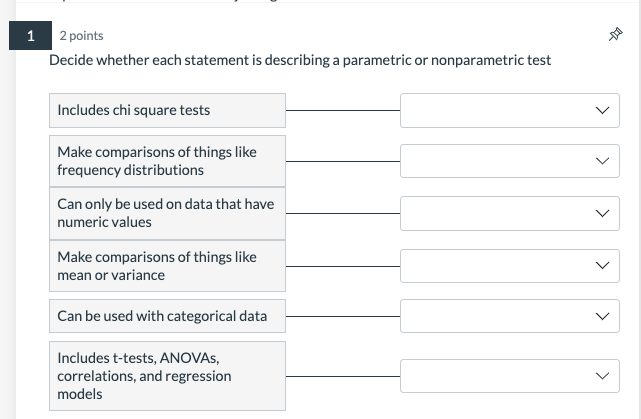
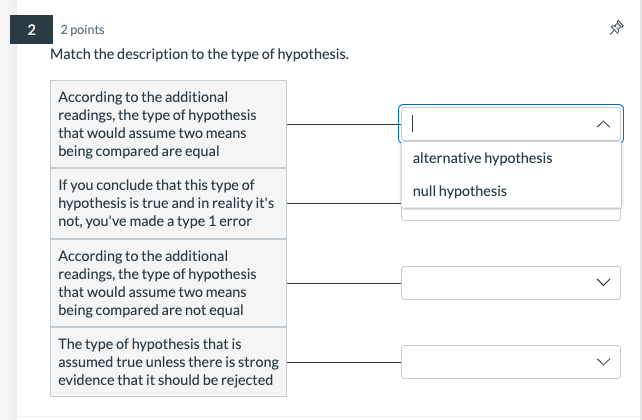
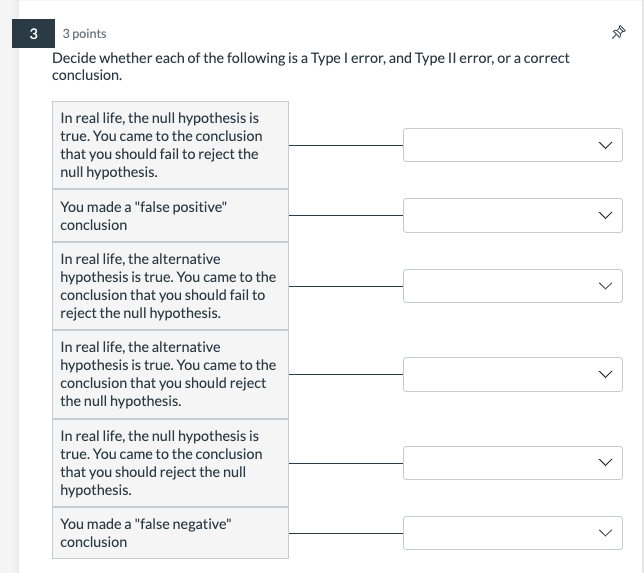

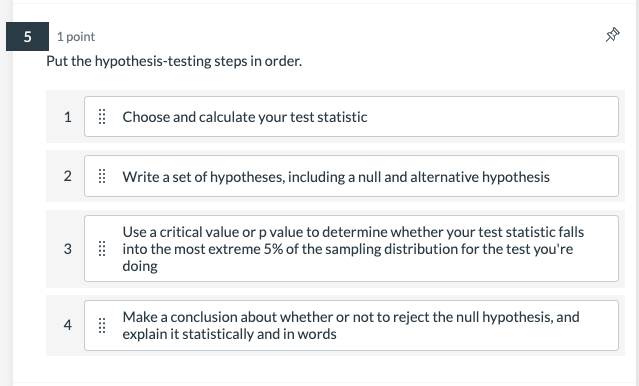
1 2 points Decide whether each statement is describing a parametric or nonparametric test Includes chi square tests Make comparisons of things like frequency distributions Can only be used on data that have numeric values Make comparisons of things like mean or variance Can be used with categorical data Includes t-tests, ANOVAs, correlations, and regression models2 2 points Match the description to the type of hypothesis. According to the additional readings, the type of hypothesis that would assume two means being compared are equal alternative hypothesis If you conclude that this type of null hypothesis hypothesis is true and in reality it's not, you've made a type 1 error According to the additional readings, the type of hypothesis that would assume two means being compared are not equal The type of hypothesis that is assumed true unless there is strong evidence that it should be rejected3 points Decide whether each of the fol lowing is a Type I errorr and Type II error. or a correct conclusion. In real life, the null hypothesis is true. You came to the conclusion that you should fail to reject the null hypothesis. You made a "false positive" conclusion In real life. the alternative hypothesis is true. You came to the conclusion that you should fail to reject the null hypothesis. In real life. the alternative hypothesis is true. You came to the conclusion that you should reject the null hypothesis. In real life. the null hypothesis is true. You came to the conclusion that you should reject the null hypothesis. You made a "false negative" conclusion 1 point We're only willing to give ourselves a 59s chance of which of the following? rejecting the null hypothesis 1when we should n't have failing to reject the null hypothesis when we shouldn't have rejecting the alternative hypothesis when we shouldn't have 5 1 point Put the hypothesis-testing steps in order. Choose and calculate your test statistic N Write a set of hypotheses, including a null and alternative hypothesis Use a critical value or p value to determine whether your test statistic falls into the most extreme 5% of the sampling distribution for the test you're doing 4 Make a conclusion about whether or not to reject the null hypothesis, and explain it statistically and in words
Step by Step Solution
There are 3 Steps involved in it

Get step-by-step solutions from verified subject matter experts
 Study Help