







Question: 1. (20 points) An instruction does not start the execution until the preceding one completes its execution. As shown in the template file (the Excel
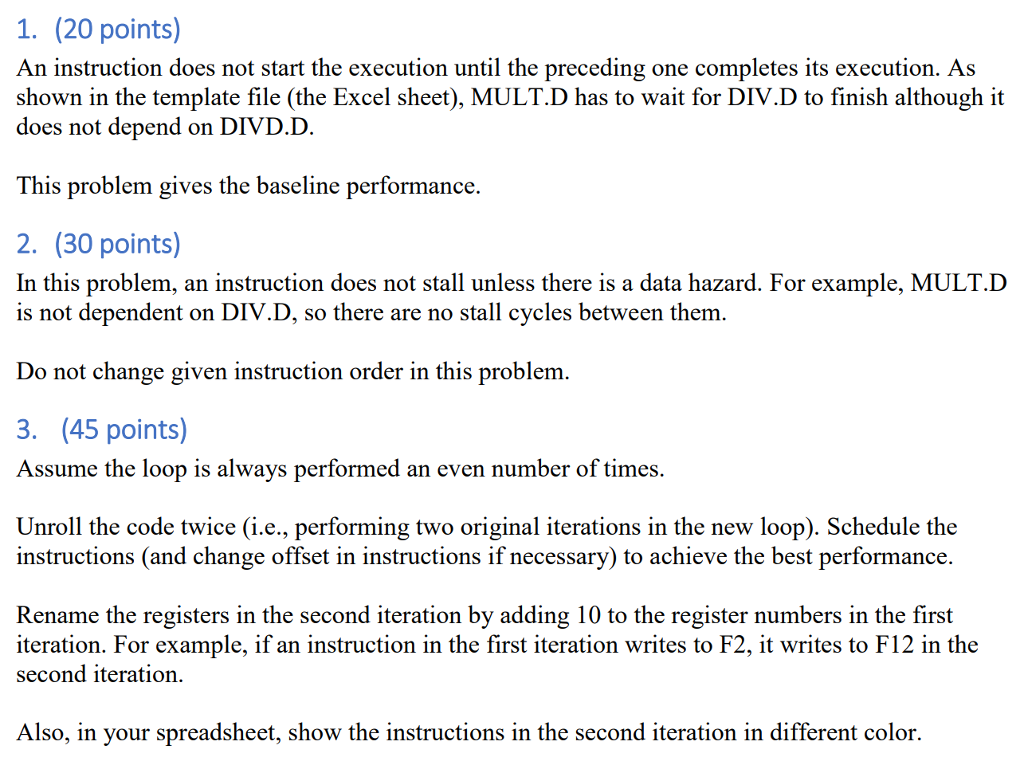
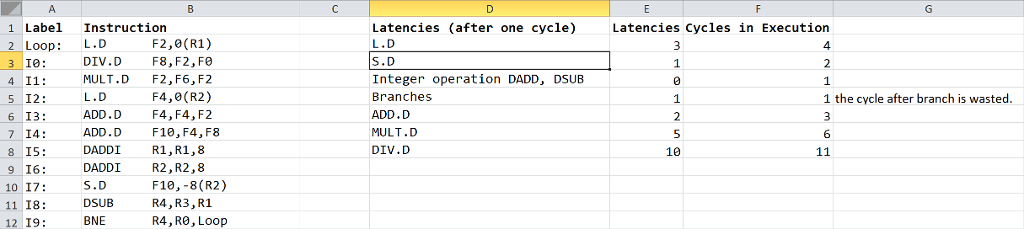
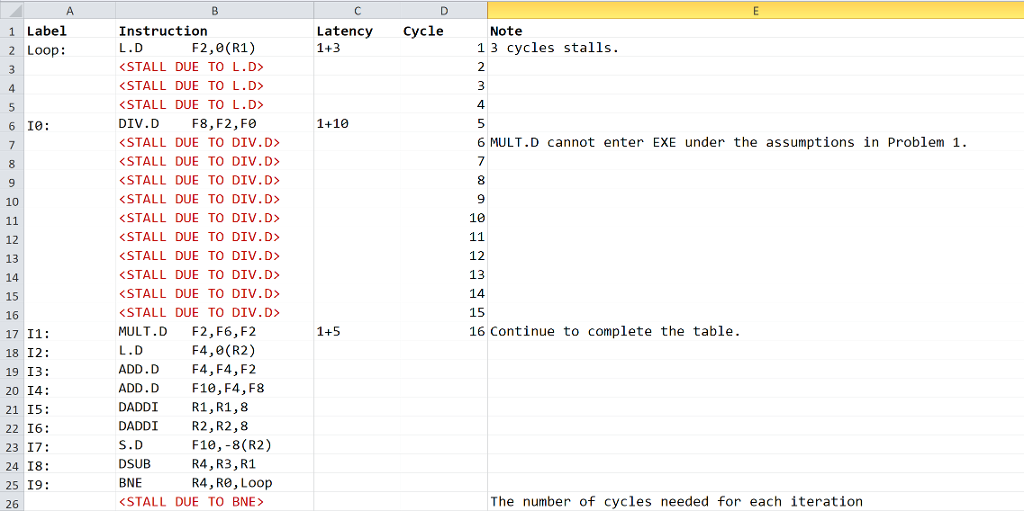
1. (20 points) An instruction does not start the execution until the preceding one completes its execution. As shown in the template file (the Excel sheet), MULT.D has to wait for DIV.D to finish although it does not depend on DIVD.D This problem gives the baseline performance. 2. (30 points) In this problem, an instruction does not stall unless there is a data hazard. For example, MULT.D is not dependent on DIV.D, so there are no stall cycles between them Do not change given instruction order in this problem 3. (45 points) Assume the loop is always performed an even number of times. Unroll the code twice (i.e., performing two original iterations in the new loop). Schedule the instructions (and change offset in instructions if necessary) to achieve the best performance. Rename the registers in the second iteration by adding 10 to the register numbers in the first iteration. For example, if an instruction in the first iteration writes to F2, it writes to F12 in the second iteration. Also, in your spreadsheet, show the instructions in the second iteration in different color. 1. (20 points) An instruction does not start the execution until the preceding one completes its execution. As shown in the template file (the Excel sheet), MULT.D has to wait for DIV.D to finish although it does not depend on DIVD.D This problem gives the baseline performance. 2. (30 points) In this problem, an instruction does not stall unless there is a data hazard. For example, MULT.D is not dependent on DIV.D, so there are no stall cycles between them Do not change given instruction order in this problem 3. (45 points) Assume the loop is always performed an even number of times. Unroll the code twice (i.e., performing two original iterations in the new loop). Schedule the instructions (and change offset in instructions if necessary) to achieve the best performance. Rename the registers in the second iteration by adding 10 to the register numbers in the first iteration. For example, if an instruction in the first iteration writes to F2, it writes to F12 in the second iteration. Also, in your spreadsheet, show the instructions in the second iteration in different color
Step by Step Solution
There are 3 Steps involved in it

Get step-by-step solutions from verified subject matter experts
 Study Help