



Question: 1. (25 points) Consider two firms, 1 and 2, producing an identical good simul- taneously. This good has market demand given by the demand
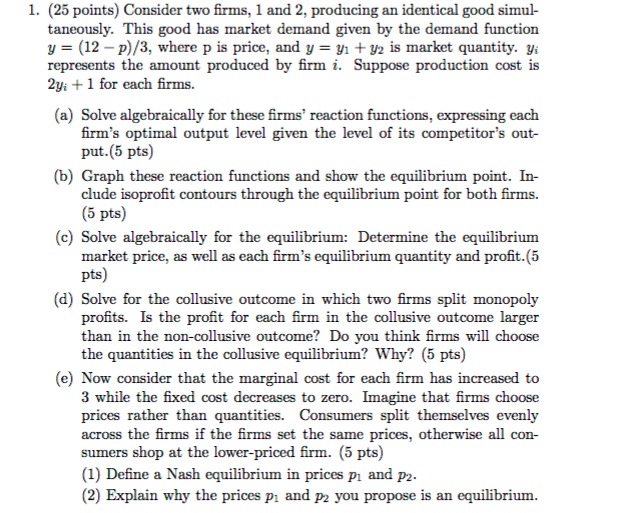
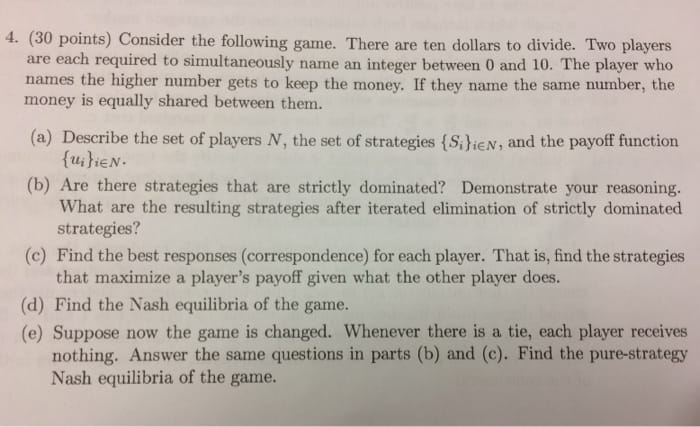
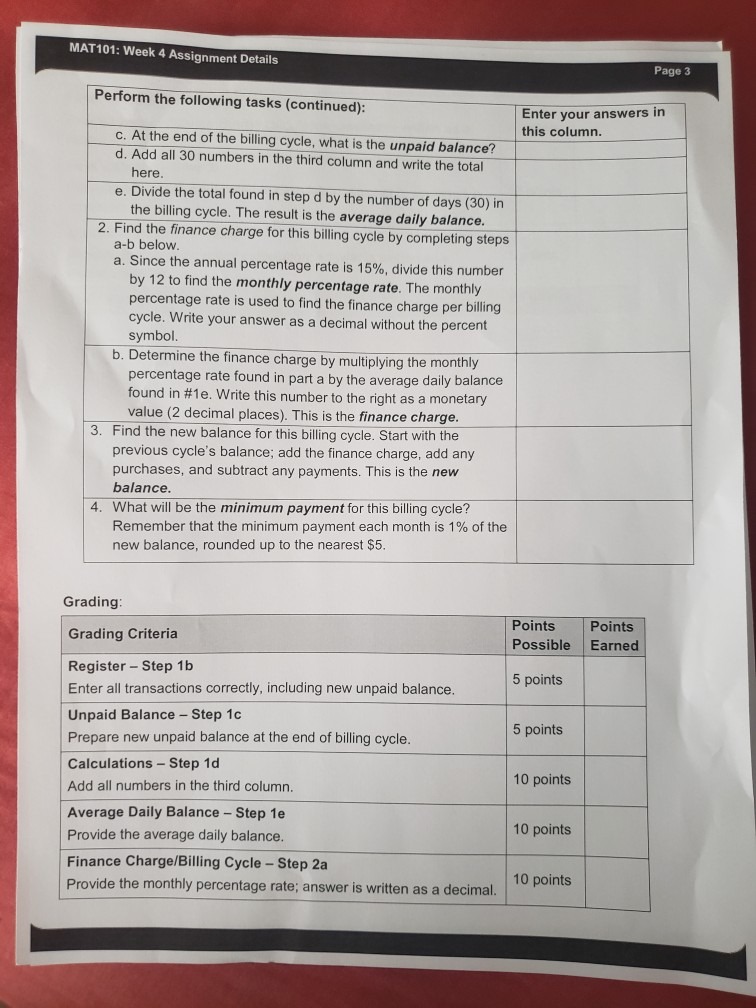
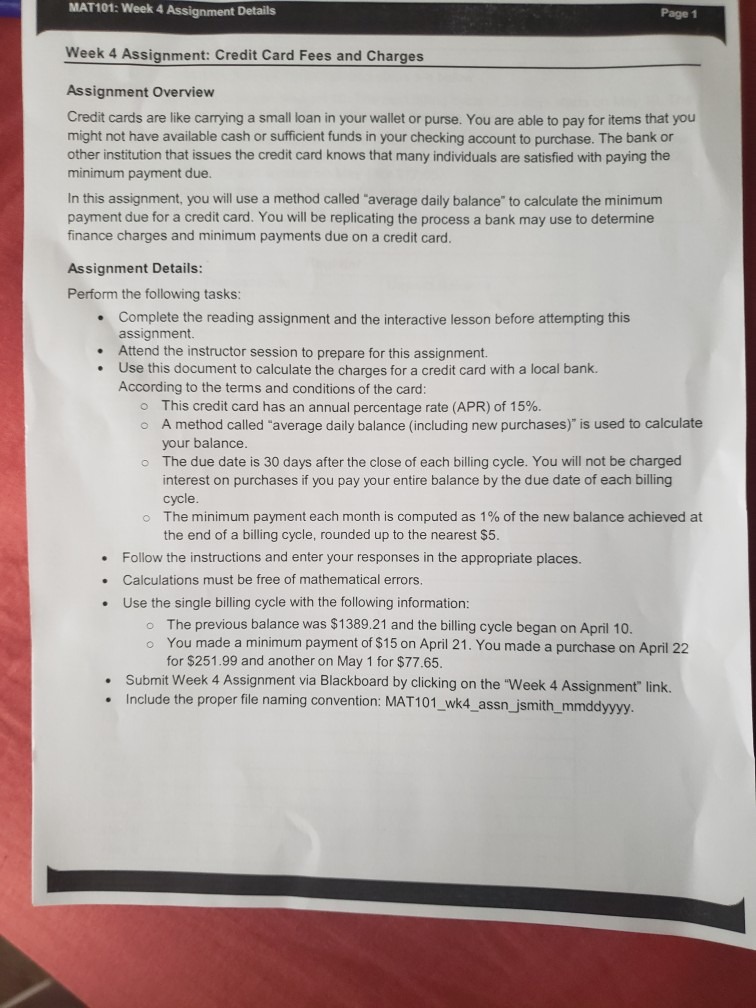
1. (25 points) Consider two firms, 1 and 2, producing an identical good simul- taneously. This good has market demand given by the demand function y = (12- p)/3, where p is price, and y = y + y2 is market quantity. y represents the amount produced by firm i. Suppose production cost is 2y +1 for each firms. (a) Solve algebraically for these firms' reaction functions, expressing each firm's optimal output level given the level of its competitor's out- put. (5 pts) (b) Graph these reaction functions and show the equilibrium point. In- clude isoprofit contours through the equilibrium point for both firms. (5 pts) (c) Solve algebraically for the equilibrium: Determine the equilibrium market price, as well as each firm's equilibrium quantity and profit. (5 pts) (d) Solve for the collusive outcome in which two firms split monopoly profits. Is the profit for each firm in the collusive outcome larger than in the non-collusive outcome? Do you think firms will choose the quantities in the collusive equilibrium? Why? (5 pts) (e) Now consider that the marginal cost for each firm has increased to 3 while the fixed cost decreases to zero. Imagine that firms choose prices rather than quantities. Consumers split themselves evenly across the firms if the firms set the same prices, otherwise all con- sumers shop at the lower-priced firm. (5 pts) (1) Define a Nash equilibrium in prices p and p2. (2) Explain why the prices p and p2 you propose is an equilibrium. 4. (30 points) Consider the following game. There are ten dollars to divide. Two players are each required to simultaneously name an integer between 0 and 10. The player who names the higher number gets to keep the money. If they name the same number, the money is equally shared between them. (a) Describe the set of players N, the set of strategies {Si}iEN, and the payoff function {ui}iEN. (b) Are there strategies that are strictly dominated? Demonstrate your reasoning. What are the resulting strategies after iterated elimination of strictly dominated strategies? (c) Find the best responses (correspondence) for each player. That is, find the strategies that maximize a player's payoff given what the other player does. (d) Find the Nash equilibria of the game. (e) Suppose now the game is changed. Whenever there is a tie, each player receives nothing. Answer the same questions in parts (b) and (c). Find the pure-strategy Nash equilibria of the game. MAT101: Week 4 Assignment Details Perform the following tasks (continued): c. At the end of the billing cycle, what is the unpaid balance? d. Add all 30 numbers in the third column and write the total here. e. Divide the total found in step d by the number of days (30) in the billing cycle. The result is the average daily balance. 2. Find the finance charge for this billing cycle by completing steps a-b below. a. Since the annual percentage rate is 15%, divide this number by 12 to find the monthly percentage rate. The monthly percentage rate is used to find the finance charge per billing cycle. Write your answer as a decimal without the percent symbol. b. Determine the finance charge by multiplying the monthly percentage rate found in part a by the average daily balance found in #1e. Write this number to the right as a monetary value (2 decimal places). This is the finance charge. 3. Find the new balance for this billing cycle. Start with the previous cycle's balance; add the finance charge, add any purchases, and subtract any payments. This is the new balance. 4. What will be the minimum payment for this billing cycle? Remember that the minimum payment each month is 1% of the new balance, rounded up to the nearest $5. Grading: Grading Criteria Register - Step 1b Enter all transactions correctly, including new unpaid balance. Unpaid Balance - Step 1c Prepare new unpaid balance at the end of billing cycle. Calculations - Step 1d Add all numbers in the third column. Average Daily Balance - Step 1e Provide the average daily balance. Finance Charge/Billing Cycle - Step 2a Provide the monthly percentage rate; answer is written as a decimal. Enter your answers in this column. Points Possible 5 points 5 points 10 points 10 points 10 points Page 3 Points Earned MAT101: Week 4 Assignment Details Week 4 Assignment: Credit Card Fees and Charges Assignment Overview Credit cards are like carrying a small loan in your wallet or purse. You are able to pay for items that you might not have available cash or sufficient funds in your checking account to purchase. The bank or other institution that issues the credit card knows that many individuals are satisfied with paying the minimum payment due. Page 1 In this assignment, you will use a method called "average daily balance" to calculate the minimum payment due for a credit card. You will be replicating the process a bank may use to determine finance charges and minimum payments due on a credit card. Assignment Details: Perform the following tasks: Complete the reading assignment and the interactive lesson before attempting this assignment. Attend the instructor session to prepare for this assignment. Use this document to calculate the charges for a credit card with a local bank. According to the terms and conditions of the card: o This credit card has an annual percentage rate (APR) of 15%. o A method called "average daily balance (including new purchases)" is used to calculate your balance. o The due date is 30 days after close of billing cycle. You will not be charged interest on purchases if you pay your entire balance by the due date of each billing cycle. o The minimum payment each month is computed as 1% of the new balance achieved at the end of a billing cycle, rounded up to the nearest $5. . Follow the instructions and enter your responses in the appropriate places. Calculations must be free of mathematical errors. Use the single billing cycle with the following information: o The previous balance was $1389.21 and the billing cycle began on April 10. o You made a minimum payment of $15 on April 21. You made a purchase on April 22 for $251.99 and another on May 1 for $77.65. Submit Week 4 Assignment via Blackboard by clicking on the "Week 4 Assignment" link. Include the proper file naming convention: MAT101_wk4_assn_jsmith_mmddyyyy.
Step by Step Solution
There are 3 Steps involved in it
Here are the stepbystep workings for the credit card assignment 1 Previous balance 138921 2 ... View full answer

Get step-by-step solutions from verified subject matter experts