







Question: 1 3 . 6 GAC design based on economic analysis: A treatability study was conducted for the treatment of 2 , 4 - dichloroaniline in
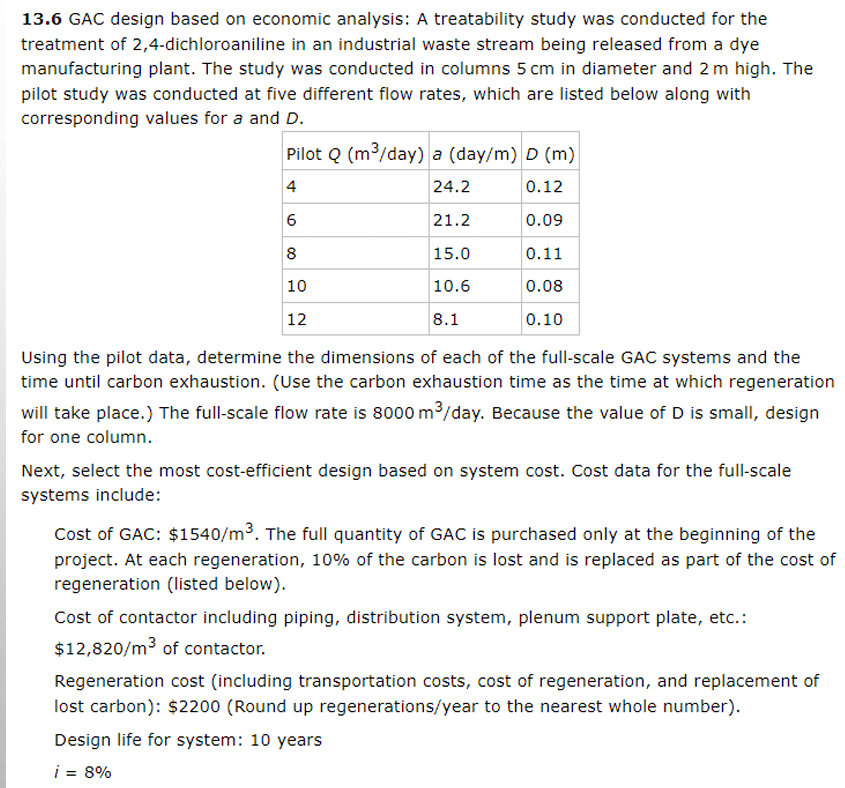
GAC design based on economic analysis: A treatability study was conducted for the treatment of dichloroaniline in an industrial waste stream being released from a dye manufacturing plant. The study was conducted in columns cm in diameter and m high. The pilot study was conducted at five different flow rates, which are listed below along with corresponding values for a and D
Using the pilot data, determine the dimensions of each of the fullscale GAC systems and the time until carbon exhaustion. Use the carbon exhaustion time as the time at which regeneration will take place. The fullscale flow rate is mathrm~m day. Because the value of D is small, design for one column.
Next, select the most costefficient design based on system cost. Cost data for the fullscale systems include:
Cost of GAC: $ mathrmm The full quantity of GAC is purchased only at the beginning of the project. At each regeneration, of the carbon is lost and is replaced as part of the cost of regeneration listed below
Cost of contactor including piping, distribution system, plenum support plate, etc.: $ mathrmm of contactor.
Regeneration cost including transportation costs, cost of regeneration, and replacement of lost carbon: $Round up regenerationsyear to the nearest whole number
Design life for system: years
i
Step by Step Solution
There are 3 Steps involved in it
1 Expert Approved Answer
Step: 1 Unlock

Question Has Been Solved by an Expert!
Get step-by-step solutions from verified subject matter experts
Step: 2 Unlock
Step: 3 Unlock
 Study Help