







Question: 1. (30 point) For each i=1, 2 and 3, compose a grammar Gi, such that L(Gi) Hi, where (a) Hi - L(Mi) where M is
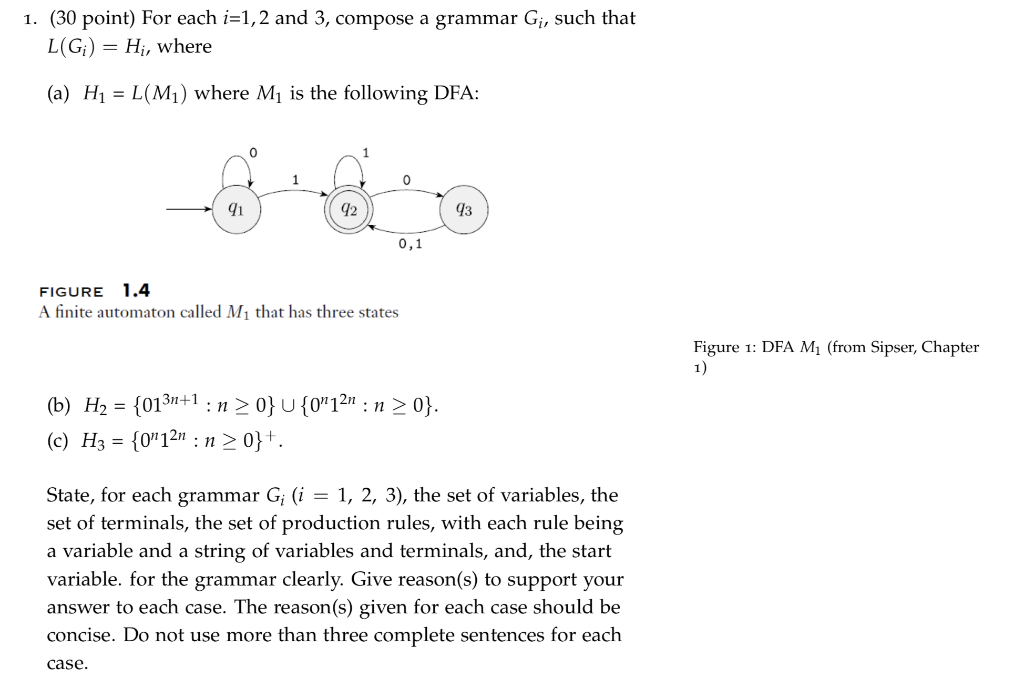
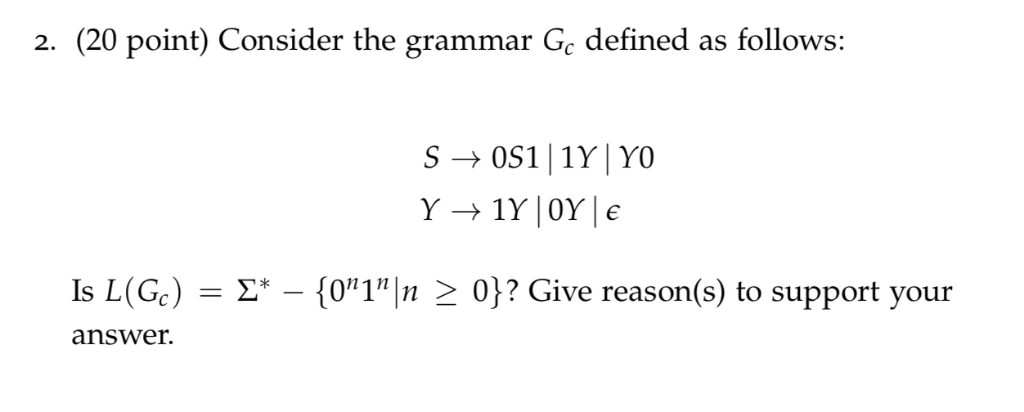
1. (30 point) For each i=1, 2 and 3, compose a grammar Gi, such that L(Gi) Hi, where (a) Hi - L(Mi) where M is the following DFA: 0 42 93 0,1 FIGURE 1.4 A finite automaton called M 1 that has three states Figure 1: DFA Mi (from Sipser, Chapter 1) (c) H3 = {0" 12n : n > 0)' . State, for each grammar Gi (i - 1, 2, 3), the set of variables, the a variable and a string of variables and terminals, and, the start set of terminals, the set of production rules, with each rule being variable. for the grammar clearly. Give reason(s) to support your answer to each case. The reason(s) given for each case should be concise. Do not use more than three complete sentences for each case 2. (20 point) Consider the grammar Gc defined as follows: Is L (G.) _ * _ {0"1"| n 0)? Give reason(s) to support your
Step by Step Solution
There are 3 Steps involved in it

Get step-by-step solutions from verified subject matter experts
 Study Help