







Question: 1. A 32-bit computer has two selector channels and one multiplexor channel. Each selector channel supports two magnetic disk and two magnetic tape units. The
1. A 32-bit computer has two selector channels and one multiplexor channel. Each selector channel supports two magnetic disk and two magnetic tape units. The multiplexor channel has two line printers, two card readers, and five VDT terminals connected to it. Assume the following transfer rates.
Disk drive 700 Kbytes/s
Magnetic tape drive 200 Kbytes
Line printer 6.6 Kbytes/s
Card Reader 1.2 Kbytes/s
VDT 1 Kbytes/s
Estimate the maximum aggregate I/O transfer rate in this system.
. 2. Given the following set of events, show which routines the CPU is executing for times 0 to 100 ns. Each handler routine (with its interrupt request) takes 20 ns to complete. The priority of the interrupts ranges from IRQ6 as the highest priority interrupt to IRQ0 as the lowest priority interrupt.
| Time | Action |
| 0 ns | Start of main program |
| 10 ns | IRQ1 |
| 25 ns | IRQ4 |
| 40 ns | IRQ6 |
| 50 ns | IRQ3 |
Time Action
0 ns: Start of Main Program
10s: IRQ1
3. We pointed out that I/O buses do not need separate address lines. Construct a timing diagram similar to Figure 7.7 that describes the handshake between an I/O controller and a disk controller for a write operation. (Hint: You will need to add a control signal.)
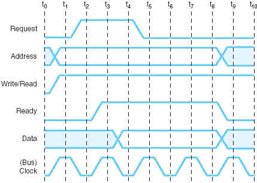
4. Why do you think the term random access device is something of a misnomer for disk drives?
5.What are the advantages and disadvantages of having a small number of sectors per disk cluster?
Request Address Write Read Ready i Data Bus) Clock
Step by Step Solution
There are 3 Steps involved in it

Get step-by-step solutions from verified subject matter experts
 Study Help