







Question: 1. A cell begins G, with 15 picograms (a picogram is one trillionth of a gram) of DNA and 14 chromosomes. Answer the following
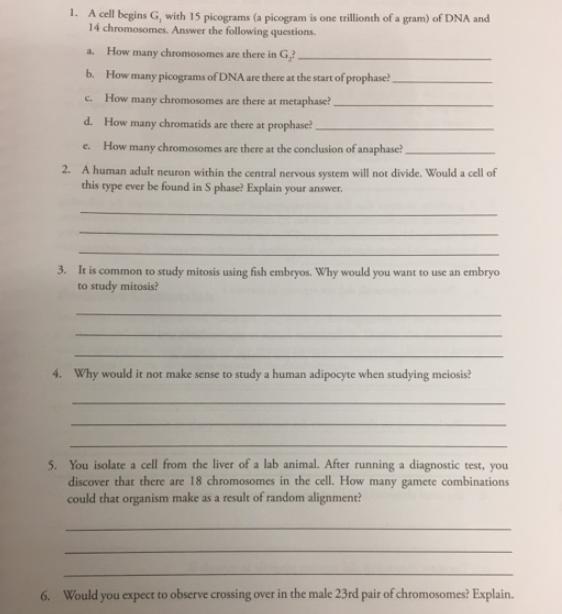
1. A cell begins G, with 15 picograms (a picogram is one trillionth of a gram) of DNA and 14 chromosomes. Answer the following questions. a. How many chromosomes are there in G. b. How many picograms of DNA are there at the start of prophase? C How many chromosomes are there at metaphase? d. How many chromatids are there at prophase? C. How many chromosomes are there at the conclusion of anaphase? 2. A human adult neuron within the central nervous system will not divide. Would a cell of type ever be found in S phase? Explain your answer. this 3. It is common to study mitosis using fish embryos. Why would you want to use an embryo to study mitosis? 4. Why would it not make sense to study a human adipocyte when studying meiosis? 5. You isolate a cell from the liver of a lab animal. After running a diagnostic test, you discover that there are 18 chromosomes in the cell. How many gamete combinations could that organism make as a result of random alignment? 6. Would you expect to observe crossing over in the male 23rd pair of chromosomes? Explain.
Step by Step Solution
3.41 Rating (160 Votes )
There are 3 Steps involved in it
Ans 1 a 30 chromosome b 30 picogram c 30 chromosome d 60 chromatids E 30 chromosome Explanation the ... View full answer

Get step-by-step solutions from verified subject matter experts
 Study Help