







Question: 1. a) Let f(n) = 6n 2 - 100n + 44 and g(n) = 0.5n 3 . Prove that f(n) = O(g(n)) using the definition
1. a) Let f(n) = 6n2 - 100n + 44 and g(n) = 0.5n3 . Prove that f(n) = O(g(n)) using the definition of Big-O notation. (You need to find constants c and n0).
b) Let f(n) = 3n2 + n and g(n) = 2n2 . Use the definition of big-O notation to prove that
-
f(n) = O(g(n)) (you need to find constants c and n0) and
-
g(n) = O(f(n)) (you need to find constants c and n0).
Conclude that f(n) = (g(n)).
2. Order the following 16 functions by asymptotic growth rate from lowest to highest. If any are of the same order then circle them on your list.
5n-6, 3, 5n+n3,  , n2.01, 3log2n, 4log n, n!, log n3, n1/3, 3n3-5n+n4, n log n +4n, 10n4, 4n, 2n, 4n+1. Note: When comparing two functions f(n) and g(n) you may use
 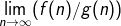 to compare their asymptotic growth rates.
lim (f(n)/g(n))
Step by Step Solution
There are 3 Steps involved in it

Get step-by-step solutions from verified subject matter experts
 Study Help