







Question: 1. A machine sends a request to a time server at time 56 (according to its local clock). The time server receives the message at
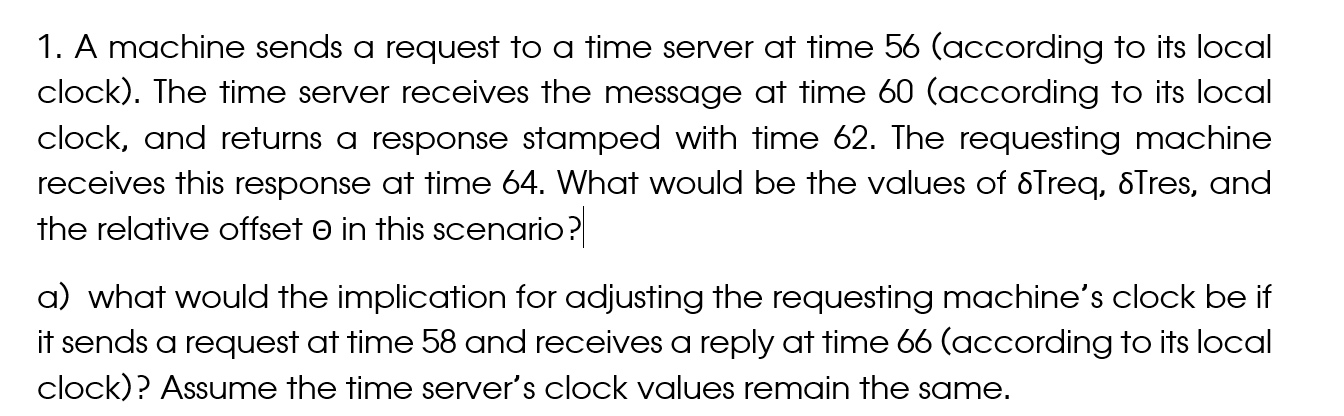
1. A machine sends a request to a time server at time 56 (according to its local clock). The time server receives the message at time 60 (according to its local clock, and returns a response stamped with time 62. The requesting machine receives this response at time 64. What would be the values of Treq, sTres, and the relative offset o in this scenario? a) what would the implication for adjusting the requesting machine's clock be if it sends a request at time 58 and receives a reply at time 66 (according to its local clock)? Assume the time server's clock values remain the same. 1. A machine sends a request to a time server at time 56 (according to its local clock). The time server receives the message at time 60 (according to its local clock, and returns a response stamped with time 62. The requesting machine receives this response at time 64. What would be the values of Treq, sTres, and the relative offset o in this scenario? a) what would the implication for adjusting the requesting machine's clock be if it sends a request at time 58 and receives a reply at time 66 (according to its local clock)? Assume the time server's clock values remain the same
Step by Step Solution
There are 3 Steps involved in it

Get step-by-step solutions from verified subject matter experts
 Study Help