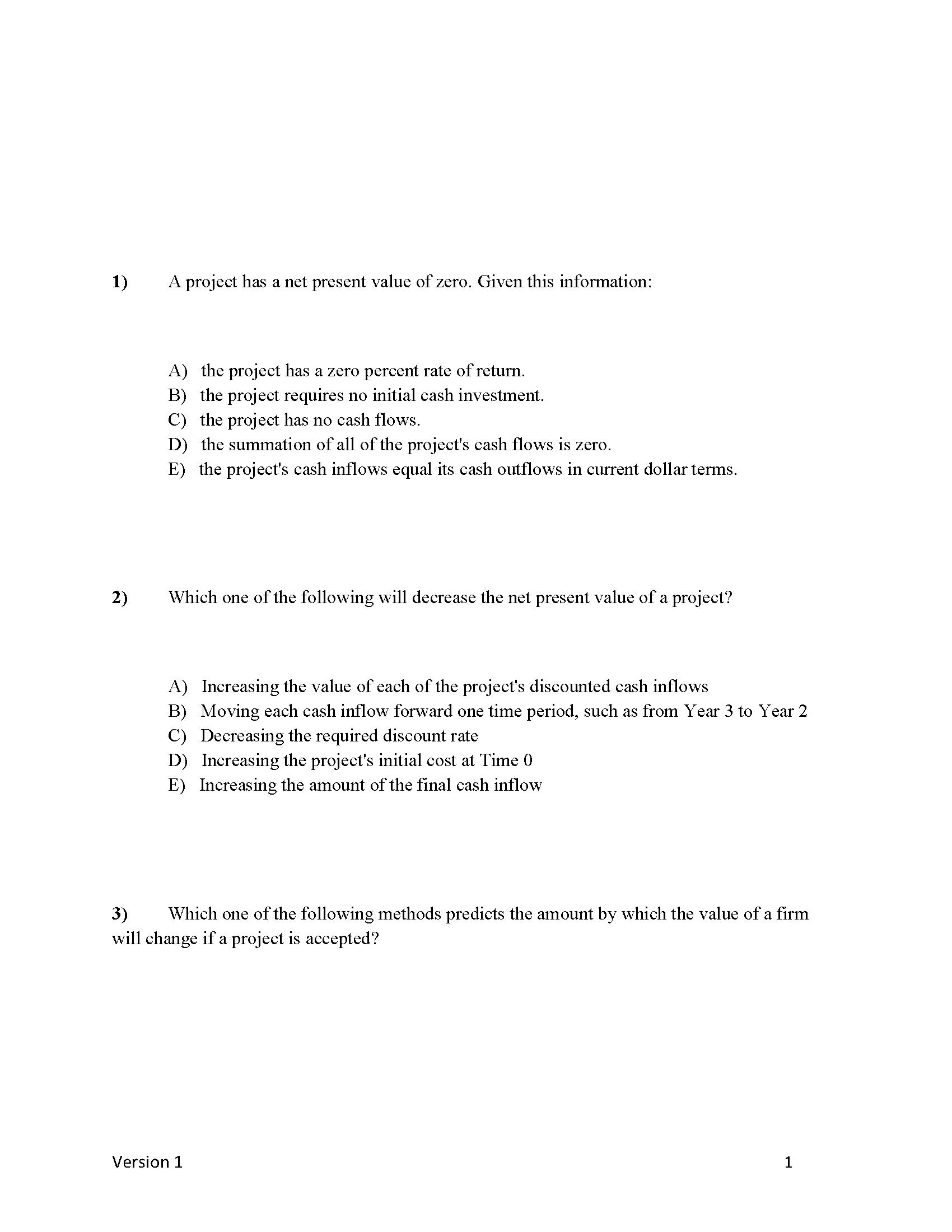
Question: 1) A project has a net present value of zero. Given this information: A) the project has a zero percent rate of return. B) the
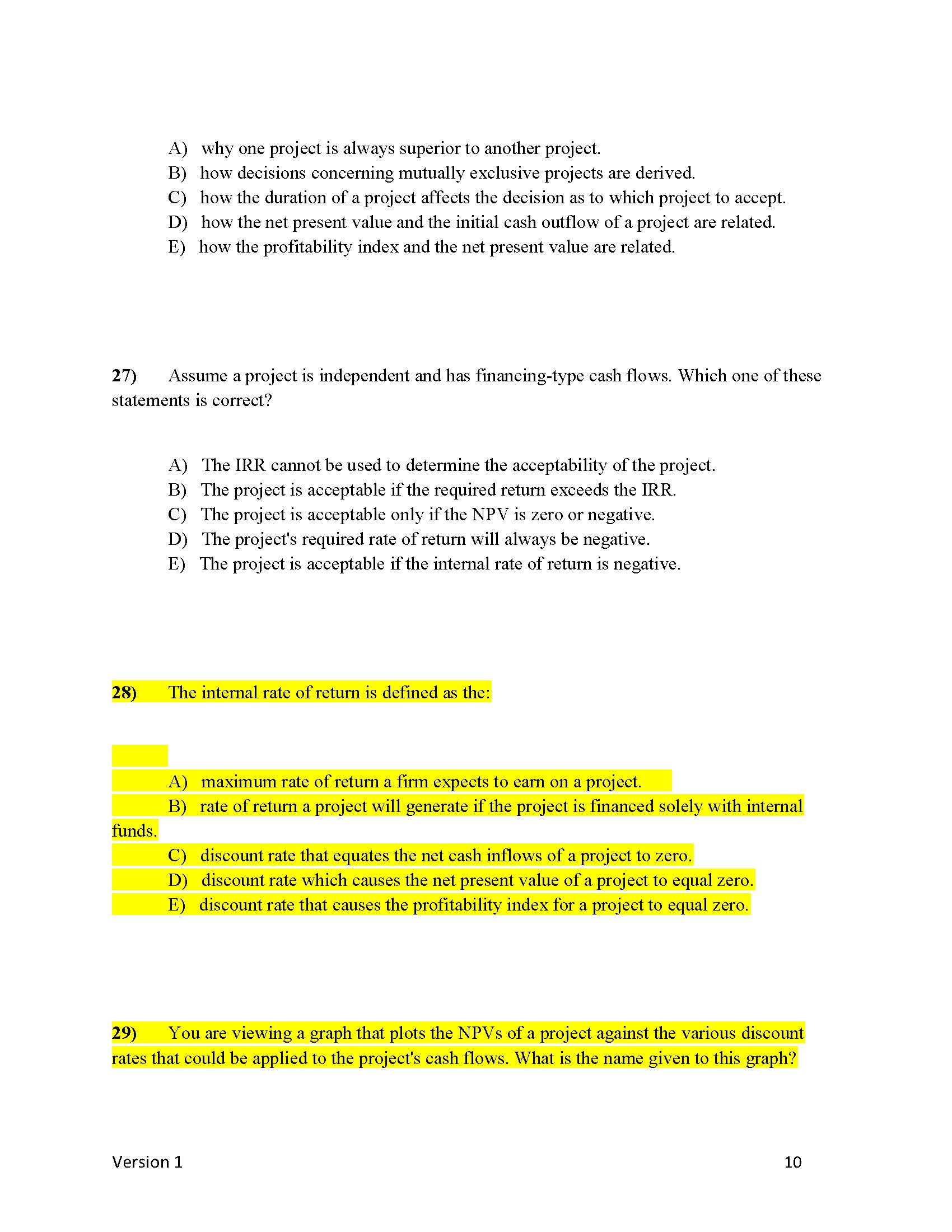
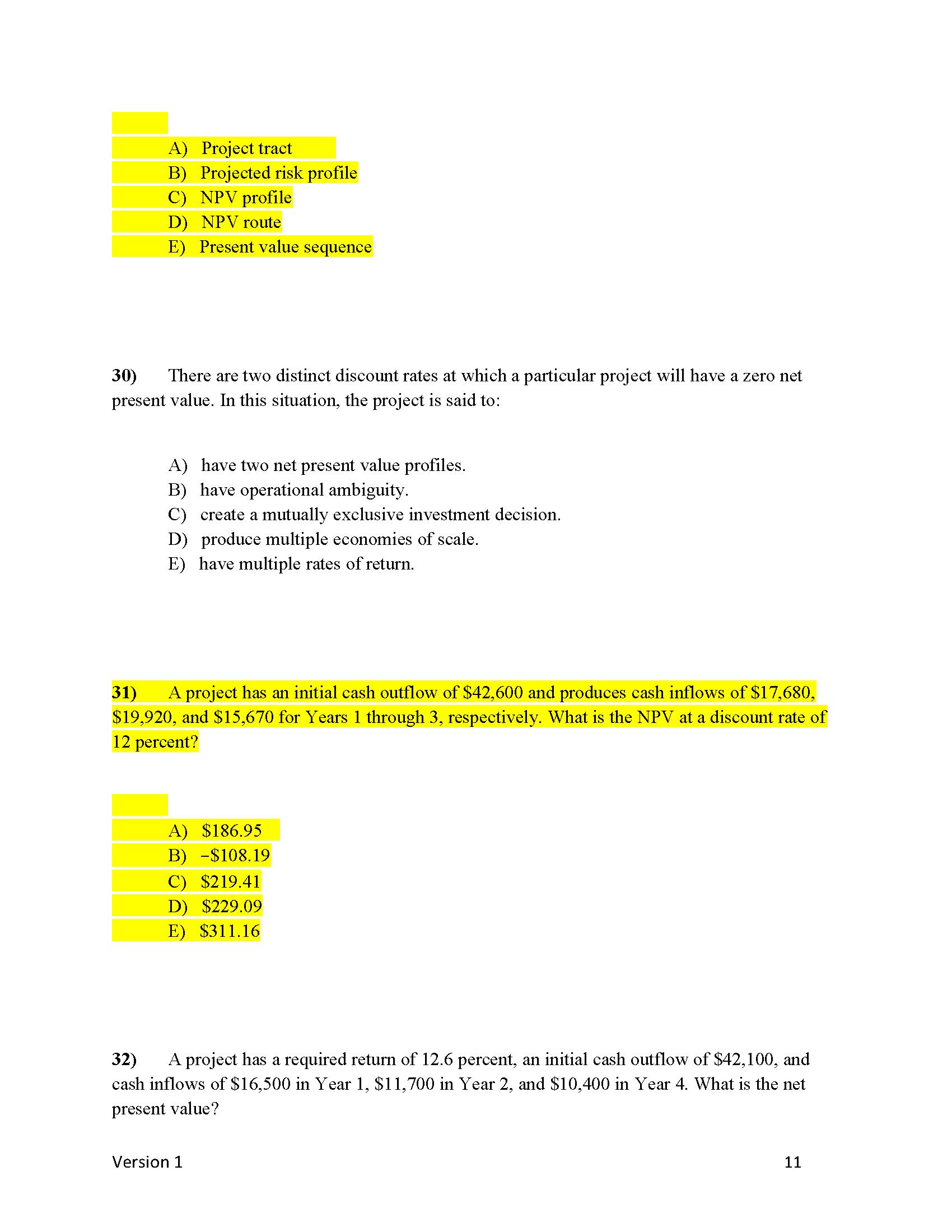
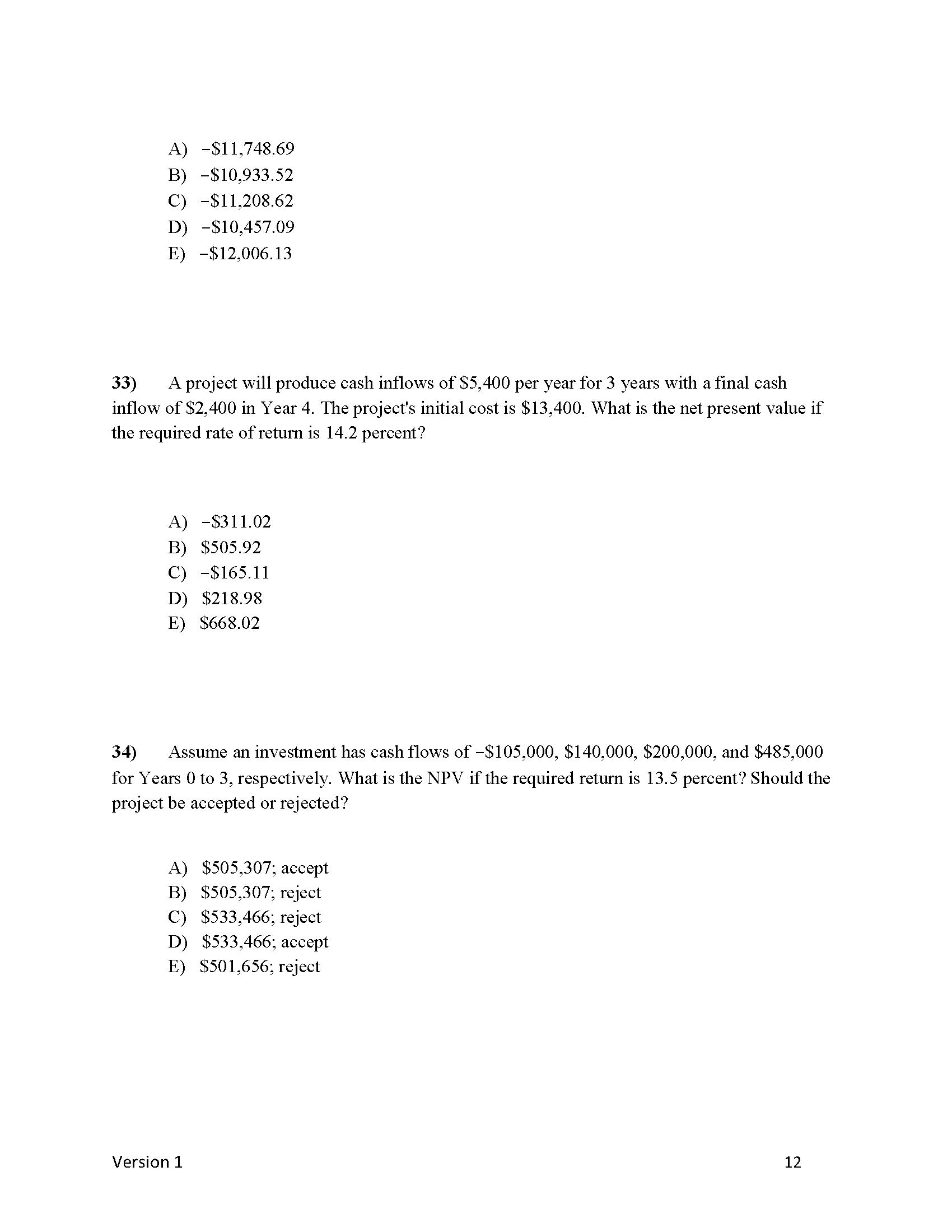
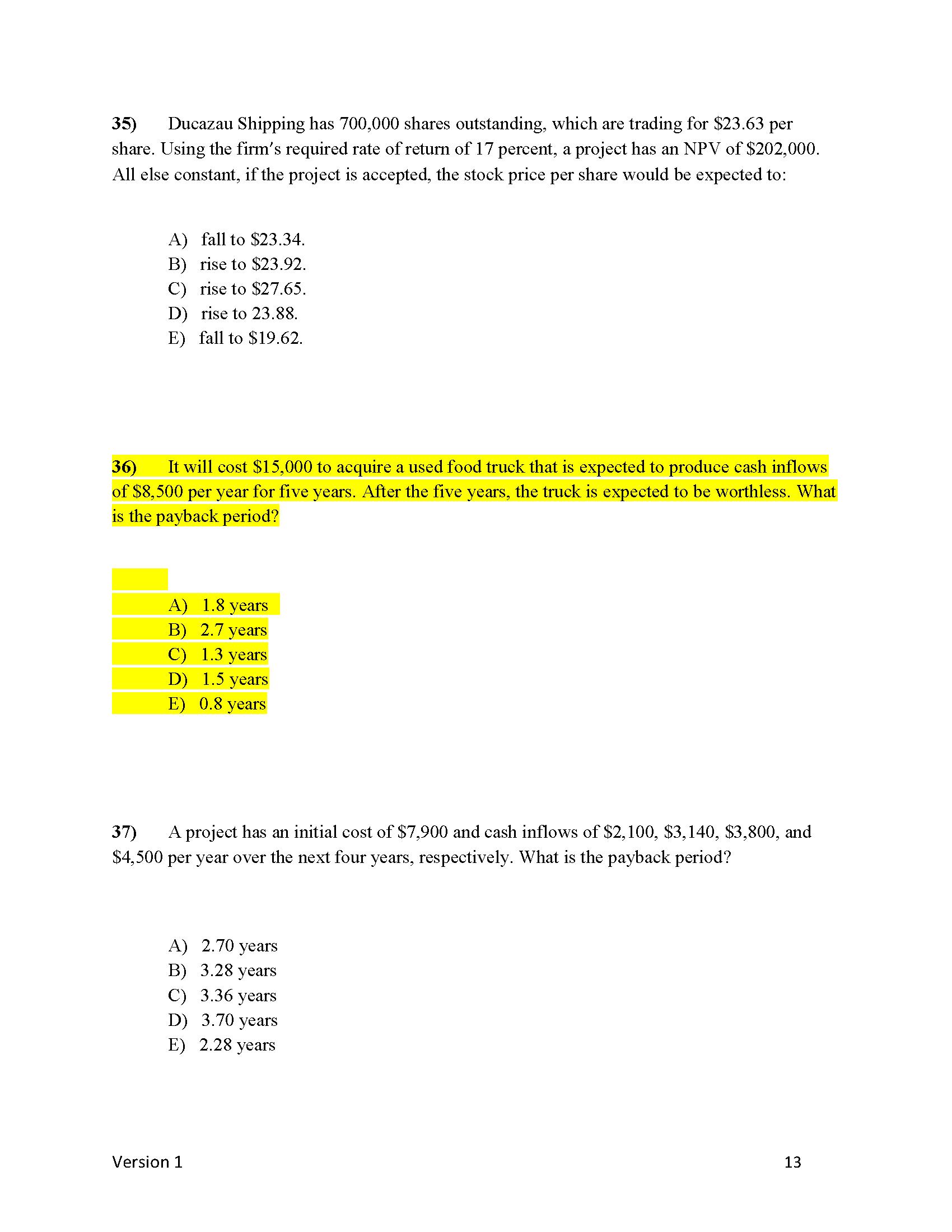
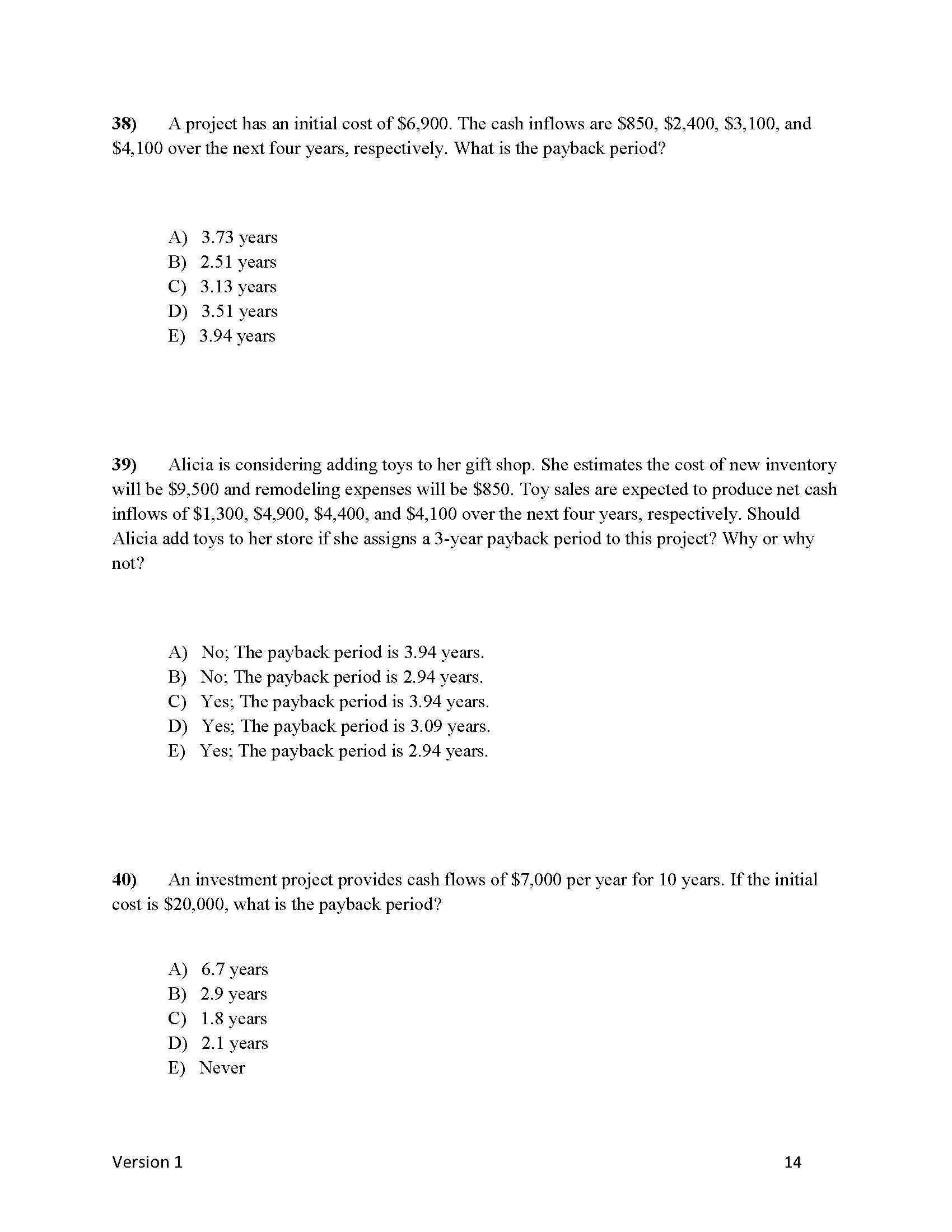
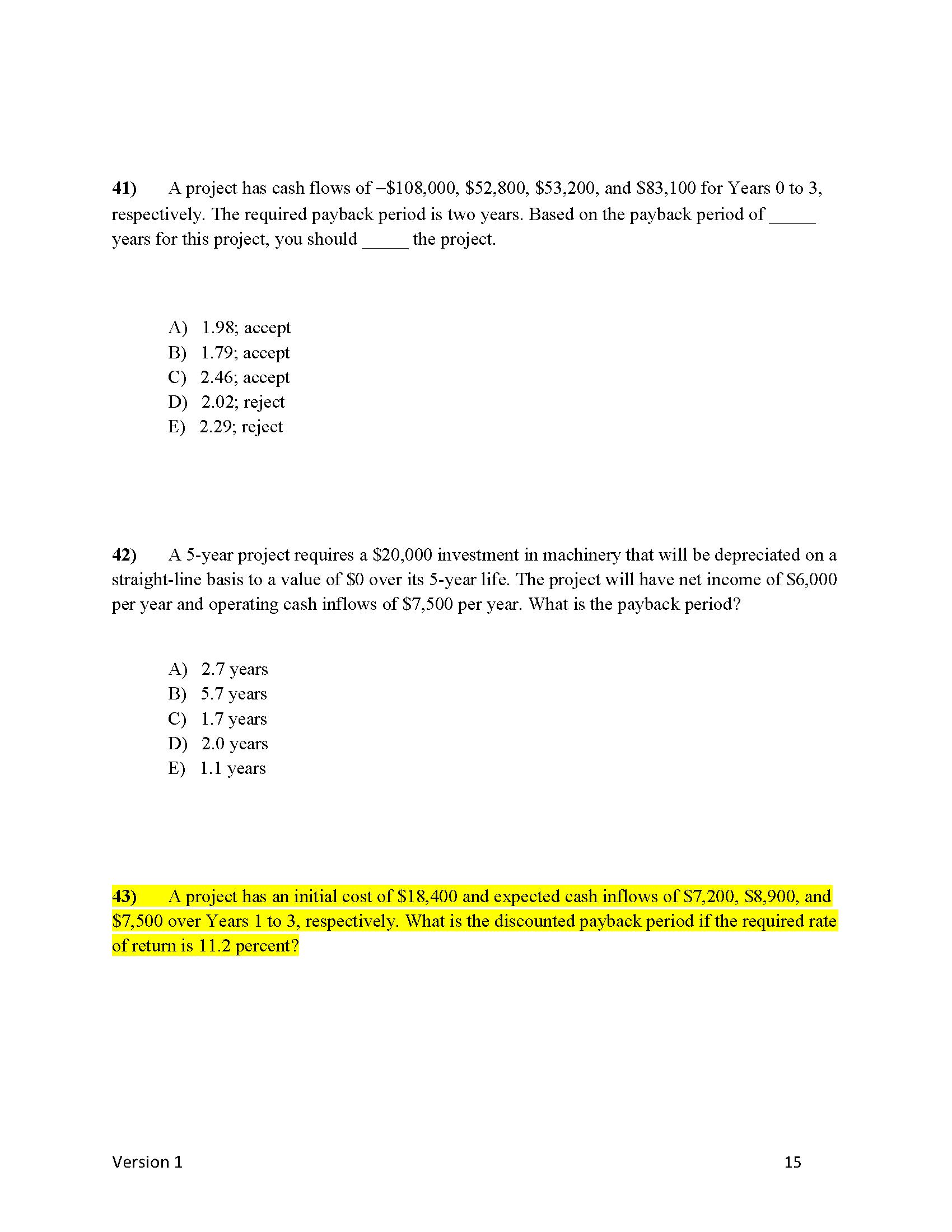
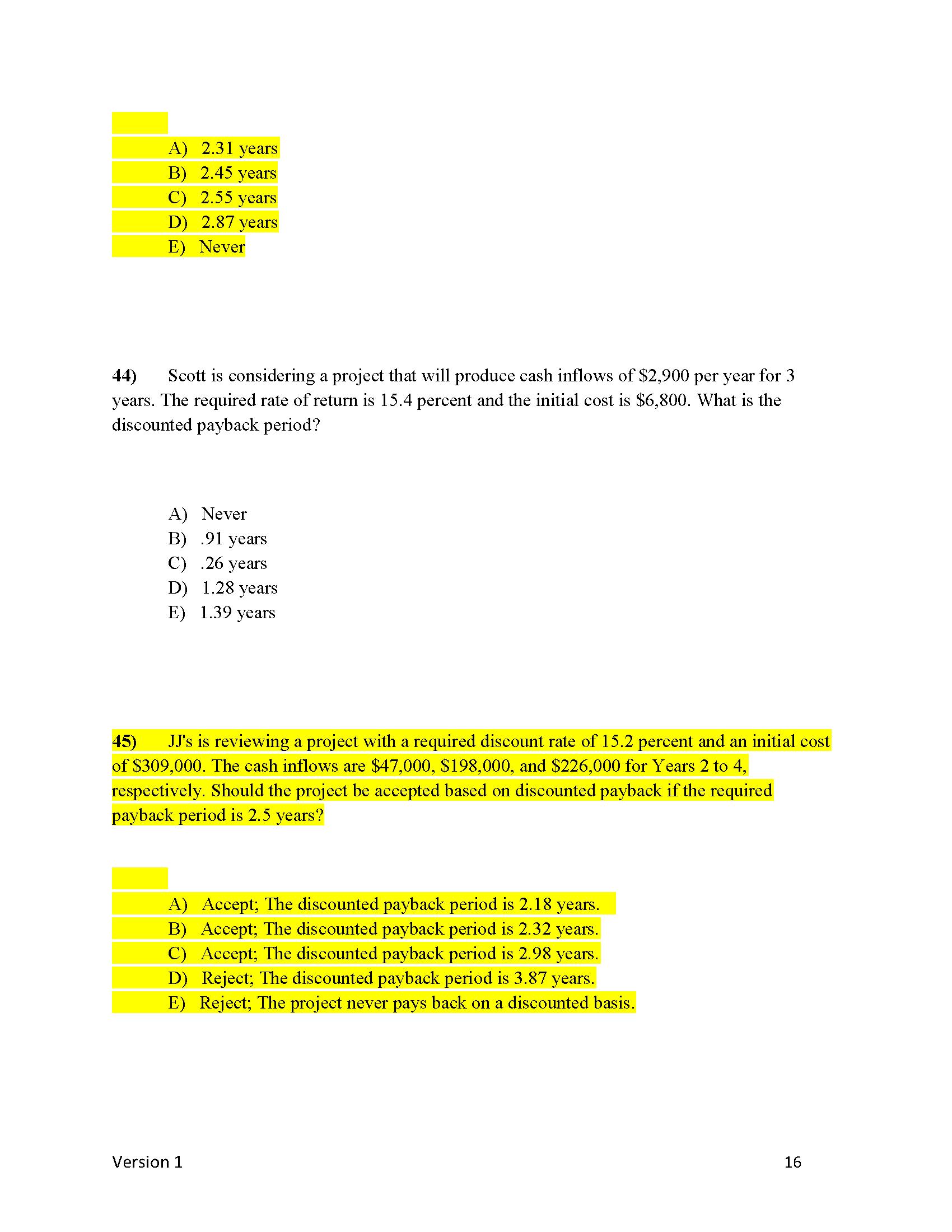
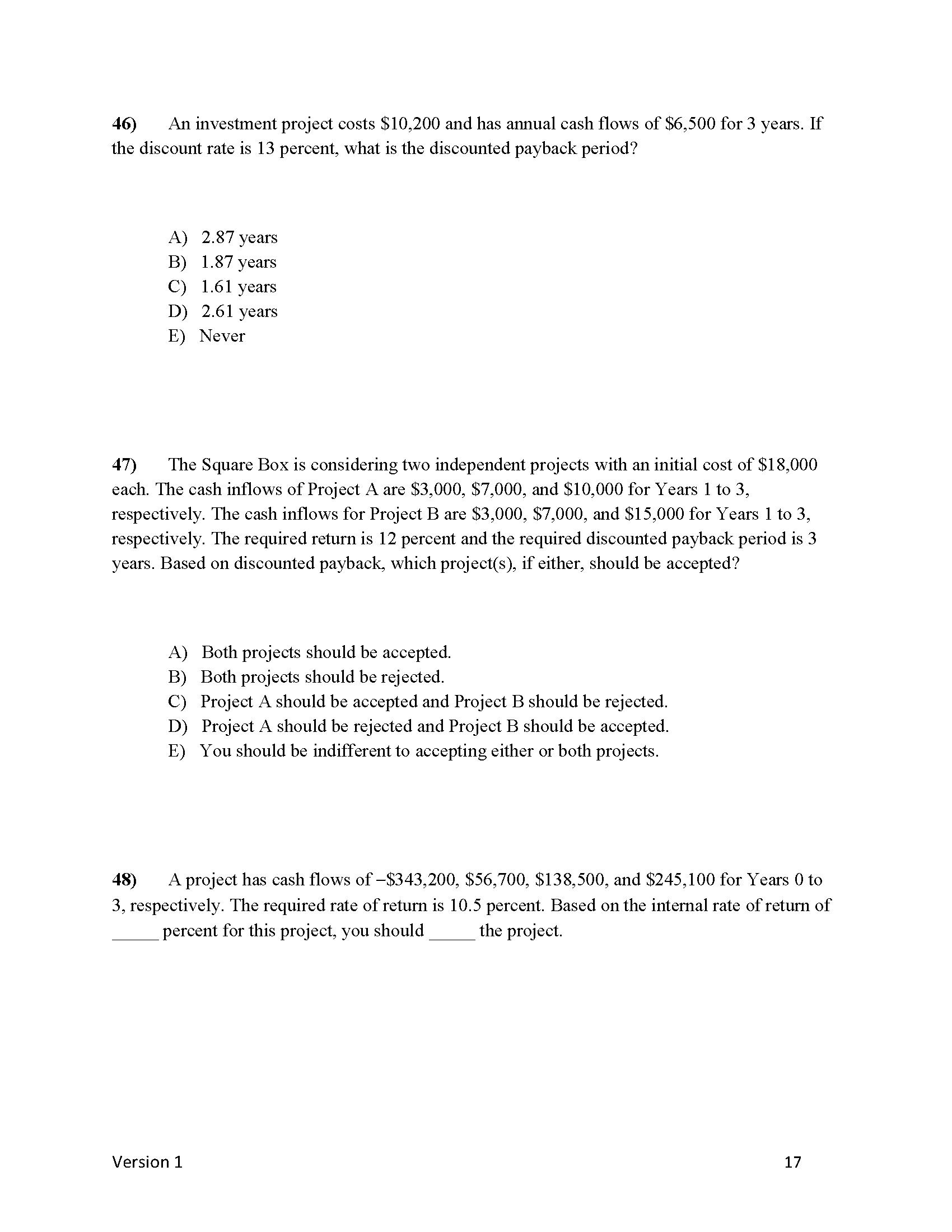
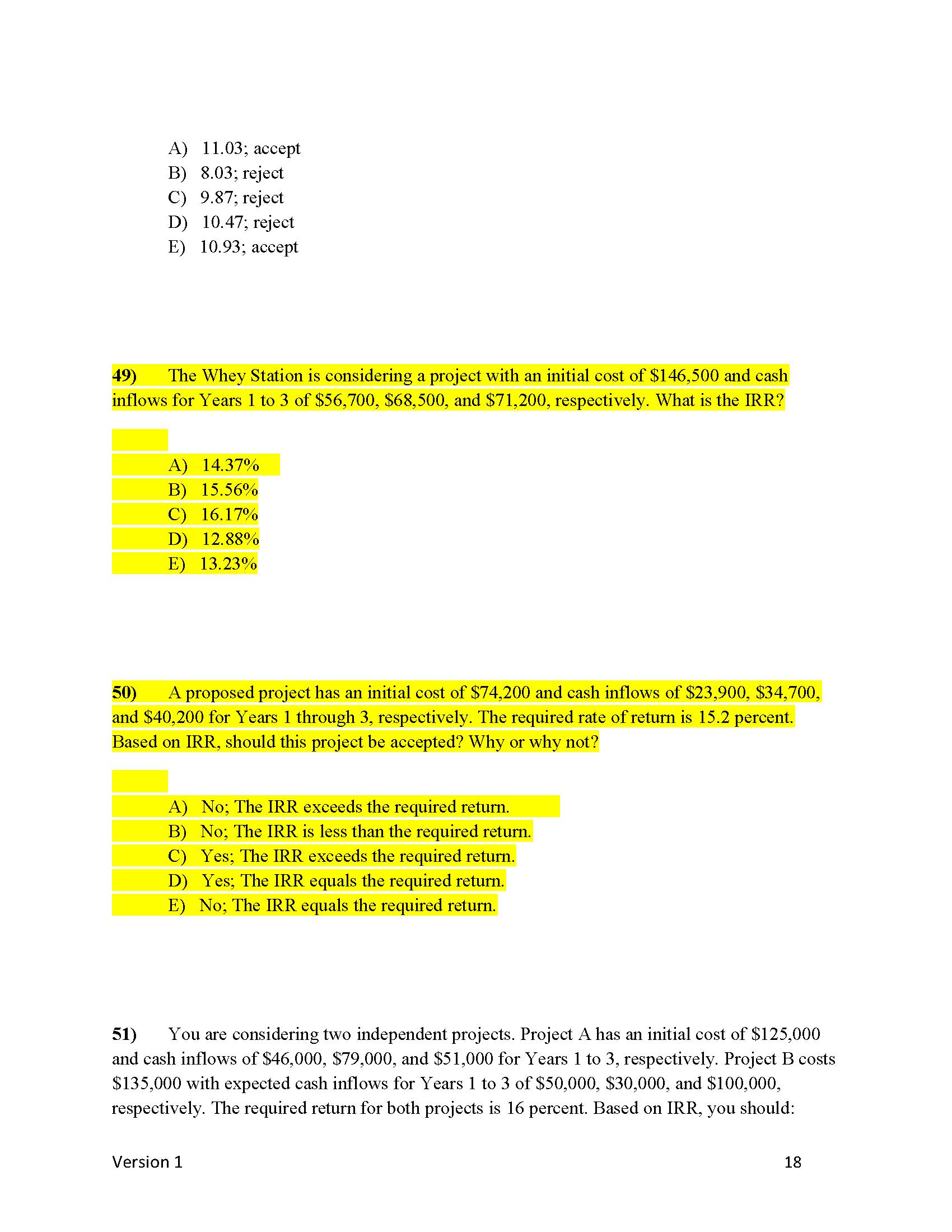
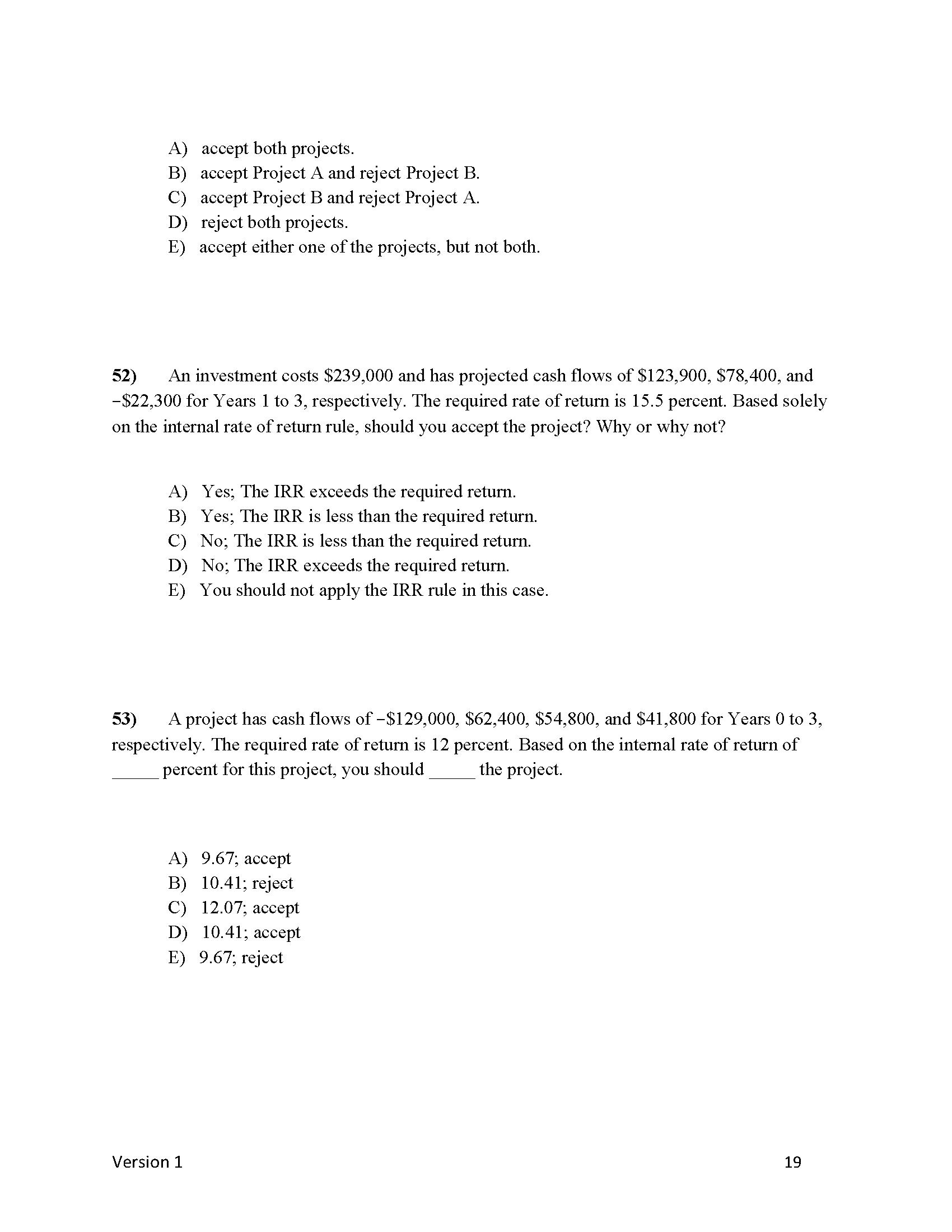
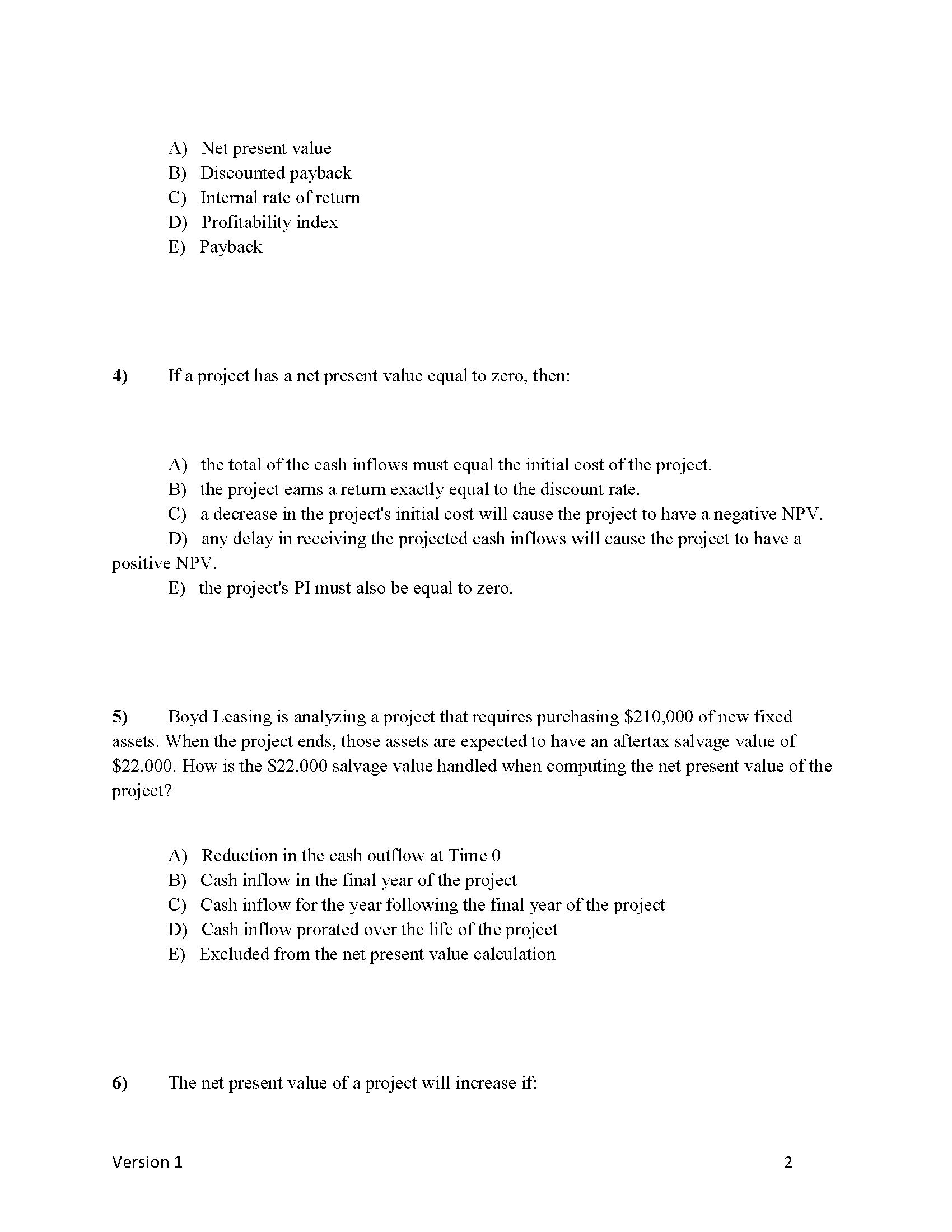
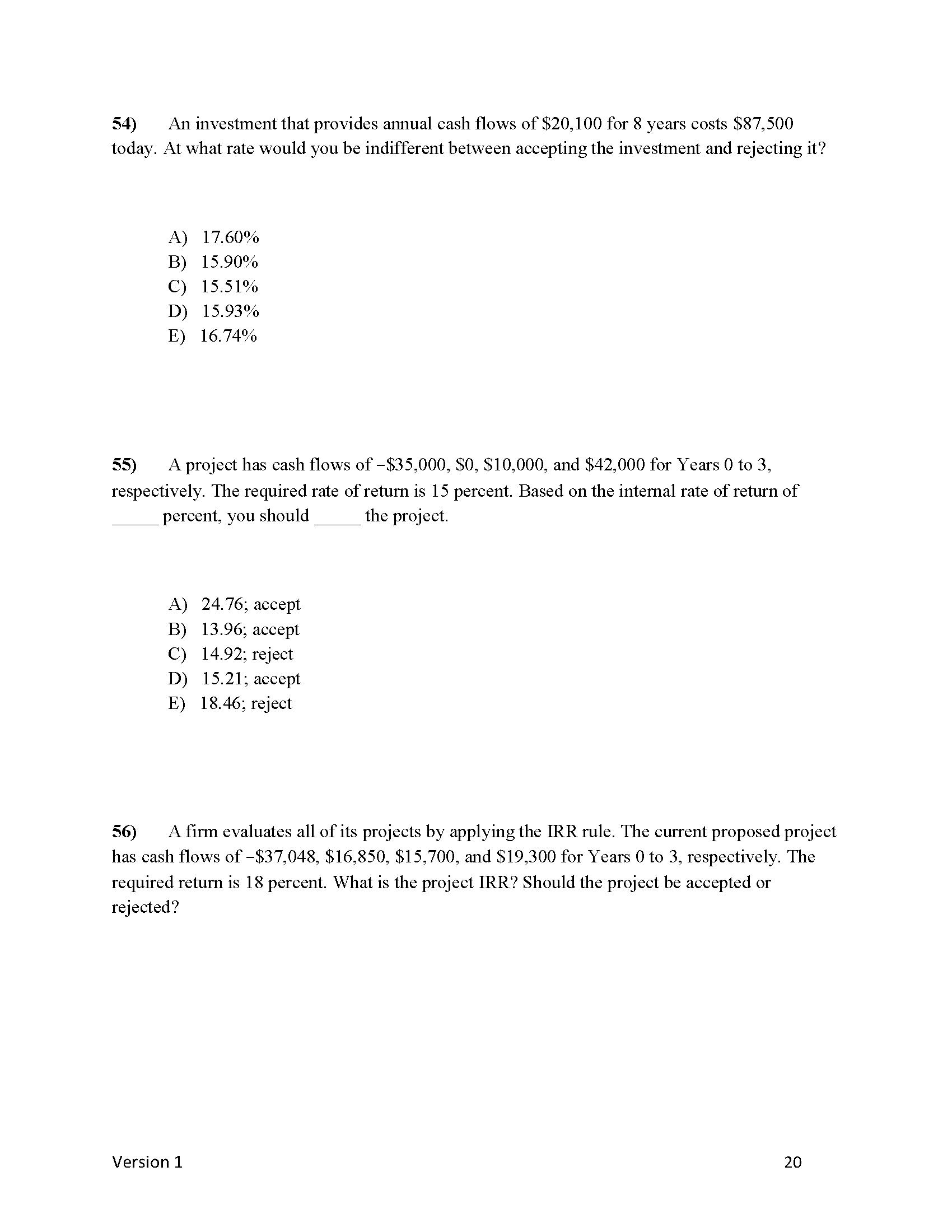
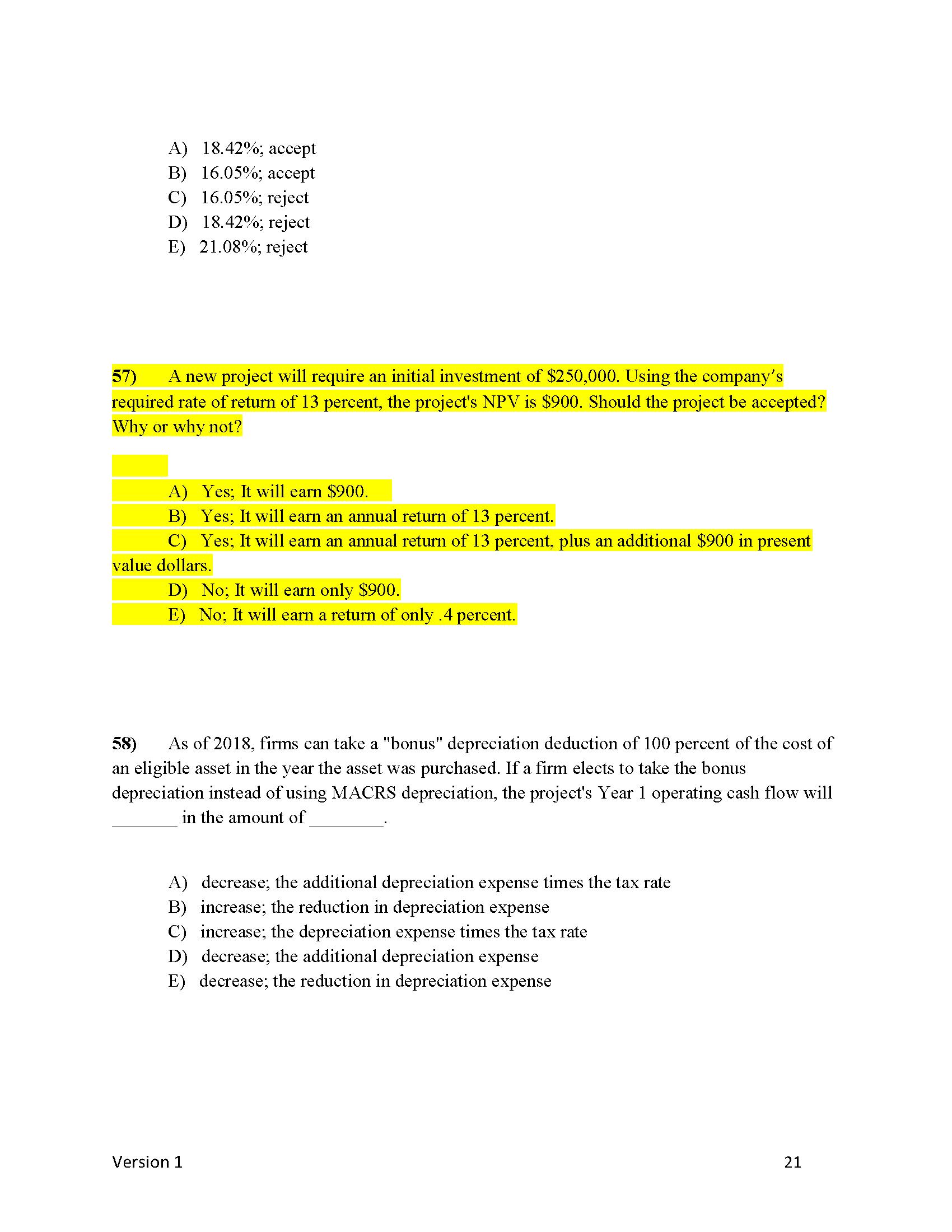
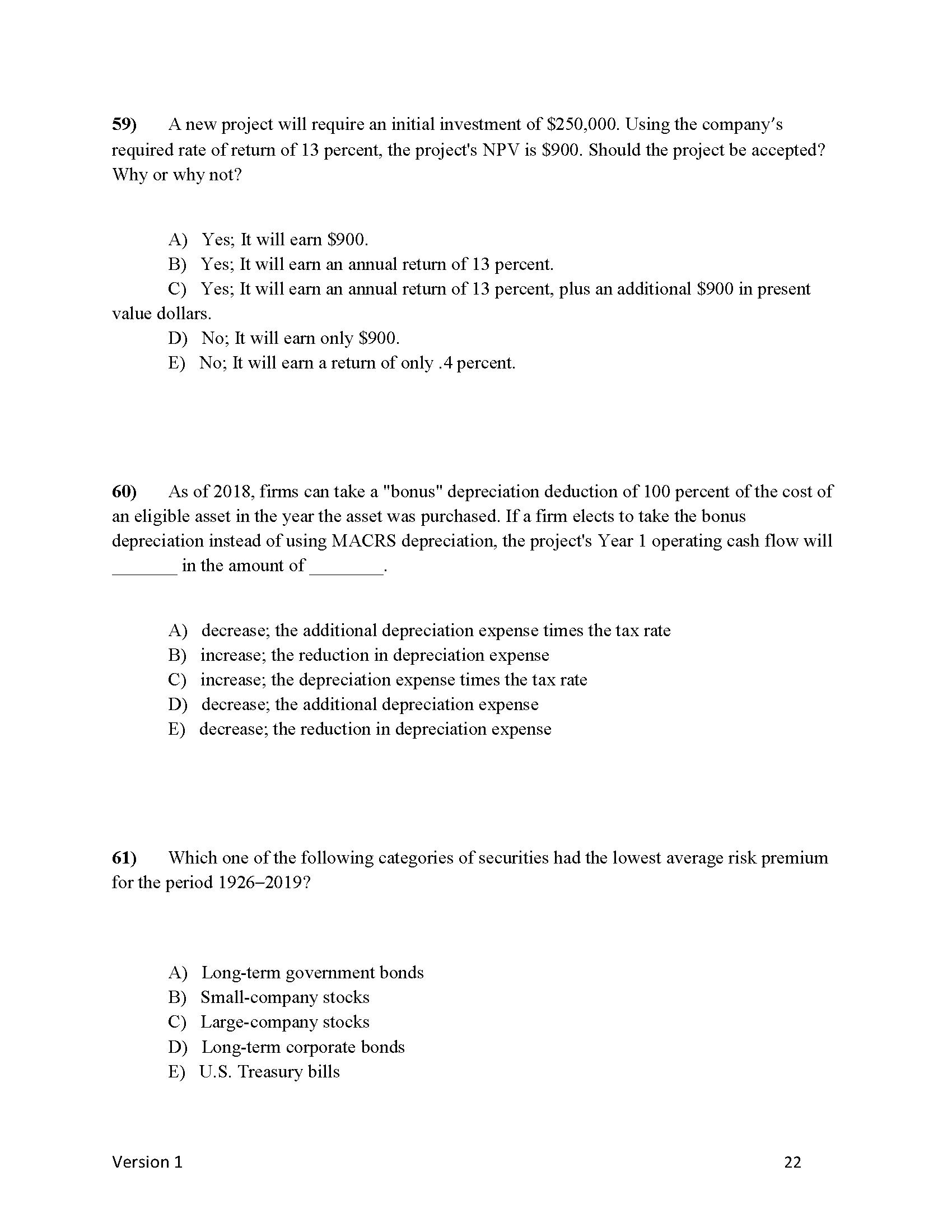
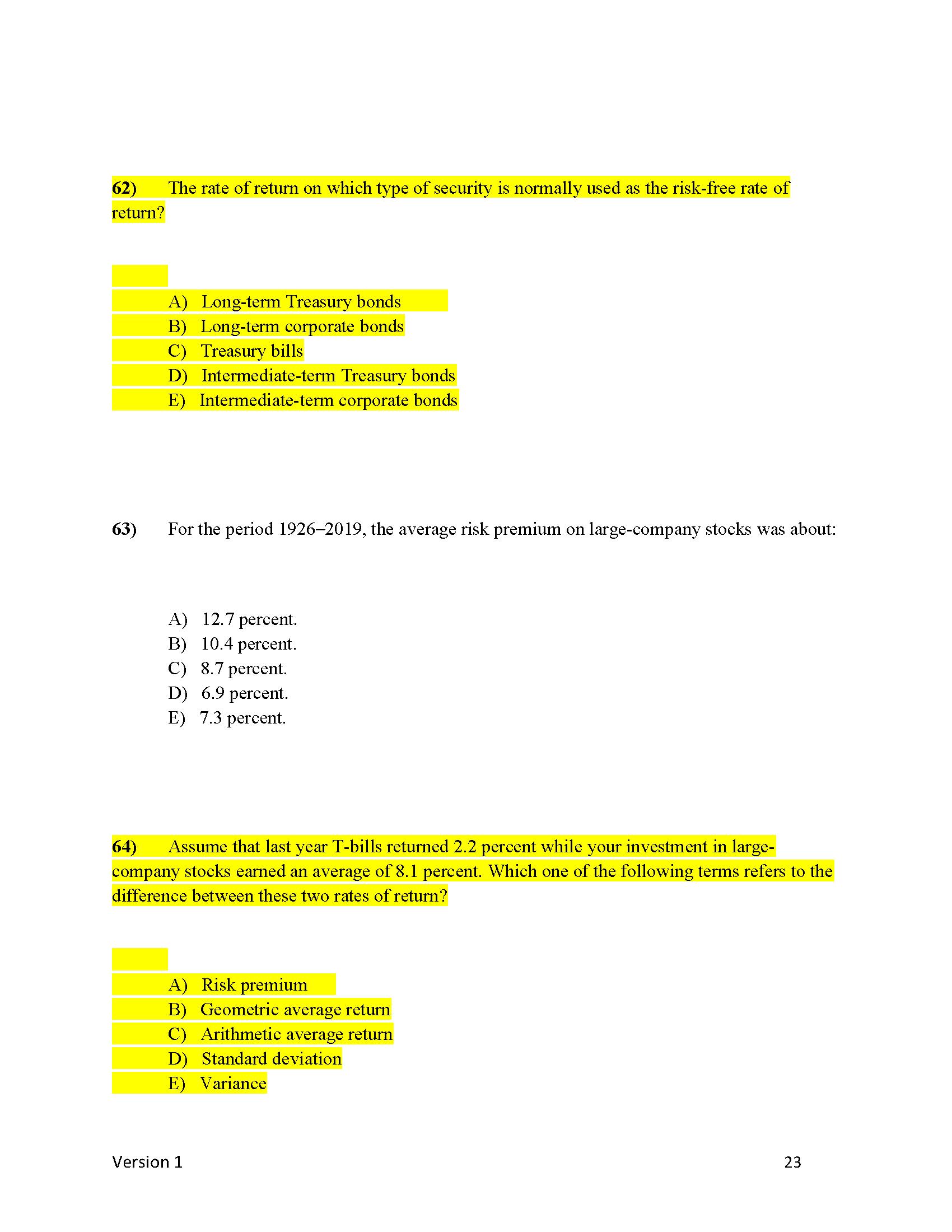
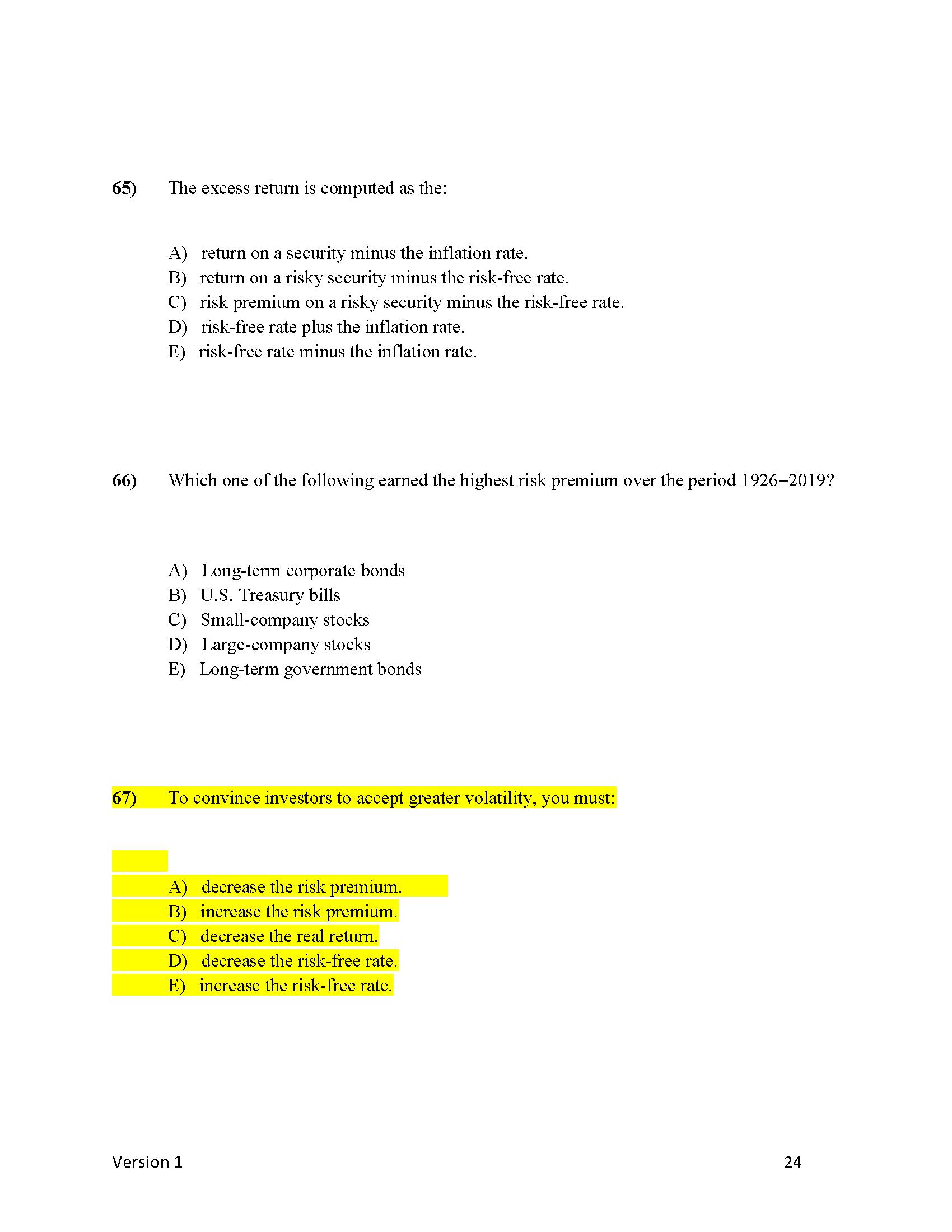
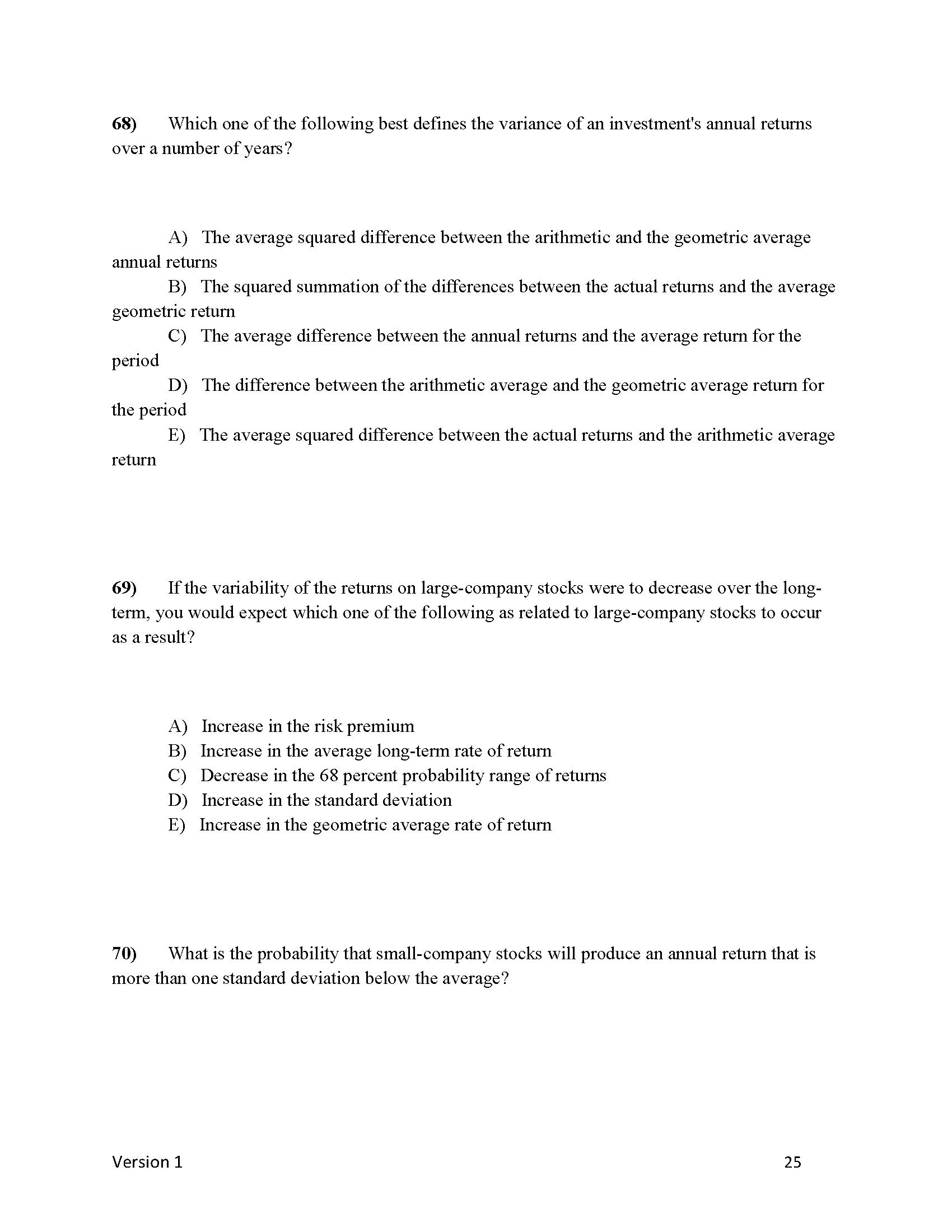
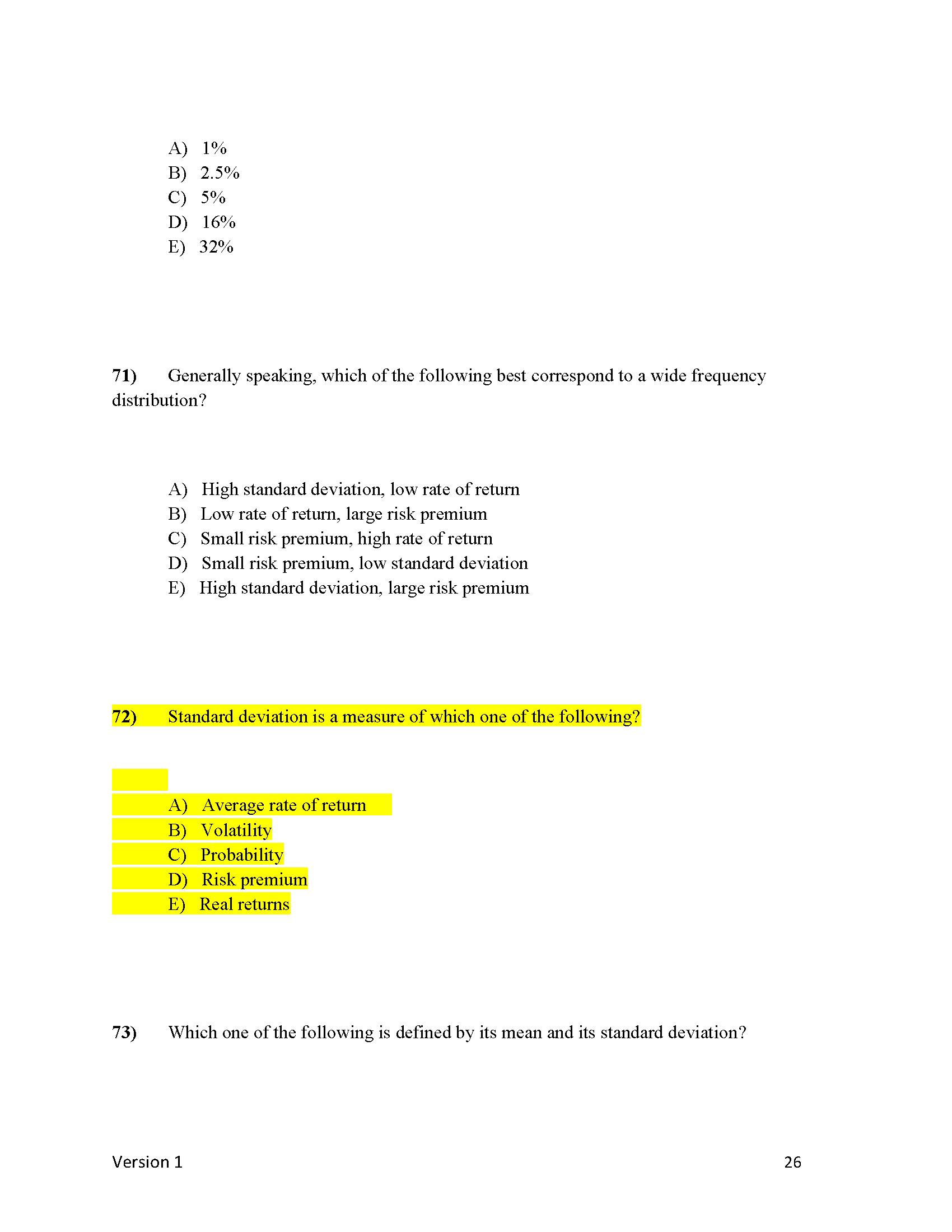
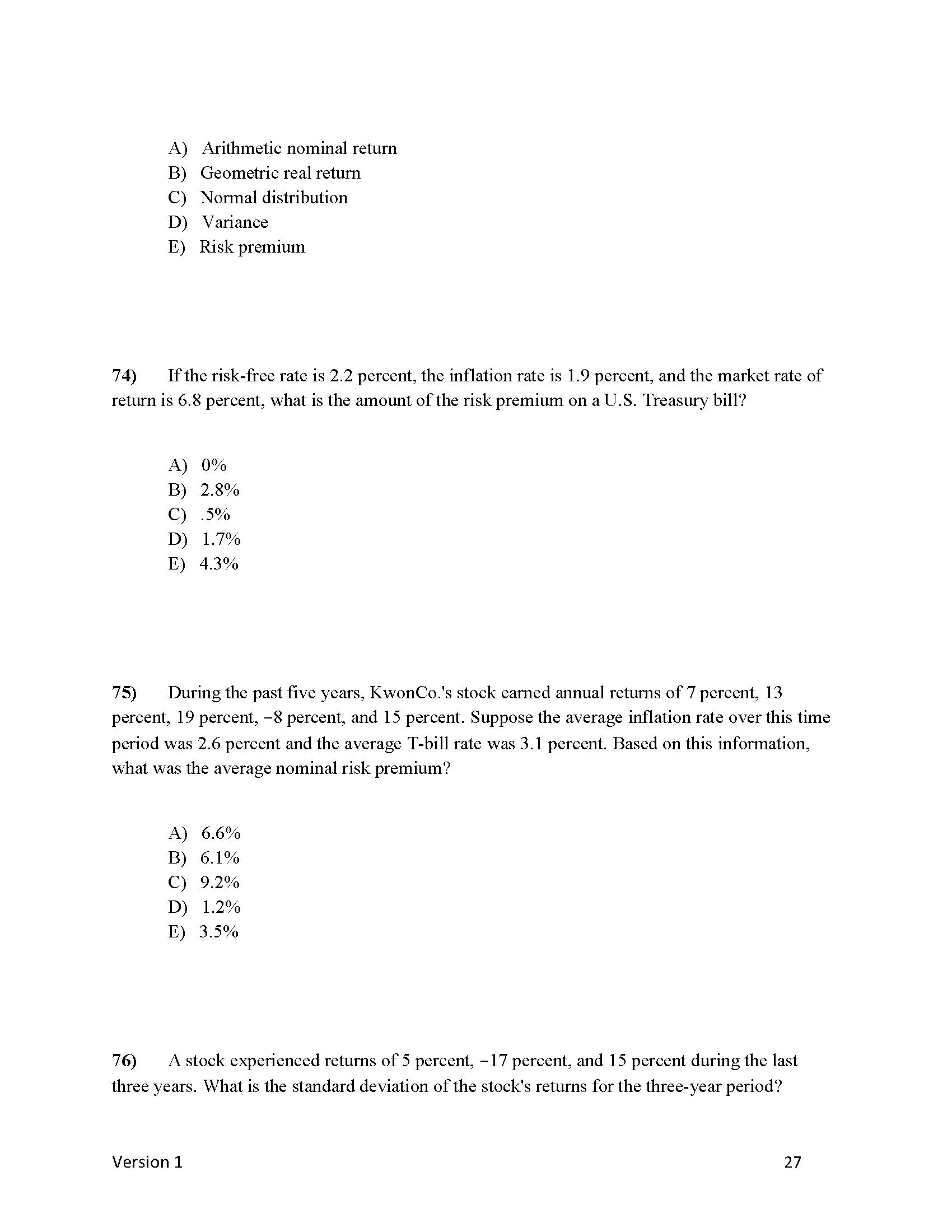
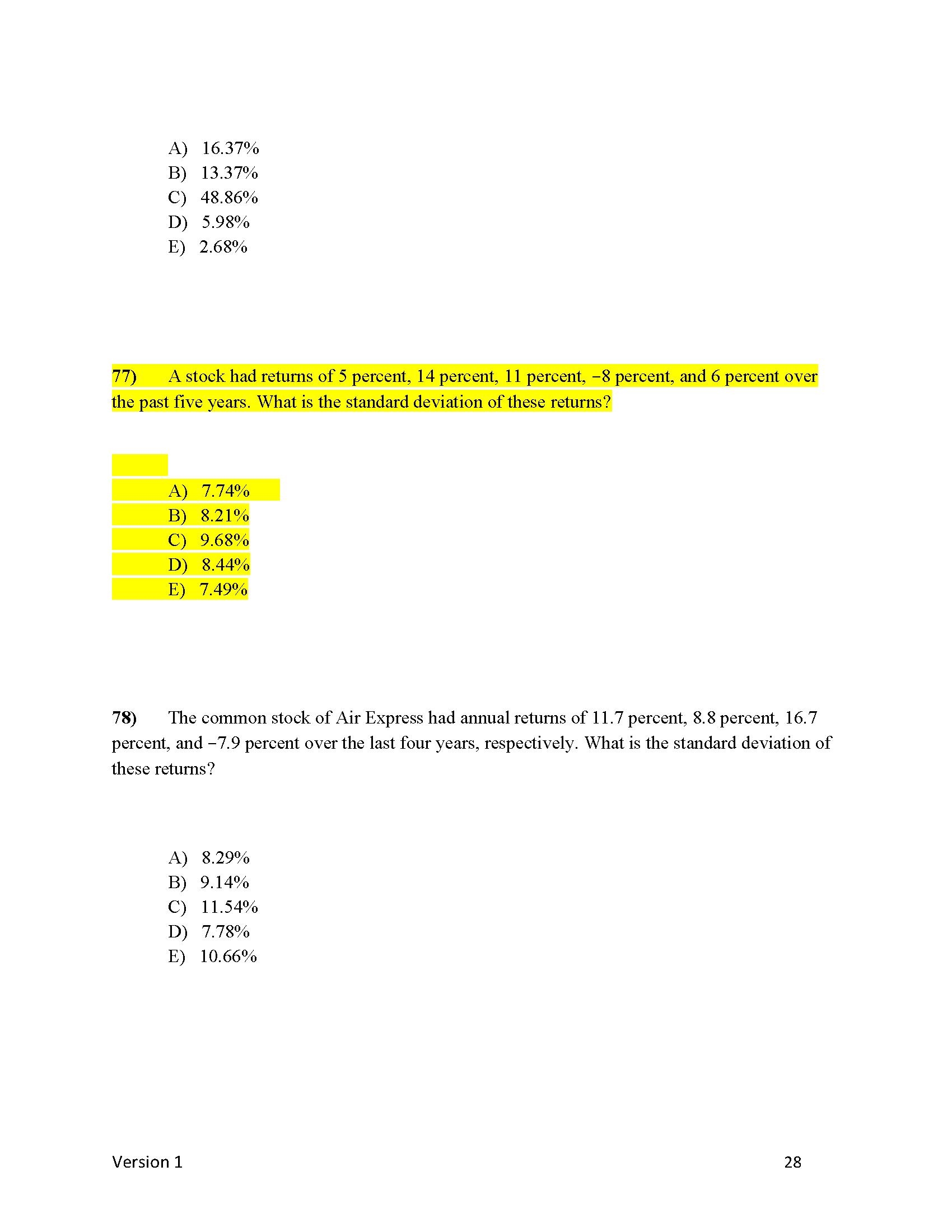
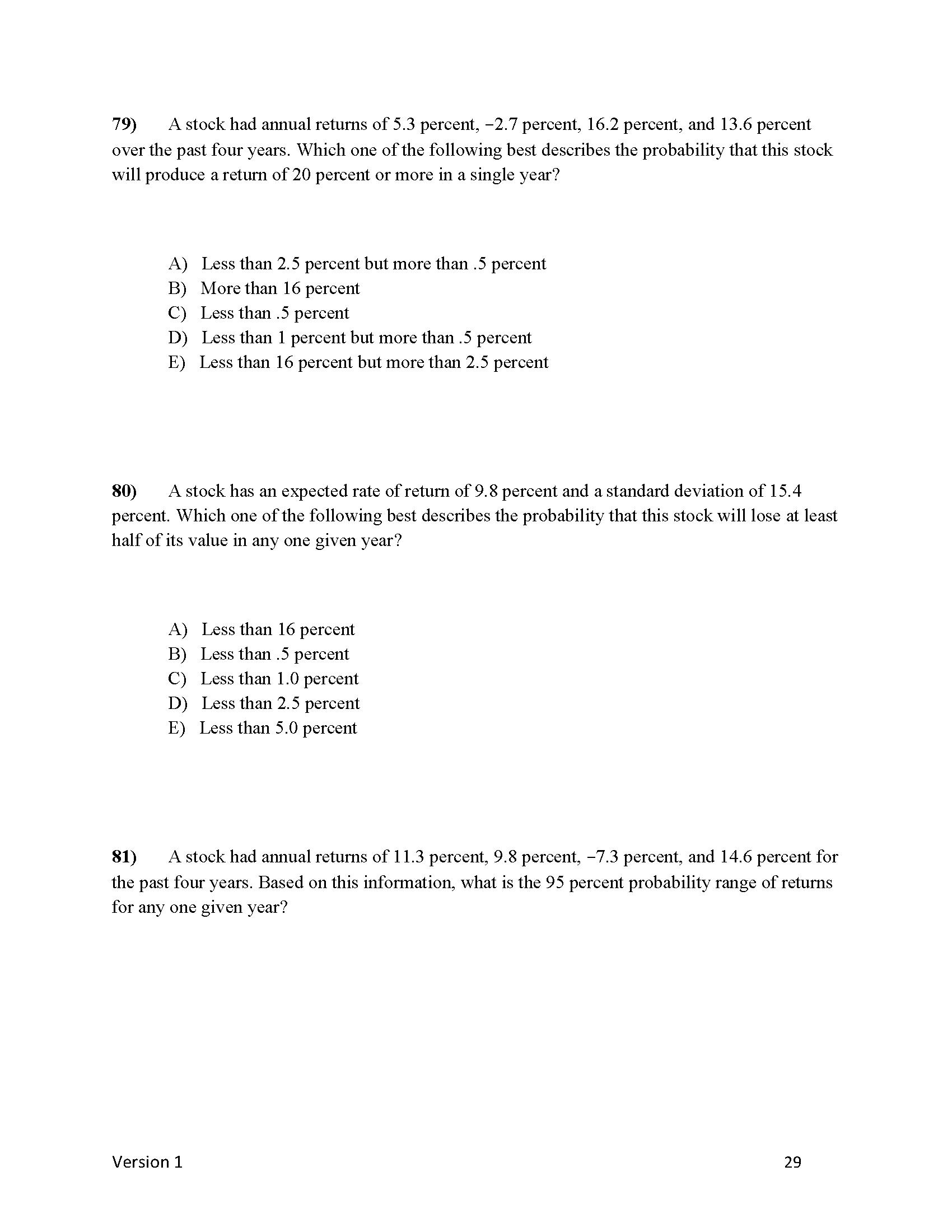
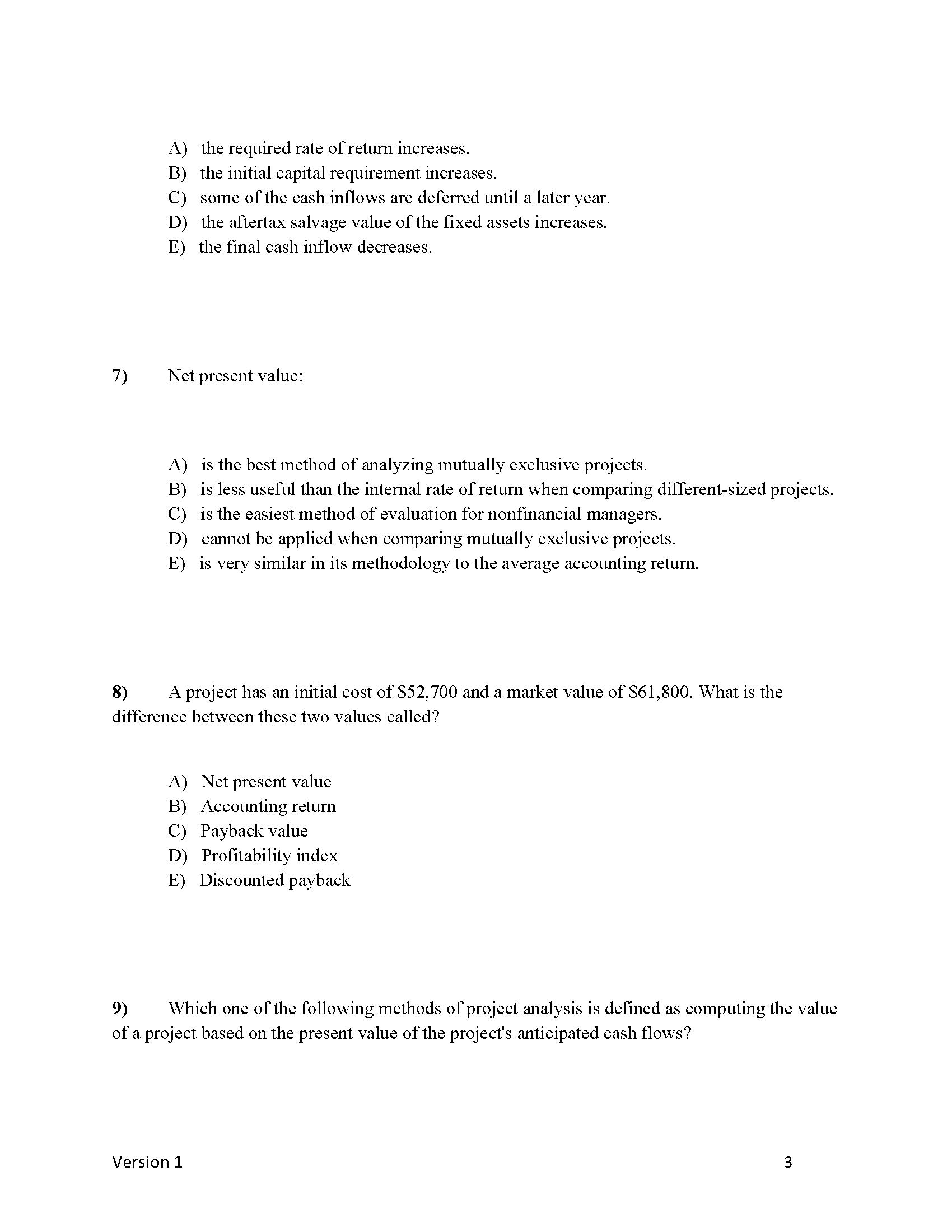
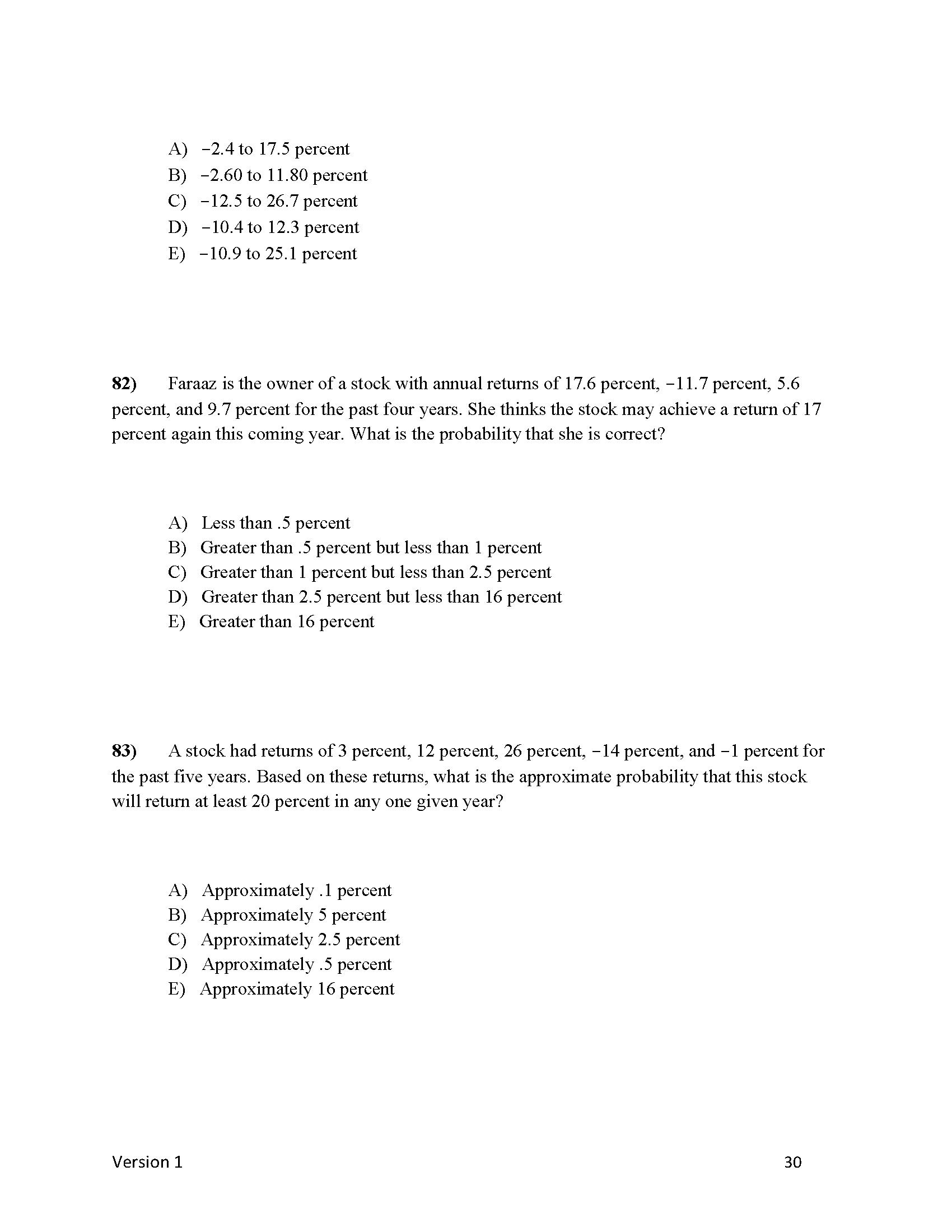
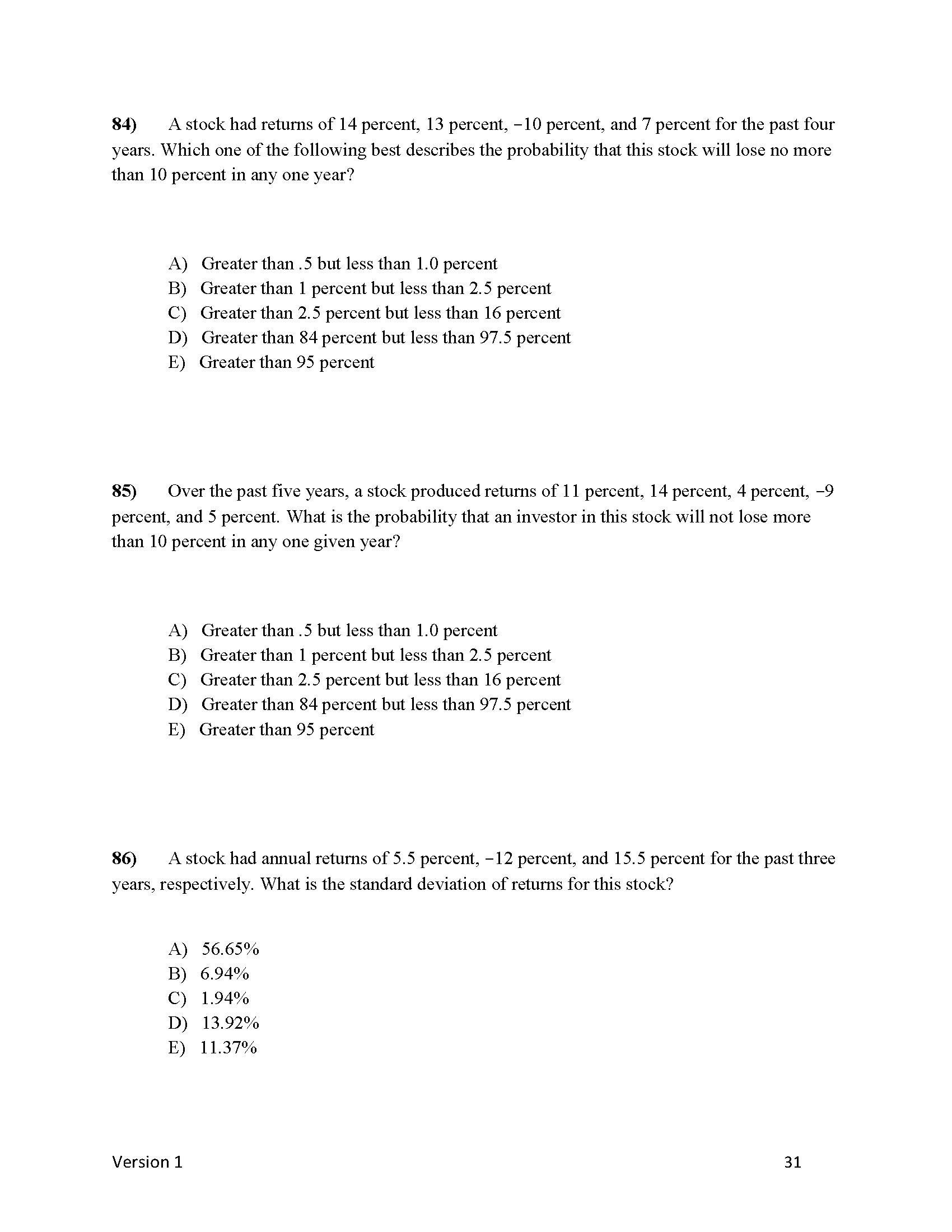
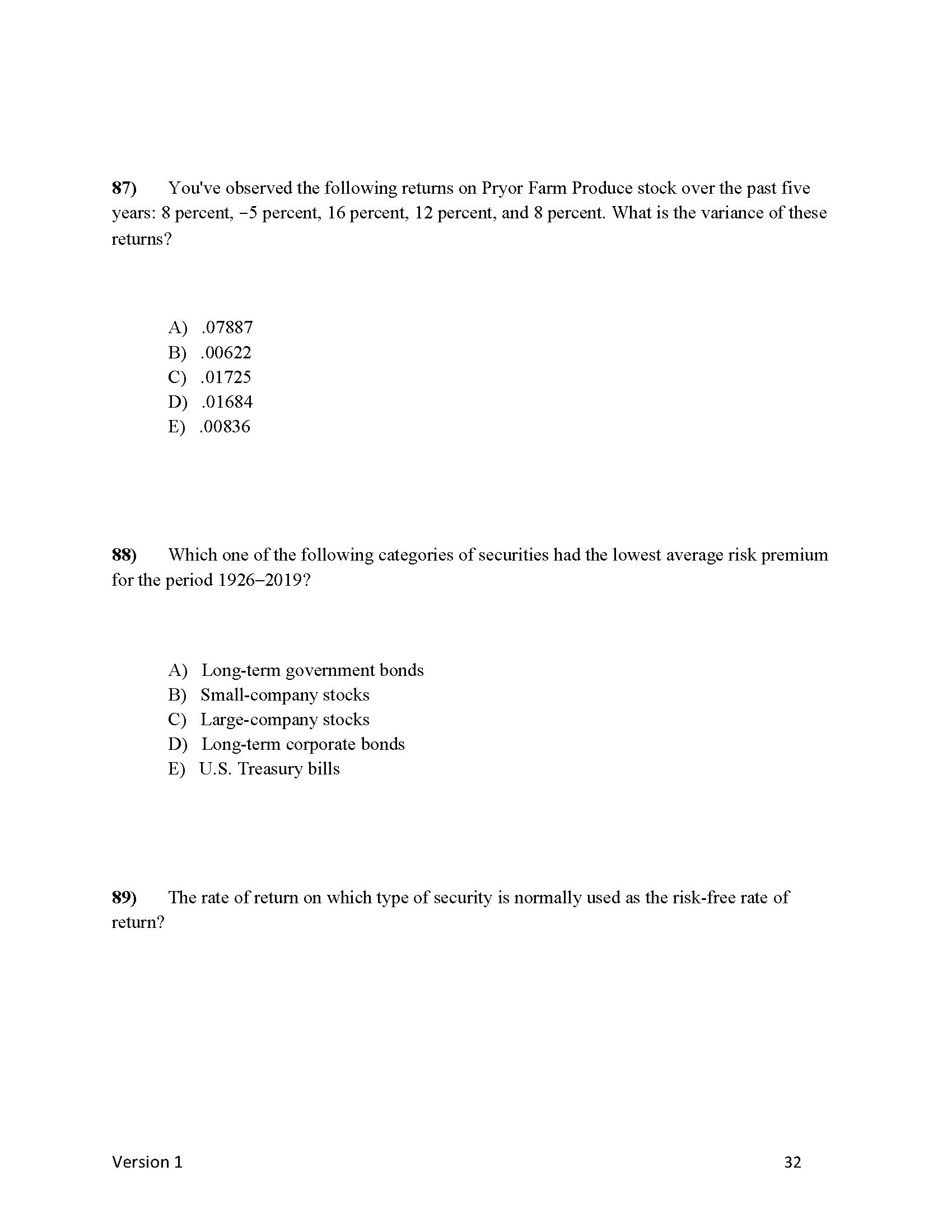
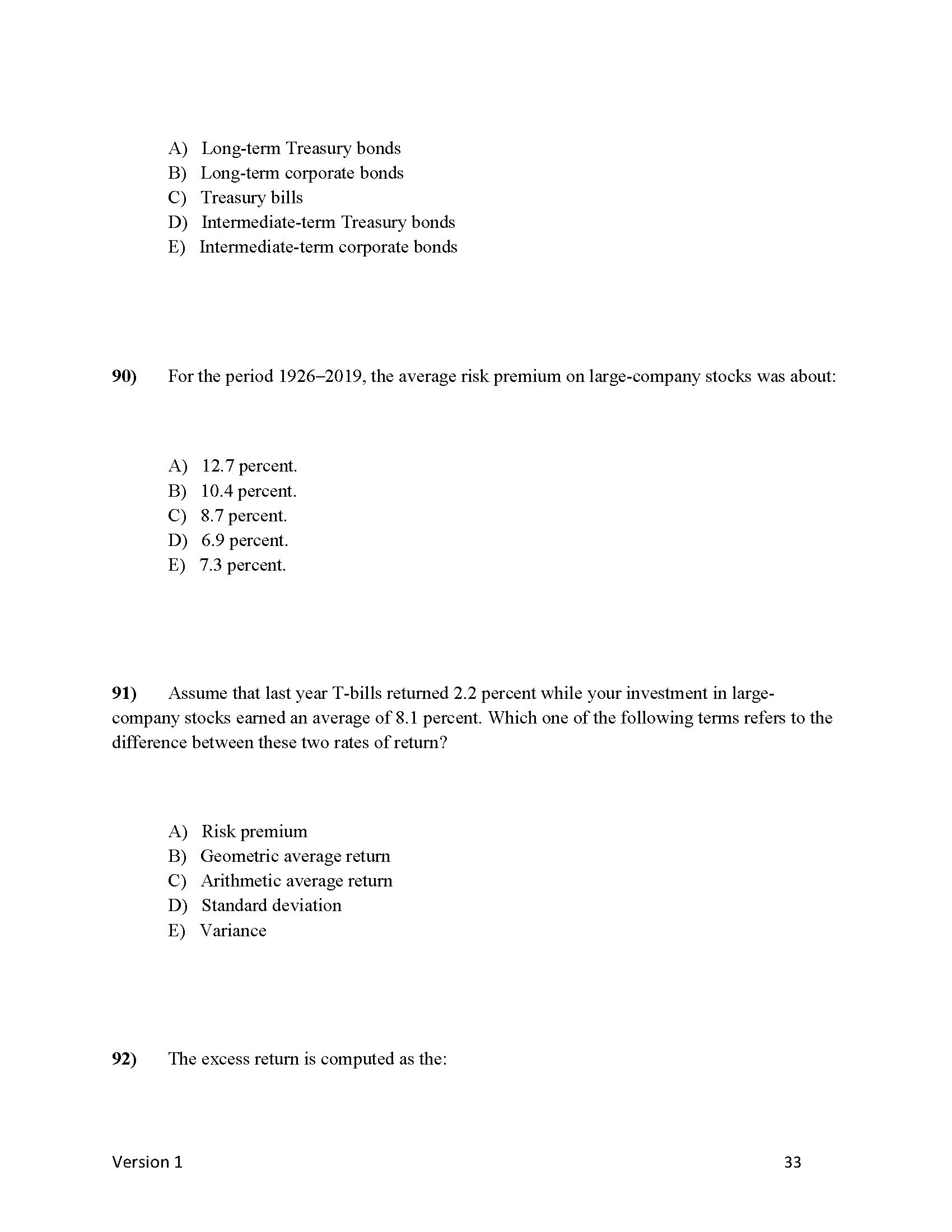
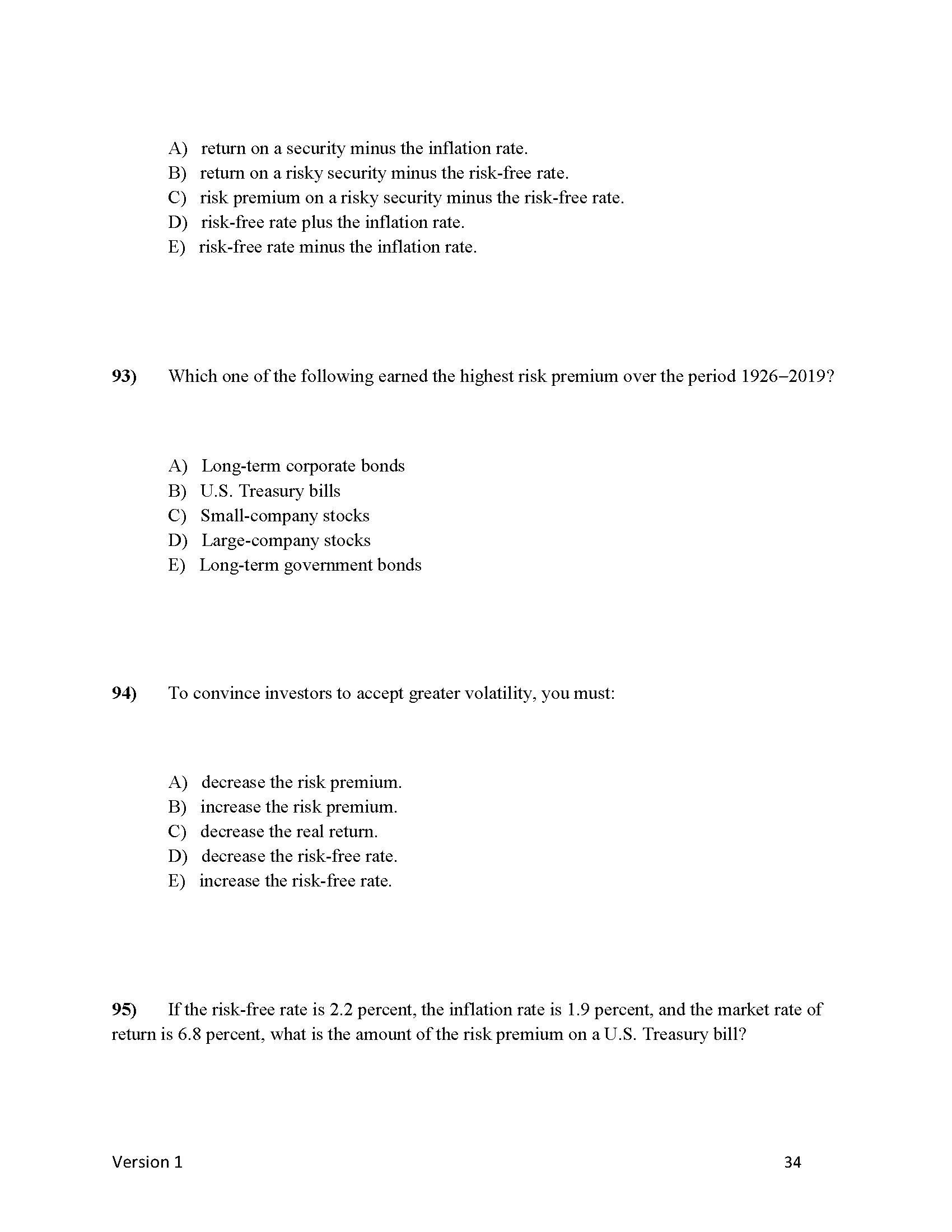
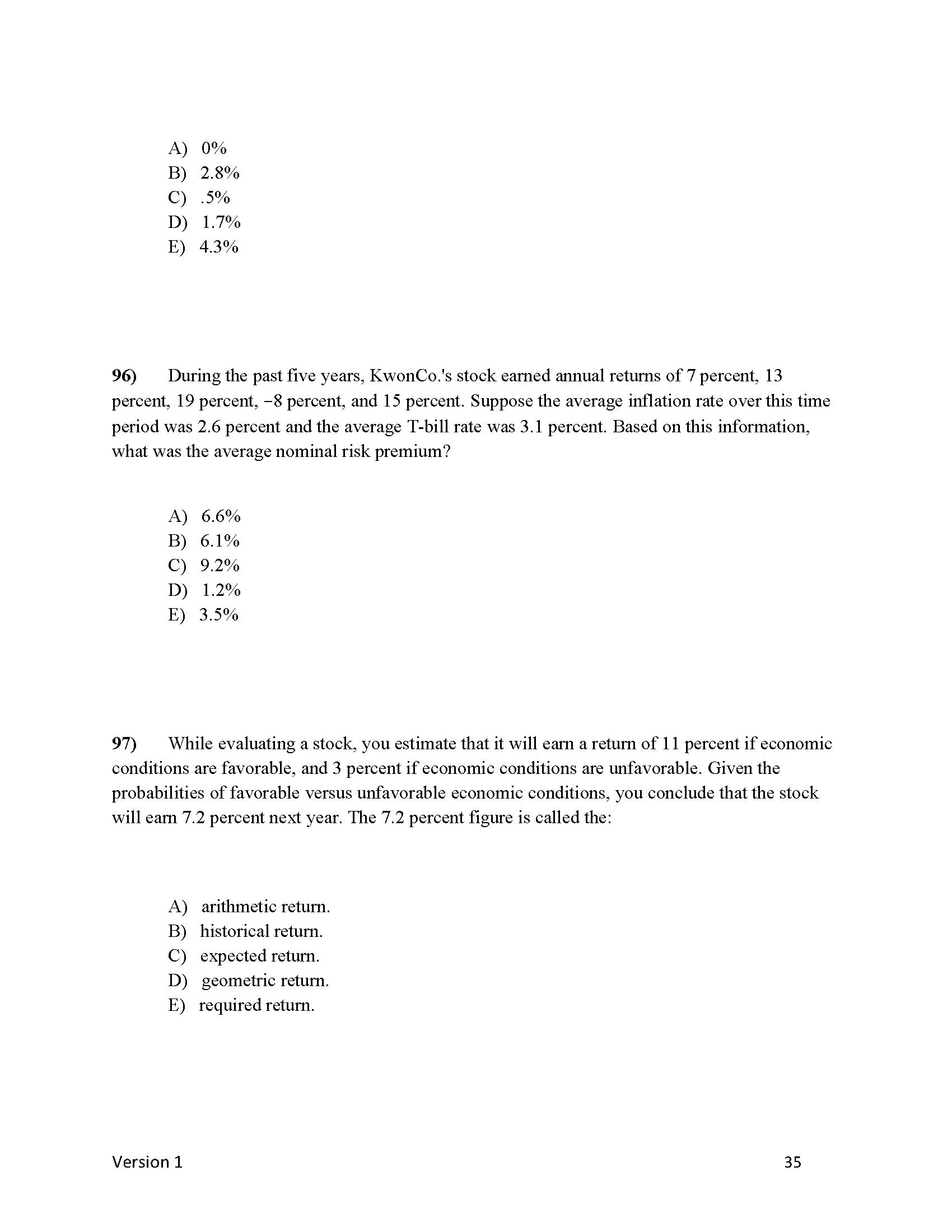
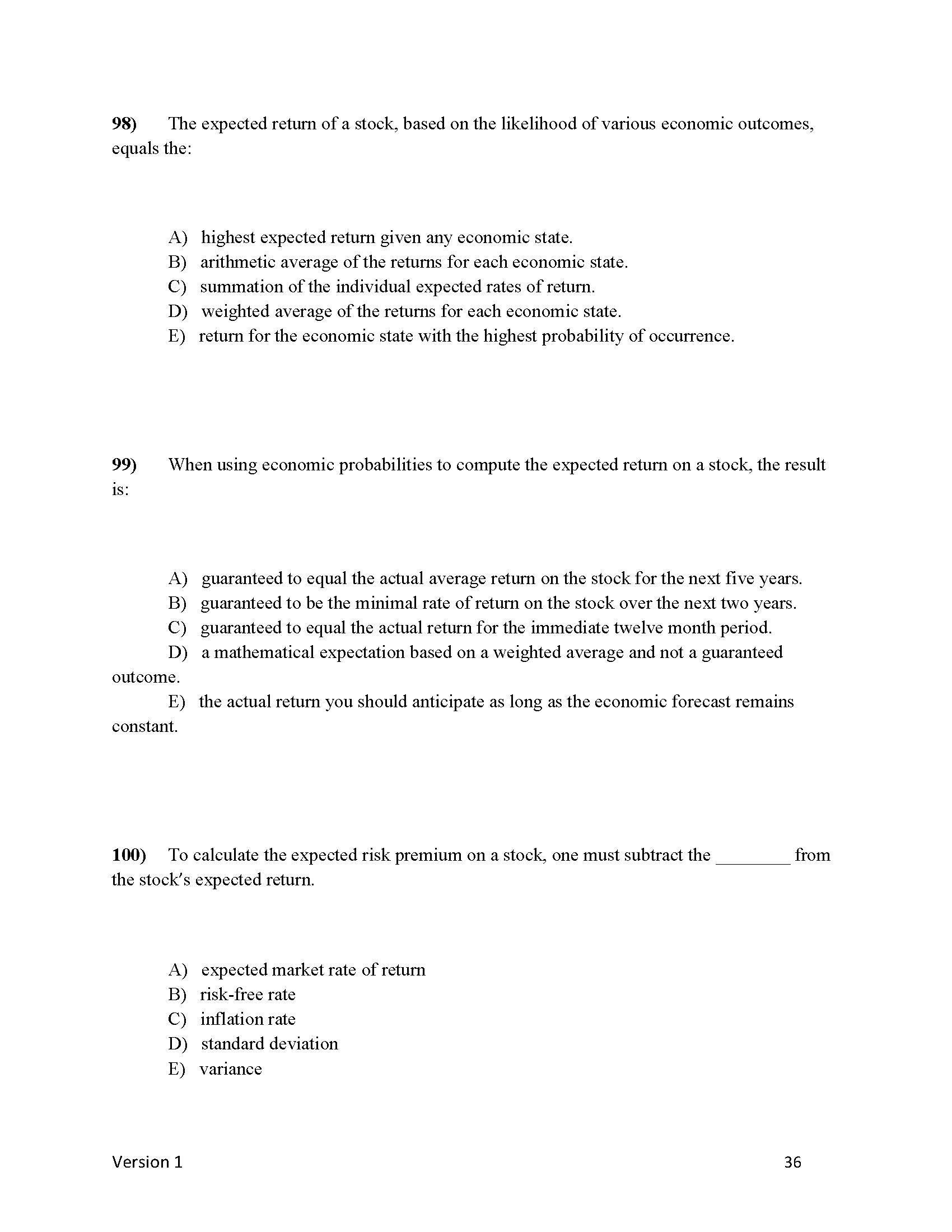
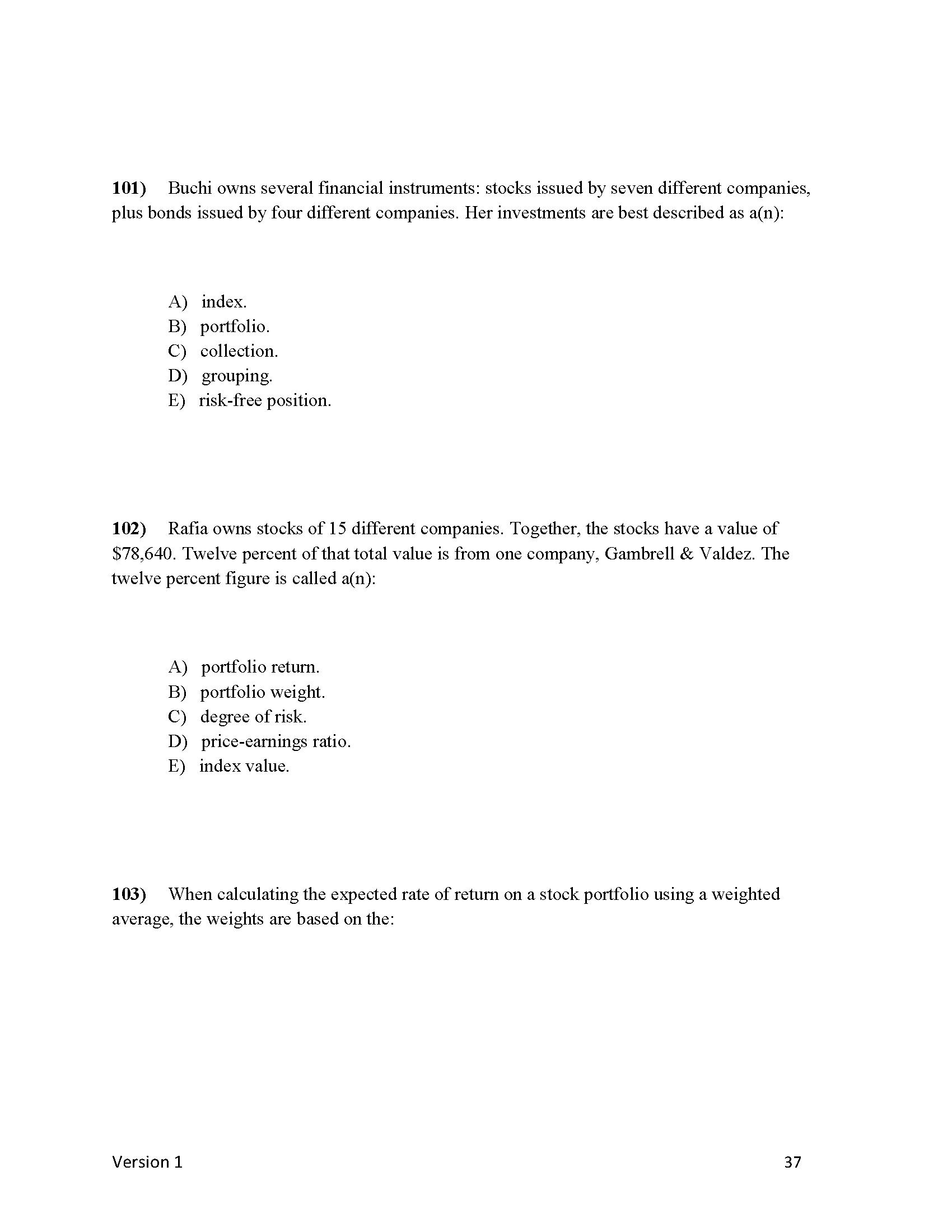
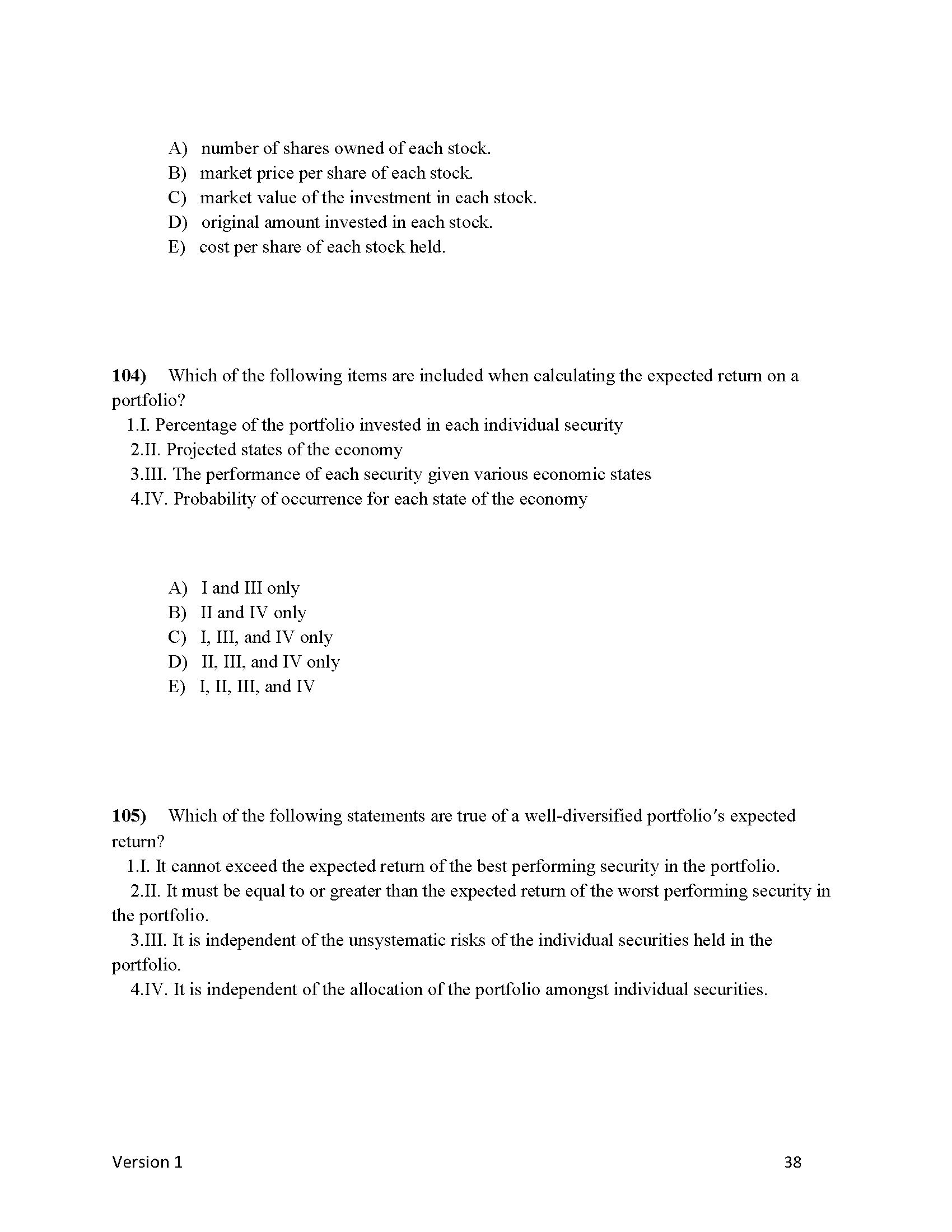
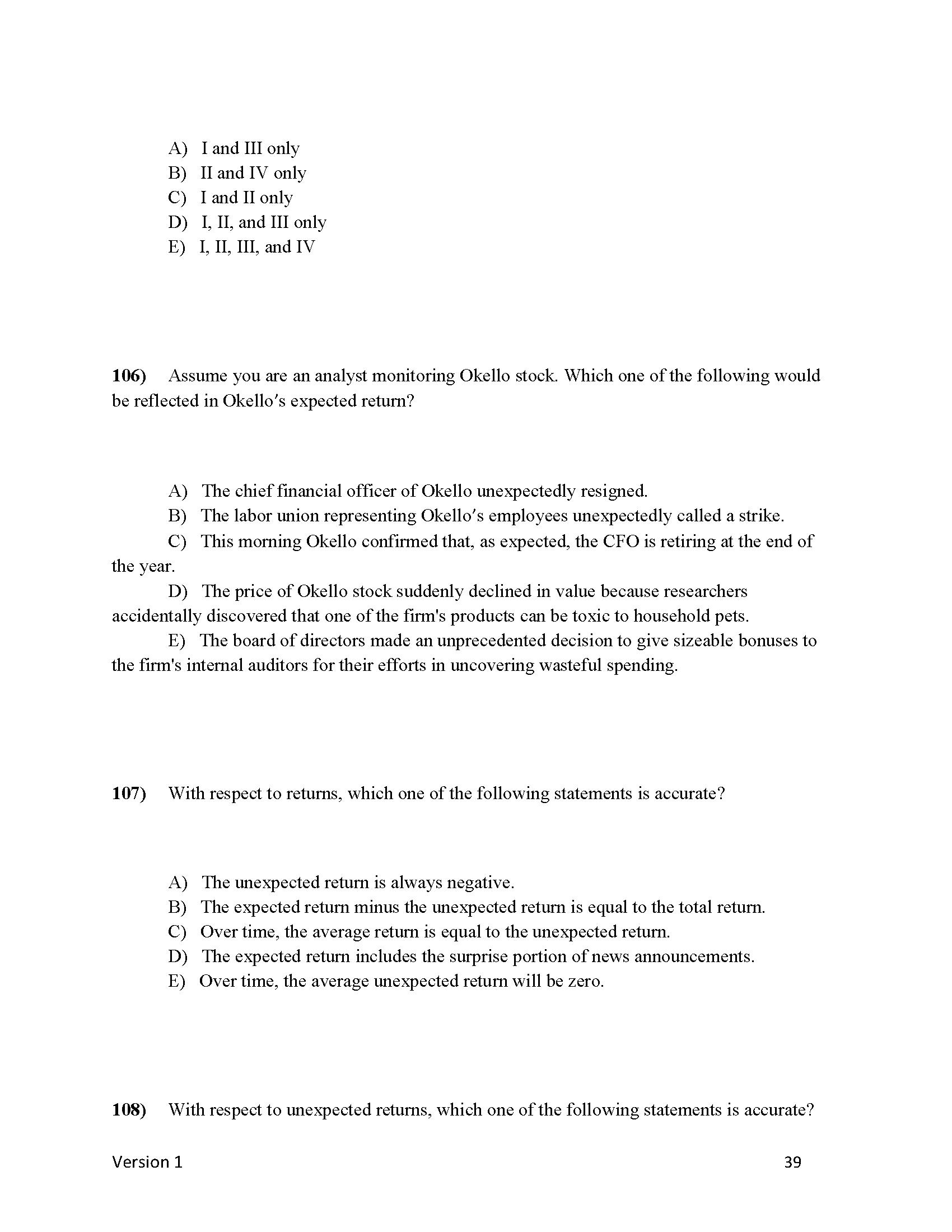
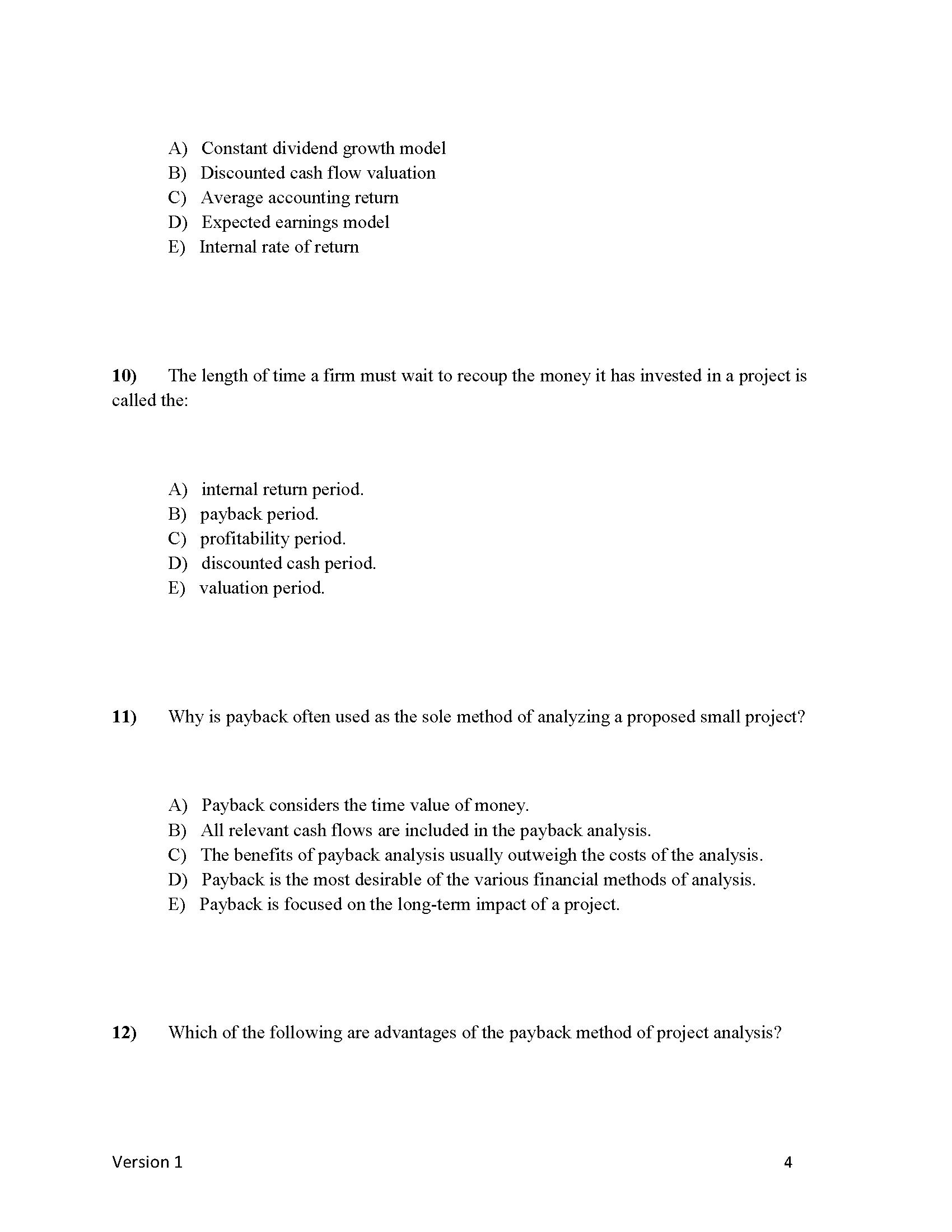
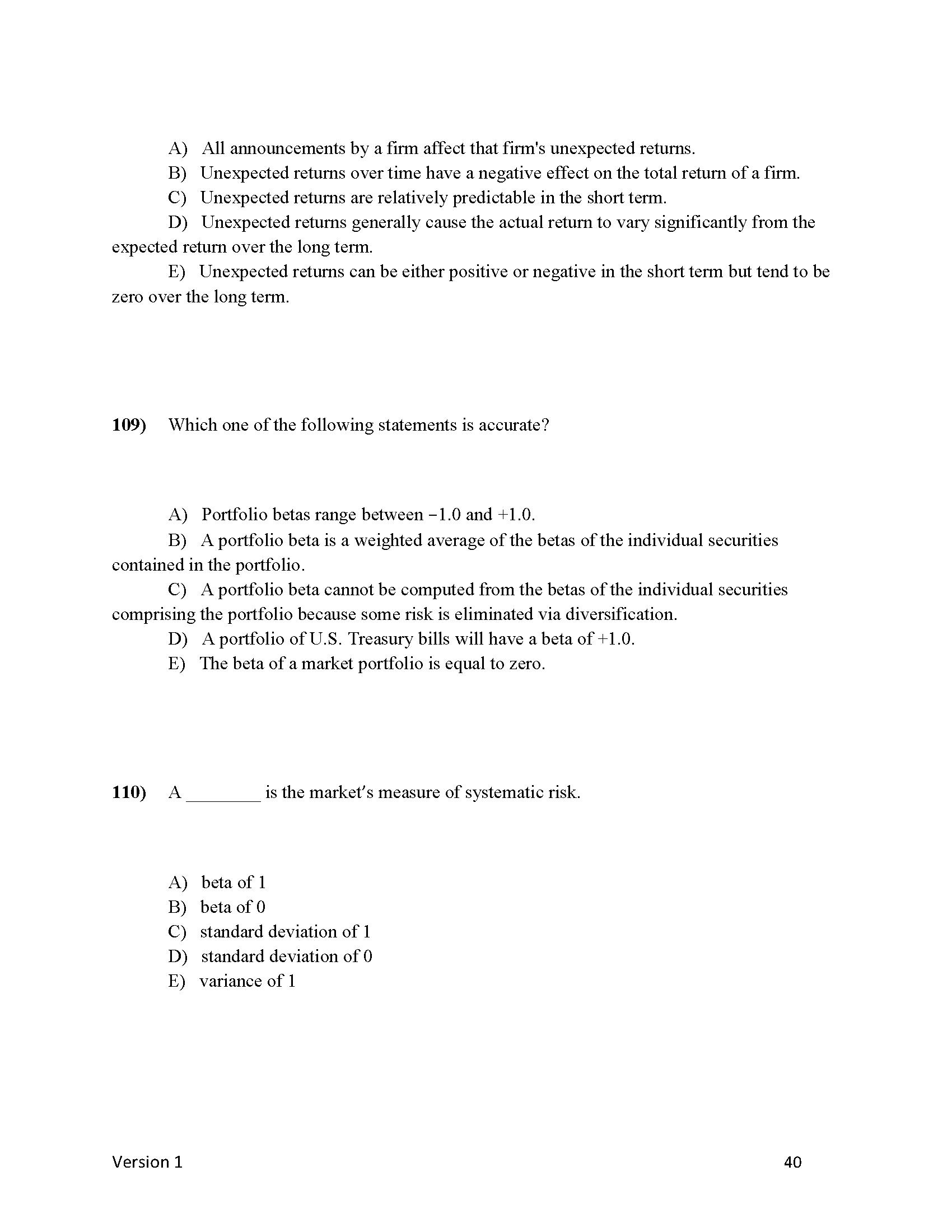
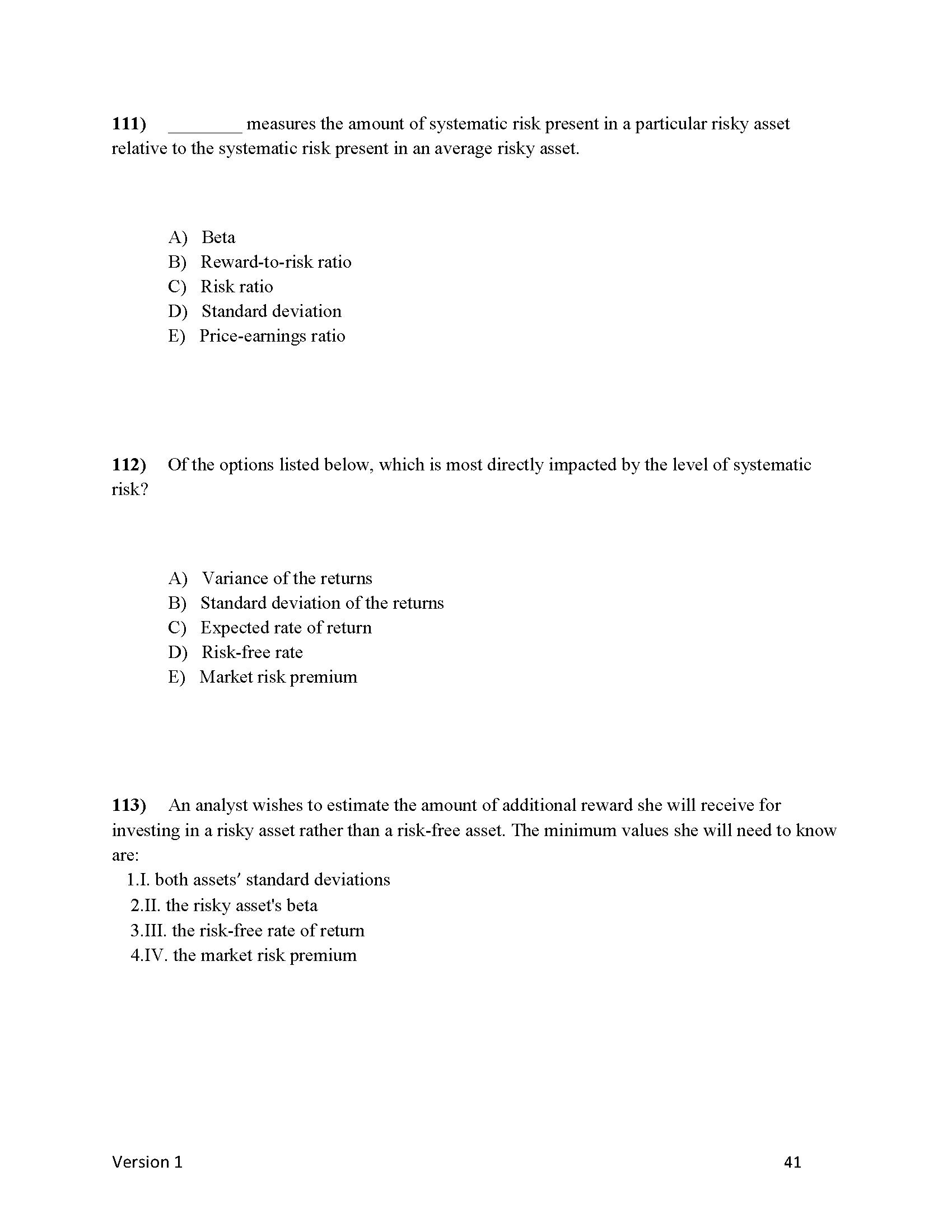
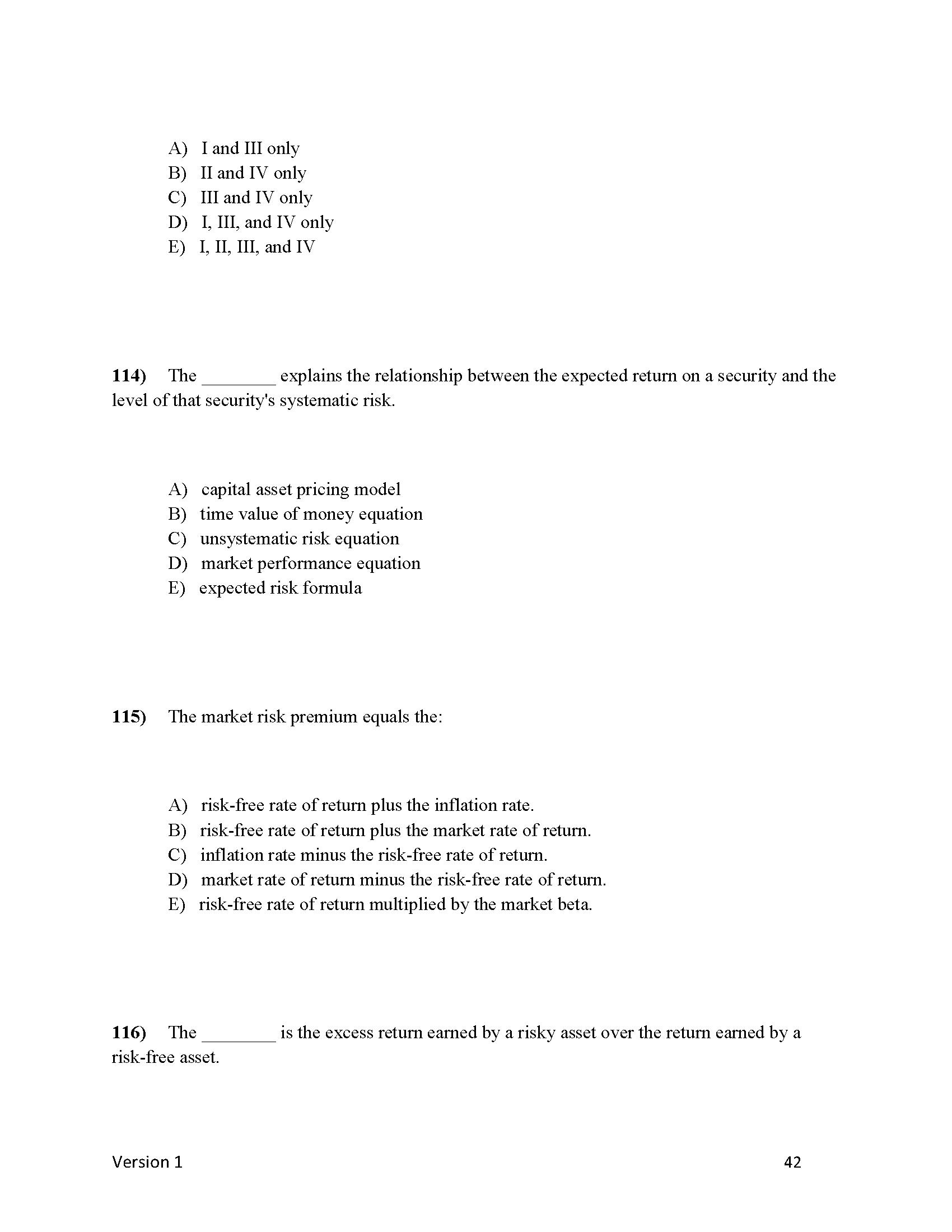
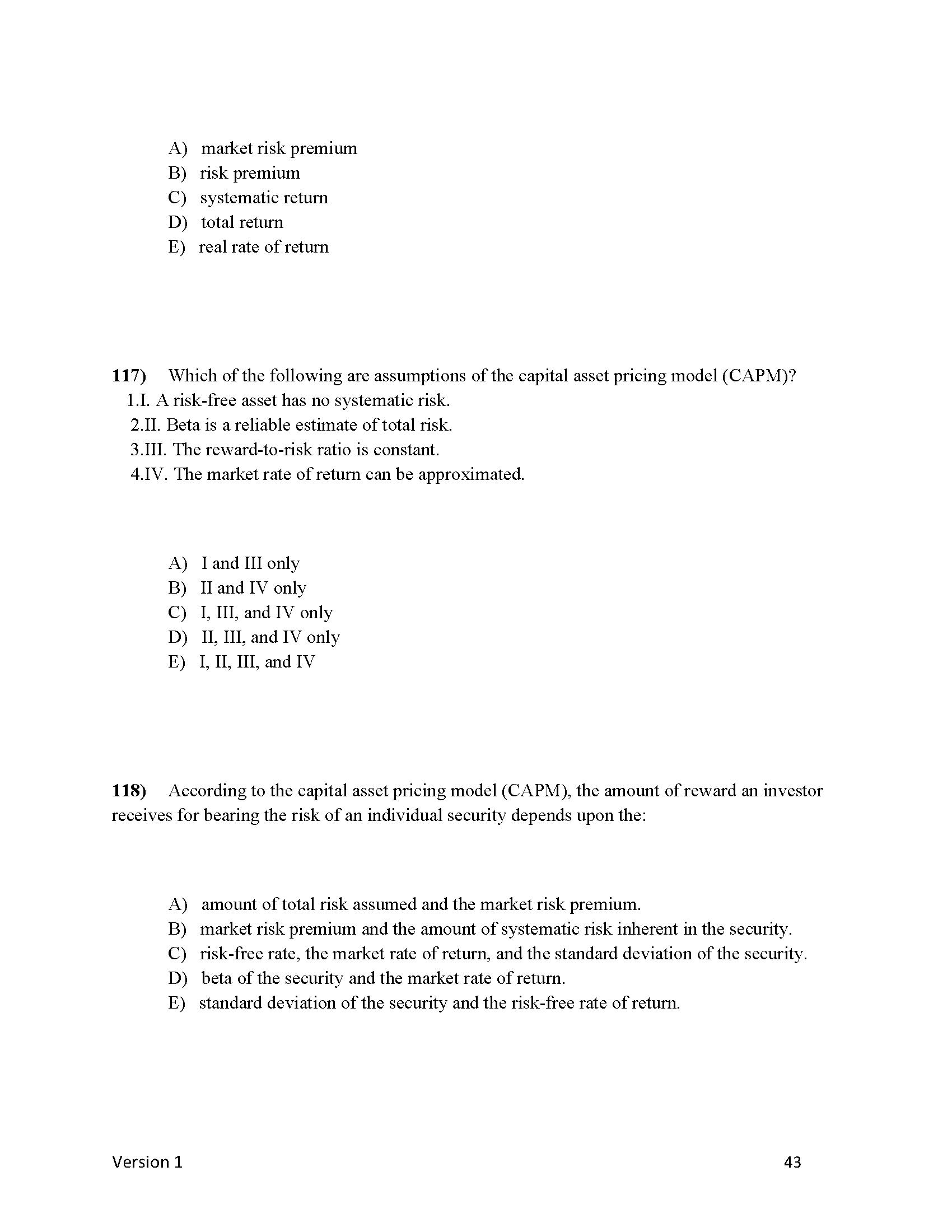
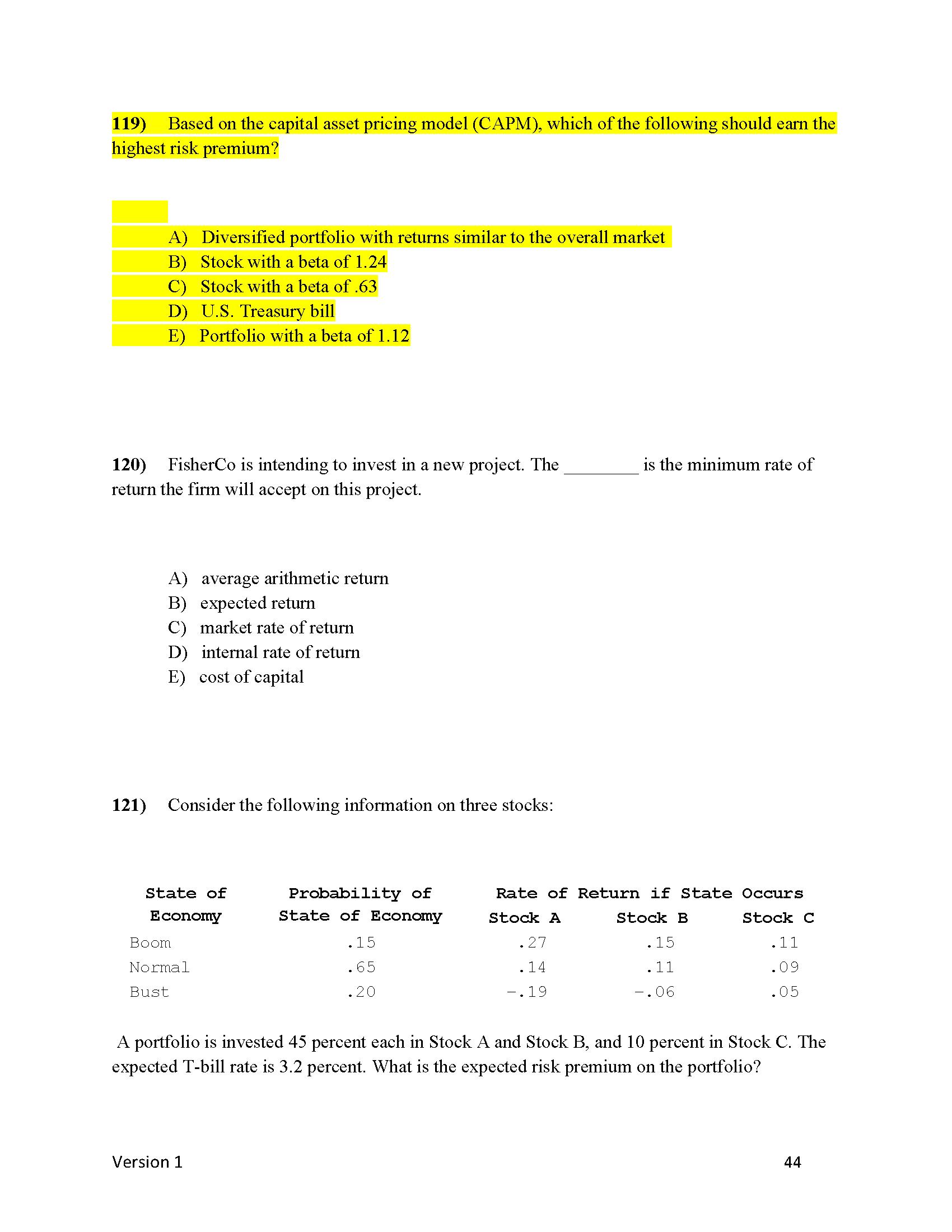
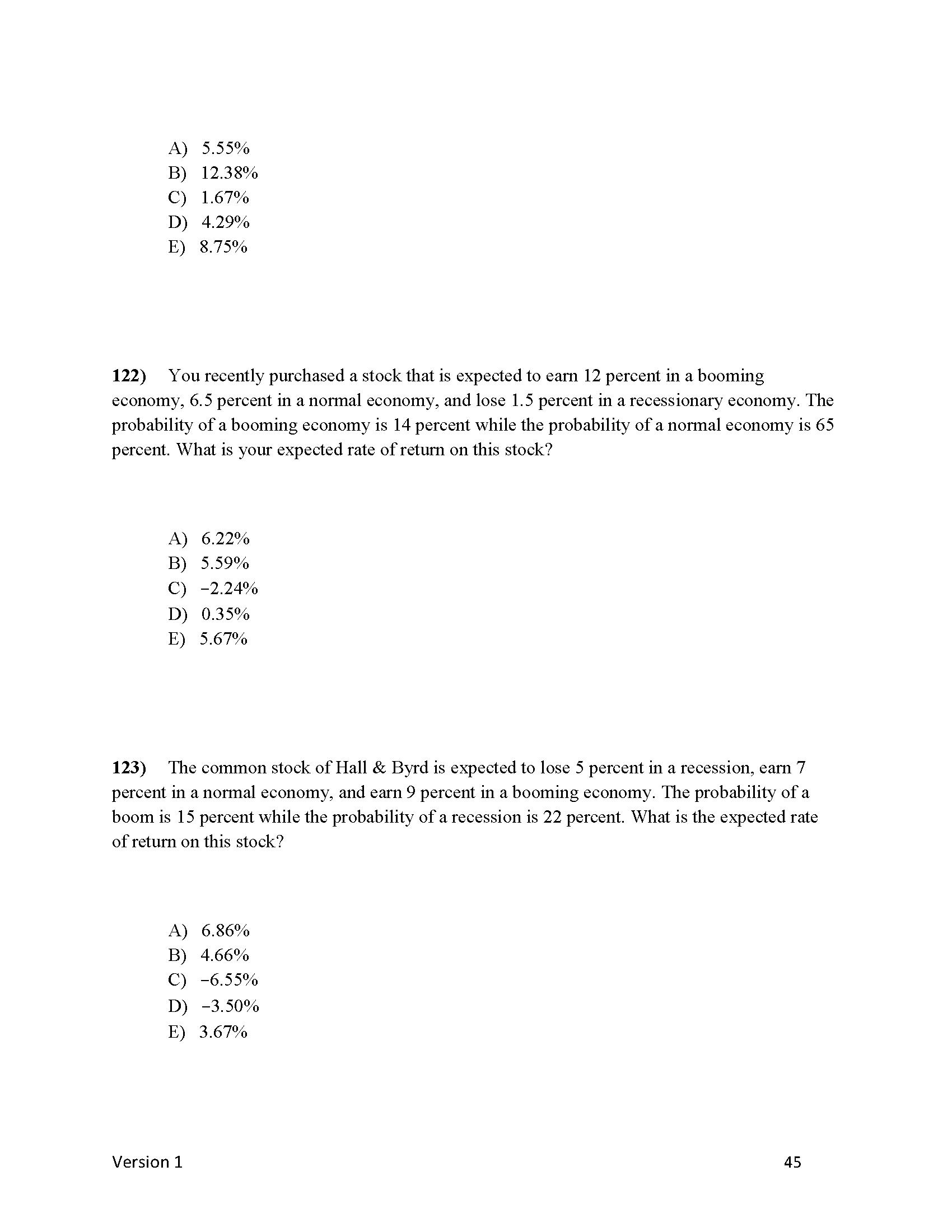
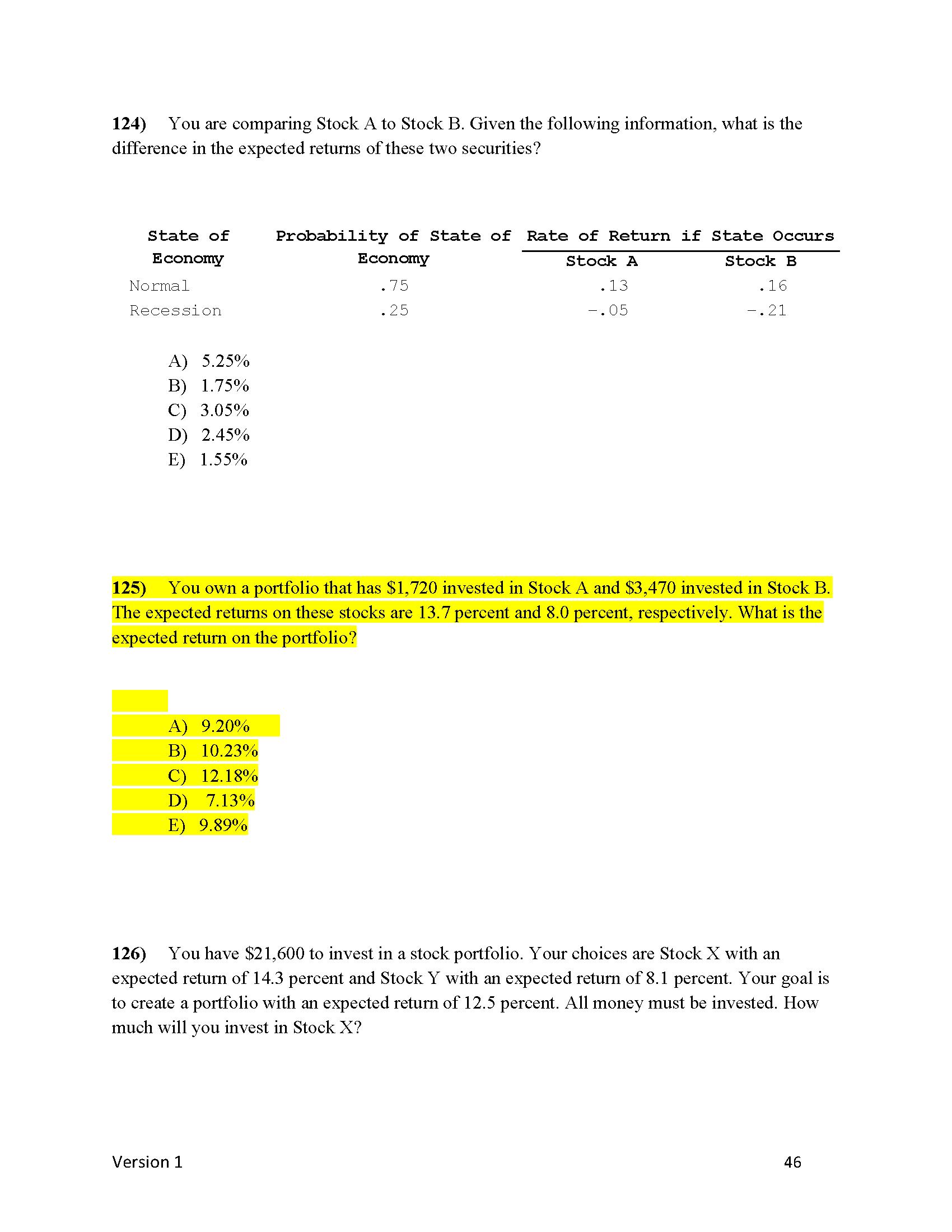
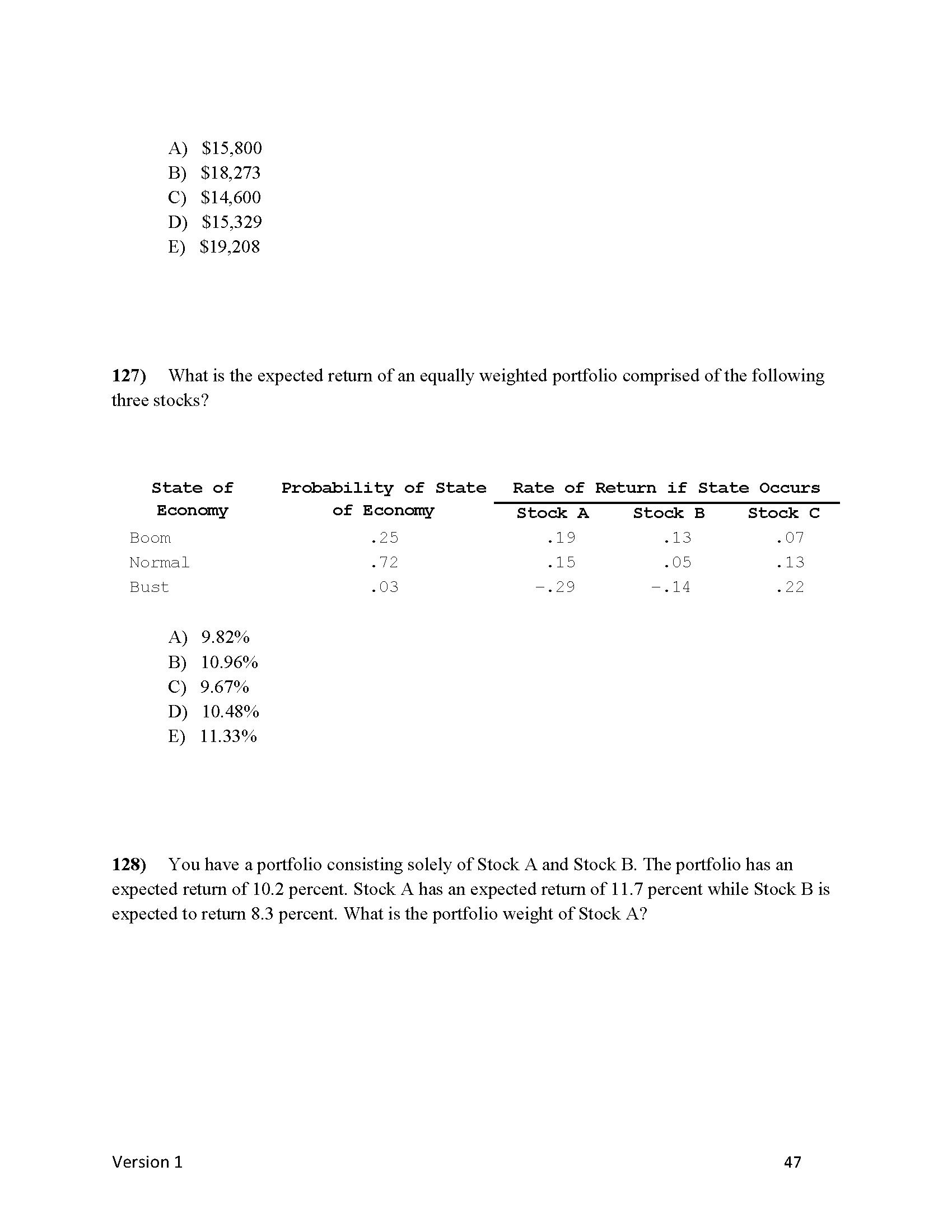
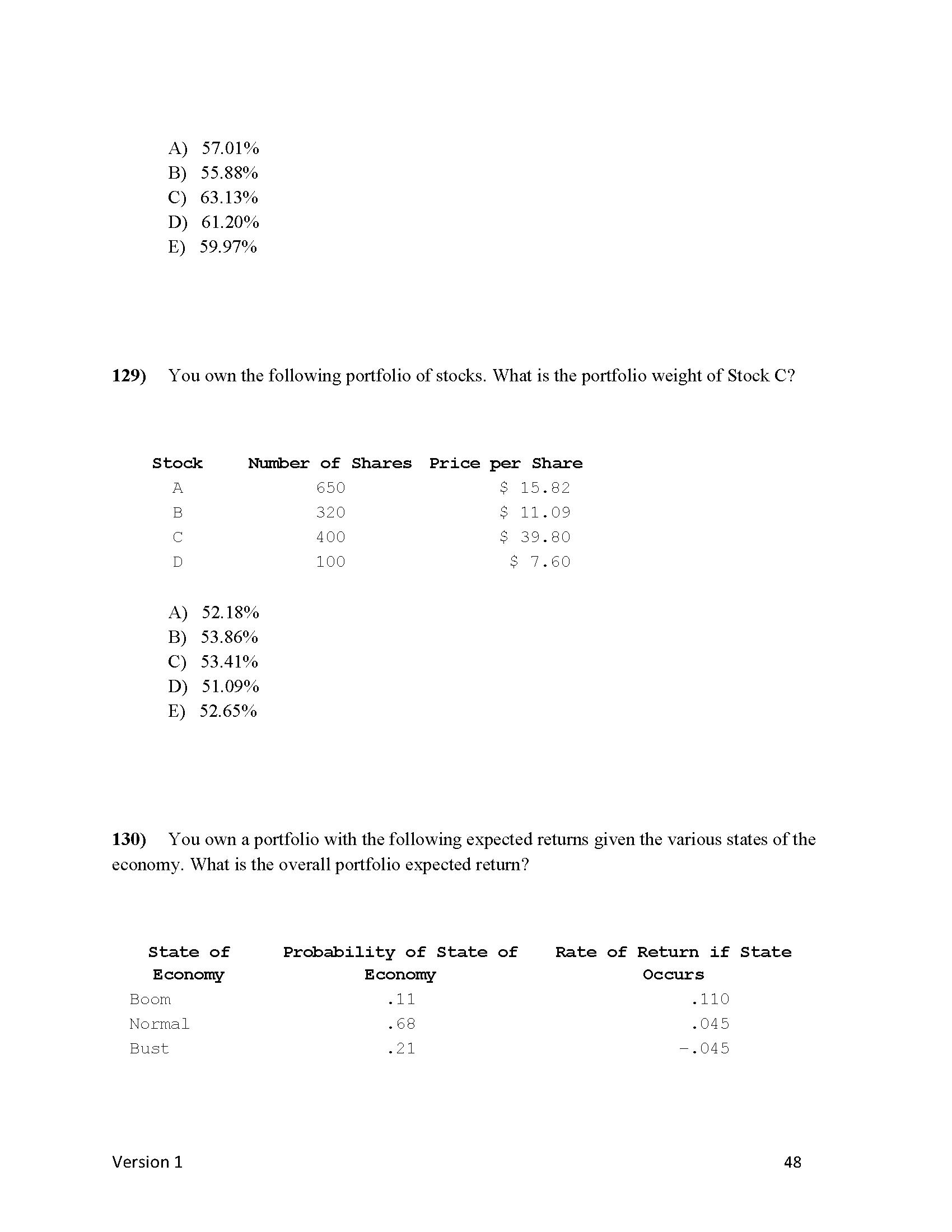
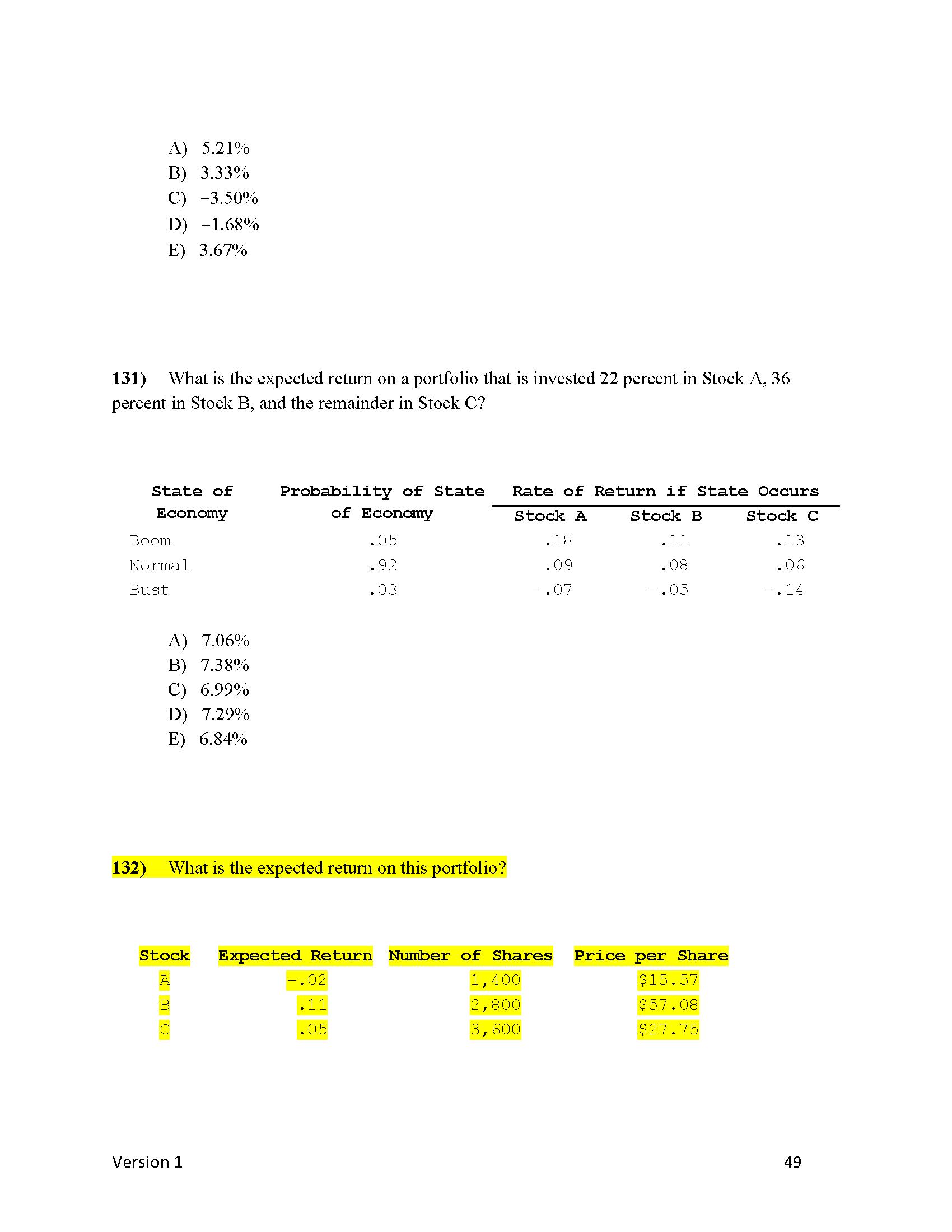
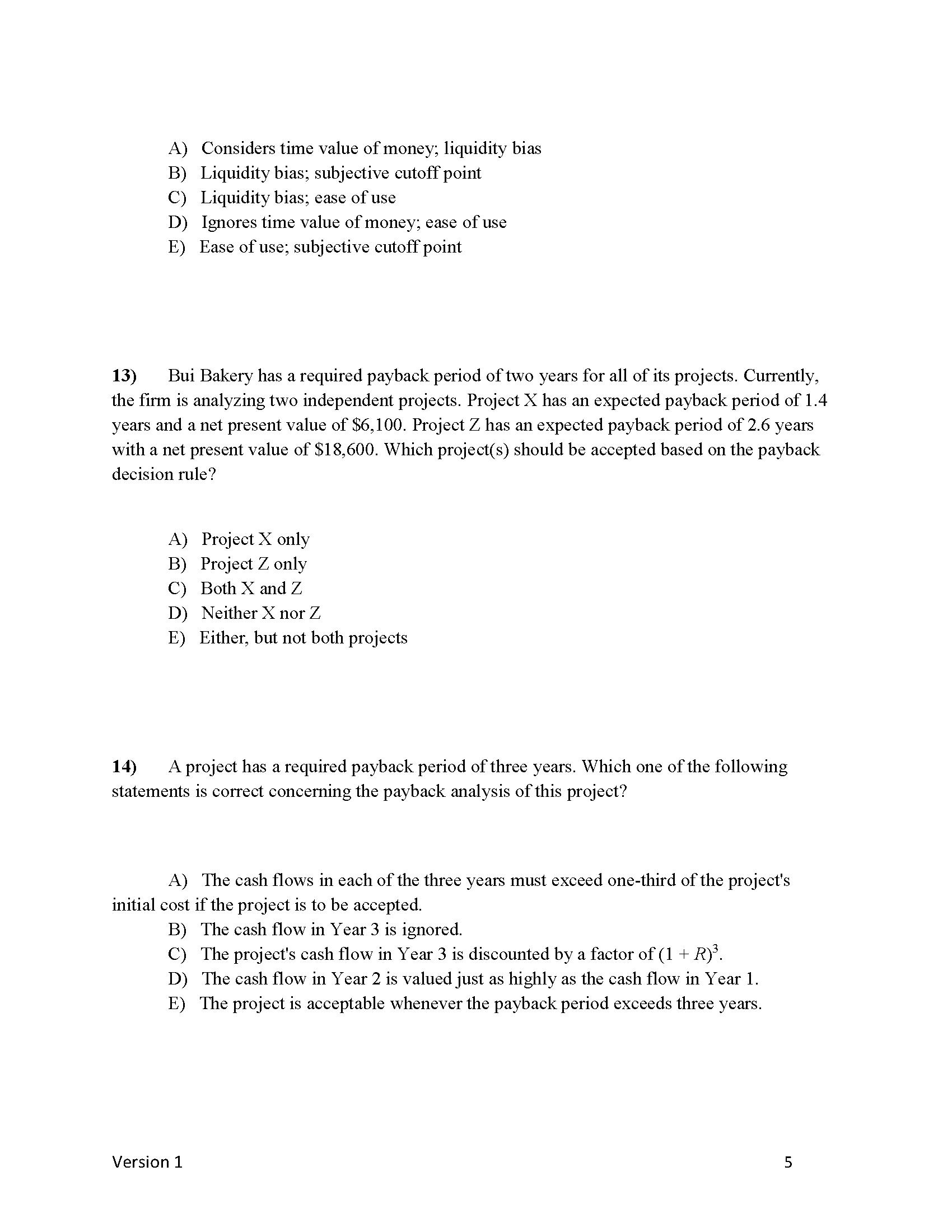
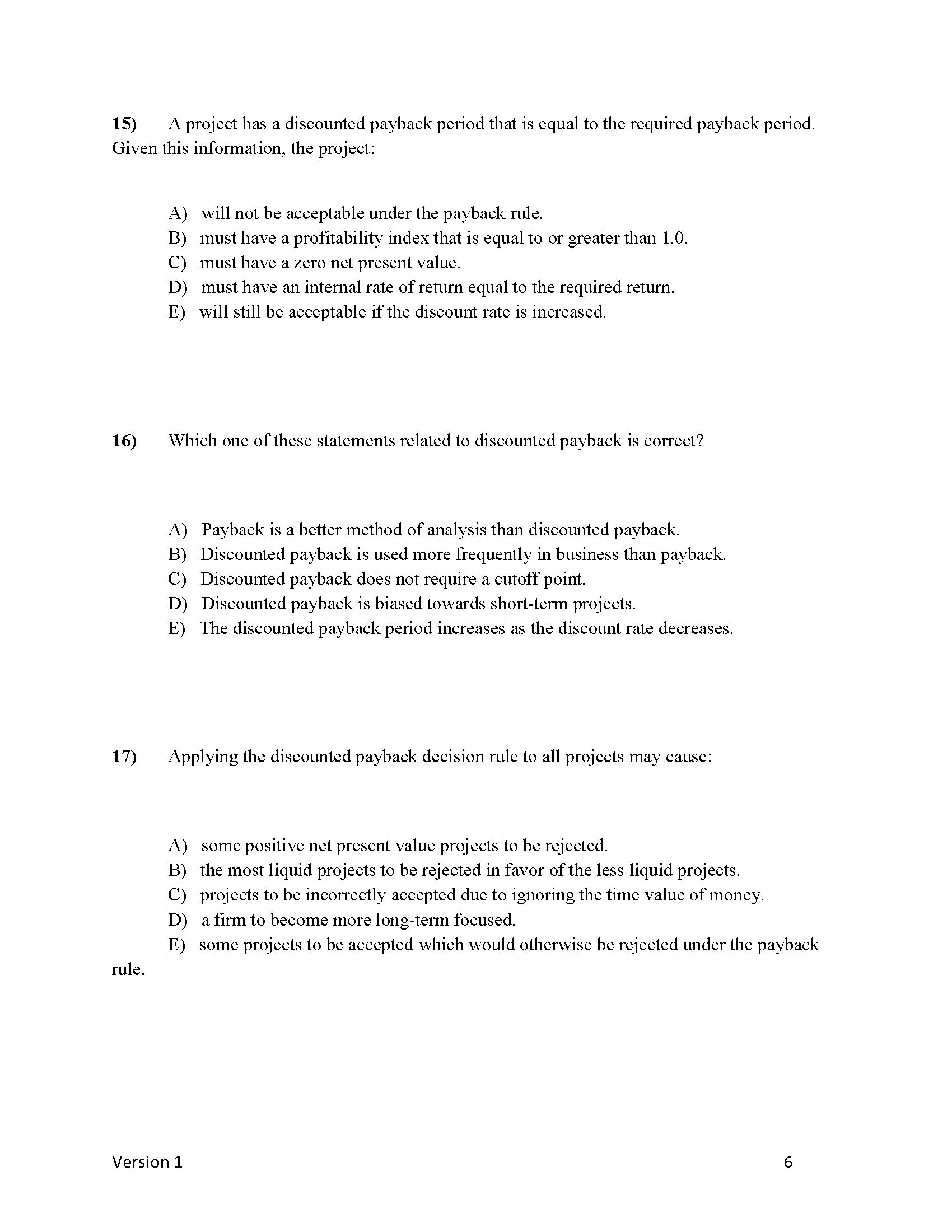
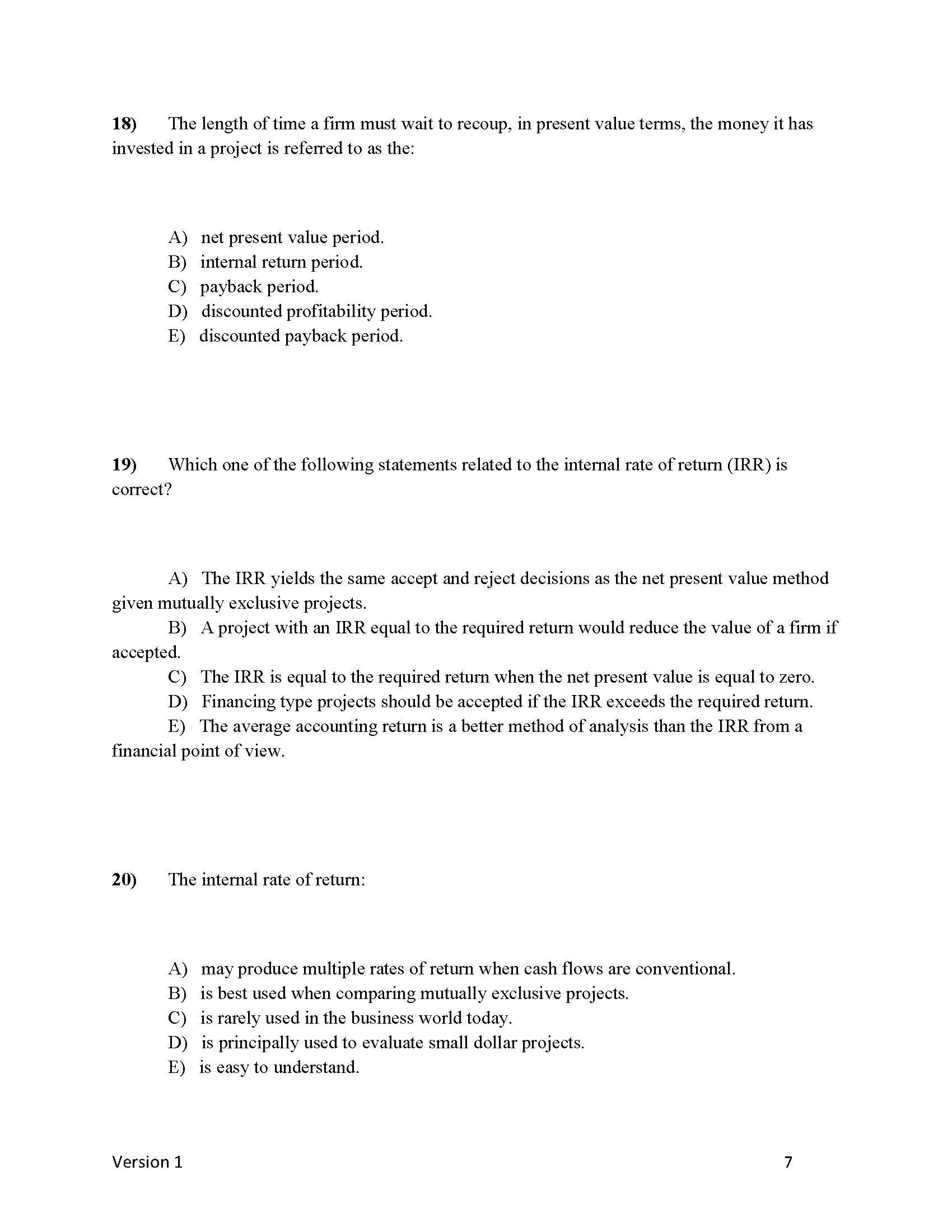
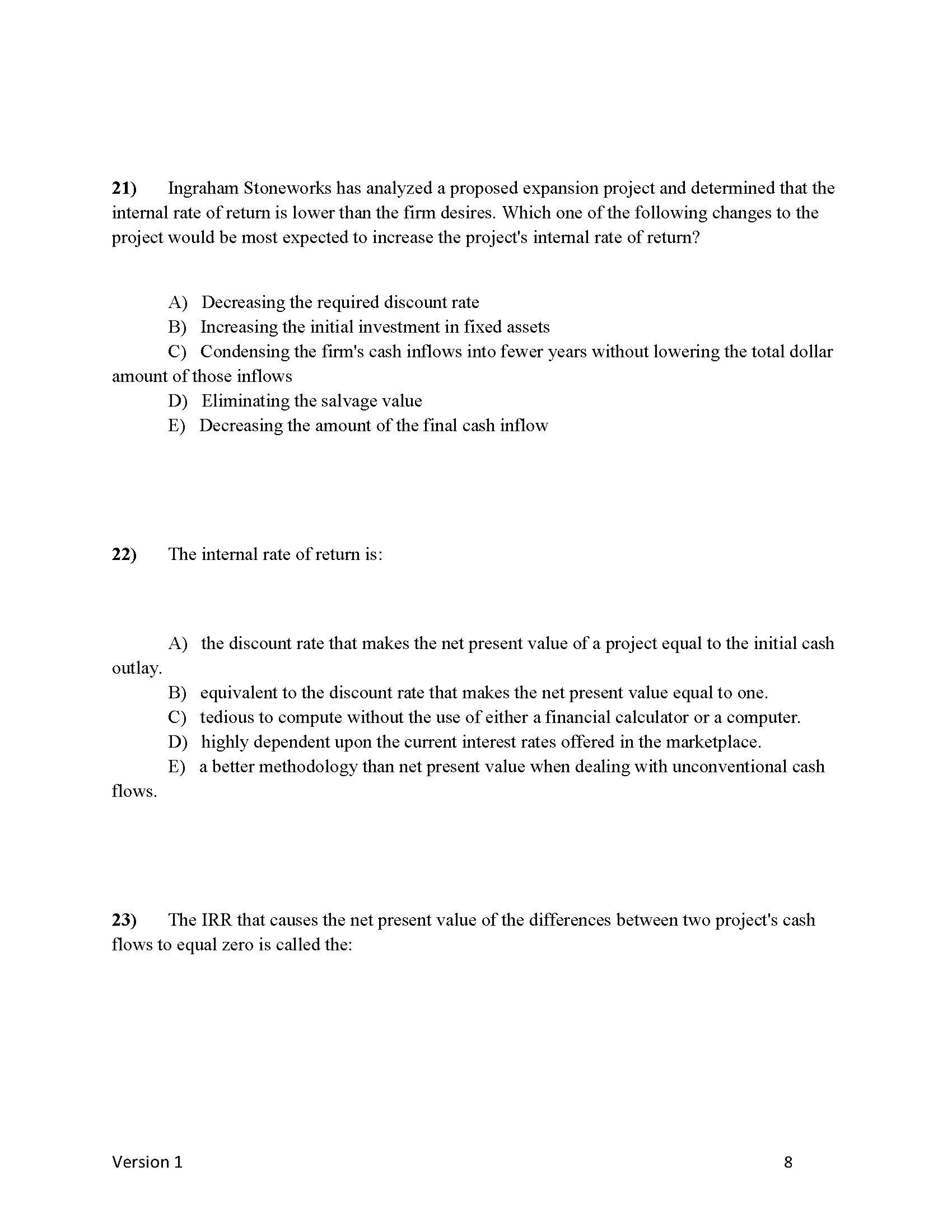
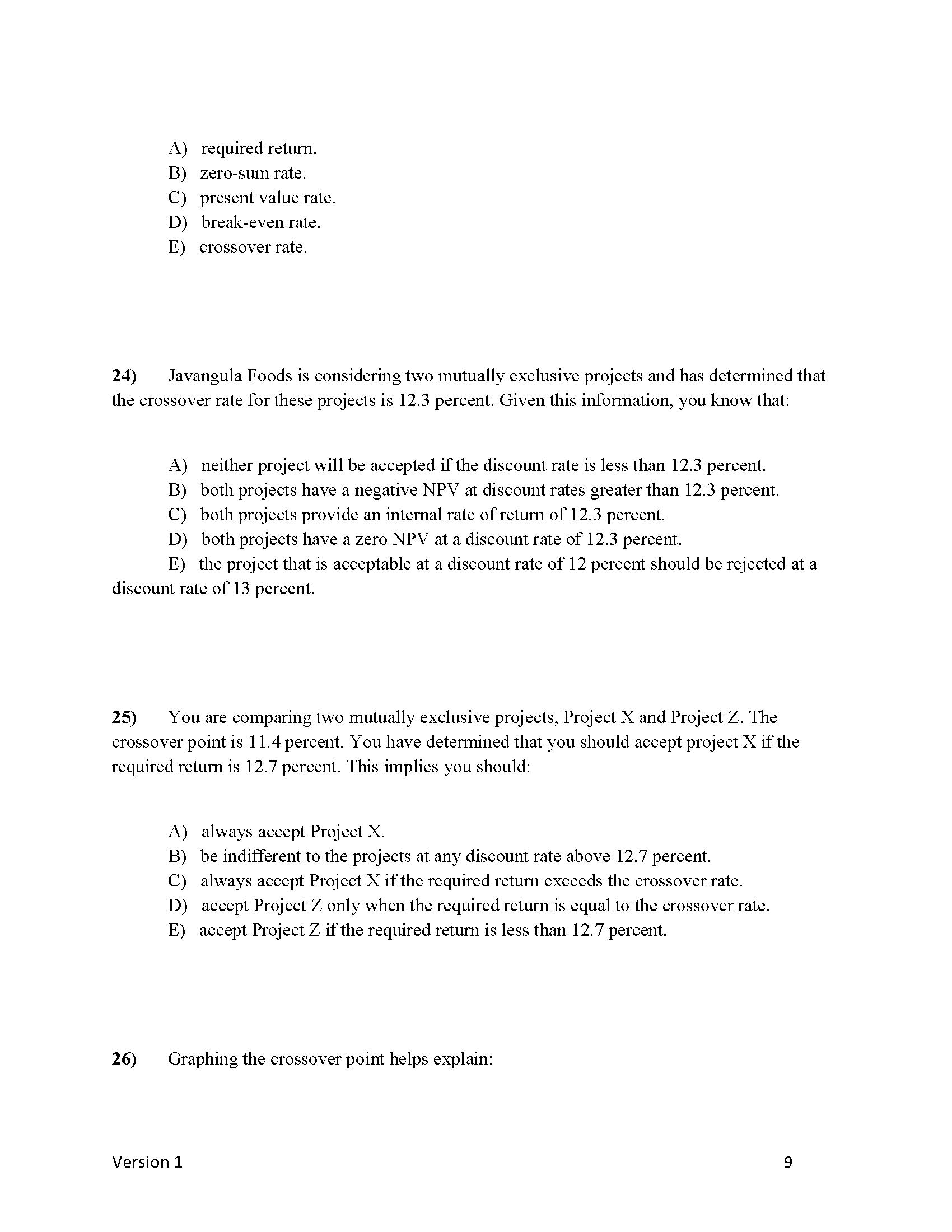
1) A project has a net present value of zero. Given this information: A) the project has a zero percent rate of return. B) the project requires no initial cash investment. C) the project has no cash flows. D) the summation of all of the project's cash flows is zero. E) the project's cash inflows equal its cash outflows in current dollar terms. 2) Which one of the following will decrease the net present value of a project? A) Increasing the value of each of the project's discounted cash inflows B) Moving each cash inflow forward one time period, such as from Year 3 to Year 2 C) Decreasing the required discount rate D) Increasing the project's initial cost at Time 0 E) Increasing the amount of the final cash inflow 3) Which one of the following methods predicts the amount by which the value of a firm will change if a project is accepted? Version 1A) why one project is always superior to another project. B) how decisions concerning mutually exclusive projects are derived. C) how the duration of a project affects the decision as to which project to accept. D) how the net present value and the initial cash outow of a project are related. E) how the protability index and the net present value are related. 27) Assume aproject is independent and has nancing-type cash ows. Which one of these statements is correct? A) The IRR cannot be used to determine the acceptability of the project. B) The project is acceptable if the required return exceeds the IRR. C) The project is acceptable only if the NPV is zero or negative. D) The project's required rate of return will always be negative. E) The project is acceptable if the internal rate of return is negative. 28) The internal rate of return is defined as the: A) maximum rate of return a firm expects to earn on a project. B) rate of return a project will generate if the project is nanced solely with internal funds. C) discount rate that equates the net cash inows of a project to zero. D) discount rate which causes the net present value of a project to equal zero. E) discount rate that causes the protability index for a project to equal zero. 29) You are viewing a graph that plots the NPVs of a project against the various discount rates that could be applied to the project's cash ows. What is the name given to this graph? Version 1 10 A) Project tract B) Projected risk profile C) NPV profile D) NPV route E) Present value sequence 30) There are two distinct discount rates at which a particular project will have a zero net present value. In this situation, the project is said to: A) have two net present value profiles. B) have operational ambiguity. C) create a mutually exclusive investment decision. D) produce multiple economies of scale. E) have multiple rates of return. 31) A project has an initial cash outflow of $42,600 and produces cash inflows of $17,680, $19,920, and $15,670 for Years 1 through 3, respectively. What is the NPV at a discount rate of 12 percent? A) $186.95 B) -$108.19 C) $219.41 D) $229.09 E) $311.16 32) A project has a required return of 12.6 percent, an initial cash outflow of $42,100, and cash inflows of $16,500 in Year 1, $1 1, 700 in Year 2, and $10,400 in Year 4. What is the net present value? Version 1 11A) $11,748.69 B) $10,933.52 C) $ll,208.62 D) -$10,457.09 E) -$l2,006.l3 33) A project will produce cash inows of $5,400 per year for 3 years with a nal cash inow of $2,400 in Year 4. The project's initial cost is $13,400. What is the net present value if the required rate of return is 14.2 percent? A) $311.02 B) $505.92 C) $165.11 D) $218.98 E) $668.02 34) Assume an investment has cash flows of $105,000, $140,000, $200,000, and $485,000 for Years 0 to 3, respectively. What is the NPV if the required return is 13.5 percent? Should the project be accepted or rejected? A) $505,307; accept B) $505,307; reject C) $533,466; reject D) $533,466; accept E) $501,656; reject Version 1 12 35) Ducazau Shipping has 700,000 shares outstanding, which are trading for $23.63 per share. Using the firm's required rate of return of 17 percent, a project has an NPV of $202,000. All else constant, if the project is accepted, the stock price per share would be expected to: A) fall to $23.34. B) rise to $23.92. C) rise to $27.65. D) rise to 23.88. E) fall to $19.62. 36) It will cost $15,000 to acquire a used food truck that is expected to produce cash inflows of $8,500 per year for five years. After the five years, the truck is expected to be worthless. What is the payback period? A) 1.8 years B) 2.7 years C) 1.3 years D) 1.5 years E) 0.8 years 37) A project has an initial cost of $7,900 and cash inflows of $2, 100, $3, 140, $3,800, and $4,500 per year over the next four years, respectively. What is the payback period? A) 2.70 years B) 3.28 years C) 3.36 years D) 3.70 years E) 2.28 years Version 1 1338) A project has an initial cost of $6,900. The cash inows are $850, $2,400, $3,100, and $4,100 over the next four years, respectively. What is the payback period? A) 3.73 years B) 2.51 years C) 3.13 years D) 3.51 years E) 3.94 years 39) Alicia is considering adding toys to her gift shop. She estimates the cost of new inventory will be $9,500 and remodeling expenses will be $850. Toy sales are expected to produce net cash inows of $1,300, $4,900, $4,400, and $4,100 over the next four years, respectively. Should Alicia add toys to her store if she assigns a 3-year payback period to this project? Why or why not? A) No; The payback period is 3.94 years. B) No; The payback period is 2.94 years. C) Yes; The payback period is 3.94 years. D) Yes; The payback period is 3.09 years. E) Yes; The payback period is 2.94 years. 40) An investment project provides cash flows of $7,000 per year for 10 years. If the initial cost is $20,000, what is the payback period? A) 6.7 years B) 2.9 years C) 1.8 years D) 2.1 years E) Never Version 1 14 41) A project has cash ows of $108,000, $52,800, $53,200, and $83,100 for Years 0 to 3, respectively. The required payback period is two years. Based on the payback period of the project. years for this project, you should A) 1.98; accept B) 1.79; accept C) 2.46; accept D) 2.02; reject E) 2.29; reject 42) A 5-year project requires a $20,000 investment in machinery that will be depreciated on a straight-line basis to a value of $0 over its 5-year life. The project will have net income of $6,000 per year and operating cash inows of $7,500 per year. What is the payback period? A) 2.7 years B) 5.7 years C) 1.7 years D) 2.0 years E) 1.1 years 43) A project has an initial cost of $18,400 and expected cash inows of $7,200, $8,900, and $7,500 over Years 1 to 3, respectively. What is the discounted payback period if the required rate of return is 11.2 percent? Version 1 15 A) 2.31 years B) 2.45 years C) 2.55 years D) 2.87 years E) Never 44) Scott is considering a project that will produce cash inows of $2,900 per year for 3 years. The required rate of return is 15.4 percent and the initial cost is $6,800. What is the discounted payback period? A) Never B) .91 years C) .26 years D) 1.28 years E) 1.39 years 45) JJ's is reviewing a project with a required discount rate of 15.2 percent and an initial cost of $309,000. The cash inows are $47,000, $198,000, and $226,000 for Years 2 to 4, respectively. Should the project be accepted based on discounted payback if the required payback period is 2.5 years? A) Accept; The discounted payback period is 2.18 years. B) Accept; The discounted payback period is 2.32 years. C) Accept; The discounted payback period is 2.98 years. D) Reject; The discounted payback period is 3.87 years. E) Reject; The project never pays back on a discounted basis. Version 1 16 46) An investment project costs $10,200 and has annual cash ows of $6,500 for 3 years. If the discount rate is 13 percent, what is the discounted payback period? A) 2.87 years B) 1.87 years C) 1.61 years D) 2.61 years E) Never 47) The Square Box is considering two independent projects with an initial cost of $18,000 each. The cash inows of Project A are $3,000, $7,000, and $10,000 for Years 1 to 3, respectively. The cash inows for Project B are $3,000, $7,000, and $15,000 for Years 1 to 3, respectively. The required return is 12 percent and the required discounted payback period is 3 years. Based on discounted payback, which project(s), if either, should be accepted? A) Both projects should be accepted. B) Both projects should be rejected. C) Project A should be accepted and Project B should be rejected. D) Project A should be rejected and Project B should be accepted. E) You should be indifferent to accepting either or both projects. 48) A project has cash ows of $343,200, $56,700, $138,500, and $245,100 for Years 0 to 3, respectively. The required rate of return is 10.5 percent. Based on the internal rate of return of percent for this project, you should the project. Version 1 17 A) 11.03; accept B) 8.03; reject C) 9.87; reject D) 10.47; reject E) 10.93; accept 49) The Whey Station is considering a project with an initial cost of $146,500 and cash inows for Years 1 to 3 of $56,700, $68,500, and $71,200, respectively. What is the IRR? A) 14.37% B) 15.56% C) 16.17% D) 12.88% E) 13.23% 50) A proposed project has an initial cost of $74,200 and cash inows of $23,900, $34,700, and $40,200 for Years 1 through 3, respectively. The required rate of return is 15.2 percent. Based on IRR, should this project be accepted? Why or why not? A) No; The IRR exceeds the required return. B) No; The IRR is less than the required return. C) Yes; The IRR exceeds the required return. D) Yes; The IRR equals the required return. E) No; The IRR equals the required return. 51) You are considering two independent projects. Project A has an initial cost of $125,000 and cash inows of $46,000, $79,000, and $51,000 for Years 1 to 3, respectively. Project B costs $135,000 with expected cash inows for Years 1 t0 3 of $50,000, $30,000, and $100,000, respectively. The required return for both projects is 16 percent. Based on IRR, you should: Version 1 18 A) accept both projects. B) accept Project A and reject Project B. C) accept Project B and reject Project A. D) reject both projects. E) accept either one of the projects, but not both. 52) An investment costs $239,000 and has projected cash ows of $123,900, $78,400, and -$22,300 for Years 1 to 3, respectively. The required rate of return is 15.5 percent. Based solely on the internal rate of return rule, should you accept the project? Why or why not? A) Yes; The IRR exceeds the required return. B) Yes; The IRR is less than the required return. C) No; The IRR is less than the required return. D) No; The IRR exceeds the required return. B) You should not apply the IRR rule in this case. 53) A project has cash flows of $129,000, $62,400, $54,800, and $41,800 for Years 0 to 3, respectively. The required rate of return is 12 percent. Based on the internal rate of return of percent for this project, you should the project. A) 9.67; accept B) 10.41; reject C) 12.07; accept D) 10.41; accept E) 9.67; reject Version 1 19 A) Net present value B) Discounted payback C) Internal rate of return D) Profitability index E) Payback 4) If a project has a net present value equal to zero, then: A) the total of the cash inflows must equal the initial cost of the project. B) the project earns a return exactly equal to the discount rate. C) a decrease in the project's initial cost will cause the project to have a negative NPV. D) any delay in receiving the projected cash inflows will cause the project to have a positive NPV. E) the project's PI must also be equal to zero. 5) Boyd Leasing is analyzing a project that requires purchasing $210,000 of new fixed assets. When the project ends, those assets are expected to have an aftertax salvage value of $22,000. How is the $22,000 salvage value handled when computing the net present value of the project? A) Reduction in the cash outflow at Time 0 B) Cash inflow in the final year of the project C) Cash inflow for the year following the final year of the project D) Cash inflow prorated over the life of the project E) Excluded from the net present value calculation 6) The net present value of a project will increase if: Version 1 254) An investment that provides annual cash ows of $20,100 for 8 years costs $87,500 today. At What rate would you be indifferent between accepting the investment and rejecting it? A) 17.60% B) 15.90% C) 15.51% D) 15.93% E) 16.74% 55) A project has cash ows of $35,000, $0, $10,000, and $42,000 for Years 0 to 3, respectively. The required rate of return is 15 percent. Based on the internal rate of return of percent, you should the project. A) 24.76; accept B) 13.96; accept C) 14.92; reject D) 15.21; accept E) 18.46; reject 56) A rm evaluates all of its projects by applying the IRR rule. The current proposed project has cash ows of -$37,048, $16,850, $15,700, and $19,300 for Years 0 to 3, respectively. The required return is 18 percent. What is the project IRR? Should the project be accepted or rejected? Version 1 20 A) 18.42%; accept B) 16.05%; accept C) 16.05%; reject D) 18.42%; reject E) 21.08%; reject 57) A new project Will require an initial investment of $250,000. Using the company's required rate of return of 13 percent, the project's NPV is $900. Should the project be accepted? Why or Why not? A) Yes; It will earn $900. B) Yes; It will earn an annual return of 13 percent. C) Yes; It will earn an annual return of 13 percent, plus an additional $900 in present value dollars. D) No; It will earn only $900. E) No; It will earn a return of only .4 percent. 58) As of 2018, firms can take a \"bonus\" depreciation deduction of 100 percent of the cost of an eligible asset in the year the asset was purchased. If a rm elects to take the bonus depreciation instead of using MACRS depreciation, the project's Year 1 operating cash ow will in the amount of A) decrease; the additional depreciation expense times the tax rate B) increase; the reduction in depreciation expense C) increase; the depreciation expense times the tax rate D) decrease; the additional depreciation expense E) decrease; the reduction in depreciation expense Version 1 21 59) A new project will require an initial investment of $250,000. Using the company's required rate of return of 13 percent, the project's NPV is $900. Should the project be accepted? Why or why not? A) Yes; It will earn $900. B) Yes; It will earn an annual return of 13 percent. C) Yes; It will earn an annual return of 13 percent, plus an additional $900 in present value dollars. D) No; It will earn only $900. E) No; It will earn a return of only .4 percent. 60) As of 2018, firms can take a \"bonus" depreciation deduction of 100 percent ofthe cost of an eligible asset in the year the asset was purchased. If a rm elects to take the bonus depreciation instead of using MACRS depreciation, the project's Year 1 operating cash ow will in the amount of A) decrease; the additional depreciation expense times the tax rate B) increase; the reduction in depreciation expense C) increase; the depreciation expense times the tax rate D) decrease; the additional depreciation expense E) decrease; the reduction in depreciation expense 61) Which one of the following categories of securities had the lowest average risk premium for the period 19262019? A) Long-term government bonds B) Small-company stocks C) Large-company stocks D) Long-term corporate bonds E) US. Treasury bills Version 1 22 62) return? 63) 64) The rate of return on which type of security is normally used as the risk-free rate of A) Long-term Treasury bonds B) Long-term corporate bonds C) Treasury bills D) Intermediate-term Treasury bonds E) Intermediate-term corporate bonds For the period 19262019, the average risk premium on large-company stocks was about: A) 12.7 percent. B) 10.4 percent. C) 8.7 percent. D) 6.9 percent. E) 7.3 percent. Assume that last year T-bills returned 2.2 percent while your investment in large- company stocks earned an average of 8.1 percent. Which one of the following terms refers to the difference between these two rates of return? A) Risk premium B) Geometric average return C) Arithmetic average return D) Standard deviation E) Variance Version 1 23 65) The excess return is computed as the: A) return on a security minus the inflation rate. B) return on a risky security minus the risk-free rate. C) risk premium on a risky security minus the risk-free rate. D) risk-free rate plus the inflation rate. E) risk-free rate minus the inflation rate. 66) Which one of the following earned the highest risk premium over the period 1926-2019? A) Long-term corporate bonds B) U.S. Treasury bills C) Small-company stocks D) Large-company stocks E) Long-term government bonds 67) To convince investors to accept greater volatility, you must: A) decrease the risk premium. B) increase the risk premium. C) decrease the real return. D) decrease the risk-free rate. E) increase the risk-free rate. Version 1 2468) Which one of the following best denes the variance of an investment's annual returns over a number of years? A) The average squared difference between the arithmetic and the geometric average annual returns B) The squared summation of the differences between the actual returns and the average geometric return C) The average difference between the annual returns and the average return for the period D) The difference between the arithmetic average and the geometric average return for the period E) The average squared difference between the actual returns and the arithmetic average return 69) If the variability of the returns on large-company stocks were to decrease over the long- term, you would expect which one of the following as related to large-company stocks to occur as a result? A) Increase in the risk premium B) Increase in the average long-term rate of return C) Decrease in the 68 percent probability range of returns D) Increase in the standard deviation E) Increase in the geometric average rate of return 70) What is the probability that small-company stocks will produce an annual return that is more than one standard deviation below the average? Version 1 25 A) 1% B) 2.5% C) 5% D) 16% E) 32% 71) Generally speaking, which of the following best correspond to a wide frequency distribution? A) High standard deviation, low rate of return B) Low rate of return, large risk premium C) Small risk premium, high rate of return D) Small risk premium, low standard deviation E) High standard deviation, large risk premium 72) Standard deviation is a measure of which one of the following? A) Average rate of return B) Volatility C) Probability D) Risk premium E) Real returns 73) Which one of the following is defined by its mean and its standard deviation? Version 1 26A) Arithmetic nominal return B) Geometric real return C) Normal distribution D) Variance E) Risk premium 74) If the risk-free rate is 2.2 percent, the ination rate is 1.9 percent, and the market rate of return is 6.8 percent, what is the amount of the risk premium on a US. Treasury bill? A) 0% B) 2.8% C) .5% D) 1.7% E) 4.3% 75) During the past ve years, KwonCo.'s stock earned annual returns of 7 percent, 13 percent, 19 percent, 8 percent, and 15 percent. Suppose the average ination rate over this time period was 2.6 percent and the average Tbill rate was 3.1 percent. Based on this information, what was the average nominal risk premium? A) 6.6% B) 6.1% C) 9.2% D) 1.2% E) 3.5% 76) A stock experienced returns of 5 percent, 17 percent, and 15 percent during the last three years. What is the standard deviation of the stock's returns for the three-year period? Version 1 27 A) 16.37% B) 13.37% C) 48.86% D) 5.98% E) 2.68% 77) A stock had returns of 5 percent, 14 percent, 11 percent, 8 percent, and 6 percent over the past ve years. What is the standard deviation of these returns? A) 7.74% B) 8.21% C) 9.68% D) 8.44% E) 7.49% 78) The common stock of Air Express had annual returns of 11.7 percent, 8.8 percent, 16.7 percent, and 7.9 percent over the last four years, respectively. What is the standard deviation of these returns? A) 8.29% B) 9.14% C) 11.54% D) 7.78% E) 10.66% Version 1 28 79) A stock had annual returns of 5.3 percent, 2.7 percent, 16.2 percent, and 13.6 percent over the past four years. Which one of the following best describes the probability that this stock will produce a return of 20 percent or more in a single year? A) Less than 2.5 percent but more than .5 percent B) More than 16 percent C) Less than .5 percent D) Less than 1 percent but more than .5 percent E) Less than 16 percent but more than 2.5 percent 80) A stock has an expected rate of return of 9.8 percent and a standard deviation of 15.4 percent. Which one of the following best describes the probability that this stock will lose at least half of its value in any one given year? A) Less than 16 percent B) Less than .5 percent C) Less than 1.0 percent D) Less than 2.5 percent E) Less than 5.0 percent 81) A stock had annual returns of 11.3 percent, 9.8 percent, 7.3 percent, and 14.6 percent for the past four years. Based on this information, what is the 95 percent probability range of returns for any one given year? Version 1 29 A) the required rate of return increases. B) the initial capital requirement increases. C) some of the cash inflows are deferred until a later year. D) the aftertax salvage value of the fixed assets increases. E) the final cash inflow decreases. 7 ) Net present value: A) is the best method of analyzing mutually exclusive projects. B) is less useful than the internal rate of return when comparing different-sized projects. C) is the easiest method of evaluation for nonfinancial managers. D) cannot be applied when comparing mutually exclusive projects. E) is very similar in its methodology to the average accounting return. 3) A project has an initial cost of $52, 700 and a market value of $61,800. What is the difference between these two values called? A) Net present value B) Accounting return C) Payback value D) Profitability index E) Discounted payback 9) Which one of the following methods of project analysis is defined as computing the value of a project based on the present value of the project's anticipated cash flows? Version 1 WA) 2.4 to 17.5 percent B) 2.60 to 11.80 percent C) 12.5 to 26.7 percent D) 10.4 to 12.3 percent E) 10.9 to 25.1 percent 82) Faraaz is the owner of a stock with annual returns of 17.6 percent, 11.7 percent, 5.6 percent, and 9.7 percent for the past four years. She thinks the stock may achieve a return of 17 percent again this coming year. What is the probability that she is correct? A) Less than .5 percent B) Greater than .5 percent but less than 1 percent C) Greater than 1 percent but less than 2.5 percent D) Greater than 2.5 percent but less than 16 percent E) Greater than 16 percent 83) A stock had returns of 3 percent, 12 percent, 26 percent, 14 percent, and 1 percent for the past ve years. Based on these returns, What is the approximate probability that this stock will return at least 20 percent in any one given year? A) Approximately .1 percent B) Approximately 5 percent C) Approximately 2.5 percent D) Approximately .5 percent E) Approximately 16 percent Version 1 30 84) A stock had returns of 14 percent, 13 percent, 10 percent, and 7 percent for the past four years. Which one of the following best describes the probability that this stock will lose no more than 10 percent in any one year? A) Greater than .5 but less than 1.0 percent B) Greater than 1 percent but less than 2.5 percent C) Greater than 2.5 percent but less than 16 percent D) Greater than 84 percent but less than 97.5 percent E) Greater than 95 percent 85) Over the past ve years, a stock produced returns of 11 percent, 14 percent, 4 percent, 9 percent, and 5 percent. What is the probability that an investor in this stock will not lose more than 10 percent in any one given year? A) Greater than .5 but less than 1.0 percent B) Greater than 1 percent but less than 2.5 percent C) Greater than 2.5 percent but less than 16 percent D) Greater than 84 percent but less than 97.5 percent E) Greater than 95 percent 86) A stock had annual returns of 5.5 percent, 12 percent, and 15.5 percent for the past three years, respectively. What is the standard deviation of returns for this stock? A) 56.65% B) 6.94% C) 1.94% D) 13.92% E) 11.37% Version 1 31 87) You've observed the following returns on Pryor Farm Produce stock over the past ve years: 8 percent, 5 percent, 16 percent, 12 percent, and 8 percent. What is the variance of these returns? A) .07887 B) .00622 C) .01725 D) .01684 E) .00836 88) Which one of the following categories of securities had the lowest average risk premium for the period 19262019? A) Long-term government bonds B) Small-company stocks C) Large-company stocks D) Long-term corporate bonds E) US. Treasury bills 89) The rate of return on which type of security is normally used as the risk-free rate of return? Version 1 32 A) Long-term Treasury bonds B) Long-term corporate bonds C) Treasury bills D) Intermediate-term Treasury bonds E) Intermediate-term corporate bonds 90) For the period 19262019, the average risk premium on large-company stocks was about: A) 12.7 percent. B) 10.4 percent. C) 8.7 percent. D) 6.9 percent. E) 7.3 percent. 91) Assume that last year T-bills returned 2.2 percent while your investment in large- company stocks earned an average of 8.1 percent. Which one of the following terms refers to the difference between these two rates of return? A) Risk premium B) Geometric average return C) Arithmetic average return D) Standard deviation E) Variance 92) The excess return is computed as the: Version 1 33 A) return on a security minus the inflation rate. B) return on a risky security minus the risk-free rate. C) risk premium on a risky security minus the risk-free rate. D) risk-free rate plus the inflation rate. E) risk-free rate minus the inflation rate. 93) Which one of the following earned the highest risk premium over the period 1926-2019? A) Long-term corporate bonds B) U.S. Treasury bills C) Small-company stocks D) Large-company stocks E) Long-term government bonds 94) To convince investors to accept greater volatility, you must: A) decrease the risk premium. B) increase the risk premium. C) decrease the real return. D) decrease the risk-free rate. E) increase the risk-free rate. 95) If the risk-free rate is 2.2 percent, the inflation rate is 1.9 percent, and the market rate of return is 6.8 percent, what is the amount of the risk premium on a U.S. Treasury bill? Version 1 34A) 0% B) 2.8% C) .5% D) 1.7% E) 4.3% 96) During the past five years, KwonCo.'s stock earned annual returns of 7 percent, 13 percent, 19 percent, 8 percent, and 15 percent. Suppose the average ination rate over this time period was 2.6 percent and the average Tbill rate was 3.1 percent. Based on this information, what was the average nominal risk premium? A) 6.6% B) 6.1% C) 9.2% D) 1.2% E) 3.5% 97) While evaluating a stock, you estimate that it will earn a return of 11 percent if economic conditions are favorable, and 3 percent if economic conditions are unfavorable. Given the probabilities of favorable versus unfavorable economic conditions, you conclude that the stock will earn 7.2 percent next year. The 7.2 percent gure is called the: A) arithmetic return. B) historical return. C) expected return. D) geometric return. E) required return. Version 1 35 98) The expected return of a stock, based on the likelihood of various economic outcomes, equals the: A) highest expected return given any economic state. B) arithmetic average of the returns for each economic state. C) summation of the individual expected rates of return. D) weighted average of the returns for each economic state. E) return for the economic state with the highest probability of occurrence. 99) When using economic probabilities to compute the expected return on a stock, the result is: A) guaranteed to equal the actual average return on the stock for the next ve years. B) guaranteed to be the minimal rate of return on the stock over the next two years. C) guaranteed to equal the actual return for the immediate twelve month period. D) a mathematical expectation based on a weighted average and not a guaranteed outcome. E) the actual return you should anticipate as long as the economic forecast remains constant. 100) To calculate the expected risk premium on a stock, one must subtract the from the stock's expected return. A) expected market rate of return B) risk-free rate C) ination rate D) standard deviation E) variance Version 1 36 101) Buchi owns several nancial instruments: stocks issued by seven different companies, plus bonds issued by four different companies. Her investments are best described as a(n): A) index. B) portfolio. C) collection. D) grouping. E) risk-free position. 102) Raa owns stocks of 15 different companies. Together, the stocks have a value of $78,640. Twelve percent of that total value is from one company, Gambrell & Valdez. The twelve percent gure is called a(n): A) portfolio return. B) portfolio weight. C) degree of risk. D) price-earnings ratio. E) index value. 103) When calculating the expected rate of return on a stock portfolio using a weighted average, the weights are based on the: Version 1 37 A) number of shares owned of each stock. B) market price per share of each stock. C) market value of the investment in each stock. D) original amount invested in each stock. E) cost per share of each stock held. 104) Which of the following items are included when calculating the expected return on a portfolio? 1.1. Percentage of the portfolio invested in each individual security 2.11. Projected states of the economy 3.111. The performance of each security given various economic states 4.1V. Probability of occurrence for each state of the economy A) 1 and 111 only B) 11 and 1V only C) 1, 111, and 1V only D) 11, 111, and 1V only E) 1, 11, 111, and IV 105) Which of the following statements are true of a well-diversified portfolio's expected return? 1.1. It cannot exceed the expected return ofthe best performing security in the portfolio. 2.11. It must be equal to or greater than the expected return of the worst performing security in the portfolio. 3.111. It is independent of the unsystematic risks of the individual securities held in the portfolio. 4.1V. It is independent of the allocation of the portfolio amongst individual securities. Version 1 38 A) I and 111 only B) 11 and IV only C) I and 11 only D) I, II, and 111 only E) I, II, III, and IV 106) Assume you are an analyst monitoring Okello stock. Which one of the following would be reflected in Okello's expected return? A) The chief nancial officer of Okello unexpectedly resigned. B) The labor union representing Okello's employees unexpectedly called a strike. C) This morning Okello confirmed that, as expected, the CFO is retiring at the end of the year. D) The price of Okello stock suddenly declined in value because researchers accidentally discovered that one of the firm's products can be toxic to household pets. E) The board of directors made an unprecedented decision to give sizeable bonuses to the rm's internal auditors for their efforts in uncovering wasteful spending. 107) With respect to returns, which one of the following statements is accurate? A) The unexpected return is always negative. B) The expected return minus the unexpected return is equal to the total return. C) Over time, the average return is equal to the unexpected return. D) The expected return includes the surprise portion of news announcements. E) Over time, the average unexpected return will be zero. 108) With respect to unexpected returns, which one of the following statements is accurate? Version 1 39 10) A) Constant dividend growth model B) Discounted cash flow valuation C) Average accounting return D) Expected earnings model E) Internal rate of return The length of time a rm must wait to recoup the money it has invested in a project is called the: 11) 12) A) internal return period. B) payback period. C) protability period. D) discounted cash period. E) valuation period. Why is payback often used as the sole method of analyzing a proposed small project? A) Payback considers the time value of money. B) All relevant cash flows are included in the payback analysis. C) The benets of payback analysis usually outweigh the costs of the analysis. D) Payback is the most desirable of the various nancial methods of analysis. E) Payback is focused on the long-term impact of a project. Which of the following are advantages of the payback method of project analysis? Version 1 4 A) All announcements by a firm affect that film's unexpected returns. B) Unexpected returns over time have a negative effect on the total return of a firm. C) Unexpected returns are relatively predictable in the short term. D) Unexpected returns generally cause the actual return to vary significantly from the expected return over the long term. E) Unexpected returns can be either positive or negative in the short term but tend to be zero over the long term. 109) Which one of the following statements is accurate? A) Portfolio betas range between l.0 and +1.0. B) A portfolio beta is a weighted average of the betas of the individual securities contained in the portfolio. C) A portfolio beta cannot be computed from the betas of the individual securities comprising the portfolio because some risk is eliminated via diversification. D) A portfolio of US. Treasury bills will have a beta of +1.0. E) The beta of a market portfolio is equal to zero. 110) A is the market's measure of systematic risk. A) beta of l B) beta of 0 C) standard deviation of l D) standard deviation of O E) variance of 1 Version 1 40 111) measures the amount of systematic risk present in a particular risky asset relative to the systematic risk present in an average risky asset. A) Beta B) Reward-to-risk ratio C) Risk ratio D) Standard deviation E) Price-earnings ratio 112) Of the options listed below, which is most directly impacted by the level of systematic risk? A) Variance of the returns B) Standard deviation of the returns C) Expected rate of return D) Risk-free rate E) Market risk premium 113) An analyst wishes to estimate the amount of additional reward she will receive for investing in a risky asset rather than a risk-free asset. The minimum values she will need to know are: 1.1. both assets' standard deviations 2.II. the risky asset's beta 3.III. the risk-free rate of return 4.IV. the market risk premium Version 1 41 A) I and III only B) II and IV only C) III and IV only D) I, III, and IV only E) I, II, III, and IV 114) The explains the relationship between the expected return on a security and the level of that security's systematic risk. A) capital asset pricing model B) time value of money equation C) unsystematic risk equation D) market performance equation E) expected risk formula 115) The market risk premium equals the: A) risk-free rate of return plus the ination rate. B) risk-free rate of return plus the market rate of return. C) ination rate minus the risk-free rate of return. D) market rate of return minus the risk-free rate of return. E) risk-free rate of return multiplied by the market beta. 116) The is the excess return earned by a risky asset over the return earned by a risk-free asset. Version 1 42 A) market risk premium B) risk premium C) systematic return D) total return E) real rate of return 117) Which of the following are assumptions of the capital asset pricing model (CAPM)? 1.1. A risk-free asset has no systematic risk. 2.11. Beta is a reliable estimate of total risk. 3.111. The reward-to-risk ratio is constant. 4.1V. The market rate of return can be approximated. A) 1 and 111 only B) 11 and 1V only C) 1, 111, and 1V only D) 11, 111, and 1V only E) 1, 11, 111, and IV 118) According to the capital asset pricing model (CAPM), the amount of reward an investor receives for bearing the risk of an individual security depends upon the: A) amount of total risk assumed and the market risk premium. B) market risk premium and the amount of systematic risk inherent in the security. C) risk-free rate, the market rate of return, and the standard deviation of the security. D) beta of the security and the market rate of return. E) standard deviation of the security and the risk-free rate of return. Version 1 43 119) Based on the capital asset pricing model (CAPM), which of the following should earn the highest risk premium? A) Diversied portfolio with returns similar to the overall market B) Stock with a beta of 1.24 C) Stock with a beta of .63 D) US. Treasury bill E) Portfolio with a beta of 1.12 120) FisherCo is intending to invest in a new project. The is the minimum rate of return the firm will accept on this project. A) average arithmetic return B) expected return C) market rate of return D) internal rate of return E) cost of capital 121) Consider the following information on three stocks: State of Probability of Rate of Return if State Occurs Economy State of Economy Stock A Stock B Stock (3 Boom .15 .27 .15 .11 Normal .65 .14 .11 .09 Bust .20 .19 .06 .05 A portfolio is invested 45 percent each in Stock A and Stock B, and 10 percent in Stock C. The expected T-bill rate is 3.2 percent. What is the expected risk premium on the portfolio? Version 1 44 A) 5.55% B) 12.38% C) 1.67% D) 4.29% E) 8.75% 122) You recently purchased a stock that is expected to earn 12 percent in a booming economy, 6.5 percent in a normal economy, and lose 1.5 percent in a recessionary economy. The probability of a booming economy is 14 percent While the probability of a normal economy is 65 percent. What is your expected rate of return on this stock? A) 6.22% B) 5.59% C) 2.24% D) 0.35% E) 5.67% 123) The common stock of Hall & Byrd is expected to lose 5 percent in a recession, earn 7 percent in a normal economy, and earn 9 percent in a booming economy. The probability of a boom is 15 percent while the probability of a recession is 22 percent. What is the expected rate of return on this stock? A) 6.86% B) 4.66% C) 6.55% D) 3.50% E) 3.67% Version 1 45 124) You are comparing Stock A to Stock B. Given the following information, What is the difference in the expected returns of these two securities? State of Probability of State of Rate of Return if State Occurs Economy Economy W Normal .75 .13 .16 Recession .25 7.05 7.21 A) 5.25% B) 1.75% C) 3.05% D) 2.45% E) 1.55% 125) You own a portfolio that has $1,720 invested in Stock A and $3,470 invested in Stock B. The expected returns on these stocks are 13.7 percent and 8.0 percent, respectively. What is the expected return on the portfolio? A) 9.20% B) 10.23% C) 12.18% D) 7.13% E) 9.89% 126) You have $21,600 to invest in a stock portfolio. Your choices are Stock X With an expected return of 14.3 percent and Stock Y with an expected return of 8.1 percent. Your goal is to create a portfolio With an expected return of 12.5 percent. All money must be invested. How much will you invest in Stock X? Version 1 46 A) $15,800 B) $18,273 C) $14,600 D) $15,329 E) $19,208 127) What is the expected return of an equally weighted portfolio comprised of the following three stocks? State of Probability of State Rate of Return if State Occurs Economy of Economy m Boom .25 .19 .13 .07 Normal .72 .15 .05 .13 Bust .03 .29 .14 .22 A) 9.82% B) 10.96% C) 9.67% D) 10.48% E) 11.33% 128) You have a portfolio consisting solely of Stock A and Stock B. The portfolio has an expected return of 10.2 percent. Stock A has an expected return of 11.7 percent while Stock B is expected to return 8.3 percent. What is the portfolio weight of Stock A? Version 1 47 A) 57.01% B) 55.88% C) 63.13% D) 61.20% E) 59.97% 129) You own the following portfolio of stocks. What is the portfolio weight of Stock C? Stock Number of Shares Price per Share A 650 $ 15.82 B 320 $ 11.09 C 400 $ 39.80 D 100 $ 7.60 A) 52.18% B) 53.86% C) 53.41% D) 51.09% E) 52.65% 130) You own a portfolio with the following expected returns given the various states of the economy. What is the overall portfolio expected return? State of Probability of State of Rate of Return if State Economy Economy Occurs Boom . 1 1 . 1 1 0 Normal . 6 8 . O4 5 Bust . 2 1 1 . O4 5 Version 1 48 A) 5.21% B) 3.33% C) 3.50% D) 1.68% E) 3.67% 131) What is the expected return on a portfolio that is invested 22 percent in Stock A, 36 percent in Stock B, and the remainder in Stock C? State of Probability of State Rate of Return if State Occurs Economy of Economy m Boom .05 .18 .11 .13 Normal .92 .09 .08 .06 Bust .03 7.07 7.05 7.14 A) 7.06% B) 7.38% C) 6.99% D) 7.29% E) 6.84% 132) What is the expected return on this portfolio? Stock Expected. Return Number of Shares Price per Share A 7.02 1,400 $15.57 B .11 2,800 $57.08 C .05 3, 600 $27.75 Version 1 49 A) Considers time value of money; liquidity bias B) Liquidity bias; subjective cutoff point C) Liquidity bias; ease of use D) Ignores time value of money; ease of use E) Ease of use; subjective cutoff point 13) Bui Bakery has a required payback period of two years for all of its projects. Currently, the rm is analyzing two independent projects. Project X has an expected payback period of 1.4 years and a net present value of $6,100. Project Z has an expected payback period of 2.6 years with a net present value of $18,600. Which project(s) should be accepted based on the payback decision rule? A) Project X only B) Project Z only C) Both X and Z D) Neither X nor Z E) Either, but not both projects 14) A project has a required payback period of three years. Which one of the following statements is correct concerning the payback analysis of this project? A) The cash flows in each of the three years must exceed one-third of the project's initial cost if the project is to be accepted. B) The cash ow in Year 3 is ignored. C) The project's cash flow in Year 3 is discounted by a factor of (1 + R)3. D) The cash ow in Year 2 is valued just as highly as the cash ow in Year 1. E) The project is acceptable whenever the payback period exceeds three years. Version 1 5 15) A project has a discounted payback period that is equal to the required payback period. Given this information, the project: A) will not be acceptable under the payback rule. B) must have a profitability index that is equal to or greater than 1.0. C) must have a zero net present value. D) must have an internal rate of return equal to the required return. E) will still be acceptable if the discount rate is increased. 16) Which one of these statements related to discounted payback is correct? A) Payback is a better method of analysis than discounted payback. B) Discounted payback is used more frequently in business than payback. C) Discounted payback does not require a cutoff point. D) Discounted payback is biased towards short-term projects. E) The discounted payback period increases as the discount rate decreases. 17) Applying the discounted payback decision rule to all projects may cause: A) some positive net present value projects to be rejected. B) the most liquid projects to be rejected in favor of the less liquid projects. C) projects to be incorrectly accepted due to ignoring the time value of money. D) a rm to become more long-term focused. E) some projects to be accepted which would otherwise be rejected under the payback rule. Version 1 6 18) The length of time a firm must wait to recoup, in present value terms, the money it has invested in a project is referred to as the: A) net present value period. B) internal return period. C) payback period. D) discounted profitability period. E) discounted payback period. 19) Which one of the following statements related to the internal rate of return (IRR) is correct? A) The IRR yields the same accept and reject decisions as the net present value method given mutually exclusive projects. B) A project with an IRR equal to the required return would reduce the value of a firm if accepted. C) The IRR is equal to the required return when the net present value is equal to zero. D) Financing type projects should be accepted if the IRR exceeds the required return. E) The average accounting return is a better method of analysis than the IRR from a nancial point of view. 20) The internal rate of return: A) may produce multiple rates of return when cash ows are conventional. B) is best used when comparing mutually exclusive projects. C) is rarely used in the business world today. D) is principally used to evaluate small dollar projects. E) is easy to understand. Version 1 7 21) Ingraham Stoneworks has analyzed a proposed expansion project and determined that the internal rate of return is lower than the firm desires. Which one of the following changes to the project would be most expected to increase the project's internal rate of return? A) Decreasing the required discount rate B) Increasing the initial investment in fixed assets C) Condensing the firm's cash inflows into fewer years without lowering the total dollar amount of those inflows D) Eliminating the salvage value E) Decreasing the amount of the final cash inflow 22) The internal rate of return is: A) the discount rate that makes the net present value of a project equal to the initial cash outlay. B) equivalent to the discount rate that makes the net present value equal to one. C) tedious to compute without the use of either a financial calculator or a computer. D) highly dependent upon the current interest rates offered in the marketplace. E) a better methodology than net present value when dealing with unconventional cash flows. The IRR that causes the net present value of the differences between two project's cash flows to equal zero is called the: Version 1 COA) required return. B) zero-sum rate. C) present value rate. D) break-even rate. E) crossover rate. 24) Javangula Foods is considering two mutually exclusive projects and has determined that the crossover rate for these projects is 12.3 percent. Given this information, you know that: A) neither project will be accepted if the discount rate is less than 12.3 percent. B) both projects have a negative NPV at discount rates greater than 12.3 percent. C) both projects provide an internal rate of return of 12.3 percent. D) both projects have a zero NPV at a discount rate of 12.3 percent. E) the project that is acceptable at a discount rate of 12 percent should be rejected at a discount rate of 13 percent. 25) You are comparing two mutually exclusive projects, Project X and Project Z. The crossover point is 11.4 percent. You have determined that you should accept project X if the required return is 12.7 percent. This implies you should: A) always accept Project X. B) be indifferent to the projects at any discount rate above 12.7 percent. C) always accept Project X if the required return exceeds the crossover rate. D) accept Project Z only when the required return is equal to the crossover rate. E) accept Project Z if the required return is less than 12.7 percent. 26) Graphing the crossover point helps explain: Version 1 9
Step by Step Solution
There are 3 Steps involved in it
1 Expert Approved Answer
Step: 1 Unlock
Question Has Been Solved by an Expert!
Get step-by-step solutions from verified subject matter experts
Step: 2 Unlock
Step: 3 Unlock
Students Have Also Explored These Related Finance Questions!









 Study Help