







Question: 1. A student was working with an unknown compound. He suspected that he had Aldehyde or ketone based on the results of several identification classification
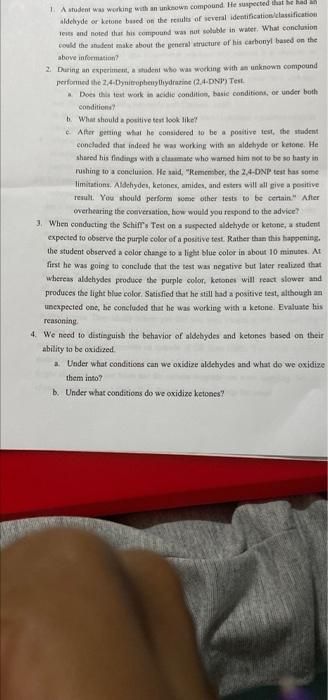
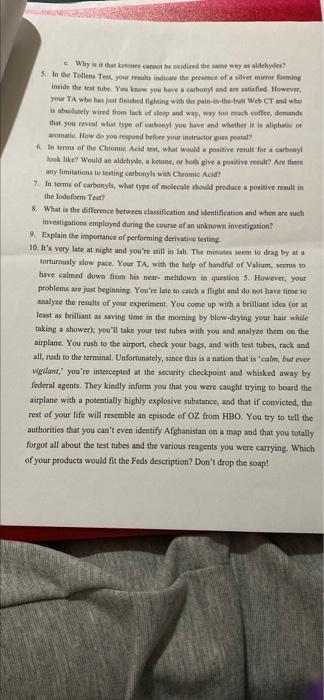
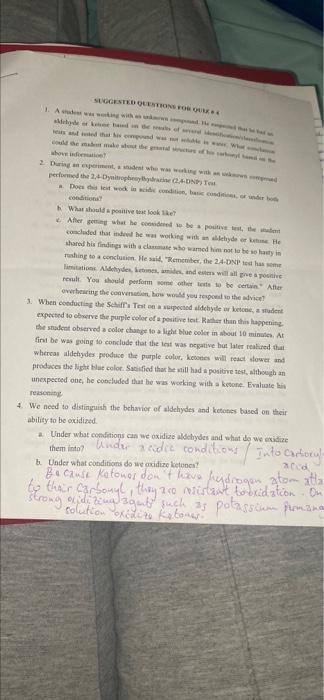
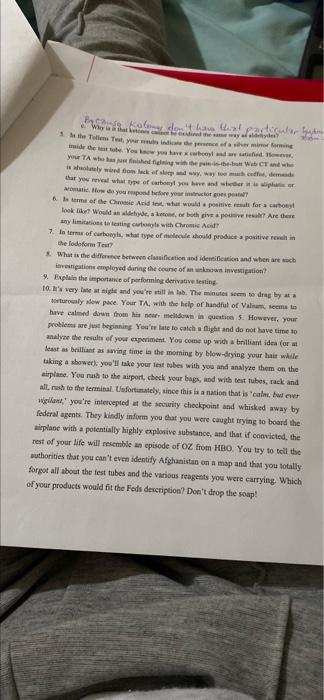
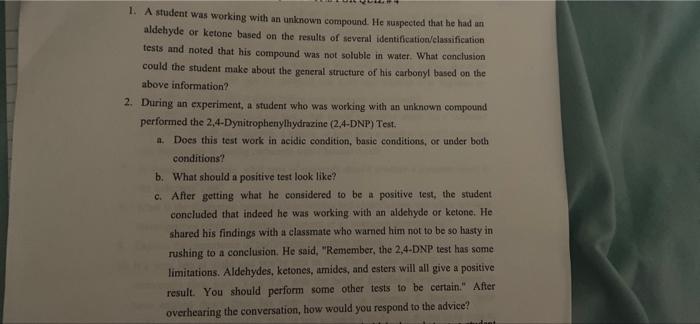
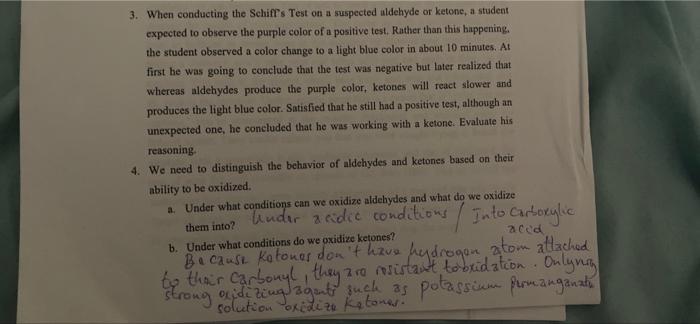
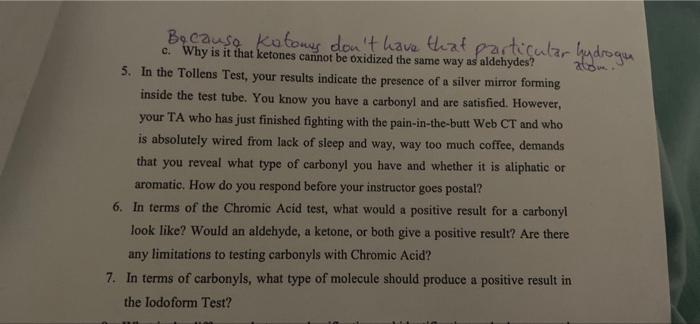
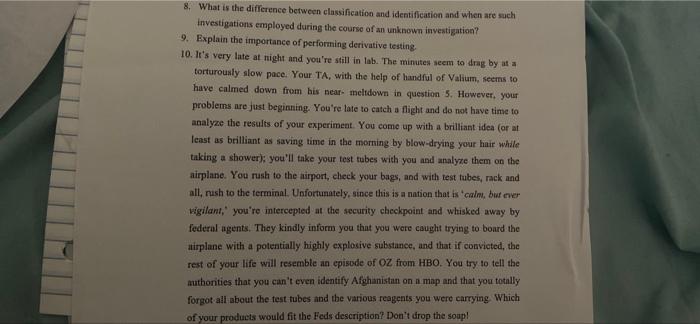
1. A student was working with an unknown compound. He suspected that he had Aldehyde or ketone based on the results of several identification classification Test and noted that his compound was not soluble in water. What conclusion could the student make about the general structure of his carbonyl based on the above information 2. During an experiment, a stadent who was working with an unknown compound performed the 2.4 Dymitrophenylhydrazine (2.4-DNI') Test Does the text work in acidie condition, basic conditions, or under both conditions What should a positive text look like! . After getting what he considered to be a positive test, the student concluded that indeed he was working with an aldehyde or ketone. He shared his findings with a clamate who wamedhim not to be so lasty in rushing to a conclusion. He said, "Remember, the 2,4-DNP test has some limitations, Aldehyder, ketones, amides, and esters will all give a positive result. You should perform some other tests to be certain." After overhearing the conversation, how would you respond to the advice? When conducting the Schift, Test on a suspected aldehyde or ketone, a student expected to observe the purple color of a positive test. Rather than this happening, the student observed a color change to a light blue color in about 10 minutes. At first he was going to conclude that the test was negative but later realized that whereas aldehydes produce the purple color, ketones will react slower and produces the light blue color. Satisfied that he still had a positive test, although an unexpected one, he concluded that he was working with a ketone. Evaluate his reasoning 4. We need to distinguish the behavior of aldehydes and ketones based on their ability to be oxidized a Under what conditions can we oxidize aldehydes and what do we oxidize them into? b. Under what conditions do we oxidize ketones Why is it that comes cannot be tied the came way aldehyder? 5. In the Tolles Test your results indicate the presence of a silver mirror forming inside the test tube. You know you have a carbonyl and are satisfied. However, your TA who has she fighting with the pain-in-the-ball Web CT who is absolutely wired from lack of sleep and way, ww too much coffee, demande that you reveal what type of carbonyl you have and whether it is alpha or aroma. How do you respond for your instructores postal In terms of the Chronic Acid test, what would positive result for a carbonyl look like? Would an aldehyde, ketone, or both gives positive result? Are there any limitations to testing carbonyls with Chronic Acid 7. Il terms of carbonyls, what type of molecule should produce a positive result in the lodoform Text? 8. What is the difference between classification and identification and when are such investigations employed during the course of an unknown investigation? 9. Explain the importance of performing derivative testing 10. It's very late at night and you're still in lab. The minutes em to drag by torturously slow pace. Your TA, with the help of handful of Valium, em to have calmed down from his near meltdown in question 5. However, your problems are just beginning You're late to catch a flight and do not have time to analyze the results of your experiment. You come up with a brilliant idea for at least as brilliant as saving time in the morning by blow-drying your hair while taking a showers you'll take your test tubes with you and analyze them on the airplane. You rush to the airport, check your baps, and with test tubes, rack und all, rush to the terminal. Unfortunately, since this is a nation that is calm, but ever vigilan, you're intercepted at the security checkpoint and whisked away by federal agents. They kindly inform you that you were caught trying to board the airplane with a potentially highly explosive substance, and that if convicted, the rest of your life will resemble an episode of OZ from HBO. You try to tell the authorities that you can't even identify Afghanistan on a map and that you totally forgot all about the test tubes and the various reagents you were carrying. Which of your products would fit the Feds description? Don't drop the soap! SUGGESTED QUESTIONS FOR UK latest dai - We 2. During wind performed the 2.4 Dymitrophes (24) Does weder otations What should positive look ? Atter what he concluded that it he was working with a dete shared his findings with some who wamed not to be the rushing to conclusion. He said, "Remember, the 2.4-DNP Hintation Aldehyde, mide and se will alles result. You should perform other tests better overheating the cover how would you respond to the advice 1. When conducting the Si Test spected oldede wat expected to observe the purple color of a positive test. Rather than this happening the seat observed a color change to a light blue color is about 10 At finst be was going to conclude that the last was negative but later realed that whereas aldehydes produce the purple color comes will react tower and produces the light blue color. Sed that he will had a positive test, although an unexpected one, he concluded that he was working with a ketone. Evaluate re 4. We need to distinguish the behavior of aldehydes and ketones based on their ability to be oxidized 2. Under what conditions can we oklidite aldehydes and what do we dize . Under what conditions do we oxidize ktos them intor under studie conditions / Into Cartou Because Katones don the bedrogen atom alla to their carbonyl, they are mistant to oxidation on strong dengagent such as potassium permainan Coluto Seller Where they le the Tolles Tout your Inde de yoyote You TA was finished in wit Wib. CT and whe Is they wil to lack op www that you reveal what type of boy you have there will How do you for your correspond & letom of the Chie Acide what would positive for tout Took like? Would aldeide, an, or both gives pouver? Are there any limitation to testing with Chrome All In terms of curls, wat type of male should produce a positive rein the lodoform Test What is the difference between clasification and identities and when arsch investigation employed during the course of an investigation 9. Explain the importance of performing derivative testing 10. I'very late at night and you're still in lab. The minutes seem to drag by at a torturously adow pace. Your TA, with the help of handful of Valam, seemets have calmed down from his nameldown in question 5. However, your problems are just beginning You'relate to catch a flight and do not have time to analyze the results of your experiment. You come up with a brilliant idea for at least as brilliant as saying time in the morning by blow-drying your hair while taking a shower you'll take your test tubes with you and analyze them on the airplane. You mush to the airport, check your bags, and with test tubes, rock and all us to the terminal. Unfortunately, since this is a nation that is can be ever want you're intercepted at the security checkpoint and whisked away by federal agents. They kindly inform you that you were caught trying to board the airplane with a potentially highly explosive substance, and that if convicted, the rest of your life will resemble an episode of OZ from HBO. You try to tell the authorities that you can't even identify Afghanistan on a map and that you totally forgot all about the test tubes and the various reagents you were carrying Which of your products would fit the Feds description? Don't drop the soup! 1. A student was working with an unknown compound. He suspected that he had an aldehyde or ketone based on the results of several identification classification tests and noted that his compound was not soluble in water. What conclusion could the student make about the general structure of his carbonyl based on the above information? 2. During an experiment, a student who was working with an unknown compound performed the 2.4-Dynitrophenylhydrazinc (2,4-DNP) Test 1. Does this test work in acidic condition, basic conditions, or under both conditions? b. What should a positive test look like? c. After getting what he considered to be a positive test, the student concluded that indeed he was working with an aldehyde or ketone. He shared his findings with a classmate who warned him not to be so hasty in rushing to a conclusion. He said, "Remember, the 2,4-DNP test has some limitations. Aldehydes, ketones, amides, and esters will all give a positive result. You should perform some other tests to be certain." After overhearing the conversation, how would you respond to the advice? 3. When conducting the Schiff's Test on a suspected uldehyde or ketone, a student expected to observe the purple color of a positive test. Rather than this happening. the student observed a color change to a light blue color in about 10 minutes. At first he was going to conclude that the test was negative but later realized that whereas aldehydes produce the purple color, ketones will react slower and produces the light blue color. Satisfied that he still had a positive test, although an unexpected one, he concluded that he was working with a ketone. Evaluate his reasoning 4. We need to distinguish the behavior of aldehydes and ketones based on their ability to be oxidized. a. Under what conditions can we oxidize aldehydes and what do we oxidize them into? b. Under what conditions do we oxidize ketones? Because Kotones don't have atom attached Under acidic conditions / Into Carboxylic hydrogen to their carbonyl, they are resistant to bridation. Onlyng strong aciditing agents such as potassium permanganatu solution Because kotoms don't have that cadicular hydrogu c. Why is it that ketones cannot be oxidized the same way as aldehydes? 5. In the Tollens Test your results indicate the presence of a silver mirror forming inside the test tube. You know you have a carbonyl and are satisfied. However, your TA who has just finished fighting with the pain-in-the-butt Web CT and who is absolutely wired from lack of sleep and way, way too much coffee, demands that you reveal what type of carbonyl you have and whether it is aliphatic or aromatic. How do you respond before your instructor goes postal? 6. In terms of the Chromic Acid test, what would a positive result for a carbonyi look like? Would an aldehyde, a ketone, or both give a positive result? Are there any limitations to testing carbonyls with Chromic Acid? 7. In terms of carbonyls, what type of molecule should produce a positive result in the lodoform Test? 8. What is the difference between classification and identification and when are such investigations employed during the course of an unknown investigation? 9. Explain the importance of performing derivative testing 10. It's very late at night and you're still in lab. The minutes seem to drag by a torturously slow pace. Your TA, with the help of handful of Valium, seems to have calmed down from his near meltdown in question 5. However, your problems are just beginning. You're late to catch a flight and do not have time to analyze the results of your experiment. You come up with a brilliant idea (or at least as brilliant as saving time in the morning by blow-drying your hair while taking a shower): you'll take your test tubes with you and analyze them on the airplane. You rush to the airport, check your bags, and with test tubes, rack and all, nash to the terminal. Unfortunately, since this is a nation that is calm, but ner Wigilant, you're intercepted at the security checkpoint and whisked away by federal agents. They kindly inform you that you were caught trying to board the airplane with a potentially highly explosive substance, and that if convicted, the rest of your life will resemble an episode of Oz from HBO. You try to tell the authorities that you can't even identify Afghanistan on a map and that you totally forgot all about the test tubes and the various reagents you were carrying Which of your products would fit the Feds description? Don't drop the soup
Step by Step Solution
There are 3 Steps involved in it

Get step-by-step solutions from verified subject matter experts
 Study Help