







Question: 1. A. Using the data in Figures 1 and 2, compute the company's average collection period (ACP) in days. Use a 360-day year when calculating
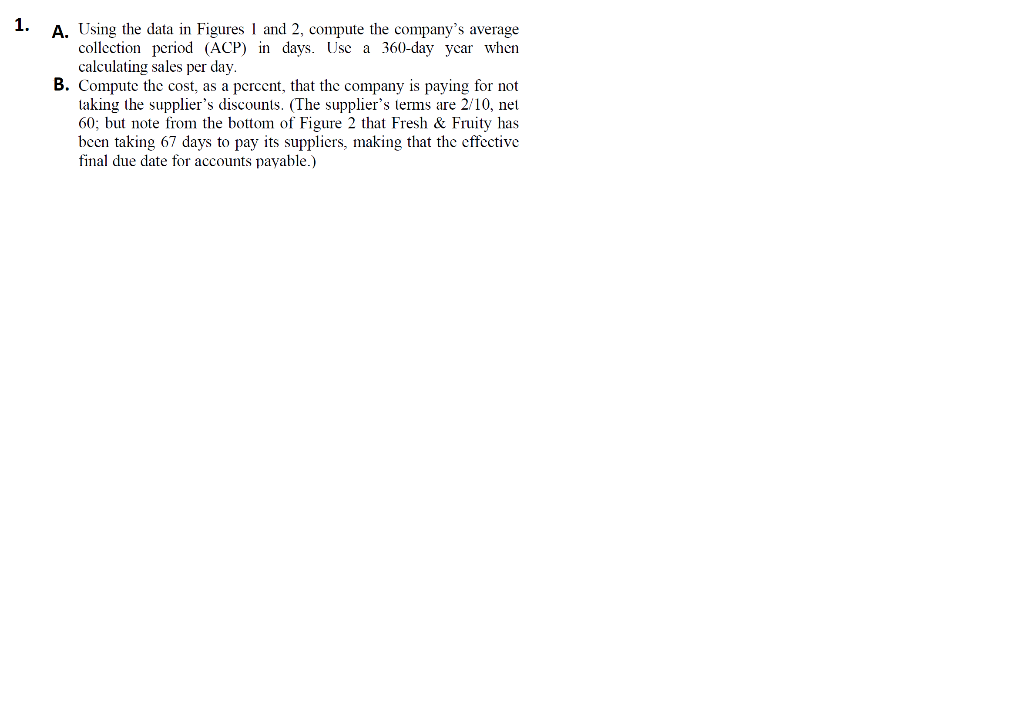
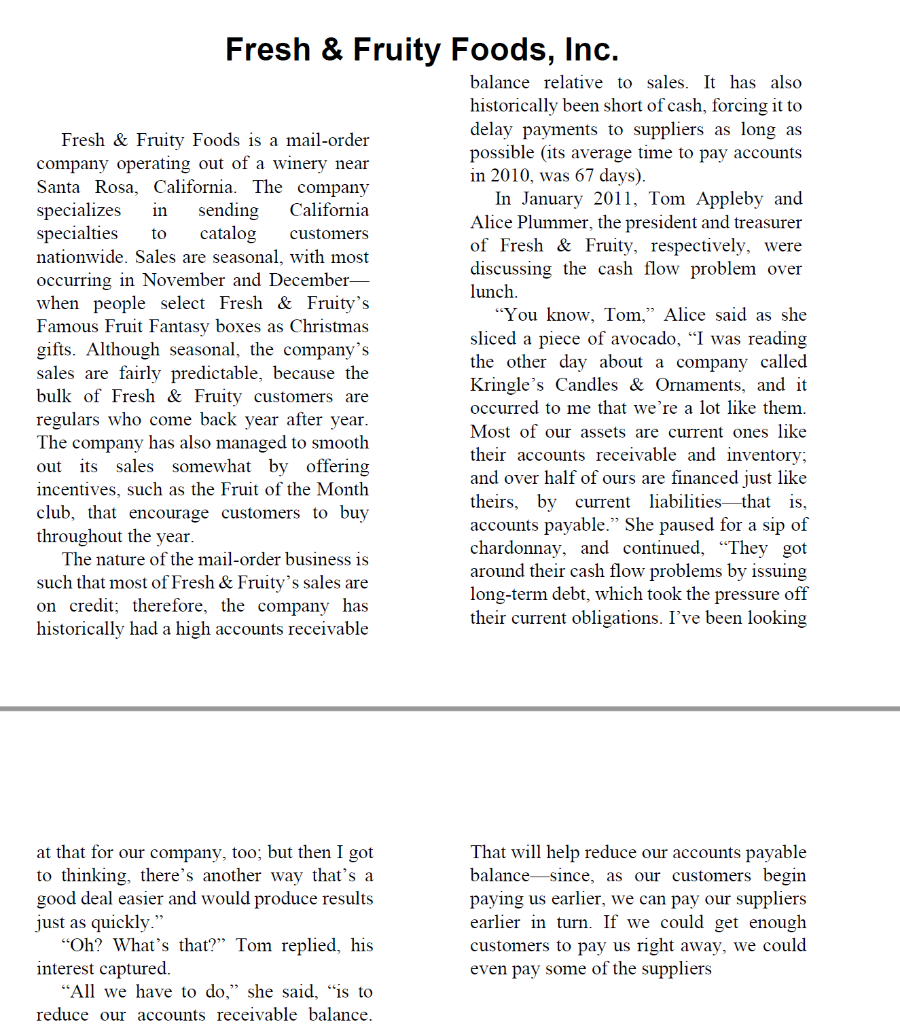
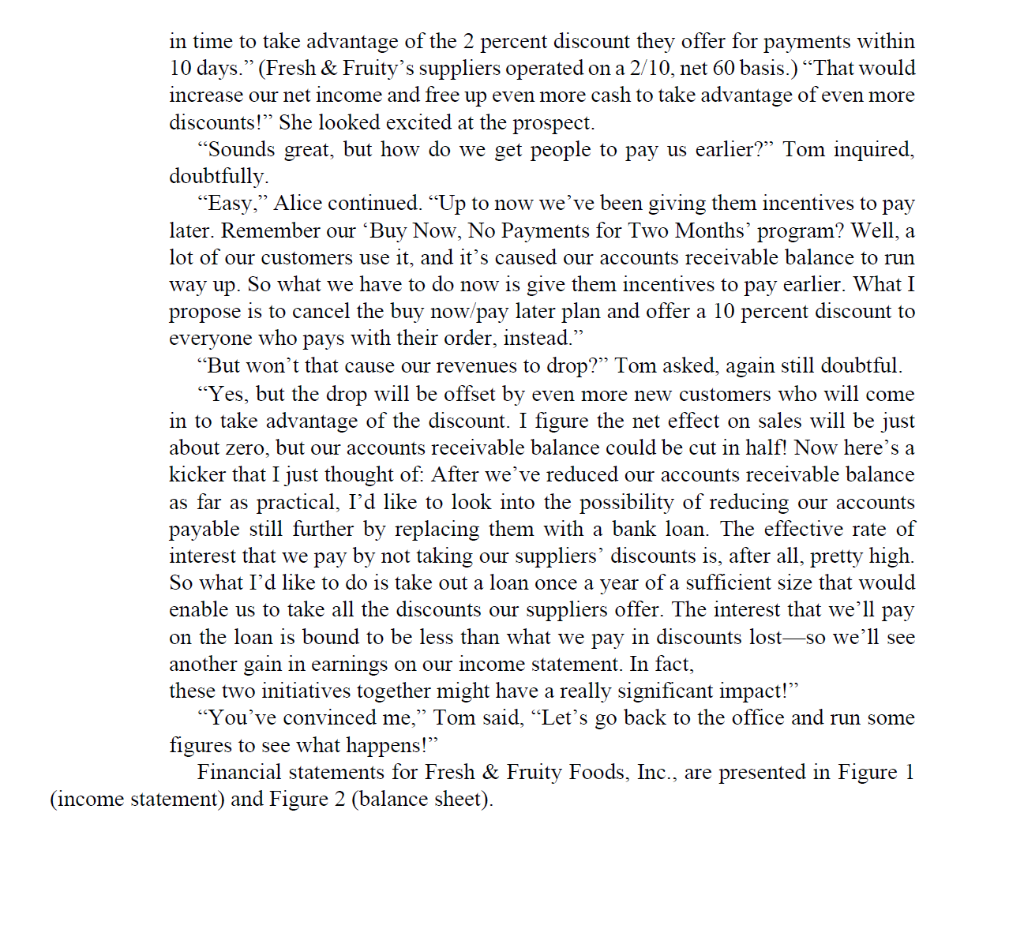
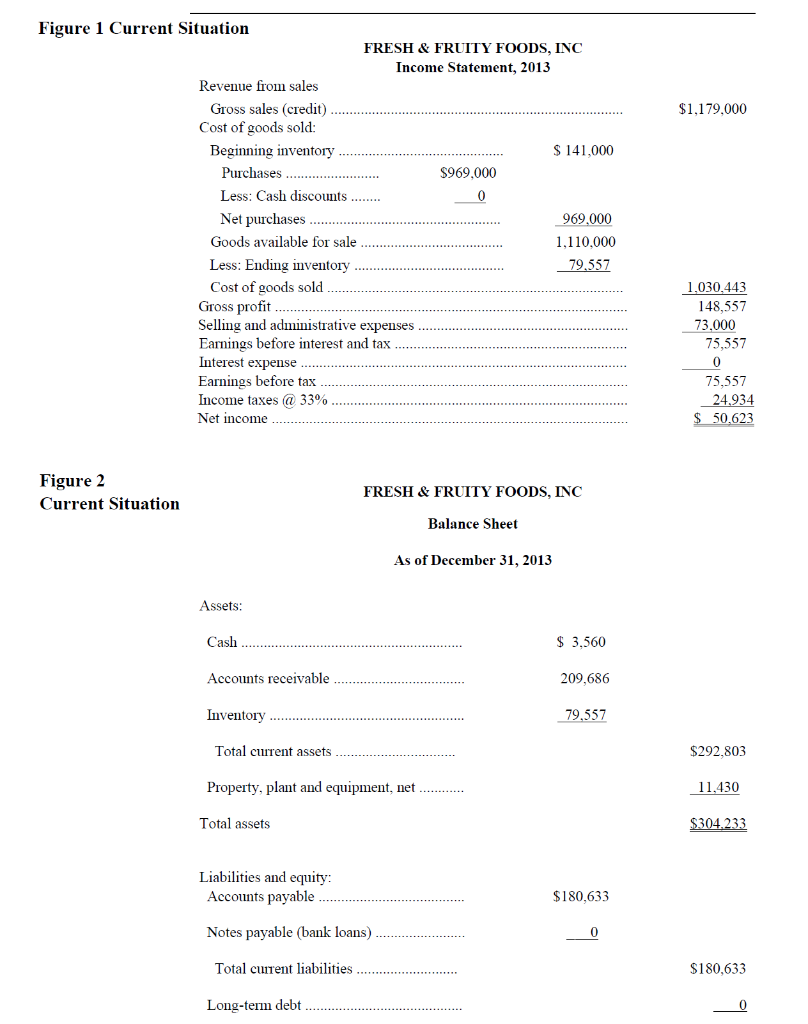
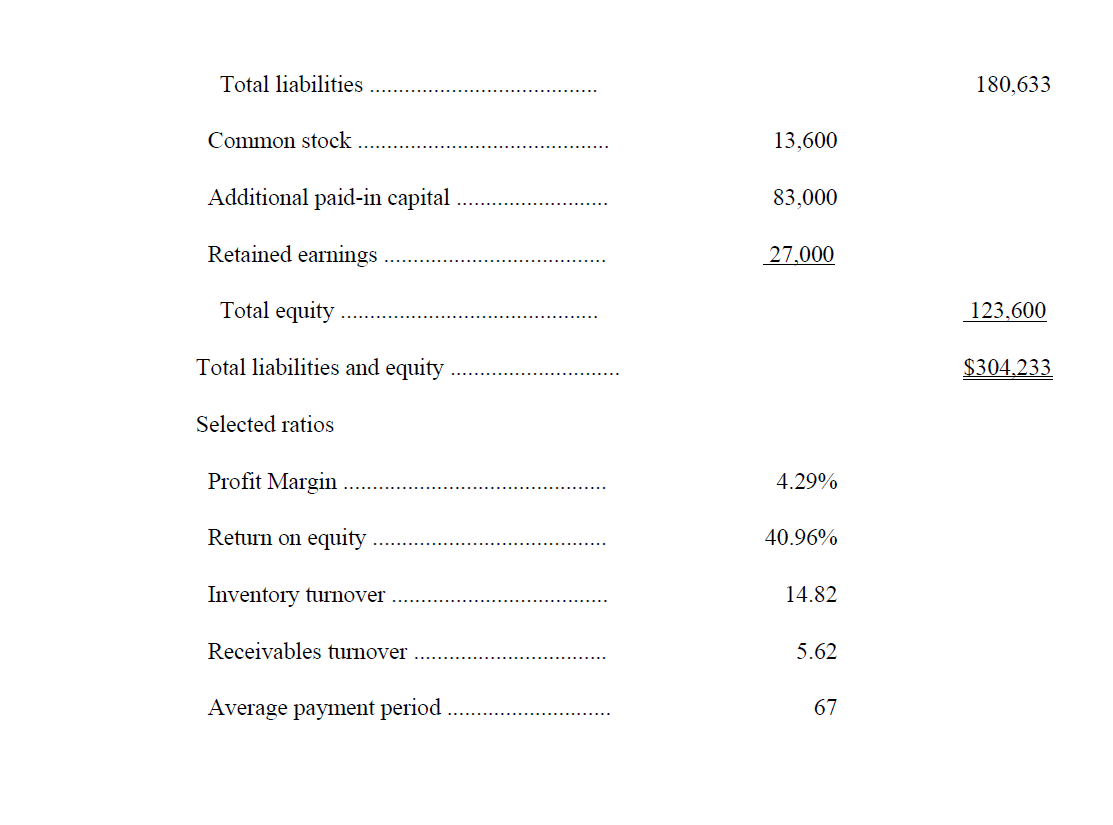
1. A. Using the data in Figures 1 and 2, compute the company's average collection period (ACP) in days. Use a 360-day year when calculating sales per day. B. Compute the cost, as a percent, that the company is paying for not taking the supplier's discounts. (The supplier's terms are 2/10, net 60; but note from the bottom of Figure 2 that Fresh & Fruity has been taking 67 days to pay its suppliers, making that the effective final due date for accounts payable.) Fresh & Fruity Foods, Inc. balance relative to sales. It has also historically been short of cash, forcing it to delay payments to suppliers as long as Fresh & Fruity Foods is a mail-order possible (its average time to pay accounts company operating out of a winery near in 2010, was 67 days). Santa Rosa, California. The company specializes in sending California In January 2011, Tom Appleby and Alice Plummer, the president and treasurer specialties to catalog customers of Fresh & Fruity, respectively, were nationwide. Sales are seasonal, with most discussing the cash flow problem over occurring in November and December- lunch. when people select Fresh & Fruity's "You know, Tom," Alice said as she Famous Fruit Fantasy boxes as Christmas gifts. Although seasonal, the company's sliced a piece of avocado, I was reading the other day about a company called sales are fairly predictable, because the bulk of Fresh & Fruity customers are Kringle's Candles & Ornaments, and it occurred to me that we're a lot like them. regulars who come back year after year. Most of our assets are current ones like The company has also managed to smooth their accounts receivable and inventory; out its sales somewhat by offering and over half of ours are financed just like incentives, such as the Fruit of the Month theirs, by current liabilities that is, club, that encourage customers to buy throughout the year. accounts payable. She paused for a sip of chardonnay, and continued, They got The nature of the mail-order business is around their cash flow problems by issuing such that most of Fresh & Fruity's sales are on credit; therefore, the company has long-term debt, which took the pressure off historically had a high accounts receivable their current obligations. I've been looking at that for our company, too; but then I got to thinking, there's another way that's a good deal easier and would produce results just as quickly." Oh? What's that? Tom replied, his interest captured "All we have to do," she said, "is to reduce our accounts receivable balance. That will help reduce our accounts payable balancesince, as our customers begin paying us earlier, we can pay our suppliers earlier in turn. If we could get enough customers to pay us right away, we could even pay some of the suppliers in time to take advantage of the 2 percent discount they offer for payments within 10 days. (Fresh & Fruity's suppliers operated on a 2/10, net 60 basis.) That would increase our net income and free up even more cash to take advantage of even more discounts! She looked excited at the prospect. Sounds great, but how do we get people to pay us earlier? Tom inquired, doubtfully Easy, Alice continued. Up to now we've been giving them incentives to pay later. Remember our Buy Now, No Payments for Two Months' program? Well, a lot of our customers use it, and it's caused our accounts receivable balance to run way up. So what we have to do now is give them incentives to pay earlier. What I propose is to cancel the buy now/pay later plan and offer a 10 percent discount to everyone who pays with their order, instead. But won't that cause our revenues to drop? Tom asked, again still doubtful. "Yes, but the drop will be offset by even more new customers who will come in to take advantage of the discount. I figure the net effect on sales will be just about zero, but our accounts receivable balance could be cut in half! Now here's a kicker that I just thought of: After we've reduced our accounts receivable balance as far as practical, I'd like to look into the possibility of reducing our accounts payable still further by replacing them with a bank loan. The effective rate of interest that we pay by not taking our suppliers' discounts is, after all, pretty high. So what I'd like to do is take out a loan once a year of a sufficient size that would enable us to take all the discounts our suppliers offer. The interest that we'll pay on the loan is bound to be less than what we pay in discounts lostso we'll see another gain in earnings on our income statement. In fact, these two initiatives together might have a really significant impact! You've convinced me," Tom said, Let's go back to the office and run some figures to see what happens! Financial statements for Fresh & Fruity Foods, Inc., are presented in Figure 1 (income statement) and Figure 2 (balance sheet). $1,179.000 Figure 1 Current Situation FRESH & FRUITY FOODS, INC Income Statement, 2013 Revenue from sales Gross sales (credit Cost of goods sold: Beginning inventory $ 141,000 Purchases $969.000 Less: Cash discounts ....... 0 Net purchases 969.000 Goods available for sale 1,110.000 Less: Ending inventory 79.557 Cost of goods sold Gross profit Selling and administrative expenses Earnings before interest and tax Interest expense Earnings before tax Income taxes @ 33%. Net income 1.030,443 148,557 73.000 75,557 75,557 24.934 $ 50,623 Figure 2 Current Situation FRESH & FRUITY FOODS, INC Balance Sheet As of December 31, 2013 Assets: Cash $ 3,560 Accounts receivable 209,686 Inventory 79,557 Total current assets $292,803 Property, plant and equipment, net 11.430 Total assets $304.233 Liabilities and equity: Accounts payable $180,633 Notes payable (bank loans) 0 Total current liabilities $180,633 Long-term debt Total liabilities 180.633 Common stock 13,600 Additional paid-in capital 83,000 Retained earnings 27.000 Total equity 123,600 Total liabilities and equity $304,233 Selected ratios Profit Margin 4.29% Return on equity 40.96% Inventory turnover 14.82 Receivables turnover 5.62 Average payment period 67
Step by Step Solution
There are 3 Steps involved in it

Get step-by-step solutions from verified subject matter experts
 Study Help