







Question: 1. At t=1, what is the source entry for switch 1 ? Host E and interface 5 2. At t=1, what is the destination entry
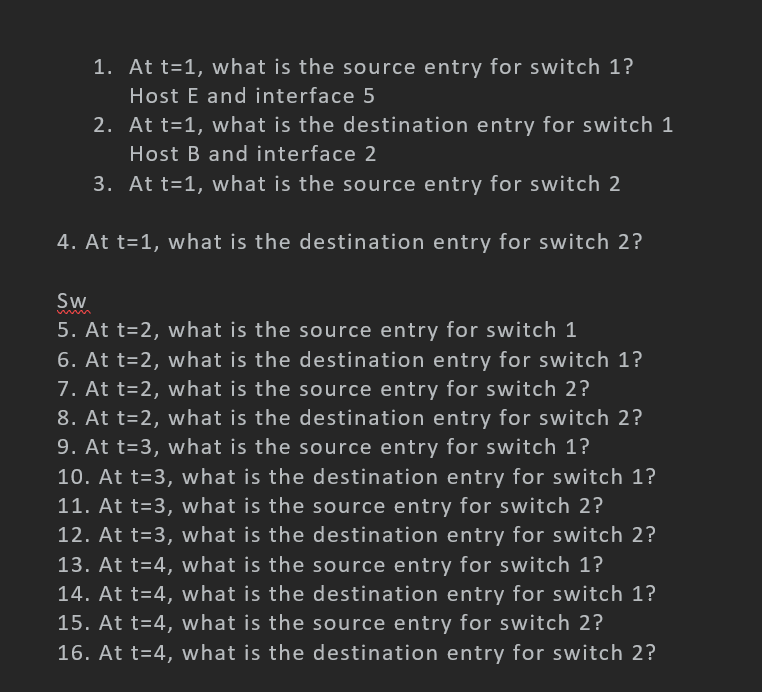
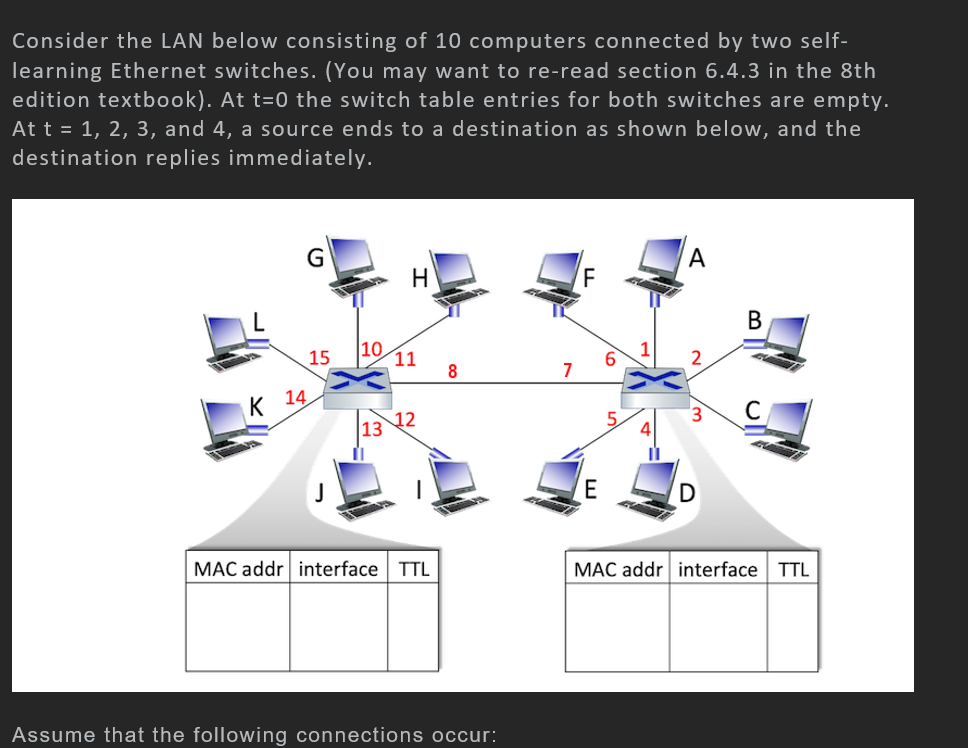
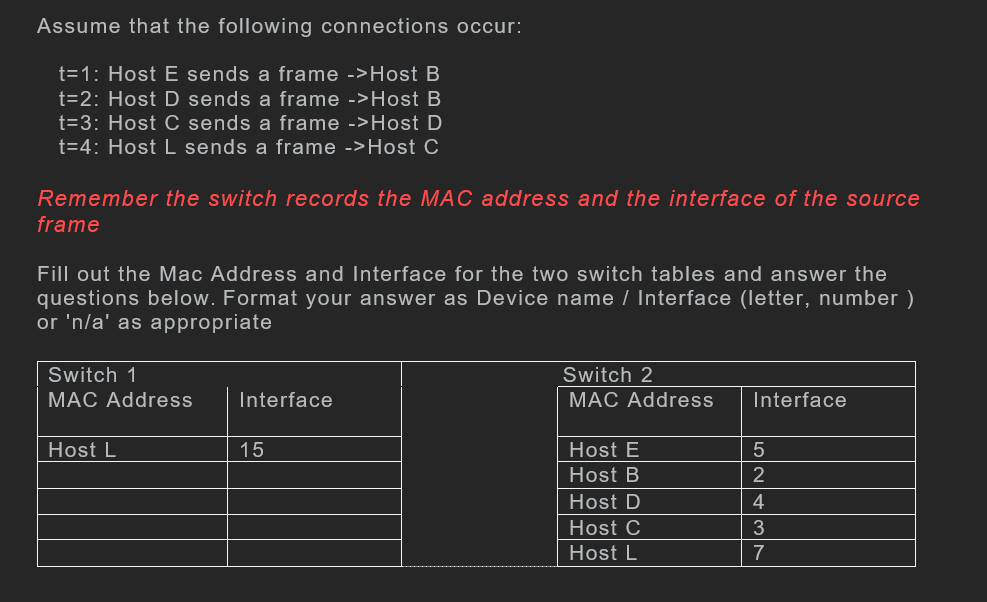
1. At t=1, what is the source entry for switch 1 ? Host E and interface 5 2. At t=1, what is the destination entry for switch 1 Host B and interface 2 3. At t=1, what is the source entry for switch 2 4. At t=1, what is the destination entry for switch 2 ? Sw 5. At t=2, what is the source entry for switch 1 6. At t=2, what is the destination entry for switch 1 ? 7. At t=2, what is the source entry for switch 2 ? 8. At t=2, what is the destination entry for switch 2 ? 9. At t=3, what is the source entry for switch 1 ? 10. At t=3, what is the destination entry for switch 1 ? 11. At t=3, what is the source entry for switch 2 ? 12. At t=3, what is the destination entry for switch 2 ? 13. At t=4, what is the source entry for switch 1 ? 14. At t=4, what is the destination entry for switch 1 ? 15. At t=4, what is the source entry for switch 2 ? 16. At t=4, what is the destination entry for switch 2 ? Consider the LAN below consisting of 10 computers connected by two selflearning Ethernet switches. (You may want to re-read section 6.4.3 in the 8th edition textbook). At t=0 the switch table entries for both switches are empty. At t=1,2,3, and 4 , a source ends to a destination as shown below, and the destination replies immediately. Assume that the following connections occur: Assume that the following connections occur: t=1:HostEsendsaframe>HostBt=2:HostDsendsaframe>HostBt=3:HostCsendsaframe>HostDt=4:HostLsendsaframe>HostC Remember the switch records the MAC address and the interface of the source frame Fill out the Mac Address and Interface for the two switch tables and answer the questions below. Format your answer as Device name / Interface (letter, number) or 'n/a' as appropriate
Step by Step Solution
There are 3 Steps involved in it

Get step-by-step solutions from verified subject matter experts
 Study Help