







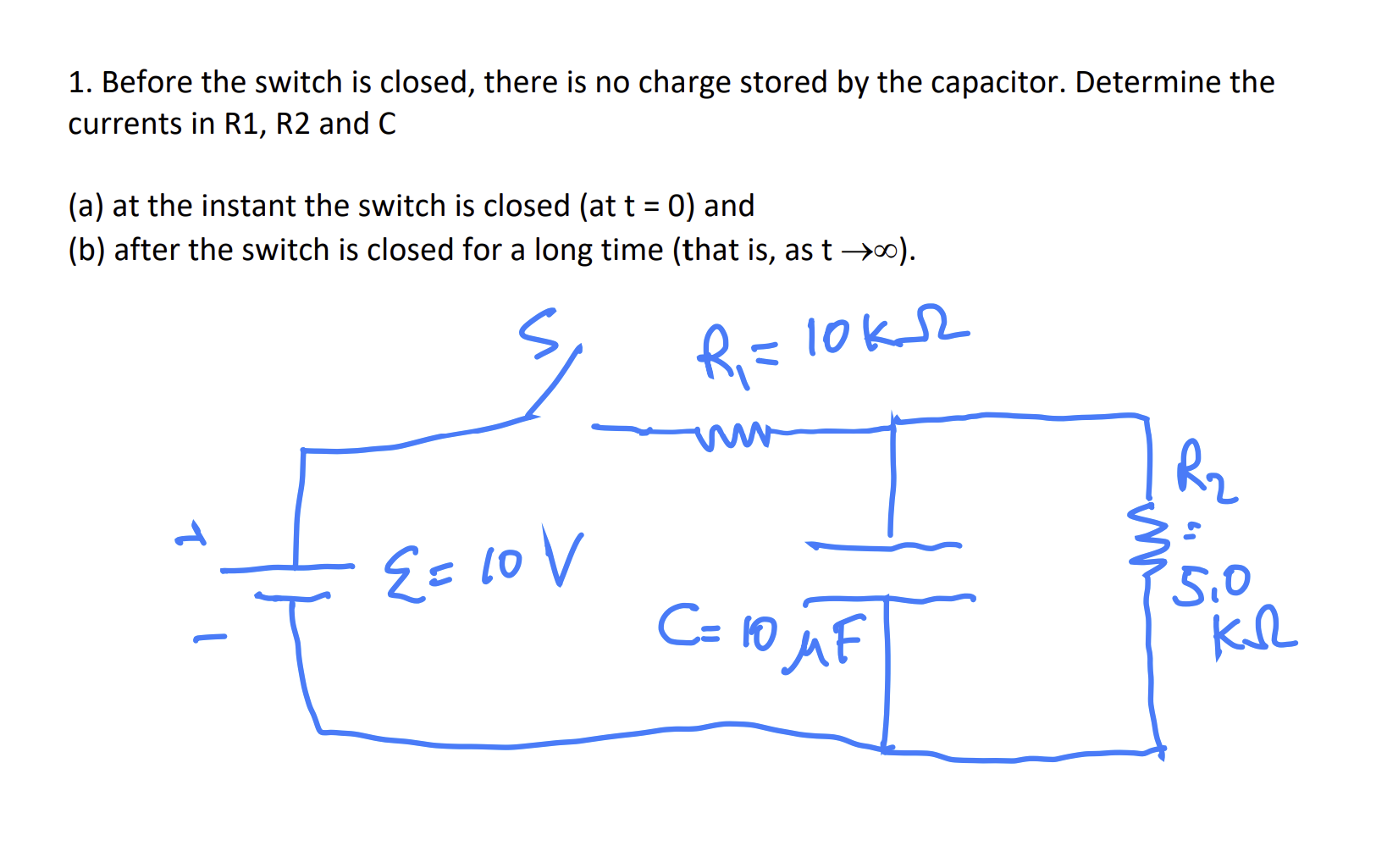
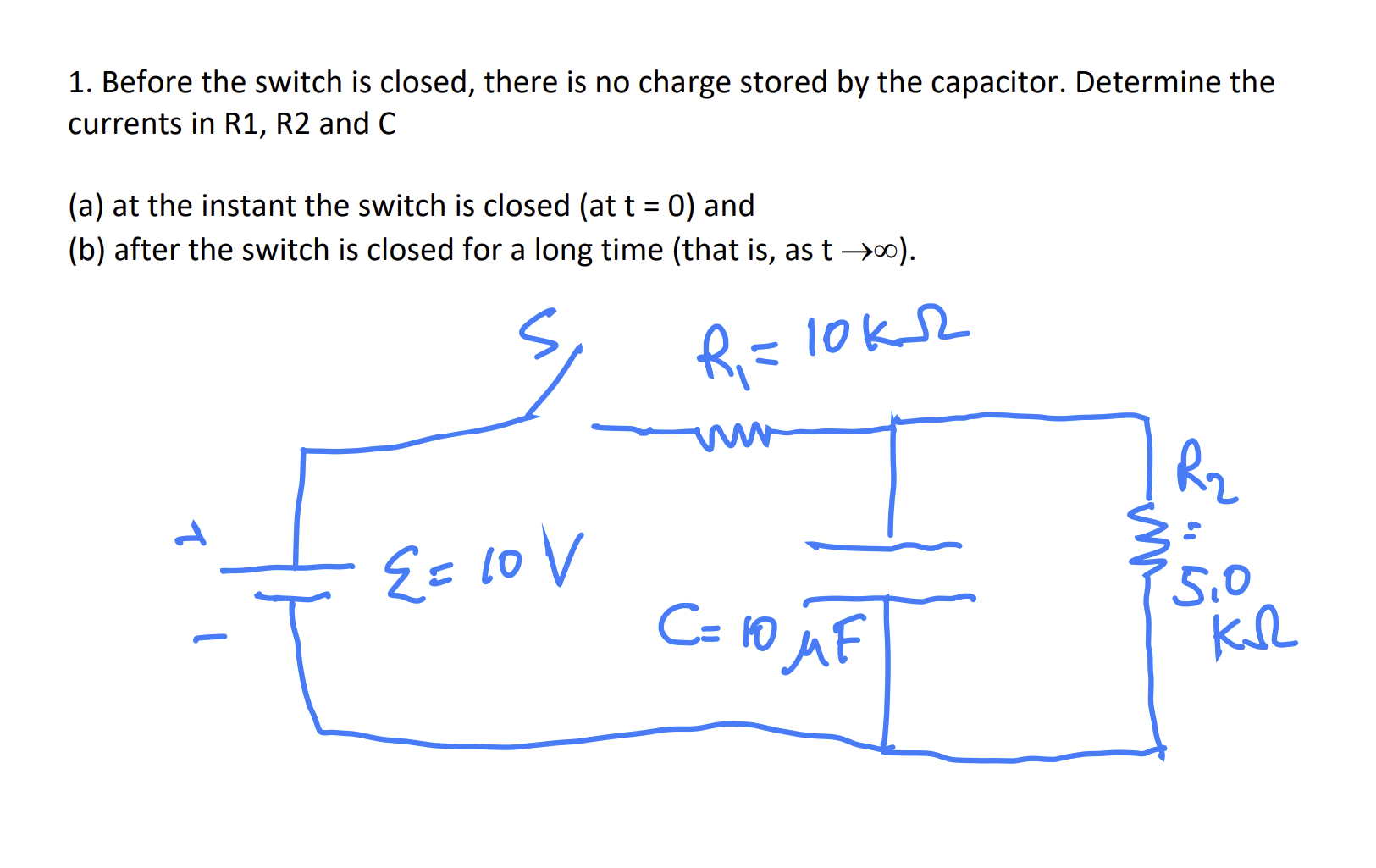
Question: 1. Before the switch is closed, there is no charge stored by the capacitor. Determine the currents in R1, R2 and C (a) at the
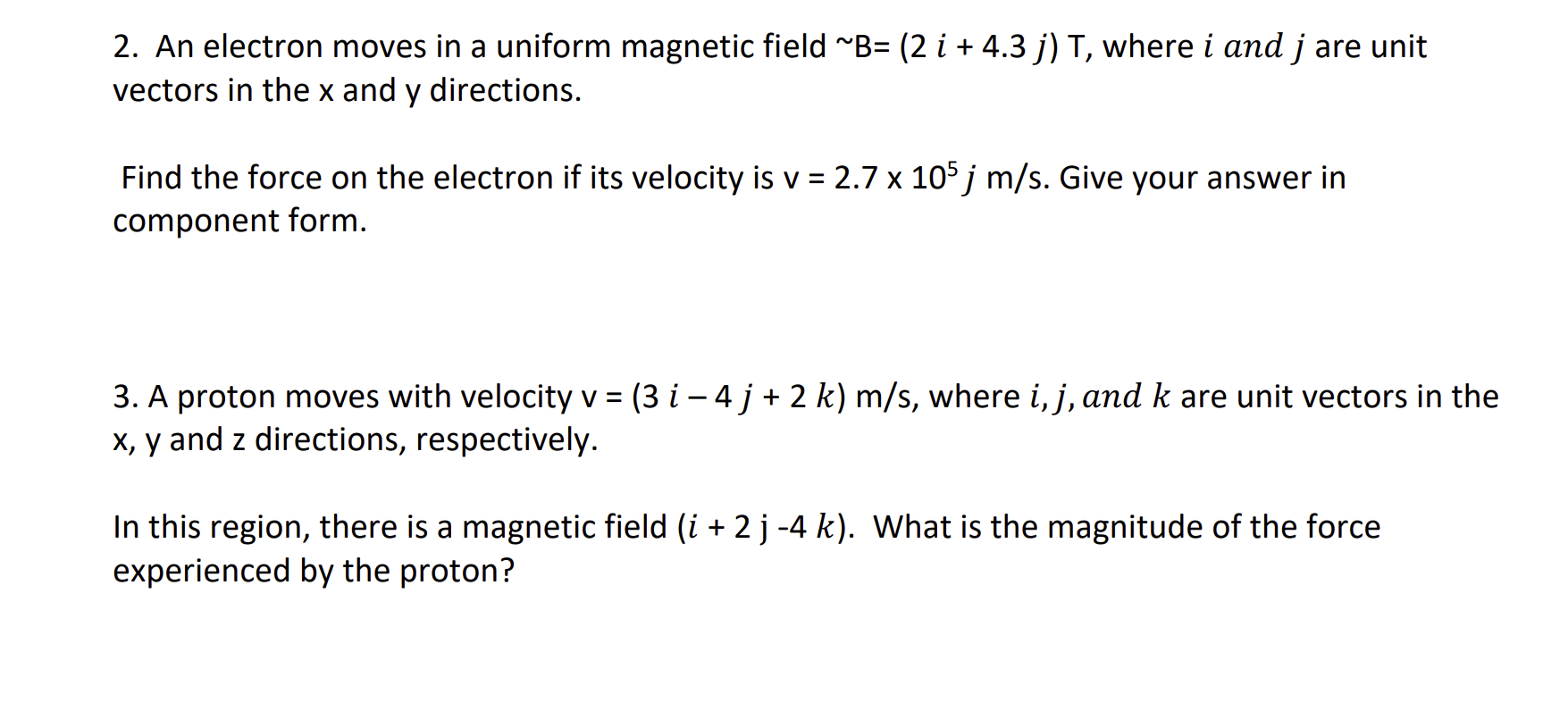
![\"B: (2 i + 4.3 j) T, where i and] are unit](https://s3.amazonaws.com/si.experts.images/answers/2024/06/66794643b2c87_875667946437c797.jpg)
![electron if its velocity is v = 2.7 x 10⁵] m/s. Give](https://s3.amazonaws.com/si.experts.images/answers/2024/06/66794644c95c9_8766679464499d09.jpg)
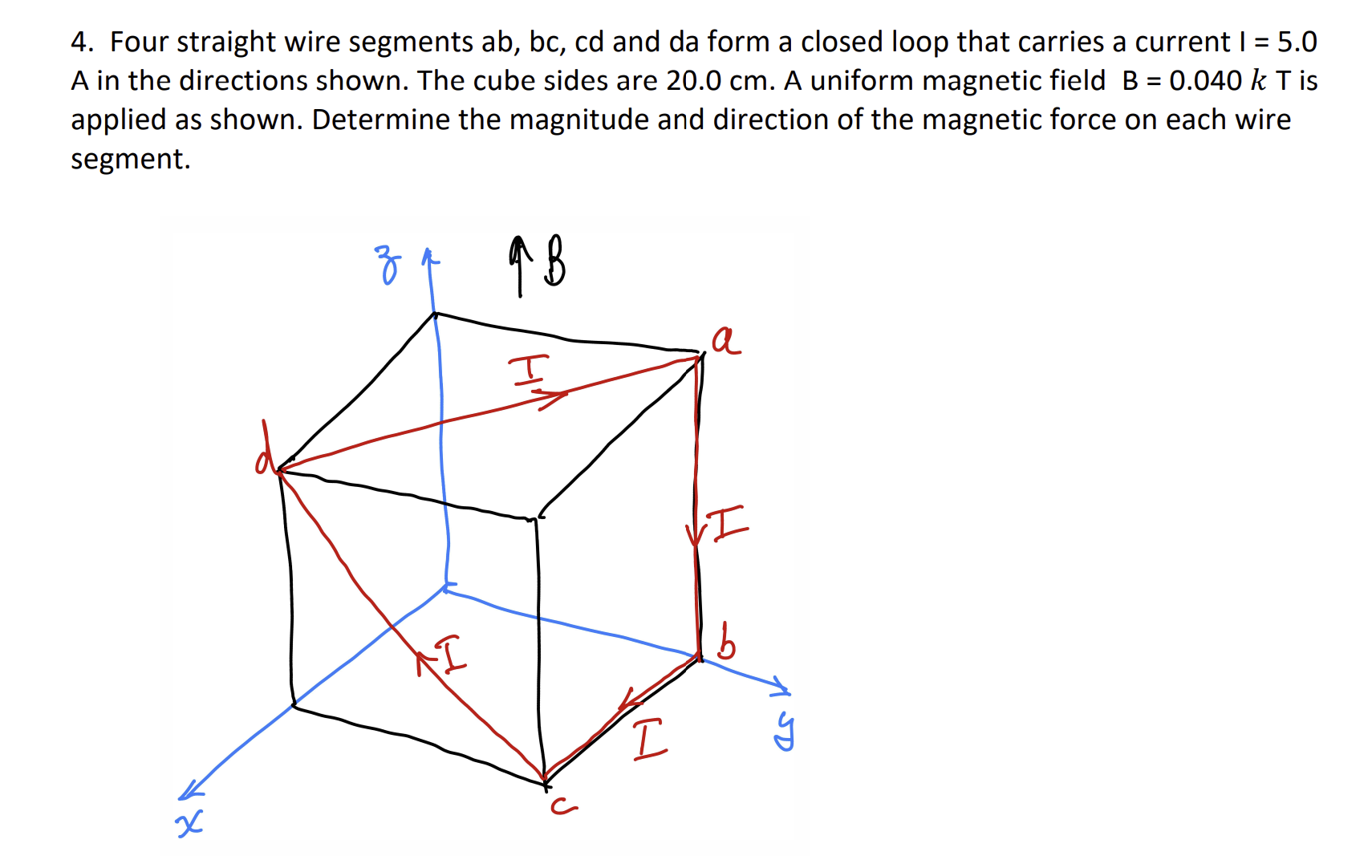
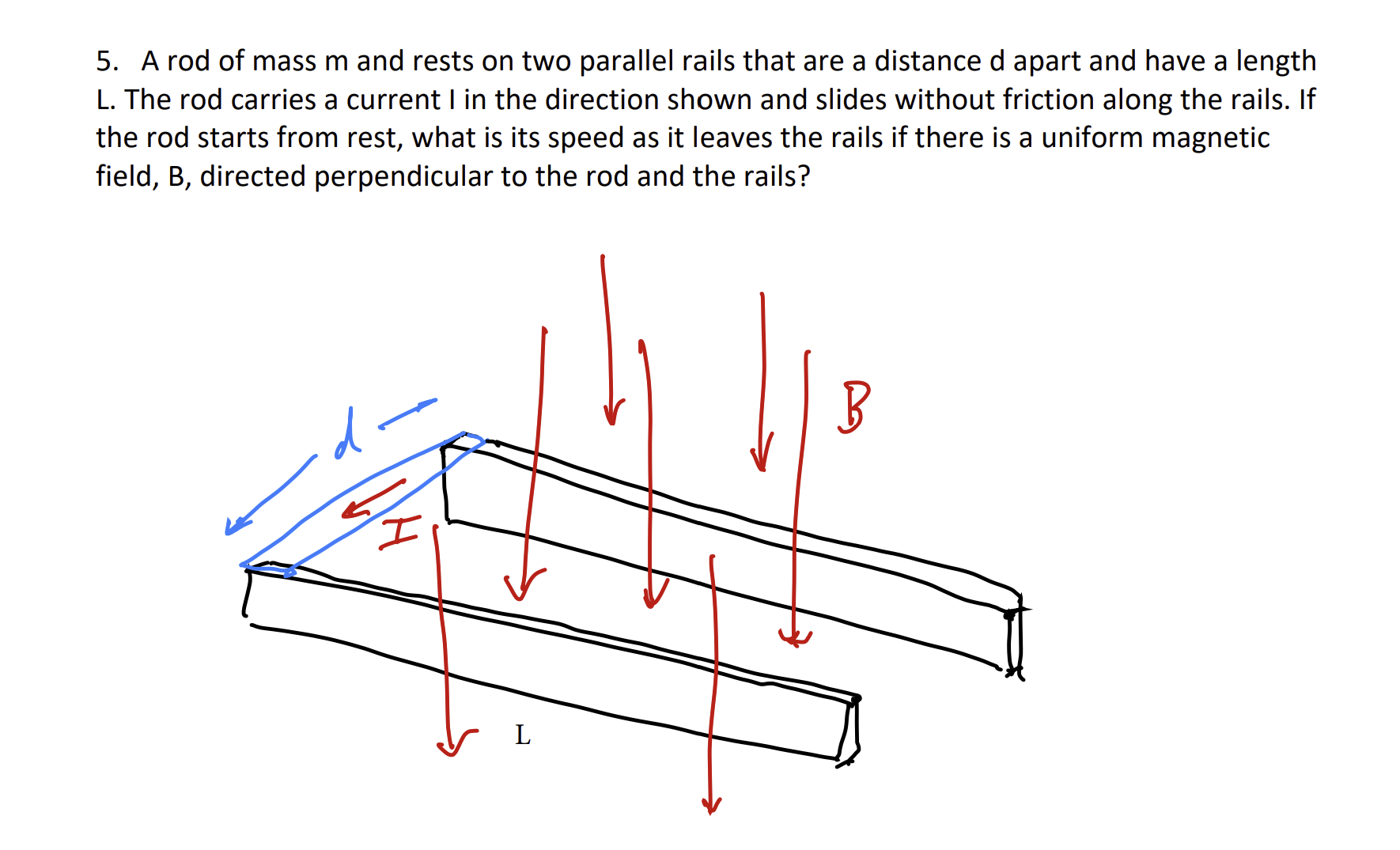
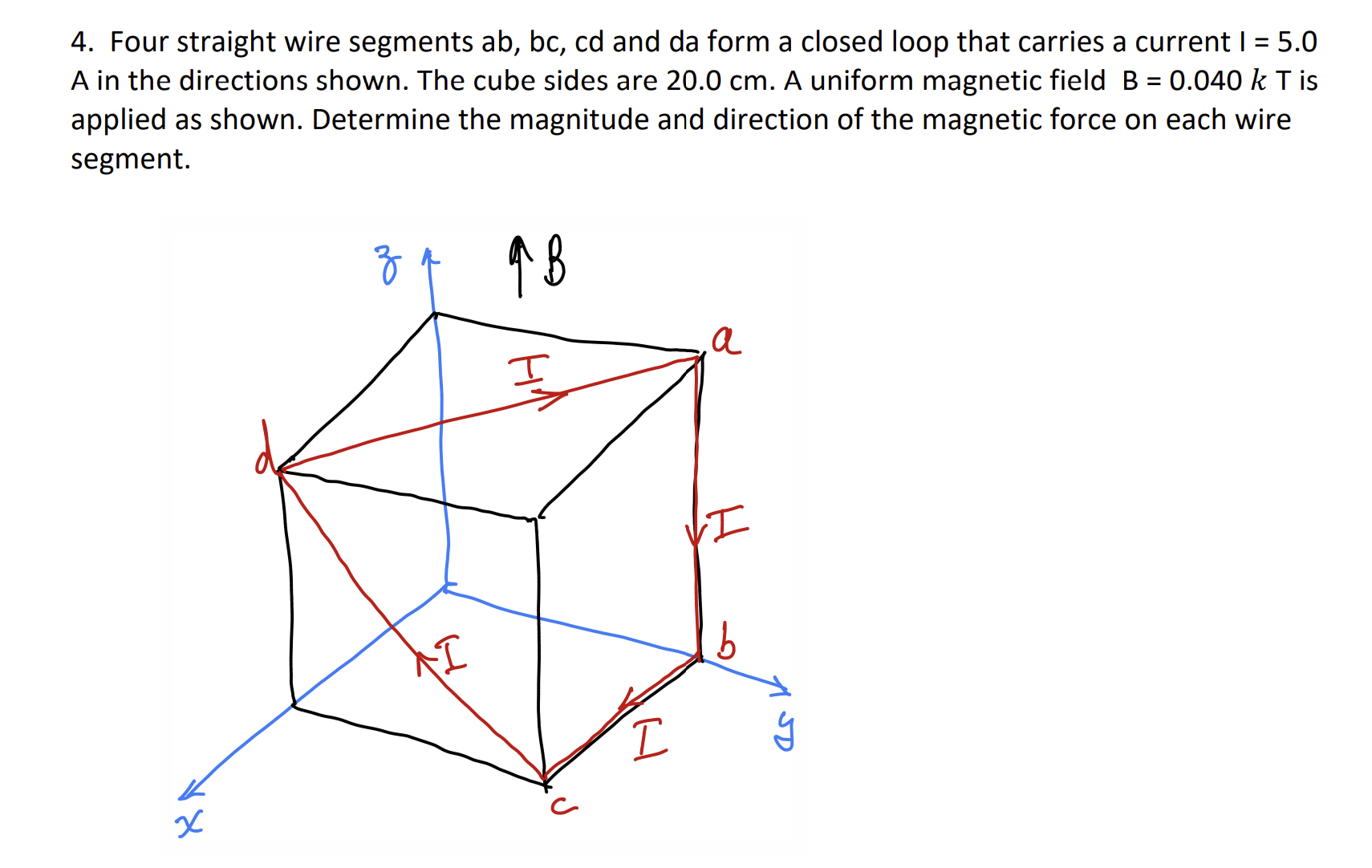
1. Before the switch is closed, there is no charge stored by the capacitor. Determine the currents in R1, R2 and C (a) at the instant the switch is closed (at t = 0) and (b) after the switch is closed for a long time (that is, as t >oo). 2. An electron moves in a uniform magnetic field \"B: (2 i + 4.3 j) T, where i and] are unit vectors in the X and y directions. Find the force on the electron if its velocity is v = 2.7 x 10⁵] m/s. Give your answer in component form. 3. A proton moves with velocity v = (3 i 4] + 2 k) m/s, where 1,], and k are unit vectors in the x, y and 2 directions, respectively. In this region, there is a magnetic field (i + 21' 4 k). What is the magnitude of the force experienced by the proton? 4. Four straight wire segments ab, bc, cd and da form a closed loop that carries a current I = 5.0 A in the directions shown. The cube sides are 20.0 cm. A uniform magnetic field B = 0.040 k T is applied as shown. Determine the magnitude and direction of the magnetic force on each wire segment. 5. A rod of mass m and rests on two parallel rails that are a distance d apart and have a length L. The rod carries a current I in the direction shown and slides without friction along the rails. If the rod starts from rest, what is its speed as it leaves the rails if there is a uniform magnetic field, B, directed perpendicular to the rod and the rails
Step by Step Solution
There are 3 Steps involved in it

Get step-by-step solutions from verified subject matter experts
 Study Help