







Question: 1. Beyond normal capacity, fixed overhead costs increase $4,500 for each 1,000 units or fraction thereof until a maximum capacity of 24,000 units is reached.
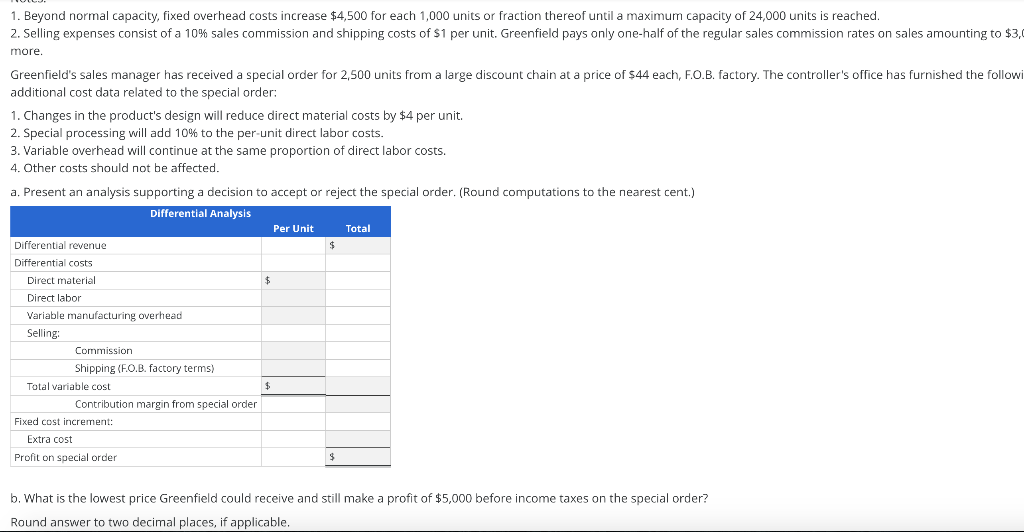
1. Beyond normal capacity, fixed overhead costs increase $4,500 for each 1,000 units or fraction thereof until a maximum capacity of 24,000 units is reached. 2. Selling expenses consist of a 10% sales commission and shipping costs of $1 per unit. Greenfield pays only one-half of the regular sales commission rates on sales amounting to $3, more. Greenfield's sales manager has received a special order for 2,500 units from a large discount chain at a price of $44 each, F.O.B. factory. The controller's office has furnished the followi additional cost data related to the special order: 1. Changes in the product's design will reduce direct material costs by $4 per unit. 2. Special processing will add 10% to the per-unit direct labor costs. 3. Variable overhead will continue at the same proportion of direct labor costs. 4. Other costs should not be affected. a. Present an analysis supporting a decision to accept or reject the special order. (Round computations to the nearest cent.) Differential Analysis Per Unit Total Differential revenue Differential costs Direct material Direct labor Variable manufacturing overhead Selling: Commission Shipping (F.O.B. factory terms) Total variable cost Contribution margin from special order Fixed cost increment: Extra cost Profit on special order b. What is the lowest price Greenfield could receive and still make a profit of $5,000 before income taxes on the special order? Round answer to two decimal places, if applicable
Step by Step Solution
There are 3 Steps involved in it

Get step-by-step solutions from verified subject matter experts
 Study Help