







Question: 1. Briefly describe the differences in the four allocation methods discussed in the case. (Direct, Step-down, reciprocal and double apportionment)* (Hint: Dont discuss the mathematics
1. Briefly describe the differences in the four allocation methods discussed in the case. (Direct, Step-down, reciprocal and double apportionment)* (Hint: Dont discuss the mathematics of the schemes, but rather how they differ conceptually.) Which of the four methods is conceptually best?
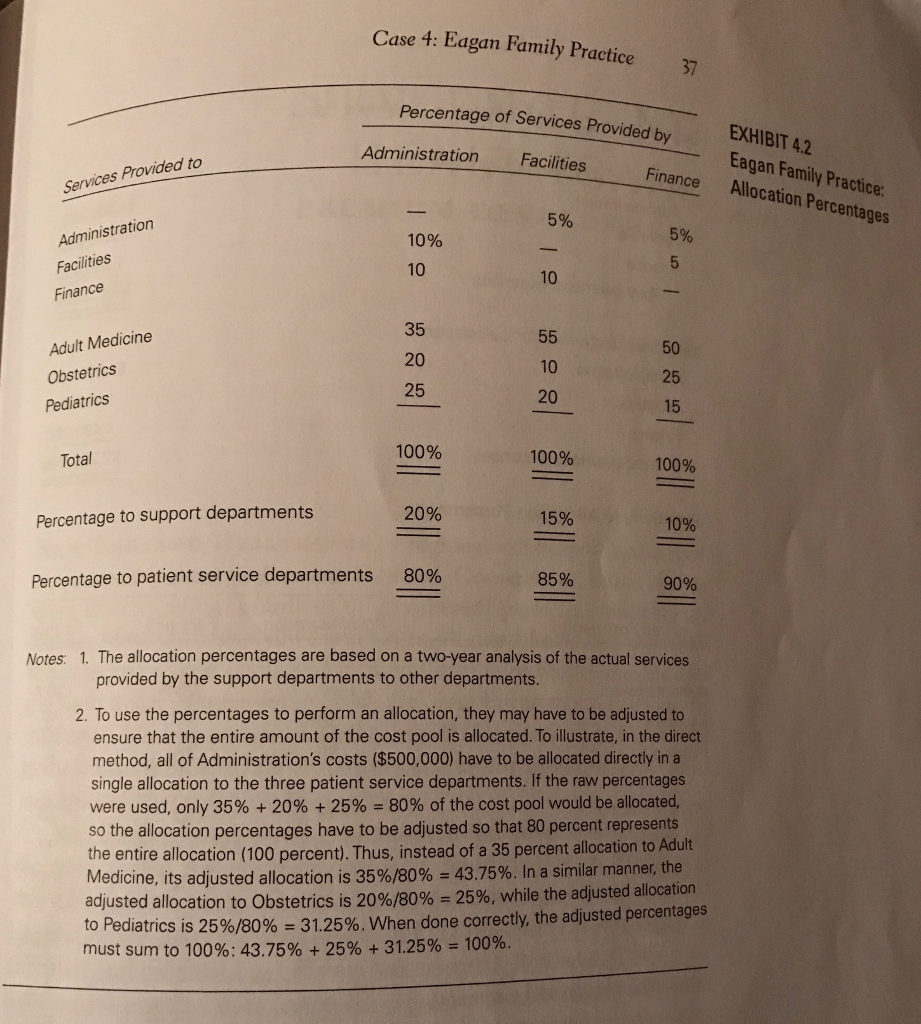
2. What are the allocations to each patient services department, and resulting profitability, under the four allocation methods using the base case cost amounts (Exhibit 4.1) and allocation rates (Exhibit 4.2).
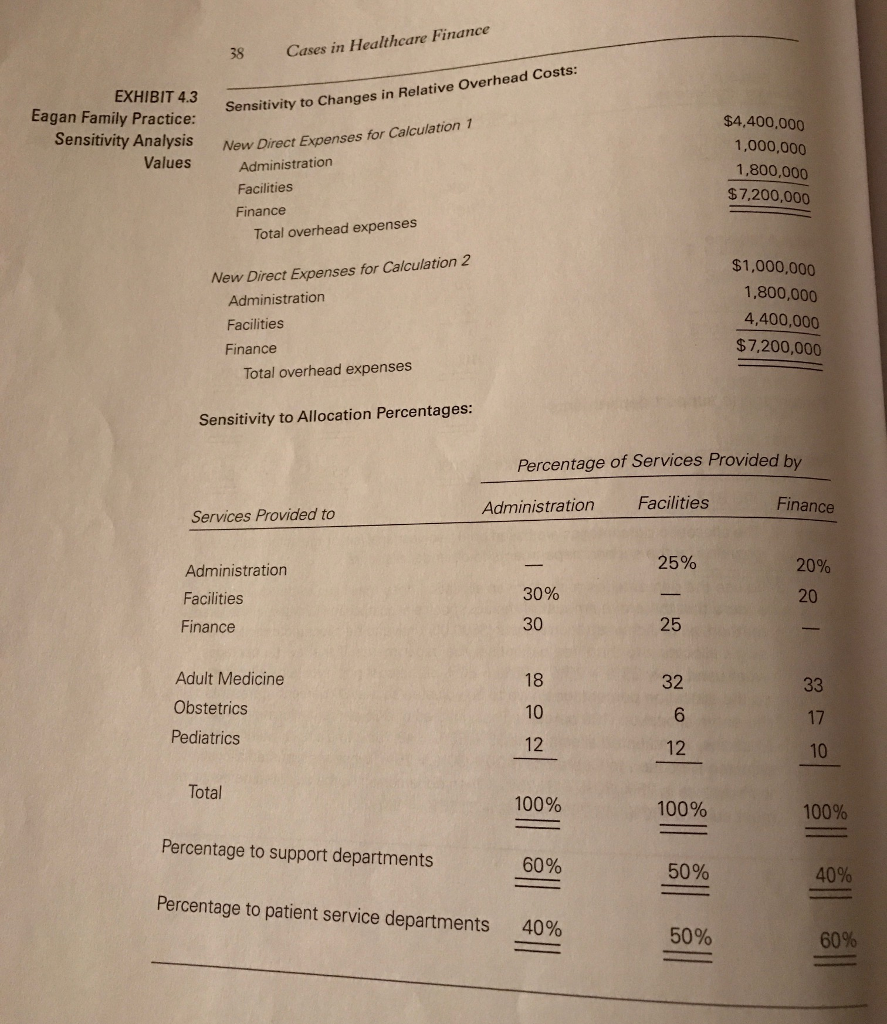
3. Now consider the sensitivity of the results to changes in the values of the overhead cost pools. Repeat Question 2, but now use the overhead cost pool amounts from the first section of Exhibit 4.3 along with the base case allocation percentages contained in Exhibit 4.2. (Note that there are two different overhead cost pool amounts [Calculation 1 and Calculation 2].)
4. Now consider the sensitivity of the results to changes in the allocation percentages. Repeat Question 2, but now use the percentages from Exhibit 4.3 along with the base case overhead cost pool amounts given in Exhibit 4.1.
5. Assess the sensitivity of patient services department profitability to:
-The allocation method.
-The relative sizes of the overhead cost pools.
-The allocation rates.
6. What does the analysis indicate about the true (but not really observable) profitability of each of the patient services departments?
7. What is your recommendation regarding the appropriate cost allocation method for the practice?
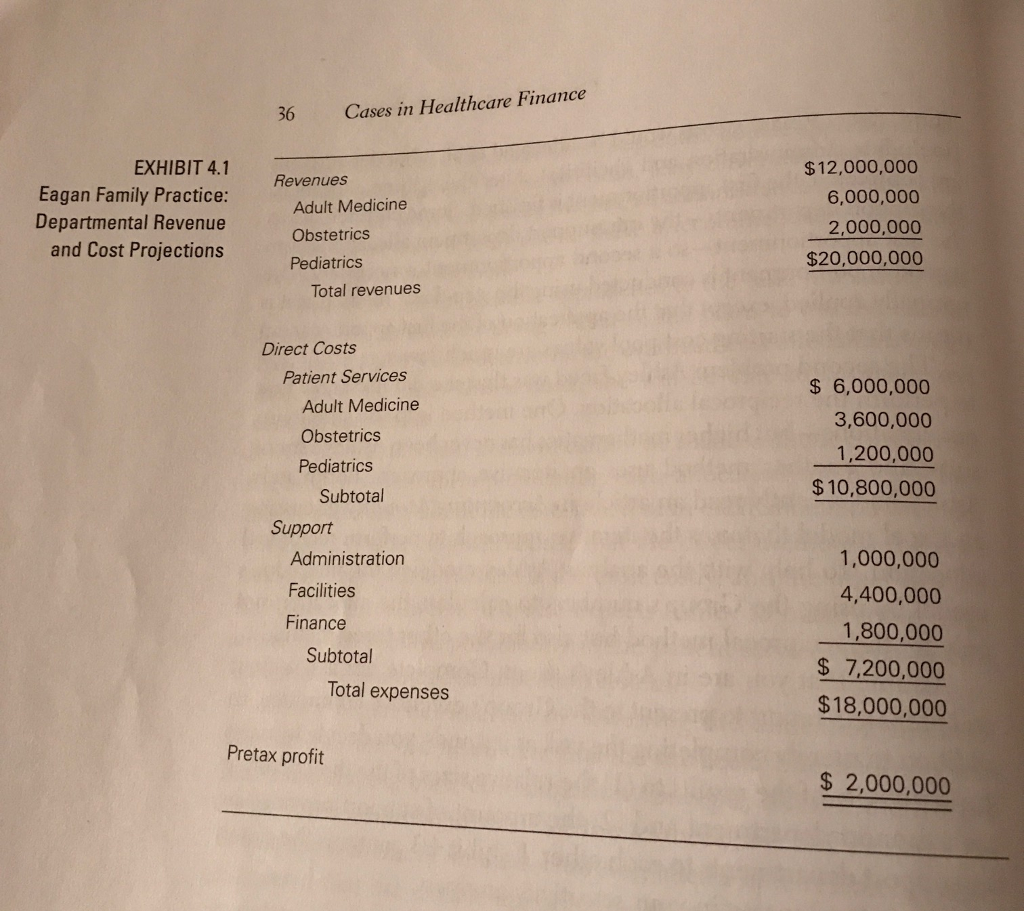
Cases in Healthcare Finance 36 EXHIBIT 4.1 Revenues Eagan Family Practice: Adult Medicine Departmental Revenue Obstetrics and Cost Projections Pediatrics Total revenues Direct Costs Patient Services Adult Medicine Obstetrics Pediatrics Subtotal Support Administration Facilities Finance Subtotal Total expenses Pretax profit $12,000,000 6,000,000 2,000,000 $20,000,000 6,000,000 3,600,000 1,200,000 10,800,000 1,000,000 4,400,000 1,800,000 7,200,000 $18,000,000 2,000,000
Step by Step Solution
There are 3 Steps involved in it

Get step-by-step solutions from verified subject matter experts
 Study Help