



Question: 1 . Can Sharp afford not to hedge? 2 . What are the hedging alternatives for Sharp s transaction exposure? 3 . What is the
Can Sharp afford not to hedge?
What are the hedging alternatives for Sharps transaction exposure?
What is the best hedging alternative?
On April at : pm William George, the chief financial officer of Sharp Machine Tools, was scheduled to meet with Gregory Byrne, the Head of East Banks International Division, to discuss the foreign exchange risk related to the firms foreign sales contract. In the early morning, April Sharp learned that his firm had won its bid of to build ten precision machine tools for a large British automaker. Sharps contract marked its first foreign sales in the
year history of the company and represented a tangible payoff in its drive to expand its customer base abroad. In accordance with the contract, Sharp had received pounds
through wire as deposit on the contract with the balance due at the time the machine tools were delivered in days. Thus, Sharp was scheduled to receive the remaining on July
History of the Company
Sharp Machine Tools, a mediumsized manufacturer of precision machine tools, was founded in by William Sharp, President and sole owner of the company. Machine tools were designed by the companys System Development Department to meet the specific needs of each client.
From to the mids Sharp had built machine tools for a variety of customers from different industries, such as automakers, steel companies, and synthetic rubber producers.
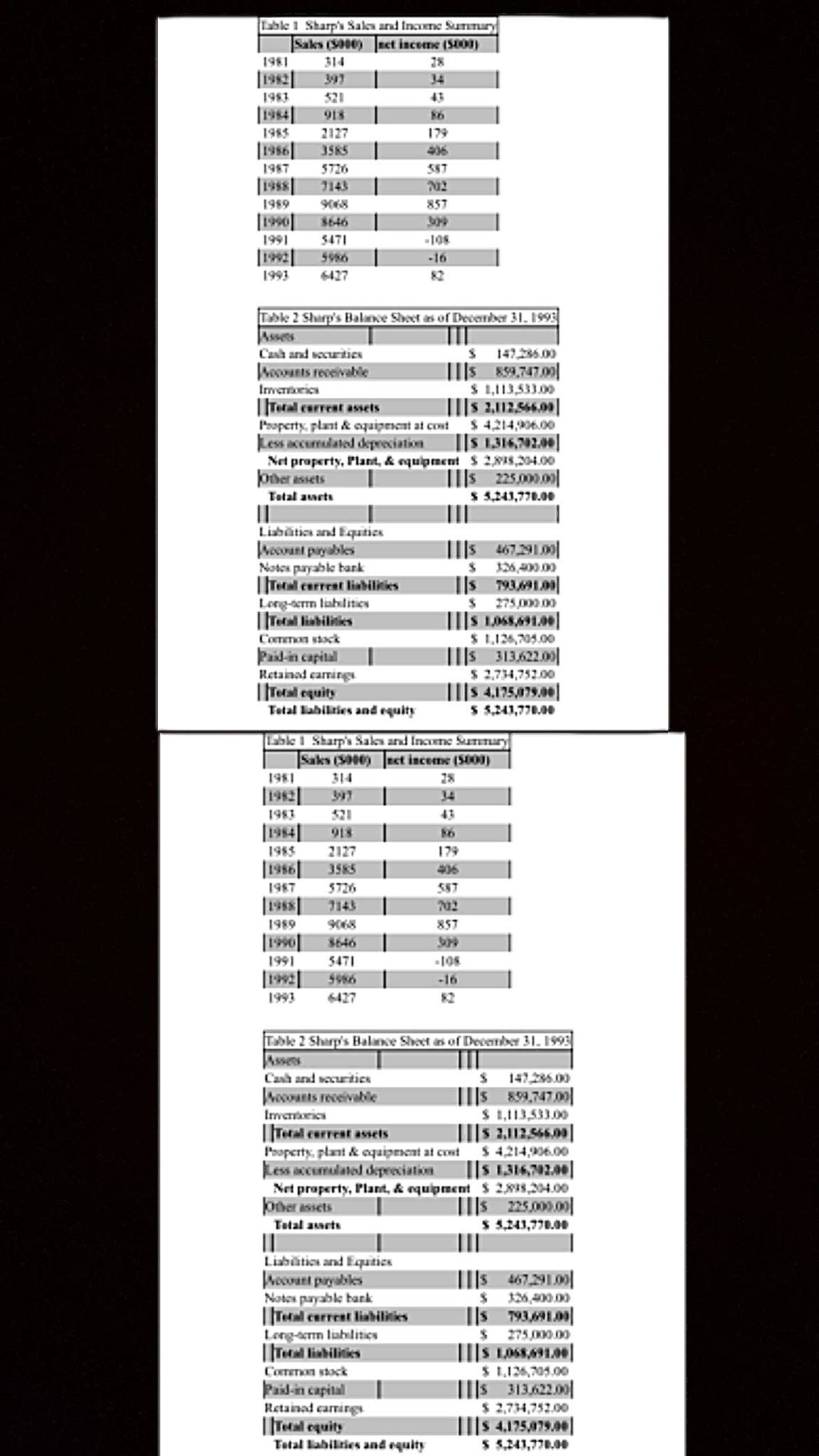
However, by the company began to concentrate on its sales to US steel companies in order to obtain economies of scale. Sales volume had increased from $ in to almost $ million in Due to the down turn in the US steel industry and severe reductions in revenues and profits see table
In the US accounted from almost of the raw steel production in the world, but this share fell below in The US share of steel production in the world declined even further to about in The number of jobs in the US steel industry dropped from in to in However, steel producers have adjusted dramatically in recent years:costs have been slashed; the number of production workers dropped sharply; the industry embraced continuous casting; technology and management links have been forged with Japanese firms; and efficient minimills flourished. These adjustments, along with the weak dollar, the general economic rebound, and help from the government, enabled the industry to turn the corner from a string of losses.
In the company showed a profit for the first time in three years. Thus, management was confident that the economy had turned the corner. Management believed that the best prospects of future growth were sales to steel companies and automakers in Europe. In the spring of Sharp launched a marketing effort overseas. This selling effort did not meet the success until the confirmation of the contract discussed above. The new sales contract, although large in itself, had the potential of being expanded in the future, since Sharps British customer was a large multinational firm with manufacturing facilities in many countries.
Foreign Exchange Risk and hedging
On April the day the bid was accepted, the value of the pound was $ However,the pound had been weak for the past year. William George was concerned that the value of pound might depreciate even further during the next days, which prompted his discussion with Gregory Byrne at the bank. He wanted to find out what techniques were available to sharp to reduce the exchange risk created by the outstanding pound receivables.
Byrne, the international specialist, had told George that two alternatives were available: do not hedge take the risk and hedge cover the risk First, George could do nothing. This would leave sharp vulnerable to pound fluctuations and which would entail losses if pound depreciated, or grains if it appreciated. On April foreign exchange analysts in London predicted that the spot rate for the pound in days would range from $ to $
Byrne explained that a hedging device is an approach designed to reduce or offset possible losses from exchange rate fluctuations that affect values or assets and liabilities. He hadinformed George that if sharp decided to cover its truncation exposure, it might select from a variety of techniques: forward market hedges, money market hedge, and options hedges. Sharp considered to be its weighted average cost of capital. Its cost of borrowing for working capital needs was currently The business risk on the British contract was fairly typical of the other projects in which sharp were involved in the US
Byrne assured George that East Bank would assist Sharp in implementing whatever decision George made. Sharp had a $ million line of credit with East bank. Byrne indicated that would be no difficult for East Bank to arrange the pound loan for Sharp through its correspondent bank inlondon. he felt that such a loanwould be at above the british prime rate. in order to assist george in making his decision, byrne provided him with information on interest rates, spot and forward exchange rates, and currency option see table and george was aware that in preparing the bid sharp had allowed for a profit margin of only in order to increase the likelihood of winning the bid and hence developing an important foreign contract. the bid wassubmitted on march calculation were madde in dollars and then convertes to pounds at the spot rate of marchsee table because the british company has stipulated payment in pounds. figuring the costs on this particular contracr sharp had assumed that virtually all components and technical expertise would be obtained in the US however sharp hoped that the company would gain a foothold in UK through this contract and that some of the direct costs on future contract would be sourced there as sharp became acquainted with local suppliers.
Step by Step Solution
There are 3 Steps involved in it
1 Expert Approved Answer
Step: 1 Unlock

Question Has Been Solved by an Expert!
Get step-by-step solutions from verified subject matter experts
Step: 2 Unlock
Step: 3 Unlock