Question: 1). can you explain this 7 type of stigma using your own word plz? Public or social stigma 2. Structural stigma 3. Health professional stigma
1). can you explain this 7 type of stigma using your own word plz?
Public or social stigma
2. Structural stigma
3. Health professional stigma
4. Self-stigma or internalized stigma
5. Perceived stigma
6. Label avoidance
7. Stigma by association
2) The LGBTQ+ community is a highly stigmatized group. How does that affect their physical and mental health? How can we reduce the stigma on that part of the population?
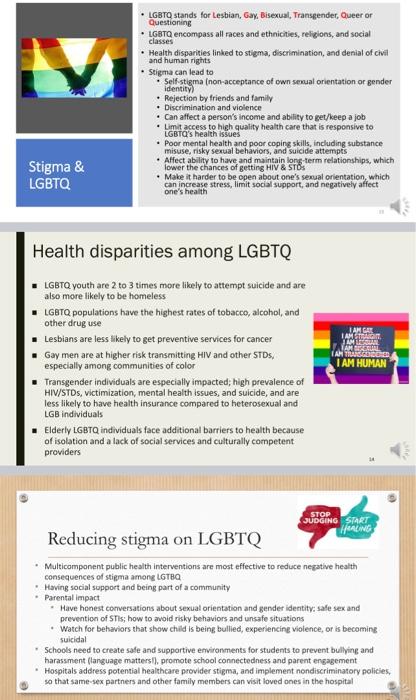
- LGBTQ stands for Lesbian, Gay, Bisexual, Transgender, Queer or Questioning - IG8TQ encompass all races and ethnicities, religions, and social classes - Health disparities linked to stiema, discrimination, and denial of civil and human rights - Stigma can lead to - Self-stigma (non-acceptance of own sewal orientation or gender identity - Rejection by friends and family - Discrimination and violence - Can affect a person's income and ability to get/keep a job - Limit access to high quality health care that is responsive to LGBTa's health issues - Poor mental health and poor coping skills, including substance misuse, risky sextal behaviors, and suicide attempts - Affect ability to have and maintain longsterm relationships, which lower the chances of getting HIV & STD: - Make it harder to be open about one's sexual orientation, which can increase stress, limit social support, and negatively affect one's health Health disparities among LGBTQ - LGBTQ youth are 2 to 3 times more likely to attempt suicide and are also more likely to be homeless - LGBTQ populations have the highest rates of tobacco, alcohol, and other drug use - Lesbians are less likely to get preventive services for cancer - Gay men are at higher risk transmitting HIV and other STDs, especially among communities of color - Transgender individuals are especially impacted; high prevalence of HIV/STDs, victimization, mental health issues, and suicide, and are less likely to have health insurance compared to heterosexual and LGB individuals - Elderly LGBTQ individuals face additional barriers to health because of isolation and a lack of social services and culturally competent providers Reducing stigma on LGBTQ - Multicomponent public heslth interventions are most effective to reduce nezative health consequences of stipma among LGTBQ. - Having social support and being part of a community - Parental impact - Have honest comversations about sexual orientation and gender idectity: safe sex and prevention of SIs; how to awoid risky behaviors and unsafe situations - Watch for behaviors that show child is being bullied, experiencing violence, of is becoming suicidal - Schools need to create safe and supportive environments for students to prevent bulling and harassment (language matters!), promote school connectedness and parent engagement - Hospitals address potential healthcare provider stigma, and implement nondiscriminatory policies, so that same-sex partners and other family members can visit loved ones in the hospital




