







Question: 1. Chapter 4 begins with the case An Improved Reputation (p.69) Re read the case and then state what the ethical dilemma here is (it's
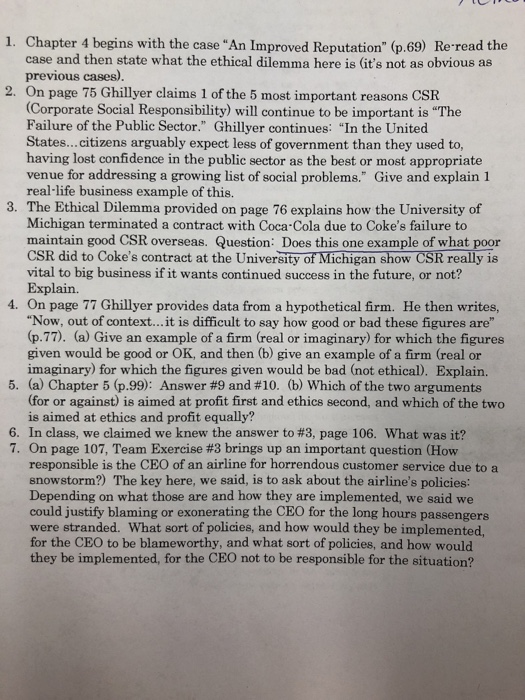
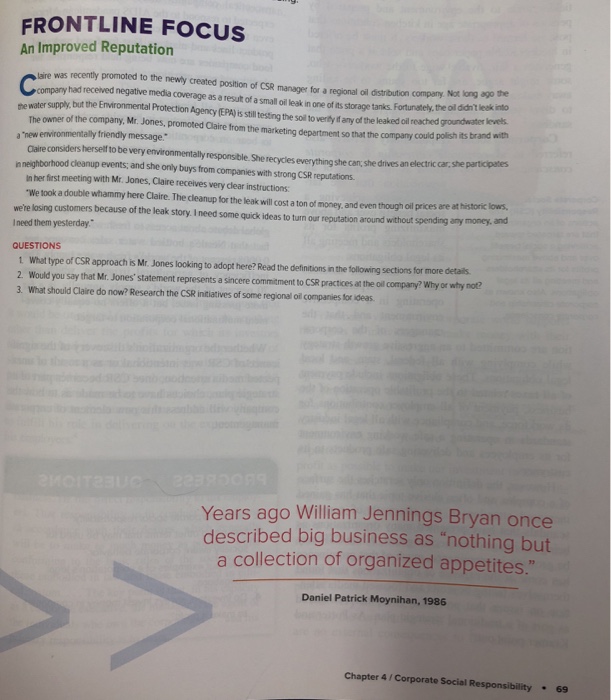
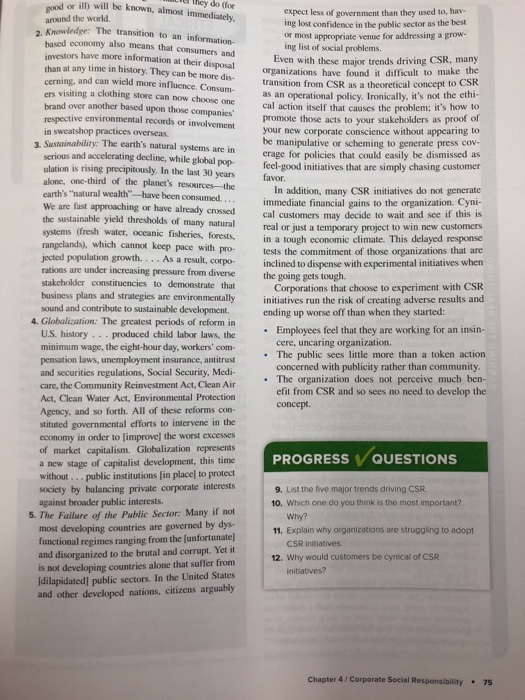
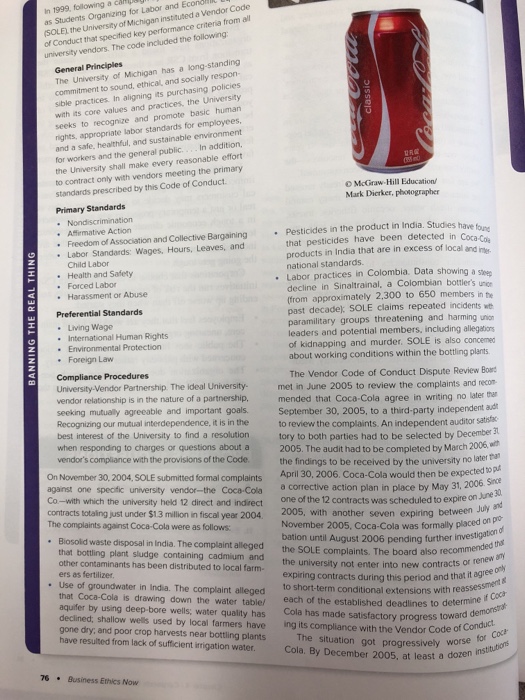
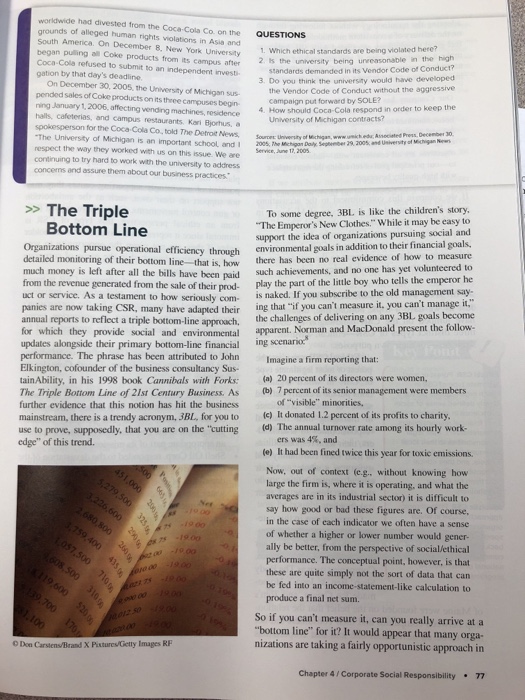
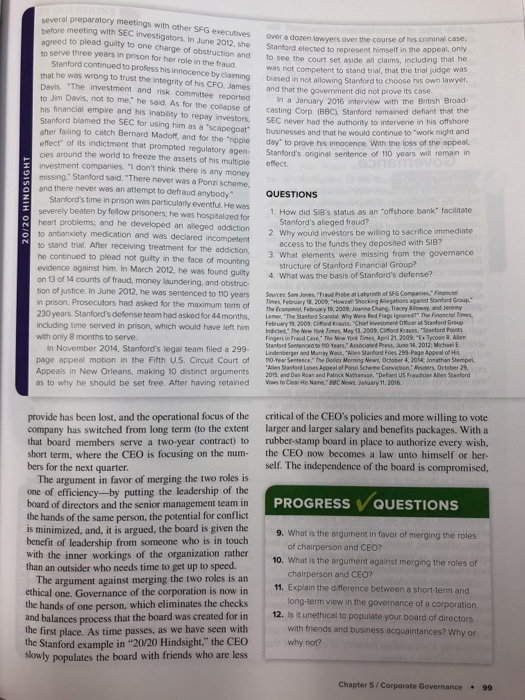
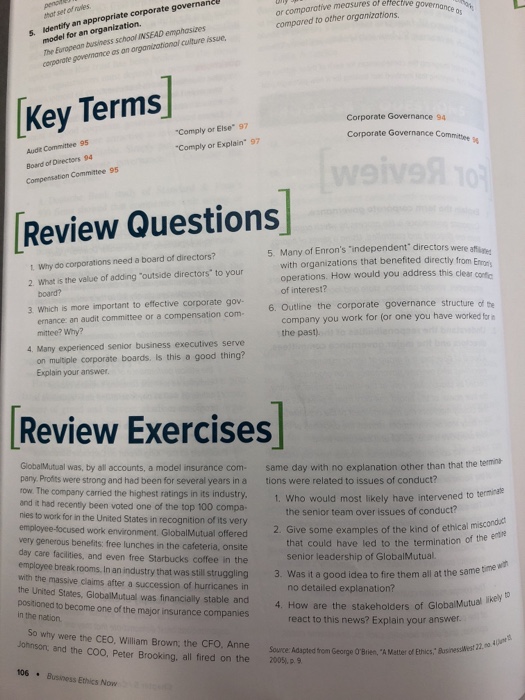
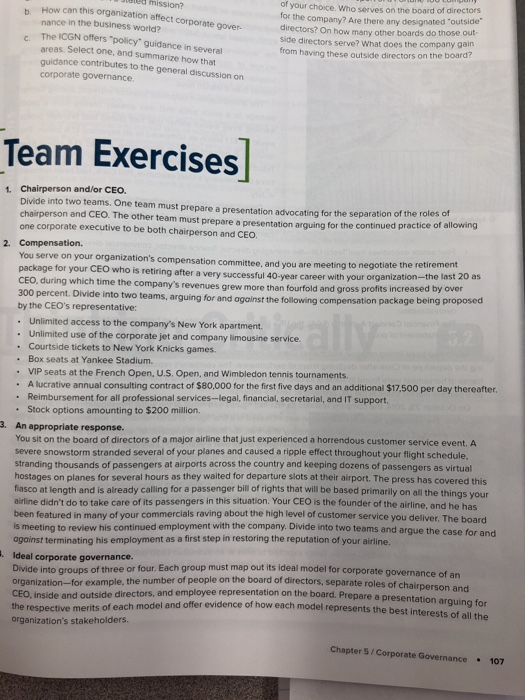
1. Chapter 4 begins with the case "An Improved Reputation" (p.69) Re read the case and then state what the ethical dilemma here is (it's not as obvious as previous cases). On page 75 Ghillyer claims 1 of the 5 most important reasons CSR (Corporate Social Responsibility) will continue to be important is "The Failure of the Public Sector." Ghillyer continues: "In the United States...citizens arguably expect less of government than they used to having lost confidence in the public sector as the best or most appropriate venue for addressing a growing list of social problems." Give and explain 1 real-life business example of this. 2. 3. The Ethical Dilemma provided on page 76 explains how the University of Michigan terminated a contract with Coca Cola due to Coke's failure to maintain good CSR overseas. Question: Does this one example of what poor CSR did to Coke's contract at the University of Michigan show CSR really is vital to big business if it wants continued success in the future, or not? Explain. 4. On page 77 Ghillyer provides data from a hypothetical firm. He then writes, "Now, out of context...it is difficult to say how good or bad these figures are" (p.77). (a) Give an example of a firm Greal or imaginary) for which the figures given would be good or OK, and then (b) give an example of a firm (real or imaginary) for which the figures given would be bad (not ethical). Explain. (a) Chapter 5 (p.99): Answer #9 and #10. (b) which of the two arguments (for or against) is aimed at profit first and ethics second, and which of the two is aimed at ethics and profit equally? 5, 6. In class, we claimed we knew the answer to #3, page 106, what was it? 7, On page 107, Team Exercise #3 brings up an important question (How responsible is the CEO of an airline for horrendous customer service due to a snowstorm?) The key here, we said, is to ask about the airline's policies: Depending on what those are and how they are implemented, we said we could justify blaming or exonerating the CEO for the long hours passengers were stranded. What sort of policies, and how would they be implemented, for the CEO to be blameworthy, and what sort of policies, and how would they be implemented, for the CE0 not to be responsible for the situation? 1. Chapter 4 begins with the case "An Improved Reputation" (p.69) Re read the case and then state what the ethical dilemma here is (it's not as obvious as previous cases). On page 75 Ghillyer claims 1 of the 5 most important reasons CSR (Corporate Social Responsibility) will continue to be important is "The Failure of the Public Sector." Ghillyer continues: "In the United States...citizens arguably expect less of government than they used to having lost confidence in the public sector as the best or most appropriate venue for addressing a growing list of social problems." Give and explain 1 real-life business example of this. 2. 3. The Ethical Dilemma provided on page 76 explains how the University of Michigan terminated a contract with Coca Cola due to Coke's failure to maintain good CSR overseas. Question: Does this one example of what poor CSR did to Coke's contract at the University of Michigan show CSR really is vital to big business if it wants continued success in the future, or not? Explain. 4. On page 77 Ghillyer provides data from a hypothetical firm. He then writes, "Now, out of context...it is difficult to say how good or bad these figures are" (p.77). (a) Give an example of a firm Greal or imaginary) for which the figures given would be good or OK, and then (b) give an example of a firm (real or imaginary) for which the figures given would be bad (not ethical). Explain. (a) Chapter 5 (p.99): Answer #9 and #10. (b) which of the two arguments (for or against) is aimed at profit first and ethics second, and which of the two is aimed at ethics and profit equally? 5, 6. In class, we claimed we knew the answer to #3, page 106, what was it? 7, On page 107, Team Exercise #3 brings up an important question (How responsible is the CEO of an airline for horrendous customer service due to a snowstorm?) The key here, we said, is to ask about the airline's policies: Depending on what those are and how they are implemented, we said we could justify blaming or exonerating the CEO for the long hours passengers were stranded. What sort of policies, and how would they be implemented, for the CEO to be blameworthy, and what sort of policies, and how would they be implemented, for the CE0 not to be responsible for the situation
Step by Step Solution
There are 3 Steps involved in it

Get step-by-step solutions from verified subject matter experts
 Study Help