Question: 1. Chapter Opening Case: Share a Coke Chapter Opening Case: Share a Coke You are about to read a short case depicting Coca-Cola's hugely successful
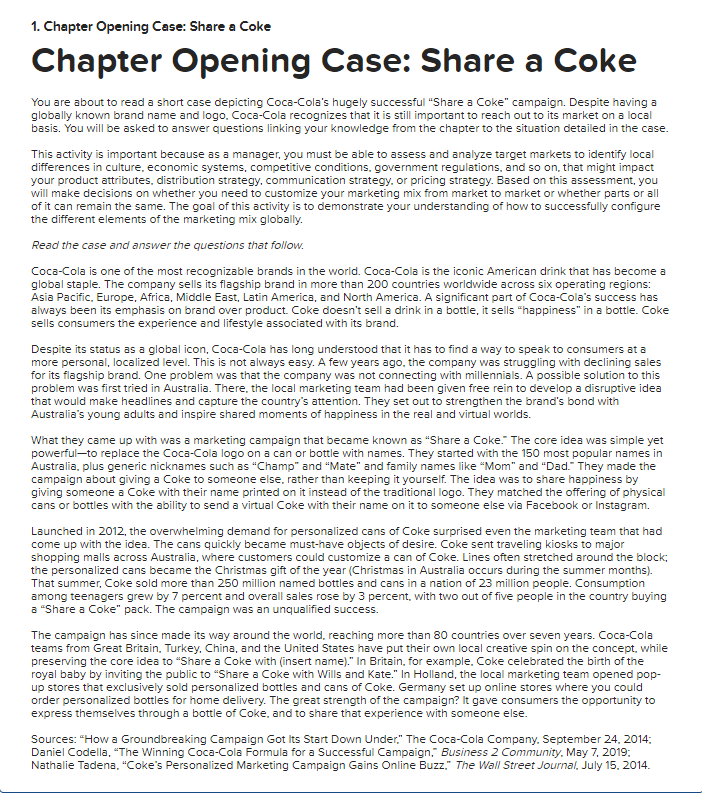
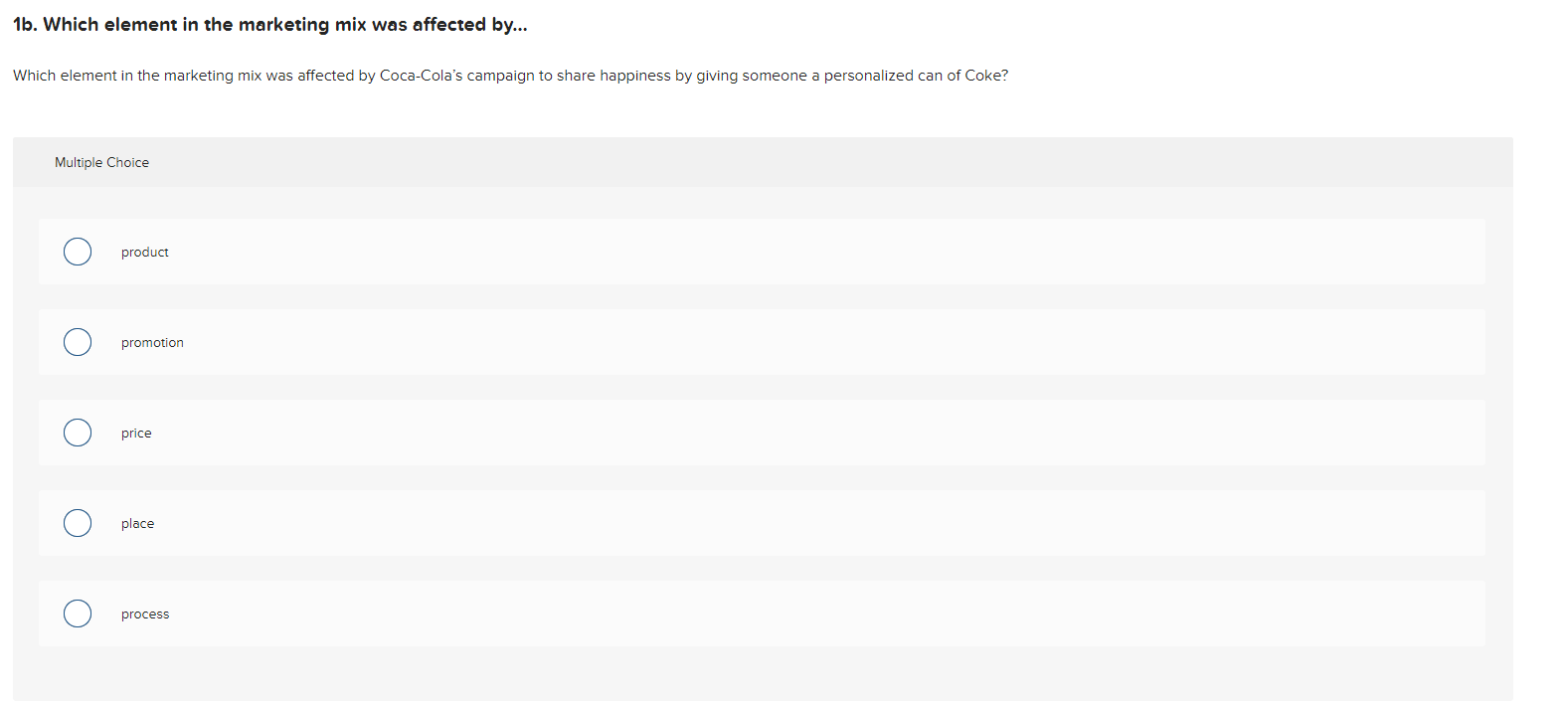
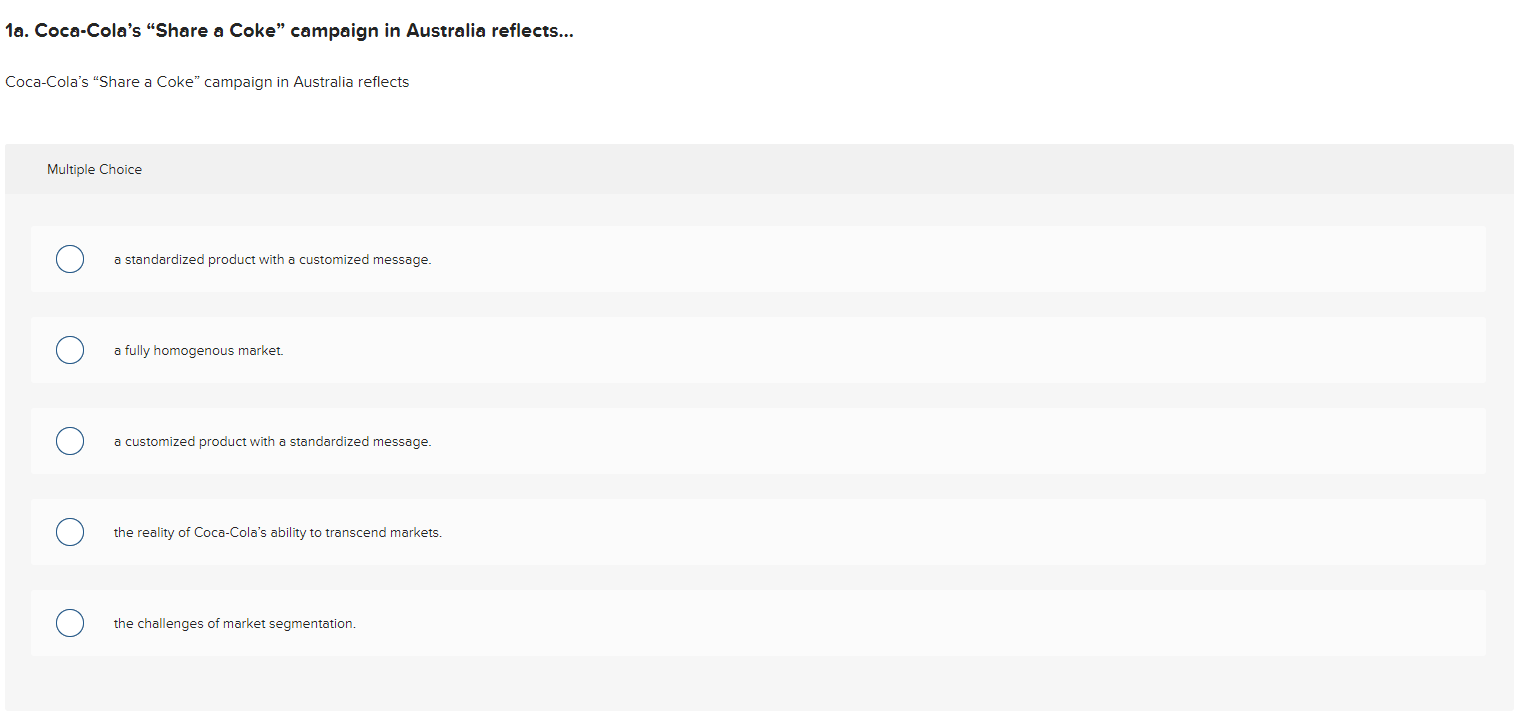
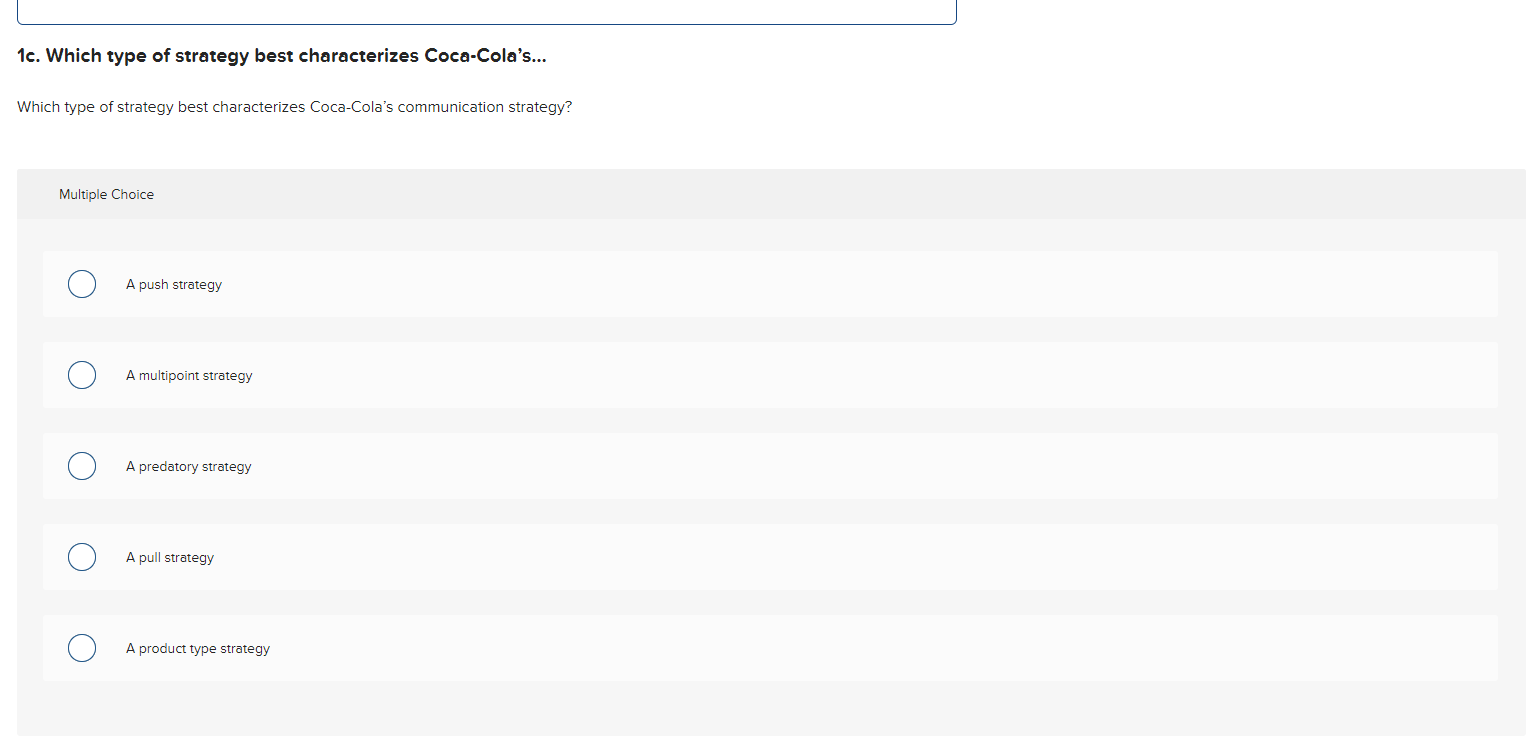
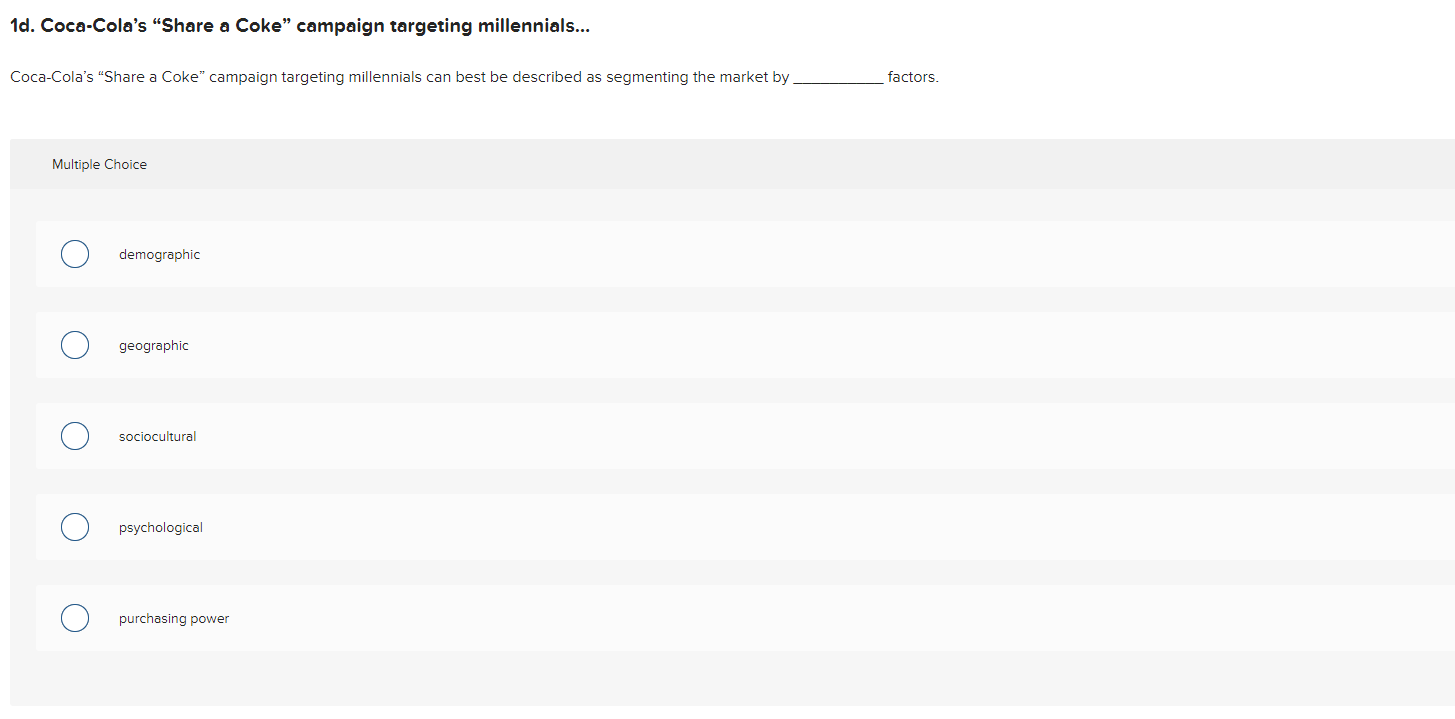
1. Chapter Opening Case: Share a Coke Chapter Opening Case: Share a Coke You are about to read a short case depicting Coca-Cola's hugely successful "Share a Coke" campaign. Despite having a globally known brand name and logo, Coca-Cola recognizes that it is still important to reach out to its market on a local basis. You will be asked to answer questions linking your knowledge from the chapter to the situation detailed in the case. This activity is important because as a manager, you must be able to assess and analyze target markets to identify local differences in culture, economic systems, competitive conditions, government regulations, and so on, that might impact your product attributes, distribution strategy, communication strategy. or pricing strategy. Based on this assessment, you will make decisions on whether you need to customize your marketing mix from market to market or whether parts or all of it can remain the same. The goal of this activity is to demonstrate your understanding of how to successfully configure the different elements of the marketing mix globally. Read the case and answer the questions that follow. Coca-Cola is one of the most recognizable brands in the world. Coca-Cola is the iconic American drink that has become a global staple. The company sells its flagship brand in more than 200 countries worldwide across six operating regions: Asia Pacific, Europe, Africa, Middle East, Latin America, and North America. A significant part of Coca-Cola's success has always been its emphasis on brand over product. Coke doesn't sell a drink in a bottle, it sells "happiness" in a bottle. Coke sells consumers the experience and lifestyle associated with its brand. Despite its status as a global icon, Coca-Cola has long understood that it has to find a way to speak to consumers at a more personal, localized level. This is not always easy. A few years ago, the company was struggling with declining sales for its flagship brand. One problem was that the company was not connecting with millennials. A possible solution to this problem was first tried in Australia. There, the local marketing team had been given free rein to develop a disruptive idea that would make headlines and capture the country's attention. They set out to strengthen the brand's bond with Australia's young adults and inspire shared moments of happiness in the real and virtual worlds. What they came up with was a marketing campaign that became known as Share a Coke." The core idea was simple yet powerful-to replace the Coca-Cola logo on a can or bottle with names. They started with the 150 most popular names in Australia, plus generic nicknames such as "Champ" and "Mate" and family names like "Mom" and "Dad." They made the campaign about giving a Coke to someone else, rather than keeping it yourself . The idea was to share happiness by giving someone a Coke with their name printed on it instead of the traditional logo. They matched the offering of physical cans or bottles with the ability to send a virtual Coke with their name on it to someone else via Facebook or Instagram. Launched in 2012, the overwhelming demand for personalized cans of Coke surprised even the marketing team that had come up with the idea. The cans quickly became must-have objects of desire. Coke sent traveling kiosks to major shopping malls across Australia, where customers could customize a can of Coke. Lines often stretched around the block, the personalized cans became the Christmas gift of the year (Christmas in Australia occurs during the summer months). That summer. Coke sold more than 250 million named bottles and cans in a nation of 23 million people. Consumption among teenagers grew by 7 percent and overall sales rose by 3 percent, with two out of five people in the country buying a "Share a Coke" pack. The campaign was an unqualified success. The campaign has since made its way around the world, reaching more than 80 countries over seven years. Coca-Cola teams from Great Britain, Turkey, China, and the United States have put their own local creative spin on the concept, while preserving the core idea to Share a Coke with (insert name)." In Britain, for example. Coke celebrated the birth of the royal baby by inviting the public to "Share a Coke with Wills and Kate." In Holland, the local marketing team opened pop- up stores that exclusively sold personalized bottles and cans of Coke. Germany set up online stores where you could order personalized bottles for home delivery. The great strength of the campaign? It gave consumers the opportunity to express themselves through a bottle of Coke, and to share that experience with someone else. Sources: "How a Groundbreaking Campaign Got Its Start Down Under." The Coca-Cola Company, September 24, 2014: Daniel Codella. "The Winning Coca-Cola Formula for a Successful Campaign," Business 2 Community. May 7, 2019: Nathalie Tadena. "Coke's Personalized Marketing Campaign Gains Online Buzz." The Wall Street Journal, July 15, 2014. 1b. Which element in the marketing mix was affected by... Which element in the marketing mix was affected by Coca-Cola's campaign to share happiness by giving someone a personalized can of Coke? Multiple Choice product O promotion price place process 1a. Coca-Cola's "Share a Coke" campaign in Australia reflects... Coca-Cola's "Share a Coke" campaign in Australia reflects Multiple Choice a standardized product with a customized message. a fully homogenous market. a customized product with a standardized message. the reality of Coca-Cola's ability to transcend markets. O U O the challenges of market segmentation. 1c. Which type of strategy best characterizes Coca-Cola's... Which type of strategy best characterizes Coca-Cola's communication strategy? Multiple Choice A push strategy O A multipoint strategy A predatory strategy A pull strategy O A product type strategy 1d. Coca-Cola's "Share a Coke" campaign targeting millennials... Coca-Cola's "Share a Coke" campaign targeting millennials can best be described as segmenting the market by factors. Multiple Choice demographic geographic sociocultural psychological purchasing power









 Study Help