Question: 1. Common Errors in Performance Evaluations Common Errors in Performance Evaluations One reason for gathering information from several sources when it comes to employee performance
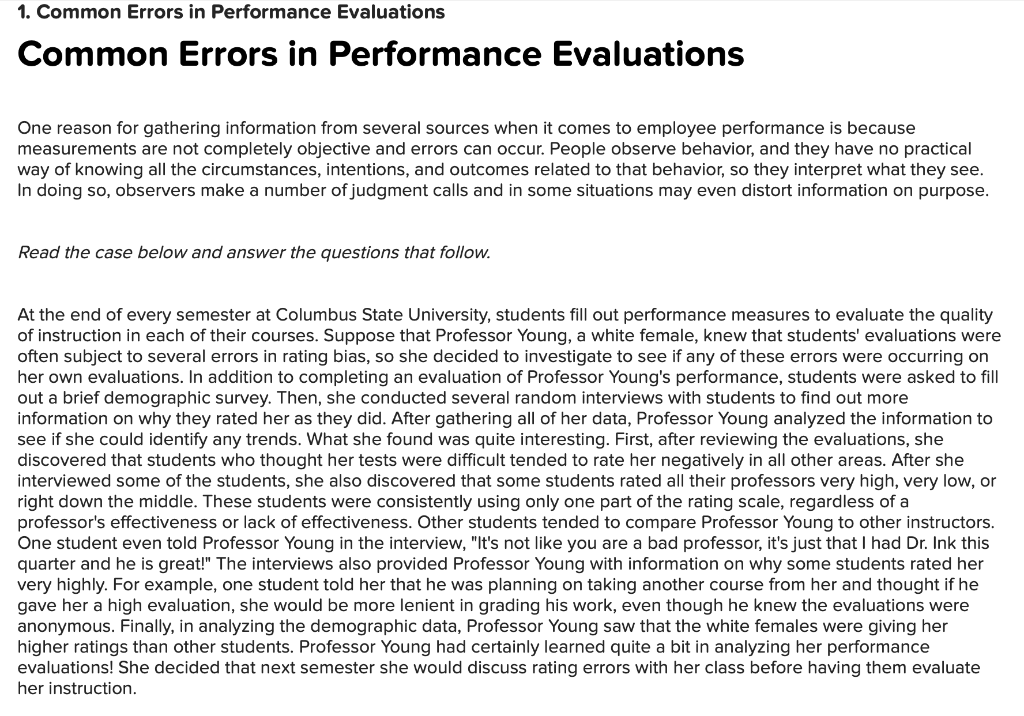
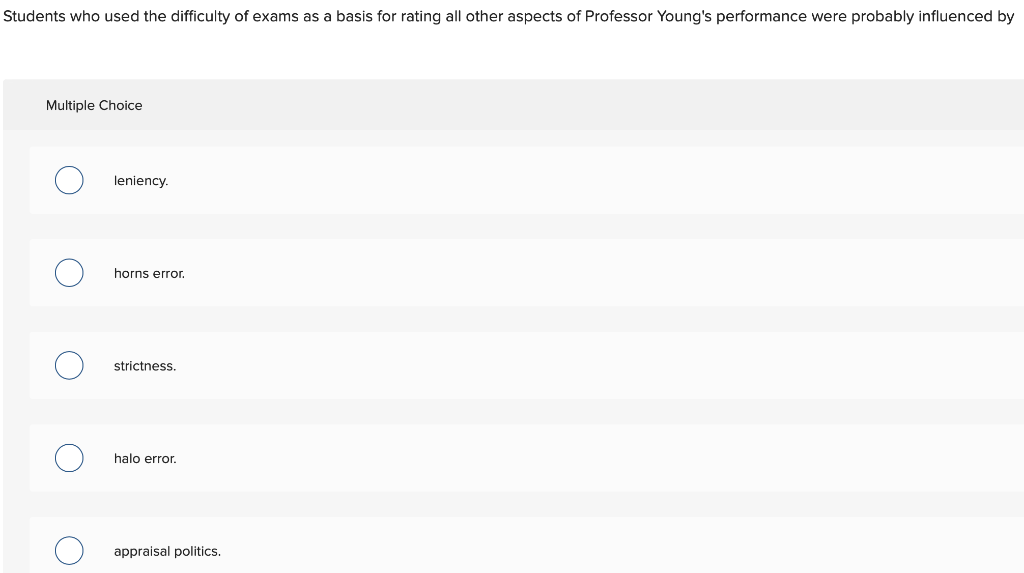
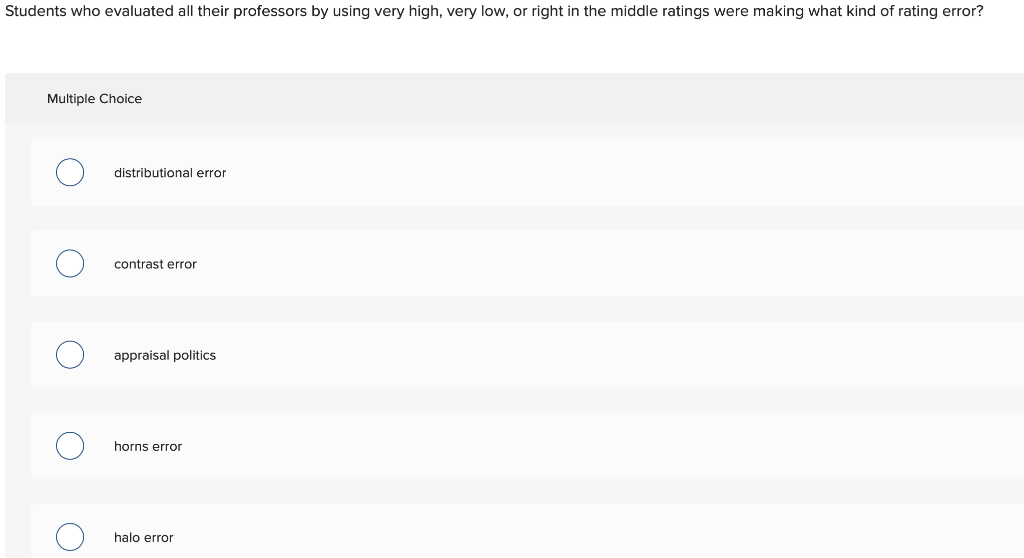
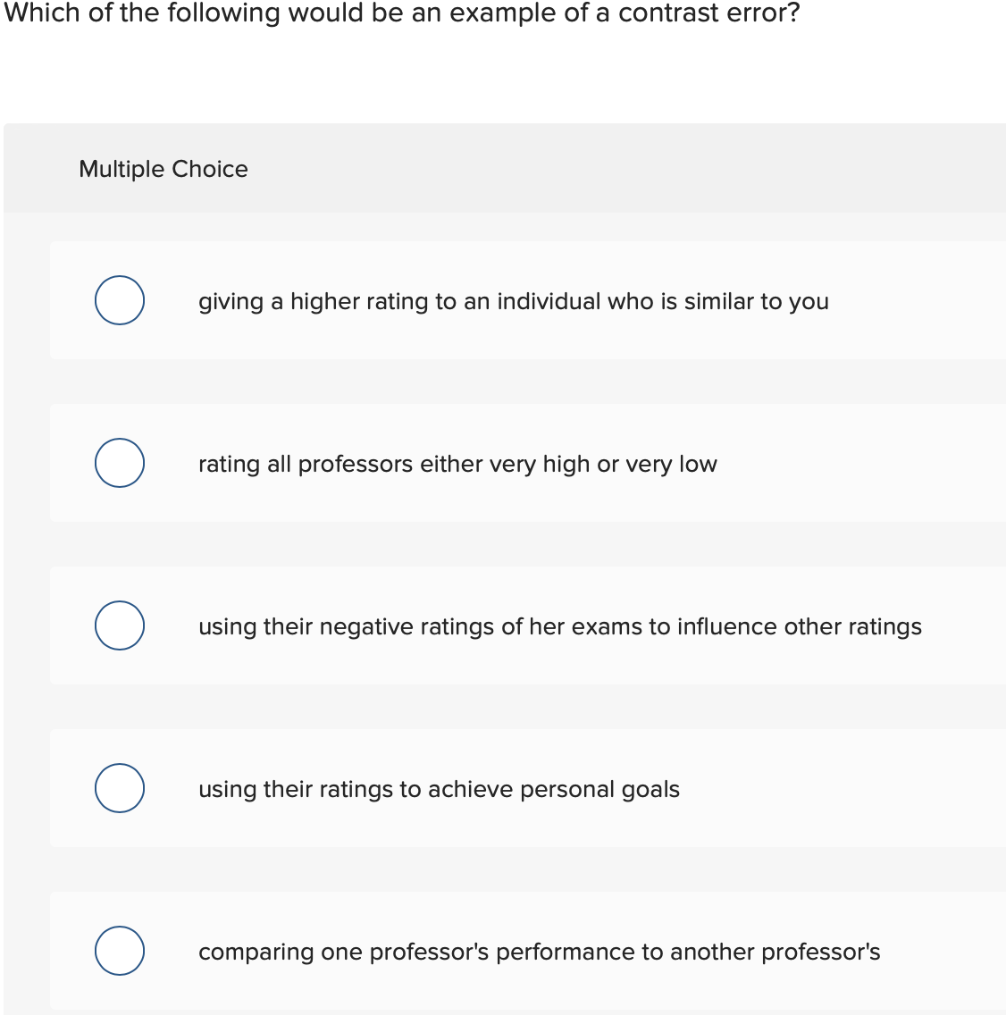
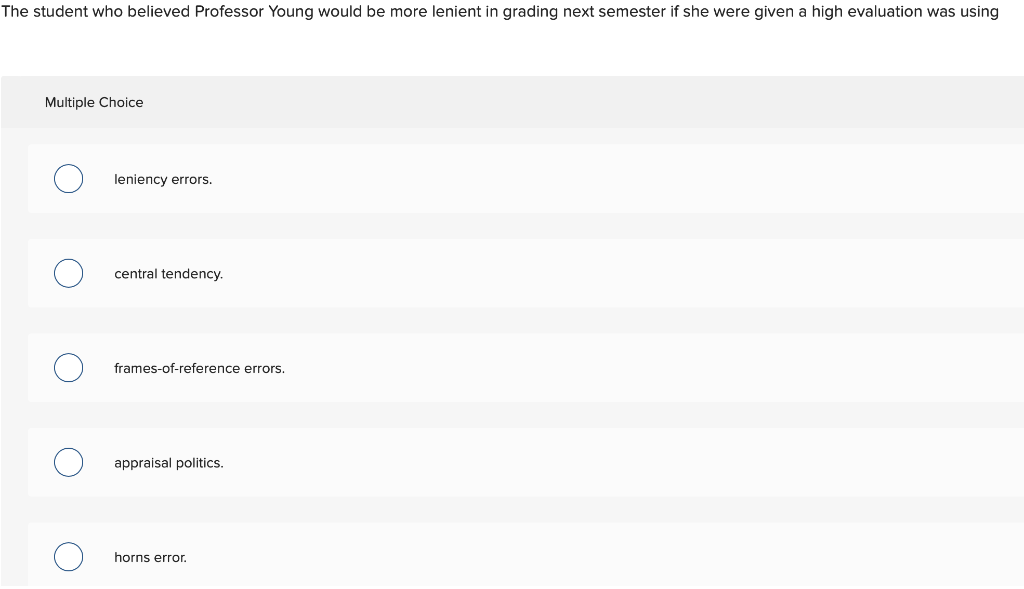
1. Common Errors in Performance Evaluations Common Errors in Performance Evaluations One reason for gathering information from several sources when it comes to employee performance is because measurements are not completely objective and errors can occur. People observe behavior, and they have no practical way of knowing all the circumstances, intentions, and outcomes related to that behavior, so they interpret what they see. In doing so, observers make a number of judgment calls and in some situations may even distort information on purpose. Read the case below and answer the questions that follow. At the end of every semester at Columbus State University, students fill out performance measures to evaluate the quality of instruction in each of their courses. Suppose that Professor Young, a white female, knew that students' evaluations were often subject to several errors in rating bias, so she decided to investigate to see if any of these errors were occurring on her own evaluations. In addition to completing an evaluation of Professor Young's performance, students were asked to fill out a brief demographic survey. Then, she conducted several random interviews with students to find out more information on why they rated her as they did. After gathering all of her data, Professor Young analyzed the information to see if she could identify any trends. What she found was quite interesting. First, after reviewing the evaluations, she discovered that students who thought her tests were difficult tended to rate her negatively in all other areas. After she interviewed some of the students, she also discovered that some students rated all their professors very high, very low, or right down the middle. These students were consistently using only one part of the rating scale, regardless of a professor's effectiveness or lack of effectiveness. Other students tended to compare Professor Young to other instructors. One student even told Professor Young in the interview, "It's not like you are a bad professor, it's just that I had Dr. Ink this quarter and he is great!" The interviews also provided Professor Young with information on why some students rated her very highly. For example, one student told her that he was planning on taking another course from her and thought if he gave her a high evaluation, she would be more lenient in grading his work, even though he knew the evaluations were anonymous. Finally, in analyzing the demographic data, Professor Young saw that the white females were giving her higher ratings than other students. Professor Young had certainly learned quite a bit in analyzing her performance evaluations! She decided that next semester she would discuss rating errors with her class before having them evaluate her instruction. Students who used the difficulty of exams as a basis for rating all other aspects of Professor Young's performance were probably influenced by Multiple Choice leniency. horns error. O strictness. O halo error. O appraisal politics. Students who evaluated all their professors by using very high, very low, or right in the middle ratings were making what kind of rating error? Multiple Choice distributional error contrast error appraisal politics O horns error O halo error Which of the following would be an example of a contrast error? Multiple Choice giving a higher rating to an individual who is similar to you rating all professors either very high or very low using their negative ratings of her exams to influence other ratings using their ratings to achieve personal goals comparing one professor's performance to another professor's The student who believed Professor Young would be more lenient in grading next semester if she were given a high evaluation was using Multiple Choice leniency errors. central tendency. frames-of-reference errors. O appraisal politics. O horns error









 Study Help