





Question: 1. Compare the difference between precisely wrong and vaguely right advertising objectives. Give an example of each. 2. Early in the chapter when discussing the
1. Compare the difference between precisely wrong
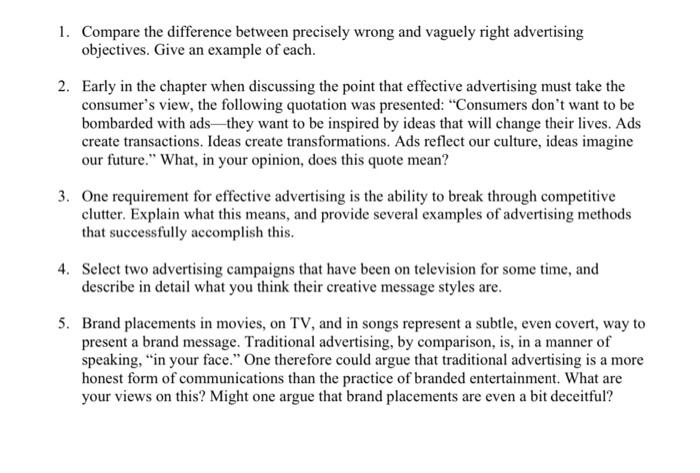
1. Compare the difference between precisely wrong and vaguely right advertising objectives. Give an example of each. 2. Early in the chapter when discussing the point that effective advertising must take the consumer's view, the following quotation was presented: "Consumers don't want to be bombarded with ads - they want to be inspired by ideas that will change their lives. Ads create transactions. Ideas create transformations. Ads reflect our culture, ideas imagine our future." What, in your opinion, does this quote mean? 3. One requirement for effective advertising is the ability to break through competitive clutter. Explain what this means, and provide several examples of advertising methods that successfully accomplish this. 4. Select two advertising campaigns that have been on television for some time, and describe in detail what you think their creative message styles are. 5. Brand placements in movies, on TV, and in songs represent a subtle, even covert, way to present a brand message. Traditional advertising, by comparison, is, in a manner of speaking, "in your face." One therefore could argue that traditional advertising is a more honest form of communications than the practice of branded entertainment. What are your views on this? Might one argue that brand placements are even a bit deceitful

Step by Step Solution

There are 3 Steps involved in it

1 Expert Approved Answer
Step: 1 Unlock blur-text-image

Question Has Been Solved by an Expert!

Get step-by-step solutions from verified subject matter experts

Step: 2 Unlock
Step: 3 Unlock

Students Have Also Explored These Related General Management Questions!