







Question: 1) Consider a standard normal random variable with = 0 and a standard deviation = 1. Use table 3 to find the following P (Z
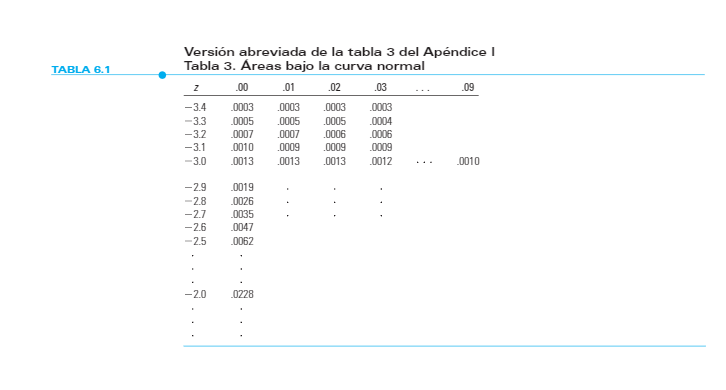
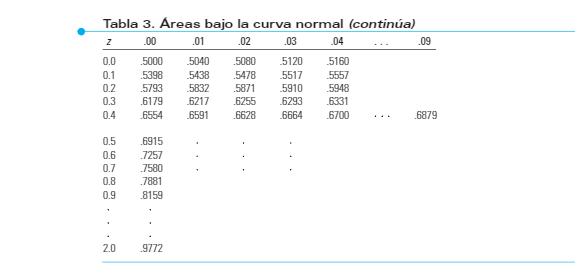
1)Consider a standard normal random variable with = 0 and a standard deviation = 1. Use table 3 to find the following
P (Z
P (Z > 1.32)
P (-2.72
P (Z
2)Find these probabilities associated with the standard normal random variable Z:
P (Z > 2.54)
P (-3.2
P (Z
P (Z > 2.88)
P (Z > 3.15)
3)Calculate the area under the standard normal curve to the left of these
Z = 1.81
Z = 0.66
Z = 1.47
Z = 2.76
4)Calculate the area under the curve between these
Z = -2.4 y Z = 2.4
Z = -3.1 y Z = 3.1
Z = -1.93 y Z = 1.93
Z = -2.26 y Z = 2.26
Z = -3.33 y Z = 3.33
5)Calculate the area under the curve to the left of these
Z = -.77
Z = 2.50
Z = 2.71
Z = 3.22
Z = -2.48
6)A normal random variable has an unknown mean and a standard deviation = 2. If the probability that x exceeds 6.5 is .9732; find .
7)A standard normal random variable has = 0 and a standard deviation = 1. Use table 3 to find the probability less than -2.73.
8)A standard normal random variable has = 0 and a standard deviation = 1. Use table 3 to find the probability greater than 3.28.
\f\f
Step by Step Solution
There are 3 Steps involved in it

Get step-by-step solutions from verified subject matter experts
 Study Help