







Question: 1. Consider the two (excess return) index model regression results for Stocks A and B. The risk-free rate over the period was 5%, and the
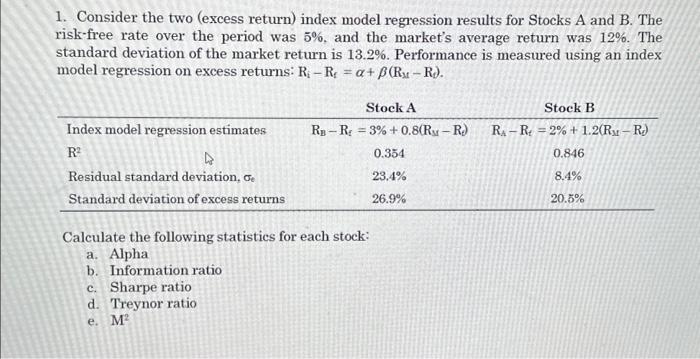
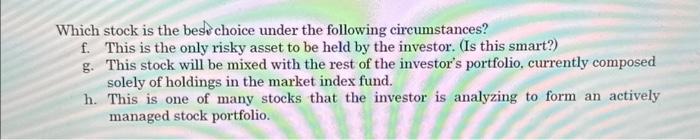
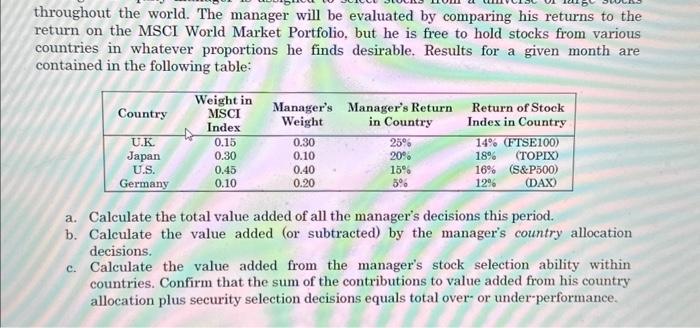
1. Consider the two (excess return) index model regression results for Stocks A and B. The risk-free rate over the period was 5%, and the market's average return was 12%. The standard deviation of the market return is 13.2%. Performance is measured using an index model regression on excess returns: RiRf=+(RMRt). Calculate the following statistics for each stock: a. Alpha b. Information ratio c. Sharpe ratio d. Treynor ratio e. M2 Which stock is the besv choice under the following circumstances? f. This is the only risky asset to be held by the investor. (Is this smart?) g. This stock will be mixed with the rest of the investor's portfolio, currently composed solely of holdings in the market index fund. h. This is one of many stocks that the investor is analyzing to form an actively managed stock portfolio. throughout the world. The manager will be evaluated by comparing his returns to the return on the MSCI World Market Portfolio, but he is free to hold stocks from various countries in whatever proportions he finds desirable. Results for a given month are contained in the following table: a. Calculate the total value added of all the manager's decisions this period. b. Calculate the value added (or subtracted) by the manager's country allocation decisions. c. Calculate the value added from the manager's stock selection ability within countries. Confirm that the sum of the contributions to value added from his country allocation plus security selection decisions equals total over- or under-performance
Step by Step Solution
There are 3 Steps involved in it

Get step-by-step solutions from verified subject matter experts
 Study Help