







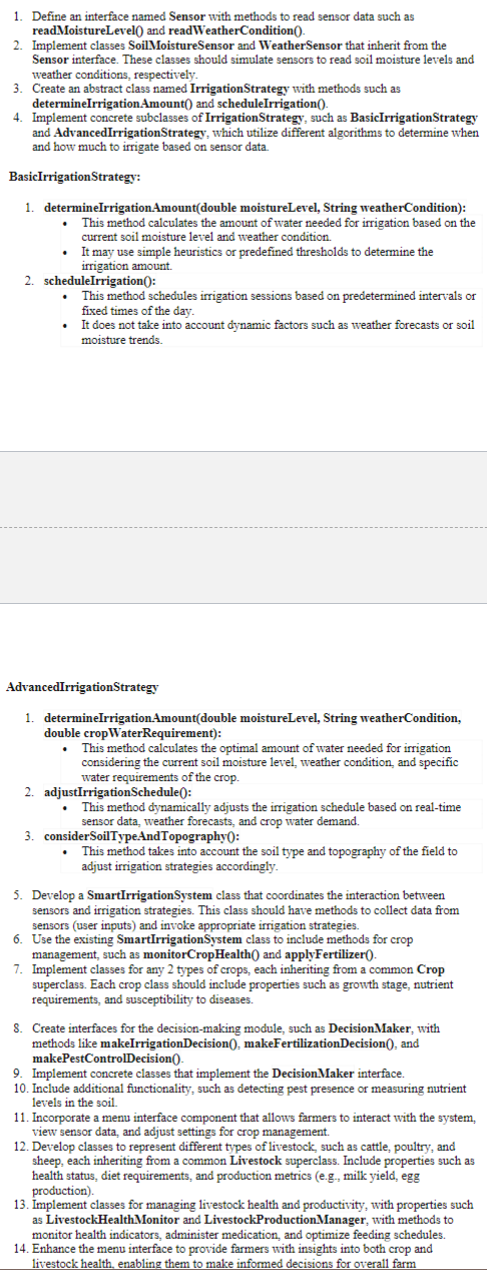
Question: 1 . Define an interface named Sensor with methods to read sensor data such as readMoistureLevel ( ) and readWeatherCondition ( ) . 2 .
Define an interface named Sensor with methods to read sensor data such as
readMoistureLevel and readWeatherCondition
Implement classes SoilMoistureSensor and WeatherSensor that inherit from the
Sensor interface. These classes should simulate sensors to read soil moisture levels and
weather conditions, respectively.
Create an abstract class named IrrigationStrategy with methods such as
determineIrrigationAmount and scheduleIrrigation
Implement
BasicIrrigationStrategy:
determineIrrigationAmountdouble moistureLevel, String weatherCondition:
This method calculates the amount of water needed for irrigation based on the
current soil moisture level and weather condition.
It may use simple heuristics or predefined thresholds to determine the
irrigation amount.
scheduleIrrigation:
This method schedules irrigation sessions based on predetermined intervals or
fixed times of the day.
It does not take into account dynamic factors such as weather forecasts or soil moisture trends.
AdvancedIrrigationStrategy
determineIrrigationAmountdouble moistureLevel, String weatherCondition, double cropWaterRequirement:
This method calculates the optimal amount of water needed for irrigation
considering the current soil moisture level, weather condition, and specific
water requirements of the crop.
adjustIrrigationSchedule :
This method dynamically adjusts the irrigation schedule based on realtime
sensor data, weather forecasts, and crop water demand.
considerSoilTypeAnd Topography:
This method takes into account the soil type and topography of the field to adjust irrigation strategies accordingly.
Develop a SmartIrrigationSystem class that coordinates the interaction between sensors and irrigation strategies. This class should have methods to collect data from sensors user inputs and invoke appropriate irrigation strategies.
Use the existing SmartIrrigationSystem class to include methods for crop management, such as monitorCropHealth and applyFertilizer
Implement classes for any types of crops, each inheriting from a common Crop superclass. Each crop class should include properties such as growth stage, nutrient requirements, and susceptibility to diseases.
Create interfaces for the decisionmaking module, such as DecisionMaker, with methods like makeIrrigationDecision makeFertilizationDecision and makePestControlDecision
Implement concrete classes that implement the DecisionMaker interface.
Include additional functionality, such as detecting pest presence or measuring nutrient
levels in the soil.
Incorporate a menu interface component that allows farmers to interact with the system, view sensor data, and adjust settings for crop management.
Develop classes to represent different types of livestock, such as cattle, poultry, and sheep, each inheriting from a common Livestock superclass. Include properties such as
health status, diet requirements, and production metrics eg milk yield, egg
production
Implement classes for managing livestock health and productivity, with properties such as LivestockHealthMonitor and LivestockProductionManager, with methods to
monitor health indicators, administer medication, and optimize feeding schedules.
Enhance the menu interface to provide farmers with insights into both crop and livestock health. enabling them to make informed decisions for overall farm
productivity.
Implement messages to notify farmers of potential health issues or production anomalies
in crops and livestock.
Utilize inheritance to create subclasses for specific types of crops eg wheat, corn,
tomatoes and livestock eg cows, chickens, sheep inheriting common behaviors and
properties from parent classes.
Water and Energy Usage Optimization:
Define an interface named ResourceOptimization with methods such as
optimizeWaterUsage and optimizeEnergyUsage
Implement classes for irrigation systems and equipment control that implement
the ResourceOptimization interface. These classes will override the interface
methods to optimize water and energy usage based on sensor data and
environmental conditions.
Waste Management:
Create an class named WasteManagement with methods
for composting units and recycling facilities, that implement the like
manageWaste and recycleMaterials
These classes will provide functionalities to handle waste disposal and
recycling efficiently.
Carbon Footprint Reduction:
Define an interface named CarbonFootprint with methods such as
trackEmissions and reduceEmissions
Implement classes for carbon footprint tracking and reduction strategies that
implement the CarbonFootprint interface. These classes will track emissions
from various farm activities and provide methods to identify and implement
measures for reducing the farm's carbon footprint
Step by Step Solution
There are 3 Steps involved in it
1 Expert Approved Answer
Step: 1 Unlock

Question Has Been Solved by an Expert!
Get step-by-step solutions from verified subject matter experts
Step: 2 Unlock
Step: 3 Unlock
 Study Help