







Question: 1. Determine the electrostatic force acting between a +3.0 uC charge and a +7.5 JC charge, if they are placed 16 cm apart. _ marks
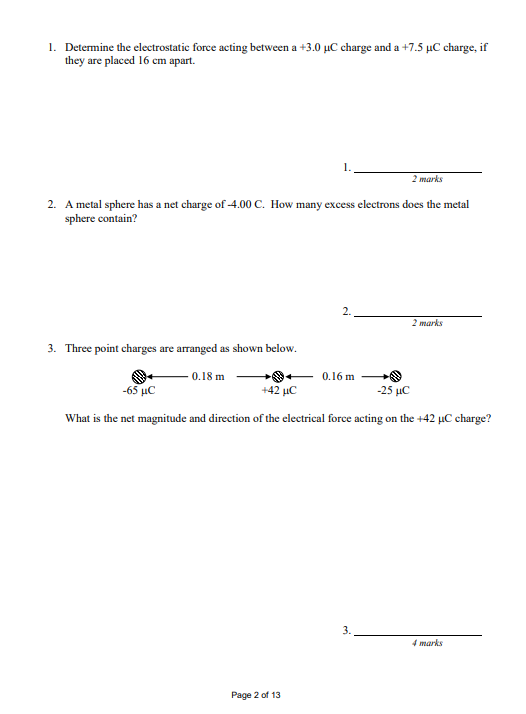
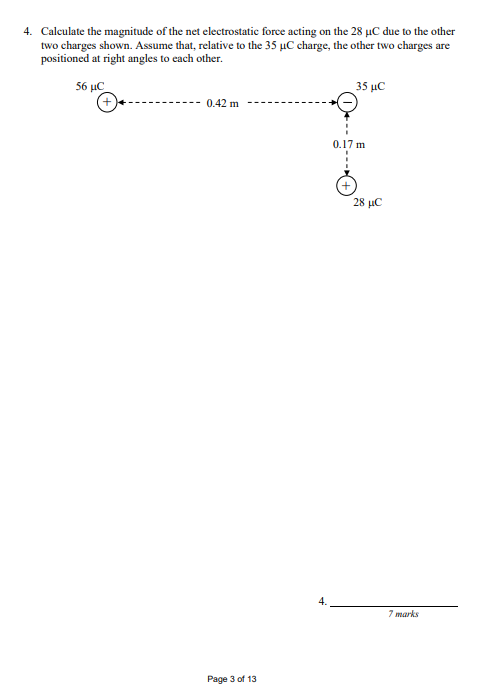
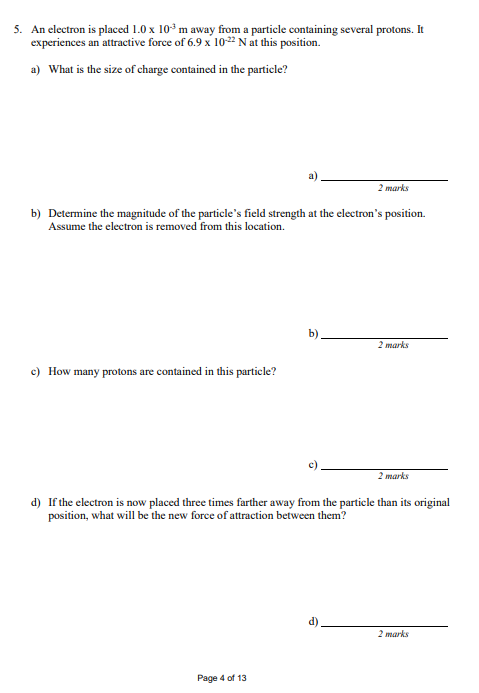
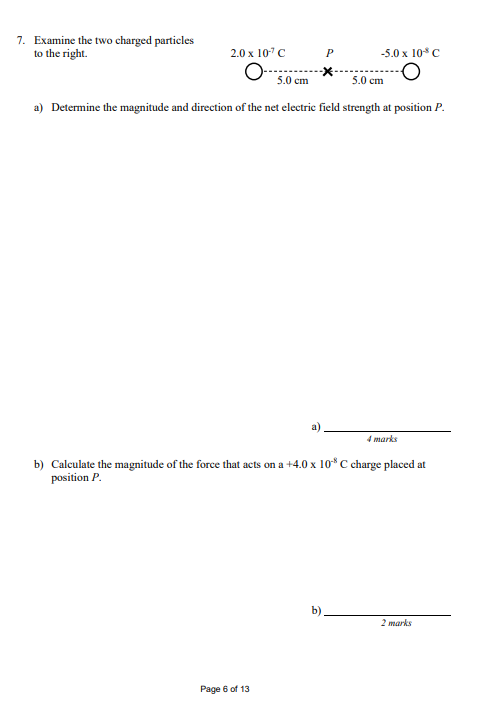
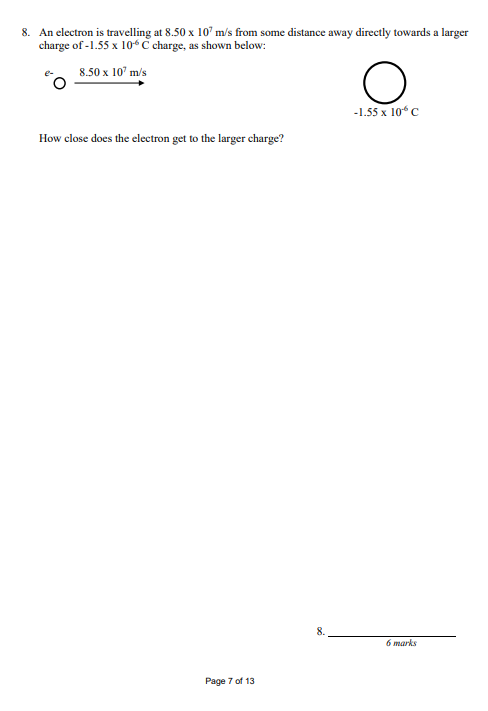
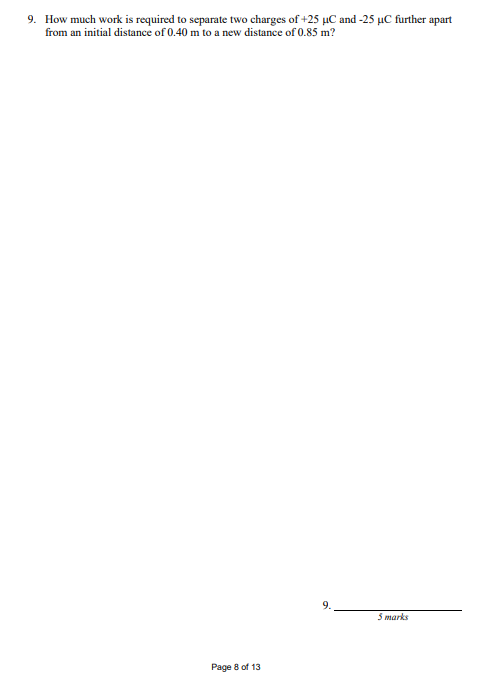
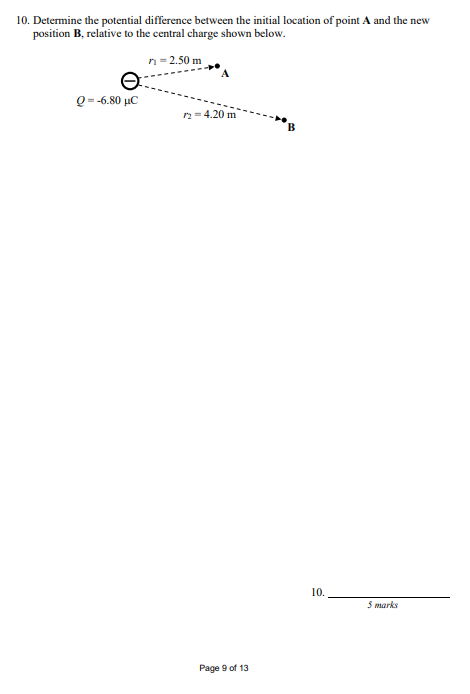
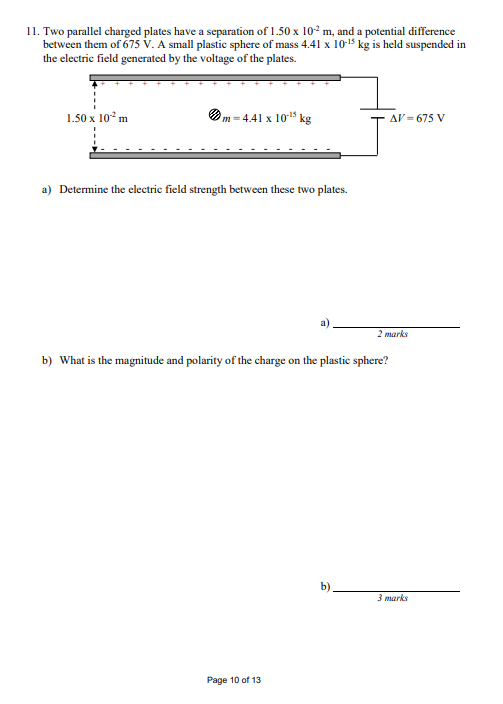
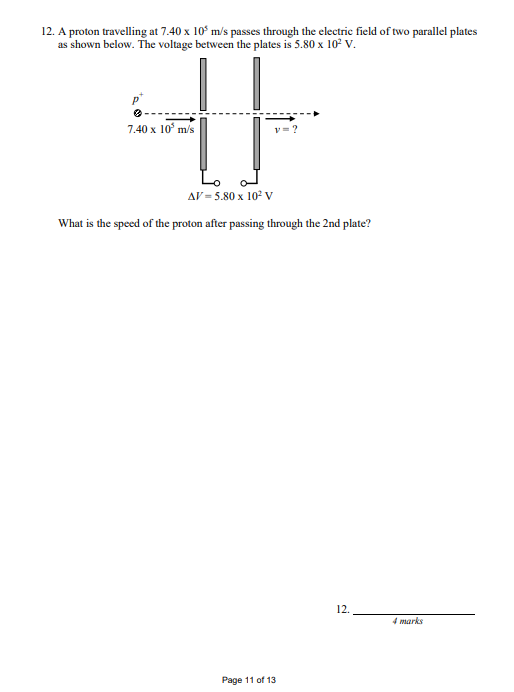
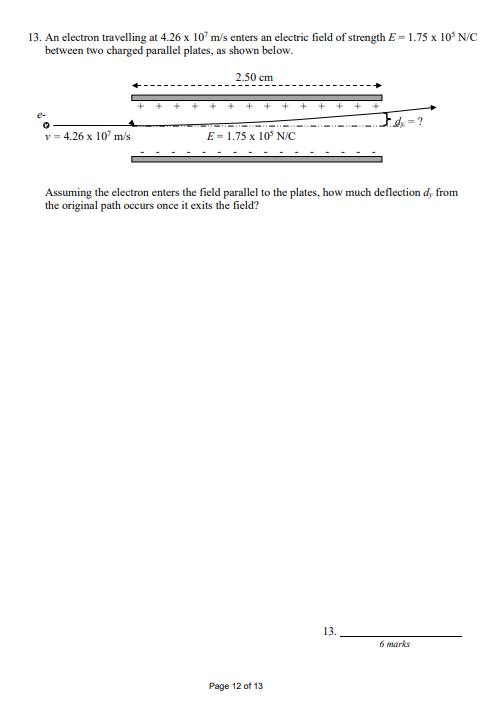
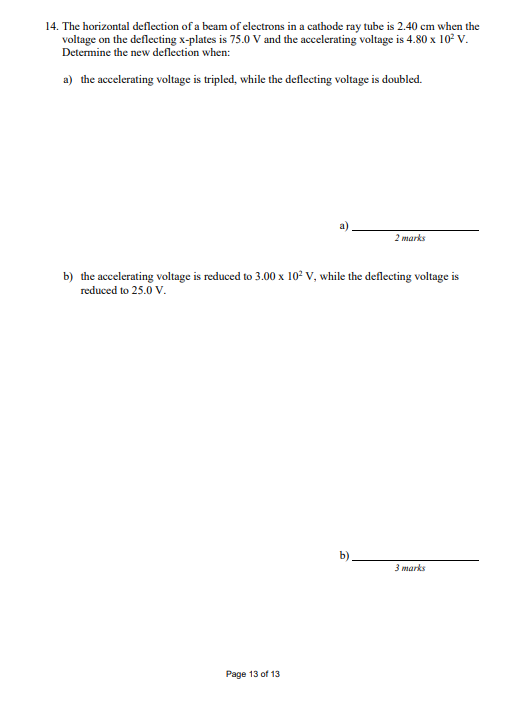
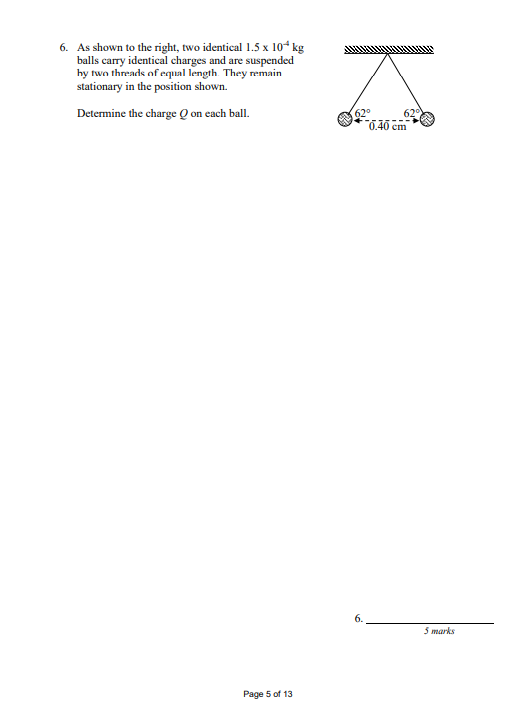
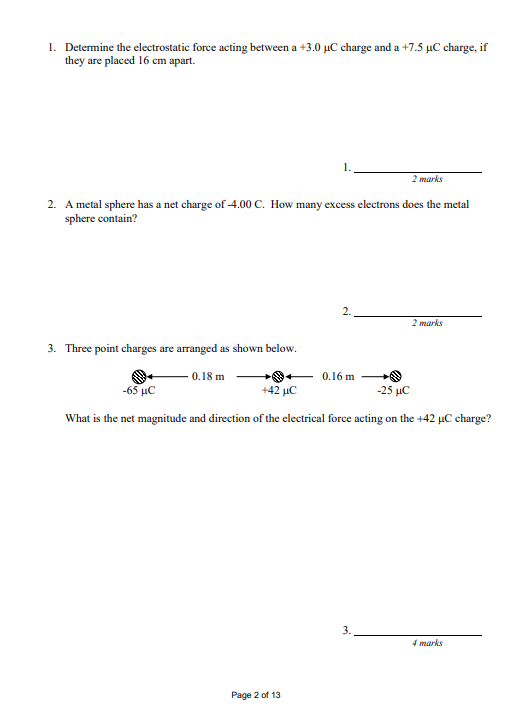
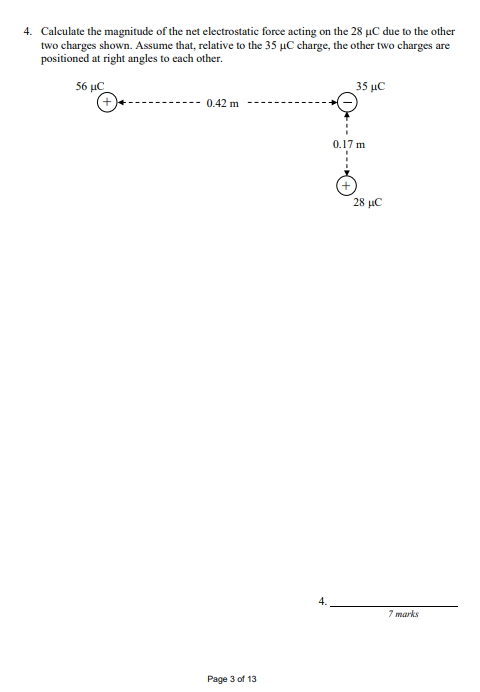
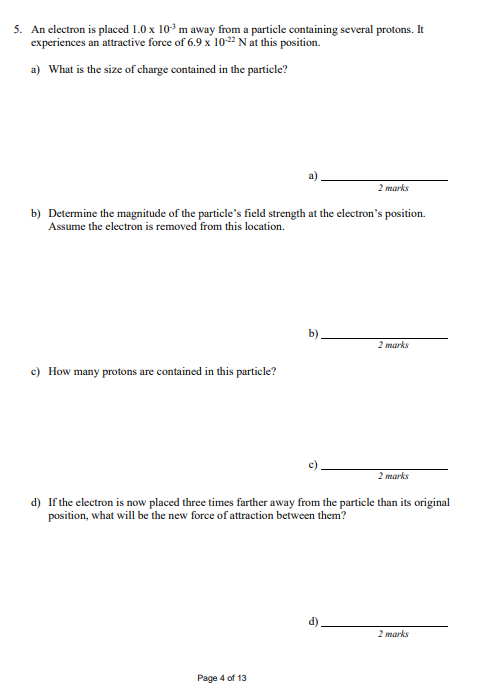
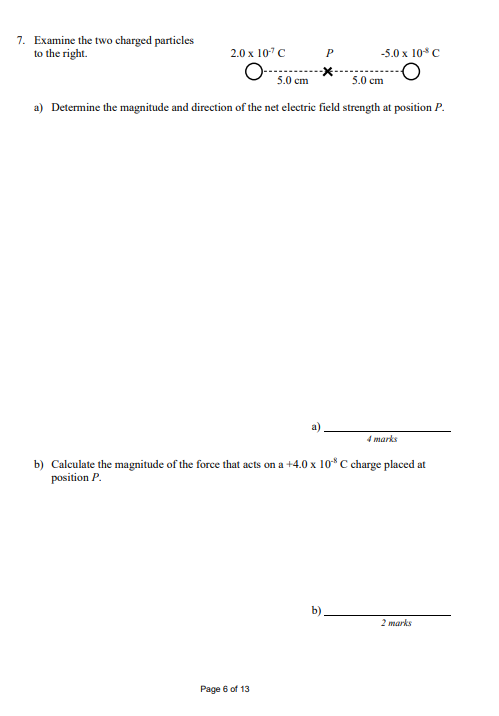
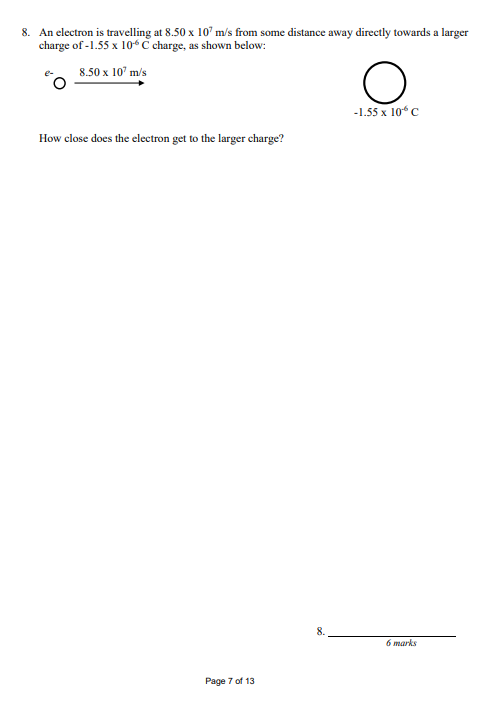
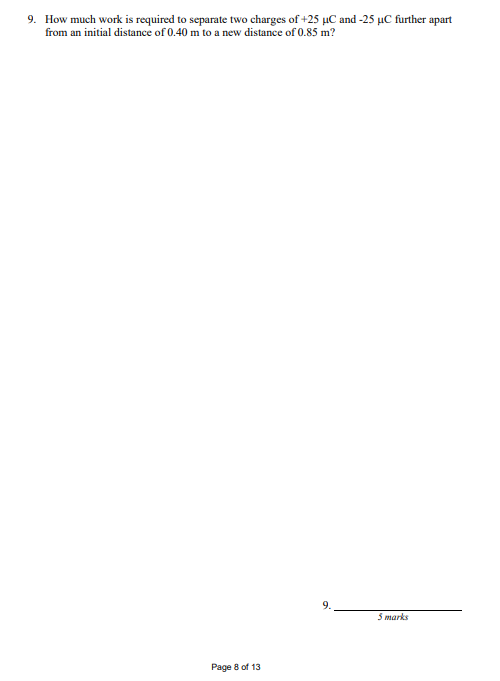
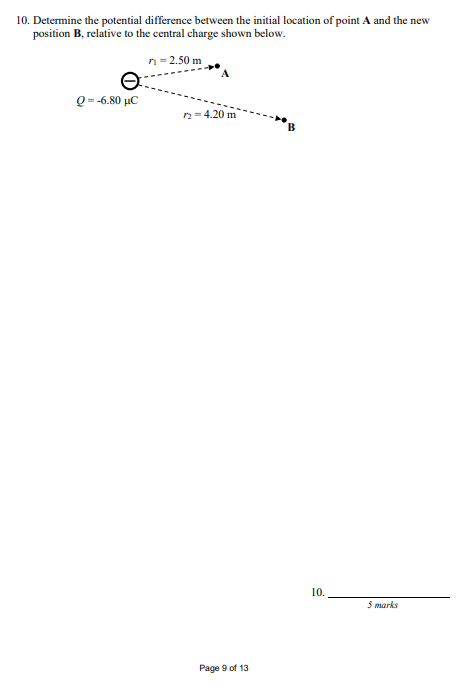
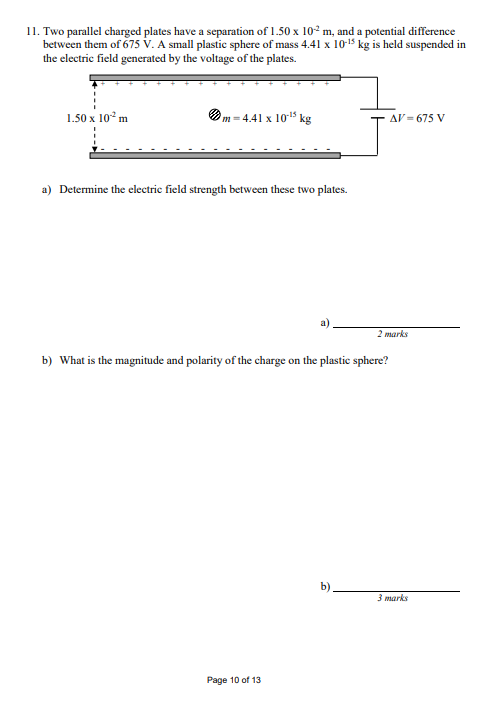
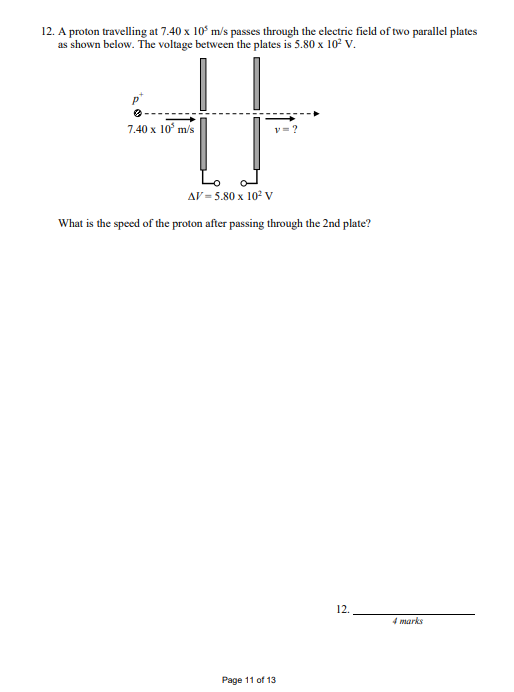
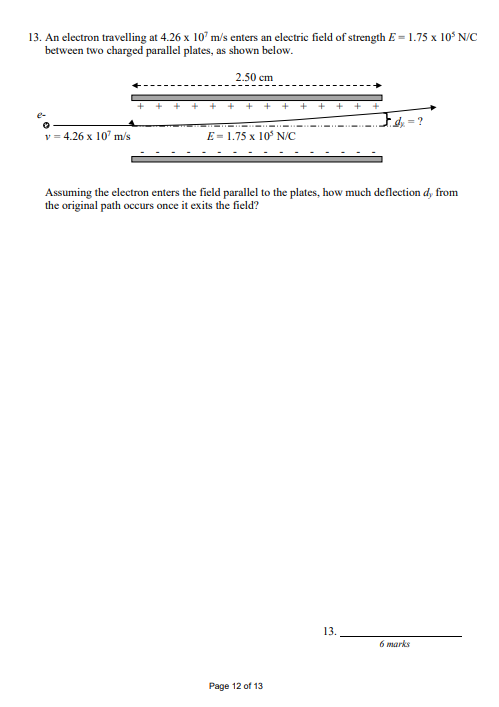
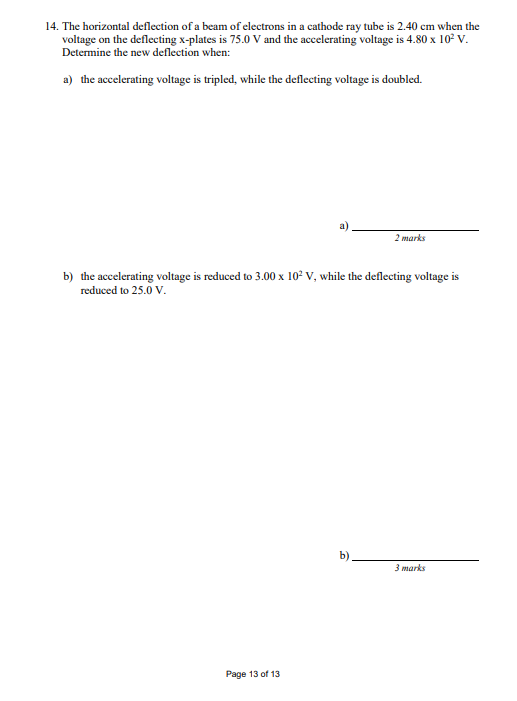
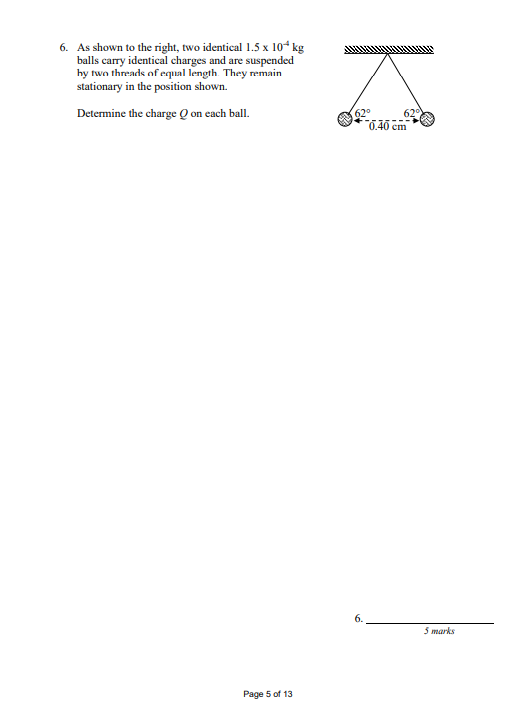
1. Determine the electrostatic force acting between a +3.0 uC charge and a +7.5 JC charge, if they are placed 16 cm apart. _ marks 2. A metal sphere has a net charge of -4.00 C. How many excess electrons does the metal sphere contain? 2. _ marks 3. Three point charges are arranged as shown below. 0.18 m 0.16 m -65 C +42 LLC -25 LLC What is the net magnitude and direction of the electrical force acting on the +42 pC charge? 3. marks Page 2 of 134. Calculate the magnitude of the net electrostatic force acting on the 28 pC due to the other two charges shown. Assume that, relative to the 35 uC charge, the other two charges are positioned at right angles to each other. 56 LLC 35 LLC 0.42 m 0.17 m 28 LIC 4. 7 marks Page 3 of 135. An electron is placed 1.0 x 10" m away from a particle containing several protons. It experiences an attractive force of 6.9 x 10²N at this position. a) What is the size of charge contained in the particle? a) 2 marks b) Determine the magnitude of the particle's field strength at the electron's position. Assume the electron is removed from this location. b) 2 marks c) How many protons are contained in this particle? c) 1 marks d) If the electron is now placed three times farther away from the particle than its original position, what will be the new force of attraction between them? d) 2 marks Page 4 of 137. Examine the two charged particles to the right. 20x 107 C P S0x10C a) Determine the magnitude and direction of the net electric fGeld strength at position F. a) A marks b) Calculate the magnitude of the force that acts on a +4.0 x 10 C charge placed at position P, b) Page & of 13 8. An electron is travelling at 8.50 x 10' m/'s from some distance away directly towards a larger charge of -1.55 x 10*C charge, as shown below: e- 8.50 x 10 m/'s O O -1.55 x 10* C How close does the electron get to the larger charge? 6 marks Page 7 of 139. How much work is required to separate two charges of +25 uC and -25 pC further apart from an initial distance of 0.40 m to a new distance of 0.85 m? 9. $ marks Page & of 1310. Determine the potential difference between the initial location of point A and the new position B. relative to the central charge shown below. 1 = 2.50 m A Q= -6.80 JC 12 = 4.20 m B 10. $ marks Page 9 of 131 1. Two parallel charged plates have a separation of 1.50 x 10 m, and a potential difference between them of 675 V. A small plastic sphere of mass 4.41 x 10- kg is held suspended in the electric field generated by the voltage of the plates. 1.50 x 10" m 0m = 4.41 x 10" kg AV = 675 V a) Determine the electric field strength between these two plates. a) 2 marks b) What is the magnitude and polarity of the charge on the plastic sphere? b) 3 marks Page 10 of 1312. A proton travelling at 7.40 x 10⁷ m's passes through the electnc field of two parallel plates as shown below. The voltage between the plates is 5.80 x 10 V. AV=3580x 10*V What is the speed of the proton after passing through the 2nd plate? 4 marks Page 11 of 13 13. An electron travelling at 4.26 x 10⁷ m/s enters an electric field of strength = 1.75 x 10 N/C between two charged parallel plates, as shown below. Assuming the electron enters the field parallel to the plates, how much deflection o, from the oniginal path oceurs once it exits the field? i migrks Page 12 of 13 14. The horizontal deflection of a beam of electrons in a cathode ray tube is 2.40 cm when the voltage on the deflecting x-plates is 75.0 V and the accelerating voltage is 4.80 x 10³ V. Determine the new deflection when: a) the accelerating voltage is tripled, while the deflecting voltage is doubled. a) 2 marks b) the accelerating voltage is reduced to 3.00 x 10² V, while the deflecting voltage is reduced to 25.0 V. b) 3 marks Page 13 of 136. As shown to the right, two identical 1.5 x 10 kg balls carry identical charges and are suspended by rwa threads of equal length. They remain stationary in the position shown. Determine the charge (7 on each ball. Page 5 of 13 5 marks
Step by Step Solution
There are 3 Steps involved in it

Get step-by-step solutions from verified subject matter experts
 Study Help